Optical Liquid Level Sensors
Optical Liquid Level Sensors
In the landscape of industrial automation, the ability to detect the presence or absence of liquid with high precision and minimal footprint is essential. Optical liquid level sensors have emerged as a primary solution for point-level detection in industries ranging from medical equipment and food processing to petrochemical storage. Unlike mechanical float switches, which rely on moving parts prone to wear and jamming, optical sensors utilize the properties of light refraction to provide a solid-state, reliable measurement.
As a professional manufacturer of industrial level measurement instruments, Welk provides a comprehensive range of solutions, including radar level meters and ultrasonic sensors. However, for many localized, high-precision applications, the optical liquid level sensor remains the preferred choice due to its compact size and rapid response time. This guide explores the engineering principles, selection criteria, and practical application of these sensors within industrial environments.
Understanding the Measurement Principle of Optical Sensors
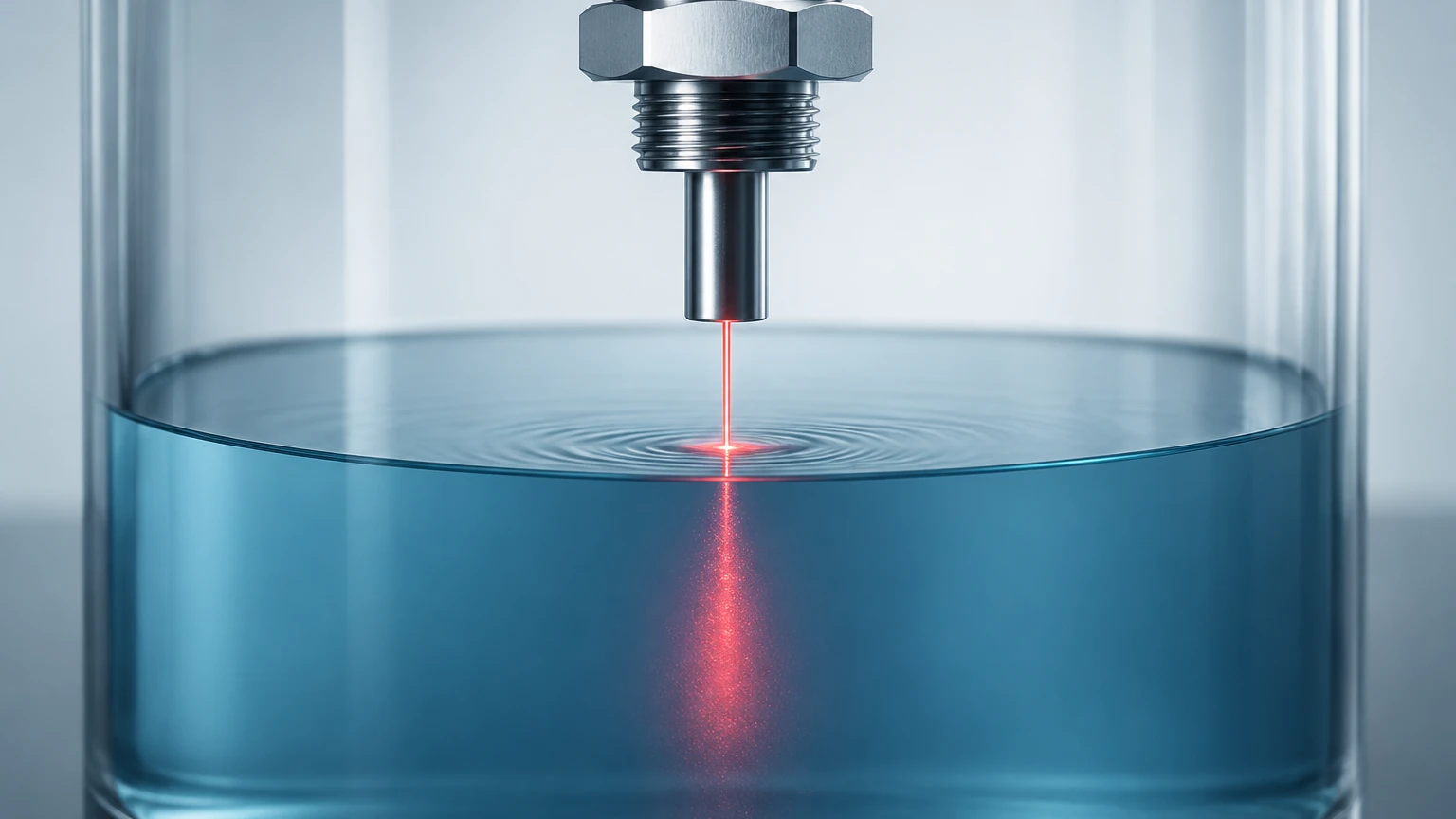
The operation of an optical liquid level sensor is based on the principles of internal reflection and refraction. The sensor typically consists of two main components housed within a transparent or semi-transparent tip: an infrared Light Emitting Diode (LED) and a phototransistor (light receiver).
Reflection in Air
When the sensor tip is surrounded by air or gas, the infrared light emitted by the LED is reflected internally within the prism (the conical tip of the sensor). Because the refractive index of the prism material (often polysulfone or glass) is significantly higher than that of air, the light is directed back toward the phototransistor. This completes the circuit and signals that the sensor is in a "dry" state.
Refraction in Liquid
When the sensor tip is submerged in a liquid, the refractive index of the surrounding medium changes. Instead of reflecting internally, the infrared light escapes the prism and is refracted into the liquid. Consequently, the phototransistor receives significantly less light or no light at all. This change in light intensity is processed by the internal electronics to trigger a switching output, signaling a "wet" state.
Because this method relies on the optical properties of the medium rather than physical displacement or electrical conductivity, optical liquid level sensors can detect almost any liquid, regardless of its dielectric constant, density, or color, provided the liquid allows for light refraction.
Key Evaluation Criteria for Industrial Applications
Selecting the correct optical sensor requires an evaluation of both the process medium and the environmental conditions. Engineers must look beyond simple detection and consider the long-term durability of the instrument.
Material Compatibility
The housing and prism material must be chemically compatible with the liquid being measured. Common materials include:
* Polysulfone (PSU): A standard engineering plastic suitable for water, oils, and some mild chemicals. It offers good heat resistance up to 100°C.
* Stainless Steel (316L) with Glass/Teflon Tips: Used for high-pressure environments or aggressive chemical applications where plastic housings would degrade.
* Trogamid: Often used in applications involving fuels and hydrocarbons.
Pressure and Temperature Ratings
Industrial tanks often operate under pressure. Standard plastic optical sensors are typically rated for pressures up to 10-20 bar (145-290 psi). For high-pressure hydraulic systems or steam-related applications, stainless steel variants can handle up to 50 bar or higher. Temperature ratings usually range from -20°C to +85°C for standard models, with specialized high-temperature versions reaching up to 125°C.
Electrical Output and Integration
Optical sensors are available with various output configurations to match the Control System (PLC) requirements:
* NPN/PNP Outputs: Common for direct connection to digital PLC inputs.
* Analog Outputs: Less common for point-level but available for specialized turbidity or interface detection.
* Voltage Range: Most industrial sensors operate on a 5V to 24V DC power supply.
Selection Guide and Technical Specifications
When comparing optical liquid level sensors to other technologies like ultrasonic or hydrostatic transmitters, it is helpful to view their specifications in a comparative context. The following table outlines typical parameters for industrial-grade optical sensors.
| Feature | Specification (Typical) | Notes |
| :— | :— | :— |
| Accuracy | ±1 mm | Highly precise point detection |
| Response Time | < 100 ms | Ideal for rapid filling/emptying cycles |
| Operating Pressure | Up to 50 bar (725 psi) | Depending on housing material |
| Operating Temperature | -40°C to +125°C | Extended ranges available for specialized use |
| Ingress Protection | IP67 / IP68 / IP69K | Suitable for washdown environments |
| Mounting Thread | M12, G1/2", 1/2" NPT | Standard industrial threading |
For broader applications involving continuous level monitoring or bulk solids, engineers may need to consult the Main Page to review alternative technologies such as radar or ultrasonic level sensors which complement point-level optical switches.
Installation Considerations and Best Practices
Correct installation is critical to preventing false triggers and ensuring the longevity of the sensor. Unlike non-contact sensors, optical sensors are wetted parts, meaning they are in direct contact with the process media.
Mounting Orientation
Optical sensors can be mounted horizontally (through the side of a tank) or vertically (from the top or bottom).
* Horizontal Mounting: Ensure the prism tip extends far enough into the tank to avoid being affected by liquid film clinging to the tank wall.
* Vertical Mounting: If mounted from the top, ensure the sensor is long enough to reach the desired trip point. If mounted from the bottom, be wary of sediment buildup which could coat the prism.
Avoiding Interference
One of the few weaknesses of optical sensing is interference from external light sources or reflective surfaces.
1. Ambient Light: Intense sunlight or high-frequency fluorescent lighting can sometimes interfere with the phototransistor. Using sensors with infrared modulation or shielded housings can mitigate this.
2. Reflective Surfaces: If the sensor is mounted too close to a reflective tank wall or an internal baffle, the light escaping the prism might reflect back into the receiver even when submerged. A minimum clearance of 15-20 mm from the tip to any reflective surface is recommended.
Torque and Sealing
Over-tightening a plastic sensor into a metal port can lead to stress cracking of the housing. Always follow the manufacturer’s torque specifications (typically 5-10 Nm for plastic and up to 20 Nm for stainless steel). Use appropriate O-rings or thread sealants compatible with the process liquid.
Limitations and Common Risks
While highly versatile, optical liquid level sensors are not universal solutions. Engineers should be aware of the following risks:
Bubbles and Foam
Heavy aeration or thick foam can cause inconsistent readings. Because foam contains air pockets, the sensor may intermittently signal a "dry" state even when covered by foam. In applications with significant foaming, hydrostatic or ultrasonic sensors may be more reliable.
Viscous Liquids and Coating
If the liquid is highly viscous (like heavy syrups or crude oil), a film may remain on the prism tip after the liquid level has dropped. This "coating" can keep the light from reflecting internally, causing a false "wet" signal. For such applications, sensors with spherical tips or those utilizing different physical principles (like tuning forks) are preferred.
Particulate Matter
High concentrations of suspended solids or large particles can physically damage the prism or block the light path. In wastewater or slurry applications, regular cleaning schedules or the use of non-contact radar level meters is advised.
Frequently Asked Questions (FAQs)
Q: Can optical sensors detect clear liquids like pure water or alcohol?
A: Yes. Optical sensors do not rely on the color or opacity of the liquid. They rely on the difference in the refractive index between the prism material and the liquid. Clear liquids are easily detected.
Q: Are optical sensors safe for use in explosive atmospheres?
A: Standard optical sensors are not intrinsically safe. However, many manufacturers offer ATEX or IECEx certified versions that are encapsulated or designed for use with Zener barriers in hazardous locations.
Q: How do I maintain an optical level sensor?
A: Maintenance is generally minimal due to the lack of moving parts. Periodic inspection to ensure the prism tip is free of scale, biological growth, or heavy coating is usually sufficient. Cleaning should be done with a soft cloth and a compatible solvent to avoid scratching the optical surface.
Q: Can these sensors be used in vacuum tanks?
A: Yes, provided the seal and housing material are rated for vacuum service. Since the sensing principle is optical, the absence of air in a vacuum does not negatively affect the internal reflection within the prism.
Conclusion: Selecting the Right Level Measurement Solution
Optical liquid level sensors provide a high-speed, compact, and cost-effective method for point-level detection in a vast array of industrial processes. By understanding the refractive properties of the media and ensuring material compatibility, engineers can implement a sensing solution that requires almost no maintenance and offers high repeatability.
However, industrial level measurement is rarely a one-size-fits-all discipline. While optical sensors excel at point detection, complex tasks such as measuring the level of corrosive chemicals in large silos or monitoring fluctuating levels in turbulent tanks may require more advanced instrumentation. Welk offers a diverse portfolio of industrial measurement tools designed to meet these challenges. To explore our full range of radar, ultrasonic, and hydrostatic measurement technologies, we invite you to visit our Main Page for detailed product specifications and application support.