3.15m to Feet
3.15m to Feet
In industrial process control and tank inventory management, precise measurement is the cornerstone of operational efficiency. When designing or retrofitting storage vessels, engineers frequently encounter the need to bridge the gap between metric specifications and imperial standards. A common height for medium-sized process tanks and chemical storage units is 3.15 meters. Converting 3.15m to feet results in approximately 10.3346 feet (or roughly 10 feet and 4 inches).
While the mathematical conversion is straightforward, the engineering implications for level instrumentation at this specific depth—roughly 10.3 feet—require a nuanced understanding of sensor technology, media characteristics, and installation environments. This guide explores the technical considerations for measuring liquid levels in vessels with a 3.15m vertical span, providing a professional reference for selecting and installing the correct instrumentation.
Understanding the Conversion: 3.15m to Feet
For high-precision industrial applications, using a simplified conversion factor is often insufficient. The international standard defines one foot as exactly 0.3048 meters. Therefore, to convert 3.15 meters to feet, the following calculation is applied:
* Formula: 3.15 meters / 0.3048 meters per foot = 10.3346457 feet.
* Practical Engineering Value: 10.33 feet.
* Fractional Equivalent: Approximately 10' 4".
At a depth of 3.15m, even a 0.5% margin of error in measurement translates to a discrepancy of over 1.5 centimeters (0.6 inches). In a large-diameter storage tank, this variance can represent hundreds of liters of product, emphasizing the need for accurate sensor calibration based on the exact vessel height.
Measurement Principles for 3.15m Vessels
Selecting the right level meter for a 10.33-foot range depends on the physical properties of the liquid and the environmental conditions inside the tank. Below are the primary measurement principles used for this depth.
Radar Level Measurement (FMCW and Pulsed)
Radar level meters represent the gold standard for non-contact measurement at the 3.15m range. They operate on the Time-of-Flight (ToF) principle. The sensor emits high-frequency electromagnetic waves (typically in the 26GHz or 80GHz band) toward the product surface. These waves reflect off the media and return to the sensor.
For a 3.15m distance, 80GHz radar is particularly effective. The shorter wavelength allows for a narrower beam angle, which is critical if the tank has internal structures like agitators or heating coils. The electronics calculate the distance based on the time interval between emission and reception, providing accuracy often within ±2mm.
Ultrasonic Level Sensors
Ultrasonic sensors are a cost-effective solution for water and wastewater applications at the 3.15m mark. Like radar, they use ToF, but they transmit mechanical sound waves instead of electromagnetic pulses. The speed of sound is approximately 343 m/s in air at 20°C. For a 3.15m distance, the round-trip travel time for the sound pulse is roughly 18.3 milliseconds.
However, ultrasonic measurement is sensitive to the medium through which the sound travels. Variations in air temperature, pressure, or the presence of heavy vapors can alter the speed of sound, necessitating temperature compensation integrated into the sensor's software.
Hydrostatic Pressure Measurement
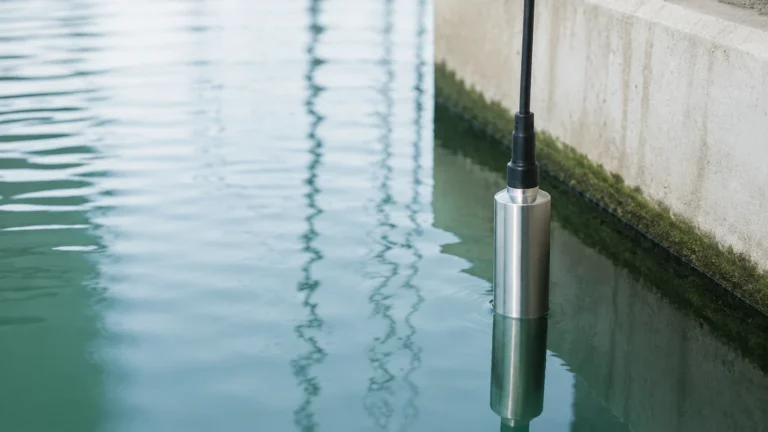
Hydrostatic transmitters measure the level by sensing the pressure exerted by the liquid column. The principle is governed by the formula: $P = \rho \cdot g \cdot h$, where $P$ is pressure, $\rho$ is the density of the liquid, $g$ is gravity, and $h$ is the height (3.15m).
If the tank contains water (density $\approx 1000 kg/m^3$), a 3.15m column exerts approximately 30.89 kPa (4.48 psi) of pressure at the base. This method is highly reliable for vented tanks but requires a differential pressure setup if the tank is pressurized.
Technical Selection Table for 3.15m (10.33 ft) Range
When evaluating options, engineers must weigh accuracy against cost and environmental constraints. The following table summarizes how different technologies perform at the 3.15m to feet threshold.
| Technology | Typical Accuracy | Best Use Case | Limitations |
| :— | :— | :— | :— |
| 80GHz Radar | ±2 mm | Chemical tanks, agitated liquids | Higher initial cost |
| Ultrasonic | ±0.25% of range | Water sumps, open channels | Affected by foam and vapor |
| Hydrostatic | ±0.1% to 0.5% | Constant density liquids | Sensitive to density changes |
| Magnetic Gauge | ±5 mm to 10 mm | High-pressure boilers | Requires side-mounting bypass |
| Guided Wave Radar | ±2 mm | Low dielectric liquids (oils) | Contact-based (probe required) |
For a comprehensive look at available hardware and specific model data sheets, professionals can visit the Main Page to review product options and application support.
Installation Considerations for 3.15m Vessels
Installing a level meter in a 10.33-foot vessel involves more than just securing a flange. Several physical factors can interfere with the sensor's performance.
1. The Dead Zone (Blocking Distance)
Every non-contact sensor has a "dead zone" directly beneath the transducer face where measurements cannot be taken. For an ultrasonic sensor with a 5m max range (covering our 3.15m requirement), the dead zone is typically 0.2m to 0.3m. If the tank is filled to the very top, the sensor must be mounted on a nozzle or standpipe to raise it above the maximum liquid level, ensuring the 3.15m span remains within the measurable range.
2. Beam Angle and Internal Obstructions
At a depth of 3.15m, the signal beam spreads as it travels. A sensor with a 10-degree beam angle will have a footprint of approximately 0.55m (1.8 ft) at the bottom of a 3.15m tank. If there are ladders, pipes, or stay bars within this cone, the sensor may report a "false high" level. Radar units with higher frequencies (80GHz) offer narrower beams (as low as 3 degrees), which are preferred for crowded 3.15m vessels.
3. Nozzle Geometry
If using a mounting nozzle, the height and diameter of the nozzle must be considered. A nozzle that is too narrow or too long can cause signal interference (ringing) for ultrasonic and radar waves. For a 3.15m measurement, a standard 2-inch or 3-inch flange is usually sufficient, provided the nozzle interior is smooth and free of burrs.

Application Scenarios for 3.15m Depth
Water and Wastewater Treatment
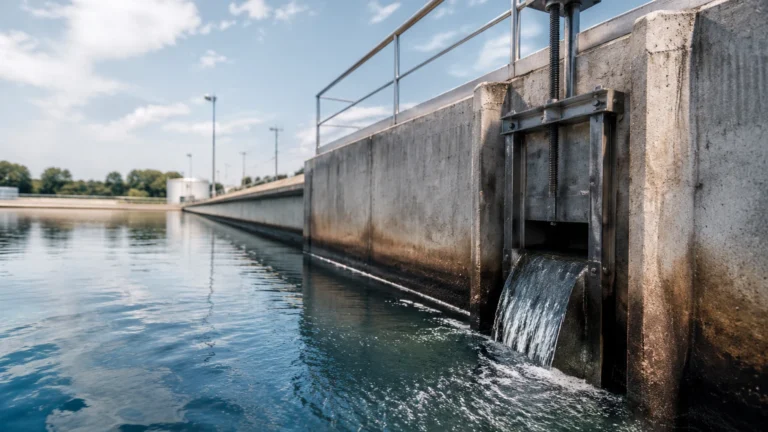
In municipal water treatment, 3.15m is a common depth for flocculation tanks or small chemical dosing skids. Ultrasonic sensors are favored here due to their resistance to corrosion and lack of contact with the treated water. Converting 3.15m to feet (10.33 ft) is often necessary when integrating European-manufactured tanks into North American SCADA systems.
Chemical Processing
For acids or caustic soda stored in intermediate bulk containers (IBCs) or small vertical silos, 3.15m represents a standard height. Radar level meters are preferred here because they can measure through plastic tank tops without needing an opening, maintaining the integrity of the containment and protecting the sensor from corrosive fumes.
Oil and Gas Lubrication Systems
Large industrial machinery often uses lubrication oil reservoirs that stand roughly 3 meters tall. Because oil has a lower dielectric constant than water, guided wave radar (GWR) or high-sensitivity non-contact radar is required to ensure the 3.15m to feet conversion remains accurate across varying temperatures and oil grades.
Limitations and Accuracy Constraints
While 3.15m is a relatively short distance for modern sensors, certain factors can still degrade performance:
* Surface Turbulence: If the 3.15m vessel is being filled rapidly or has an active agitator, the surface will be turbulent. This scatters the signal. Software filtering or the use of a stilling well can mitigate this.
* Vapor and Condensation: In closed tanks, condensation can form on the sensor face. While radar is largely unaffected, ultrasonic signals can be significantly attenuated or blocked by heavy droplets.
* Material Buildup: In applications involving slurries or viscous liquids, material may cling to the sensor or the walls of the 3.15m tank, potentially causing false readings in contact-based systems like hydrostatic or guided wave radar.
Frequently Asked Questions (FAQs)
Is 3.15m too shallow for radar level meters?
No. Modern radar sensors can accurately measure distances as short as a few centimeters. A 3.15m (10.33 ft) range is well within the optimal operating window for both 26GHz and 80GHz radar units.
How does temperature affect the 3.15m measurement?
Temperature primarily affects ultrasonic sensors and hydrostatic transmitters. For ultrasonic, a 10°C change can cause a roughly 1.8% error in distance if not compensated. For hydrostatic, temperature changes affect the density of the liquid, which directly alters the pressure reading for the 3.15m column.
Can I use a 5m sensor for a 3.15m tank?
Yes. It is standard practice to select a sensor with a range slightly larger than the vessel height. A sensor rated for 5m or 10m will provide excellent resolution for a 3.15m to feet application, provided the dead zone is accounted for at the top of the tank.
What is the advantage of converting 3.15m to feet in the PLC?
Many legacy control systems in the United States and UK are programmed in imperial units. Converting the 4-20mA signal from a metric-calibrated sensor into feet (0 to 10.33 ft) allows operators to monitor levels using familiar benchmarks without recalculating volumes manually.
Conclusion
Accurately managing a 3.15m (10.33 ft) liquid level requires more than a simple unit conversion. It demands a strategic approach to sensor selection, taking into account the physics of the measurement principle and the specific constraints of the installation site. Whether utilizing the precision of 80GHz radar or the cost-efficiency of ultrasonic waves, understanding the nuances of this specific depth ensures long-term reliability and process safety. For those seeking specific hardware recommendations or technical datasheets for their next project, visiting the Main Page provides a gateway to professional-grade measurement solutions.