Coriolus Flow Meter
Coriolus Flow Meter
In the landscape of industrial process control, the coriolus flow meter stands as one of the most versatile and accurate instruments for measuring fluid dynamics. Unlike volumetric flow meters that calculate the space a fluid occupies, a coriolus flow meter measures mass flow directly. This distinction is critical in industries such as chemical processing, oil and gas, and food production, where the mass of a substance determines the chemical reaction's outcome or the commercial value of a product. This guide explores the engineering principles, selection criteria, and practical application of these instruments within modern industrial frameworks.
Understanding the Coriolis Principle in Flow Measurement
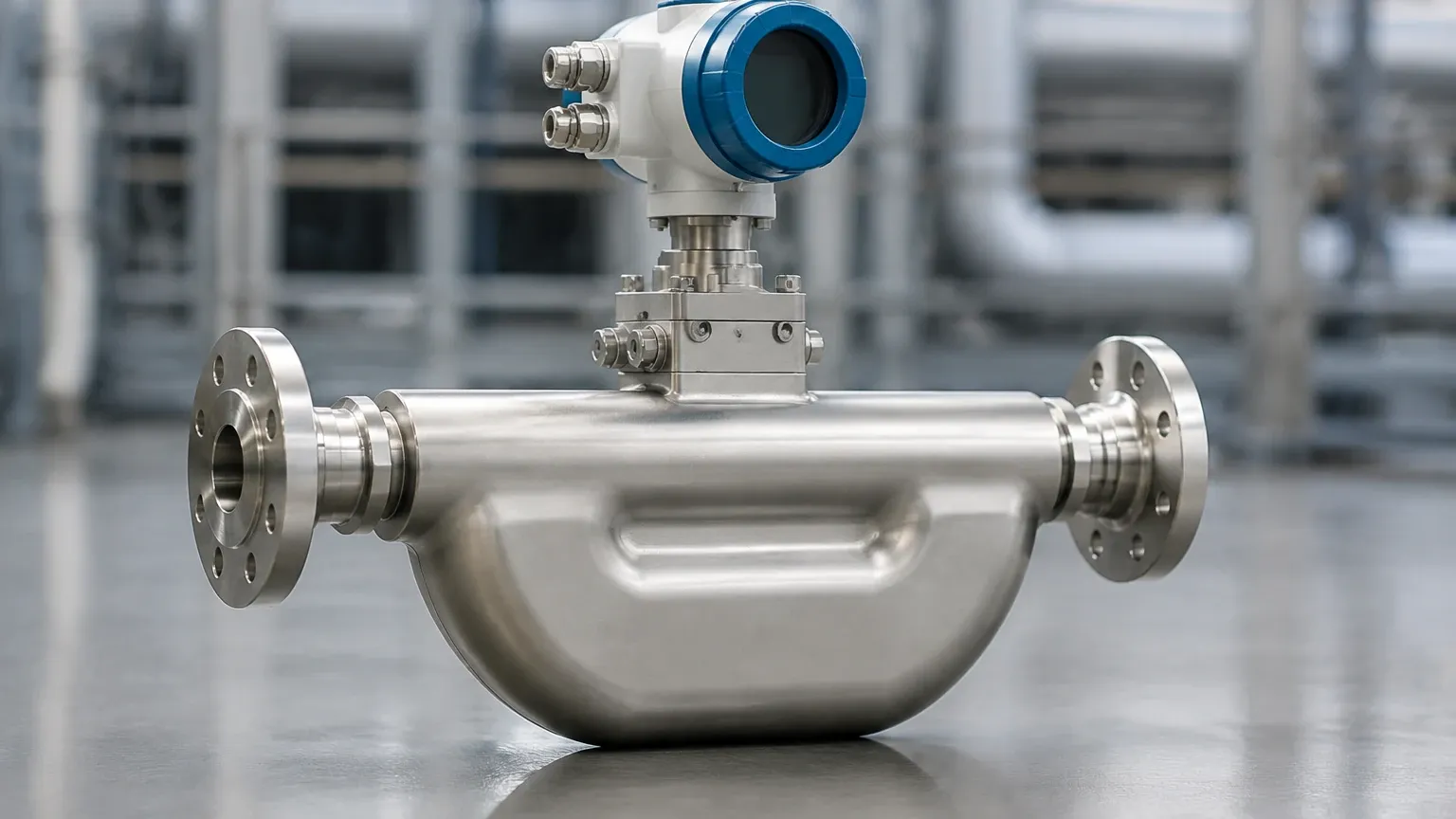
The fundamental operation of a coriolus flow meter is based on the principles of motion mechanics, specifically the Coriolis effect. To understand how this applies to a flow meter, one must visualize the internal structure of the device, which typically consists of one or two vibrating measuring tubes.
The Physics of Mass Flow
When the meter is active, an electromagnetic drive coil causes the measuring tubes to oscillate at their resonant frequency. When a fluid (liquid or gas) is at rest within the tubes, the tubes vibrate uniformly. However, as soon as the fluid begins to flow, the mass of the fluid moving through the vibrating tubes induces a secondary twisting motion. This is due to the Coriolis force, which acts perpendicular to both the direction of motion and the axis of rotation (or vibration).
Engineers measure this twisting motion using electro-dynamic sensors located at the inlet and outlet of the tubes. As the tube twists, there is a time delay—or phase shift—between the signals detected by these sensors. This phase shift ($Δt$) is directly proportional to the mass flow rate. Because mass is an intrinsic property that does not change with temperature or pressure, the coriolus flow meter provides an exceptionally stable measurement regardless of changes in the fluid's physical state.
Density and Temperature Measurement
Beyond mass flow, these meters are capable of measuring fluid density and temperature simultaneously. The density of the medium is determined by the resonant frequency of the vibrating tubes; a denser fluid increases the mass of the vibrating system, thereby lowering the frequency. Integrated Platinum Resistance Thermometers (typically Pt100) monitor the tube temperature to compensate for changes in the elasticity of the tube material, ensuring accuracy across a wide thermal range.
Key Components and Design Variations
The construction of a coriolus flow meter must balance sensitivity to the Coriolis force with the structural integrity required to withstand industrial pressures.
1. Measuring Tubes: These are the core components. They are often U-shaped to maximize the Coriolis effect over a shorter physical distance, though straight-tube designs are used for applications requiring low pressure drop or easier cleaning (CIP/SIP).
2. Drive Coil: An electromagnetic component that maintains the tube oscillation.
3. Pick-off Sensors: Located at the inlet and outlet, these detect the phase shift.
4. Transmitter: The electronic "brain" that processes the raw sensor signals into mass flow, density, and temperature data, providing outputs via 4-20mA, HART, Modbus, or Profibus.
Common materials for the wetted parts include 316L stainless steel for general applications, while Hastelloy C22 or Tantalum are used for highly corrosive chemical environments. For engineers managing complex liquid assets, reviewing a variety of Main Page resources can help in understanding how these flow instruments integrate with level measurement systems for total inventory control.
Selection Criteria for Industrial Applications
Choosing the right coriolus flow meter requires a detailed analysis of the process fluid and the installation environment. The following table provides a comparison of common design considerations:
| Feature | U-Shaped Tube | Straight-Tube Design |
| :— | :— | :— |
| Sensitivity | High; ideal for low flow rates | Moderate; better for high-velocity flows |
| Pressure Drop | Higher due to tube curvature | Lower; minimal impact on process pressure |
| Cleanability | Difficult to drain completely | Excellent; ideal for hygienic applications |
| Installation Space | Requires more vertical or horizontal clearance | Compact; fits easily into existing piping |
| Vibration Resistance | Generally more robust against external vibration | May require more sophisticated decoupling |
| Typical Accuracy | ±0.1% to ±0.05% of rate | ±0.2% to ±0.1% of rate |
Fluid Properties to Confirm
Before procurement, the following data points must be verified:
* Viscosity: While Coriolis meters are largely independent of viscosity, extremely high viscosity can lead to significant pressure drops.
* Corrosivity: Ensure the tube material is compatible with the chemical composition of the fluid.
* Gas Content: Entrained air or "slug flow" can disrupt the tube oscillation, leading to measurement errors.
Installation Best Practices
Proper installation is paramount to maintaining the high accuracy of a coriolus flow meter. Because the meter relies on detecting minute vibrations, external factors can introduce noise into the signal.
Orientation
The orientation of the meter depends on the phase of the medium:
* Liquids: The meter should ideally be installed in a "U-down" position or in a vertical pipe with upward flow. This ensures the tubes remain full and prevents air bubbles from being trapped.
* Gases: A "U-up" position is preferred to allow any condensed liquids to drain out of the tubes, preventing measurement fluctuations.
Vibration and Support
The meter must be isolated from external mechanical vibrations. This is achieved by supporting the piping immediately upstream and downstream of the meter. Flexible connectors are generally discouraged unless the meter itself is rigidly anchored to a stable foundation, as they can sometimes introduce unpredictable resonance.
Zero Point Calibration
After installation and once the system is filled with the process fluid at operating temperature and pressure, a "zero-point adjustment" must be performed. This is done under a "no-flow" condition—achieved by closing valves on both sides of the meter—to calibrate the electronics to the specific mechanical stresses of the installed piping.
Limitations and Operating Constraints
While the coriolus flow meter is often considered the "gold standard" of flow measurement, it is not without limitations:
* Initial Cost: The complexity of the sensors and the precision required in manufacturing make these meters more expensive than electromagnetic or ultrasonic alternatives.
* Size Constraints: As pipe diameters increase (above 250 mm or 10 inches), the physical size and weight of a Coriolis meter become substantial, often making them impractical for very large-scale water distribution.
* Pressure Drop: In U-tube designs, the fluid must navigate bends, which naturally results in a loss of head pressure. This must be accounted for in pump sizing.
* Sensitivity to Aeration: If a liquid contains more than 5-10% entrained gas, the damping effect on the tubes can cause the meter to "stall" or lose its reading. Specialized "dual-phase" firmware is often required for such applications.
Frequently Asked Questions (FAQ)
Q: Can a coriolus flow meter measure steam?
A: While theoretically possible, it is rarely practical. The low density of steam requires very high velocities to generate a measurable Coriolis force, leading to excessive pressure drops and potential damage to the meter tubes. Vortex flow meters are usually preferred for steam.
Q: How often does a Coriolis meter need recalibration?
A: Because there are no moving parts subject to wear (like bearings in a turbine meter), the calibration is exceptionally stable. Most industrial standards recommend a verification check every 2 to 5 years, depending on the criticality of the process and the corrosivity of the fluid.
Q: Does the flow profile (laminar vs. turbulent) affect accuracy?
A: No. One of the greatest advantages of the coriolus flow meter is that it is independent of the flow profile. Unlike ultrasonic or orifice plate meters, it does not require long straight runs of pipe upstream or downstream.
Q: Is it possible to measure bidirectional flow?
A: Yes, Coriolis meters inherently measure flow in both directions. The phase shift simply reverses, allowing the transmitter to report both forward and reverse flow totals.
Conclusion
The coriolus flow meter remains a cornerstone of precision engineering in the B2B industrial sector. By providing direct mass flow, density, and temperature in a single device, it reduces the need for multiple sensors and simplifies process architecture. When integrated with advanced level measurement technologies, such as those found on the Main Page, these instruments enable a level of process transparency and efficiency that is essential for modern competitive manufacturing. Understanding the specific mechanical and fluidic requirements of your application ensures that the investment in Coriolis technology yields the highest possible return in accuracy and reliability.