Ultrasonic Level Sensor Zigbee
Ultrasonic Level Sensor Zigbee: Engineering Guide to Wireless Level Monitoring
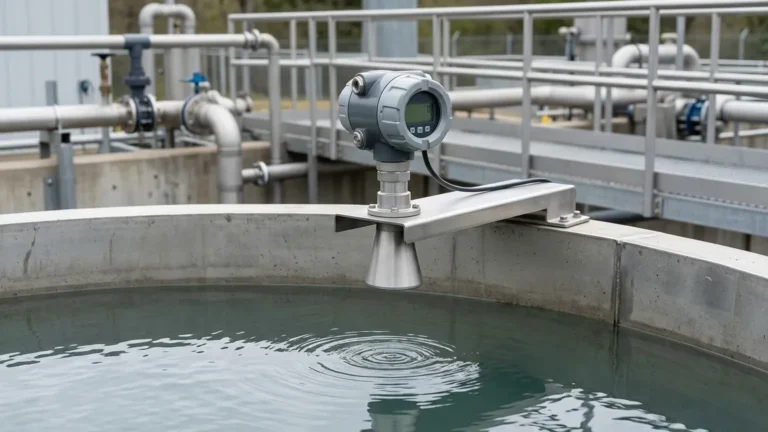
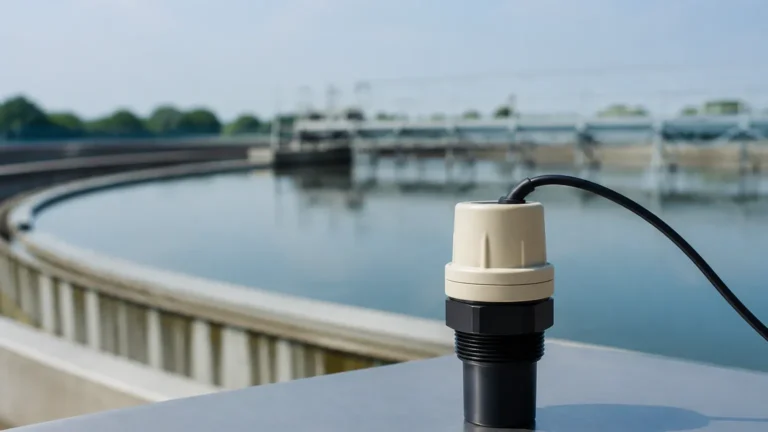
In the landscape of industrial automation, the transition from wired to wireless sensing has significantly reduced installation costs and increased the flexibility of process monitoring. Among these technologies, the ultrasonic level sensor zigbee integration has emerged as a preferred solution for tank farms, water treatment facilities, and chemical storage areas where traditional cabling is either cost-prohibitive or physically impractical. By combining the non-contact reliability of Ultrasonic Level Meters with the robust mesh networking capabilities of the Zigbee protocol, engineers can achieve high-precision monitoring across expansive industrial sites.
The Principle of Ultrasonic Level Measurement
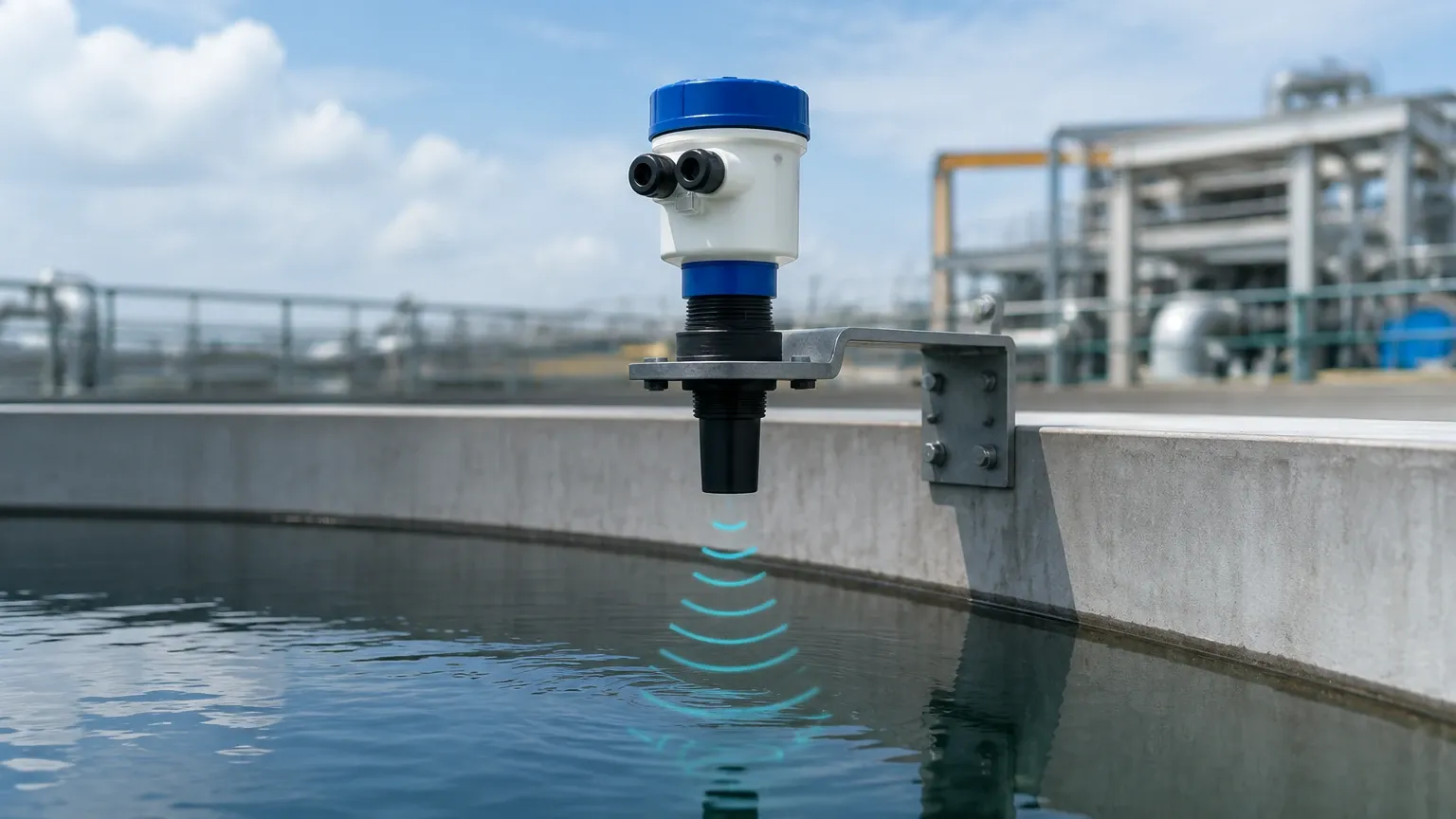
Before evaluating the wireless communication layer, it is essential to understand the underlying physics of the measurement. Ultrasonic level sensors operate on the Time-of-Flight (ToF) principle.
The sensor’s transducer emits a high-frequency acoustic pulse, typically in the range of 20 kHz to 200 kHz. This sound wave travels through the air, reflects off the surface of the medium (liquid or solid), and returns to the transducer. The sensor’s internal processor then calculates the distance based on the time elapsed between transmission and reception using the following formula:
Distance = (Speed of Sound × Time Delay) / 2
Since the speed of sound in air is approximately 343 meters per second at 20°C, the device must also account for temperature variations, as the speed of sound fluctuates with air density. Most professional-grade ultrasonic level meters include integrated temperature compensation to maintain accuracy across varying environmental conditions.
Understanding Zigbee in Industrial Sensing
Zigbee is a wireless communication standard based on the IEEE 802.15.4 protocol. It is specifically designed for low-power, low-data-rate applications, making it ideal for industrial sensors that only need to transmit level readings at periodic intervals.
Key Advantages of Zigbee for Level Sensors:
1. Mesh Networking: Unlike point-to-point Bluetooth or star-topology Wi-Fi, Zigbee devices can pass data through intermediate nodes. If one sensor is out of range of the central gateway, it can "hop" its signal through other nearby sensors.
2. Low Power Consumption: An ultrasonic level sensor zigbee configuration can often operate on battery power for several years, depending on the transmission frequency, because the radio remains in a sleep state between measurements.
3. Scalability: A single Zigbee gateway can support dozens or even hundreds of individual level sensors, creating a comprehensive monitoring network without the need for extensive PLC I/O modules.
Technical Evaluation and Selection Criteria
When selecting an ultrasonic level sensor with Zigbee connectivity, engineers must look beyond the wireless protocol and evaluate the instrument's core performance specifications.
1. Measurement Range and Frequency
The frequency of the ultrasonic pulse determines the sensing range. Lower frequencies (e.g., 40 kHz) can travel further and are used for ranges up to 15 or 20 meters. Higher frequencies (e.g., 120 kHz) provide better resolution and smaller "dead zones" but are limited to shorter distances, typically under 5 meters.
2. The Blocking Distance (Dead Zone)
Every ultrasonic sensor has a "dead zone" directly beneath the transducer where it cannot accurately measure. This is the time required for the transducer to stop vibrating after sending a pulse before it can listen for the echo. For a standard industrial sensor, this may range from 0.2m to 0.5m. The tank's maximum fill level must never enter this zone.
3. Beam Angle
The ultrasonic pulse spreads out in a cone shape. If the beam angle is too wide, the signal may reflect off tank walls, ladders, or agitators, causing false readings. Narrow beam angles (typically 5° to 12°) are preferred for tall, narrow silos or tanks with internal obstructions.
4. Environmental Protection
For chemical or outdoor applications, the sensor housing must be rated (e.g., IP66, IP67, or IP68). If the medium is corrosive, the transducer face should be coated with PTFE or PVDF.
Practical Selection Table
| Feature | Standard Wired Ultrasonic | Ultrasonic Level Sensor Zigbee |
| :— | :— | :— |
| Power Source | 24V DC Loop Powered | Battery or Solar + Battery |
| Data Transmission | 4-20mA / RS485 Modbus | Zigbee Mesh (2.4 GHz) |
| Installation Cost | High (Conduit, Cabling, Labor) | Low (Mount and Sync) |
| Mobility | Fixed | Portable / Reconfigurable |
| Update Rate | Real-time (Continuous) | Periodic (e.g., every 5-15 mins) |
| Ideal Application | Critical Process Control | Inventory & Remote Monitoring |
Installation Guidelines for Zigbee-Enabled Sensors
Proper mechanical installation is critical to ensuring the Zigbee signal reaches the gateway and the ultrasonic pulse provides an accurate level reading.
Mechanical Positioning
* Perpendicular Alignment: The sensor must be mounted perfectly perpendicular to the liquid surface. A tilt of even a few degrees can cause the echo to bounce away from the transducer, resulting in signal loss.
* Avoid the Center: In cylindrical tanks, do not mount the sensor in the exact center, as this can create parabolic echoes that amplify noise. Conversely, avoid mounting too close to the wall to prevent sidewall interference.
* Inlet Proximity: Ensure the sensor is positioned away from the liquid inlet to avoid turbulence and false readings caused by the inflowing stream.
Wireless Connectivity Optimization
* Gateway Placement: Place the Zigbee gateway at a high elevation to maintain a clear Line of Sight (LoS) where possible.
* Signal Obstructions: While Zigbee can penetrate some walls, heavy metal enclosures or thick concrete structures will significantly attenuate the 2.4 GHz signal. If the sensor is inside a metal tank, an external antenna may be required.
* Mesh Density: If a sensor is struggling to connect, adding a Zigbee router (a mains-powered node) between the sensor and the gateway can bridge the gap.
Limitations and Environmental Considerations
While highly versatile, ultrasonic technology is not a universal solution. Engineers should be aware of the following limitations:
* Vacuum Conditions: Ultrasonic waves require a medium (air/gas) to travel. They cannot function in a vacuum.
* Heavy Foam: Foam absorbs the acoustic pulse rather than reflecting it. If the process involves significant foaming, radar level meters are generally recommended over ultrasonic sensors.
* High Pressure/Temperature: Changes in pressure and temperature significantly alter the speed of sound. While sensors compensate for temperature, extreme fluctuations or high-pressure environments (above 3 bar) can introduce inaccuracies.
* Dust and Vapor: Heavy dust in silos or thick steam in boiling liquids can scatter the ultrasonic signal. In these cases, high-frequency radar is often a more reliable alternative.
Maintenance and Troubleshooting
Zigbee-enabled sensors require minimal maintenance compared to contact-based systems (like float switches), but periodic checks are necessary:
1. Transducer Cleaning: In humid or dusty environments, condensation or buildup can occur on the transducer face. Wipe it periodically with a soft cloth and mild solvent if necessary.
2. Battery Management: Monitor the battery voltage via the Zigbee network. Most systems allow for low-battery alerts to be sent to the SCADA or cloud dashboard.
3. Signal Strength (RSSI): Periodically check the Received Signal Strength Indicator (RSSI) values. A sudden drop in signal strength may indicate a new physical obstruction or interference from other 2.4 GHz devices (like Wi-Fi routers).
Frequently Asked Questions (FAQ)
Q: How far can a Zigbee level sensor transmit?
A: In an open field, a Zigbee signal can reach 75 to 100 meters. However, in industrial environments with metal structures, this is often reduced to 20-30 meters. The mesh networking capability allows this range to be extended indefinitely by adding more nodes.
Q: Can Zigbee sensors be used in hazardous areas?
A: Yes, provided the device is certified (e.g., ATEX or IECEx). Because Zigbee sensors are low-power, they are well-suited for Intrinsic Safety (IS) designs.
Q: How does the sensor handle surface turbulence?
A: Industrial ultrasonic meters use software algorithms to average the readings over a set period (damping), which filters out the "noise" caused by ripples or small waves on the liquid surface.
Q: Is the Zigbee signal secure?
A: Zigbee uses AES-128 encryption, providing a high level of security for industrial data transmission. Access to the network requires a specific security key handled at the gateway level.
Conclusion
The integration of an ultrasonic level sensor zigbee system offers a cost-effective, scalable, and accurate method for managing liquid and solid levels in modern industrial settings. By understanding the acoustic principles of Ultrasonic Level Meters and the networking strengths of Zigbee, facilities can transition toward smarter, more data-driven operations. When selecting a device, always prioritize the specific requirements of your medium, the physical constraints of your tank, and the necessary integration with your existing automation infrastructure.