2 Ultrasonic Flow Meter
2 Ultrasonic Flow Meter: A Comprehensive Guide to Level and Flow Integration
In the landscape of industrial process control, the precision of fluid measurement determines the efficiency of the entire operation. Among the various technologies available, ultrasonic measurement has emerged as a preferred non-contact solution. Whether a facility requires a 2 ultrasonic flow meter for a specific pipe diameter or an integrated system for open channel monitoring, understanding the underlying physics and application constraints is essential for engineering success.
At Welk, we specialize in high-performance Ultrasonic Level Meters and flow solutions designed to withstand the rigors of chemical processing, water treatment, and industrial automation. This guide explores the technical foundations, selection criteria, and practical installation requirements for 2-inch ultrasonic flow and level measurement systems.
Understanding the Measurement Principles
Ultrasonic technology relies on the propagation of high-frequency sound waves (typically above 20 kHz) through a medium. In B2B industrial applications, two primary methods are used depending on whether the fluid is in a closed pipe or an open channel.
1. Transit-Time Principle (Closed Pipes)
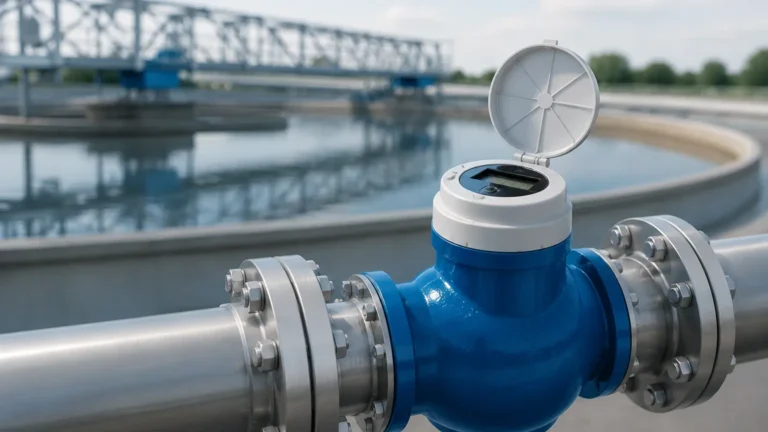
For a standard 2 ultrasonic flow meter (DN50) installed in a pressurized pipe, the transit-time method is most common. This involves two transducers acting as both transmitters and receivers. One transducer sends a signal downstream, while the other sends one upstream. Because the moving fluid carries the sound waves, the downstream signal travels faster than the upstream signal. The time difference ($Δt$) is directly proportional to the flow velocity.
2. Time-of-Flight Principle (Level and Open Channel)
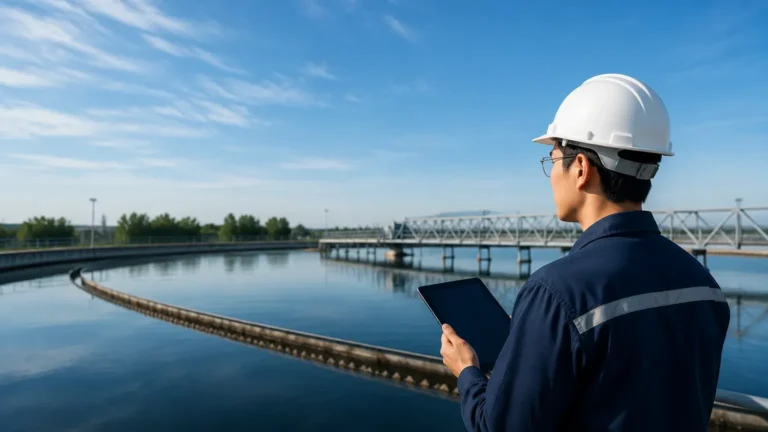
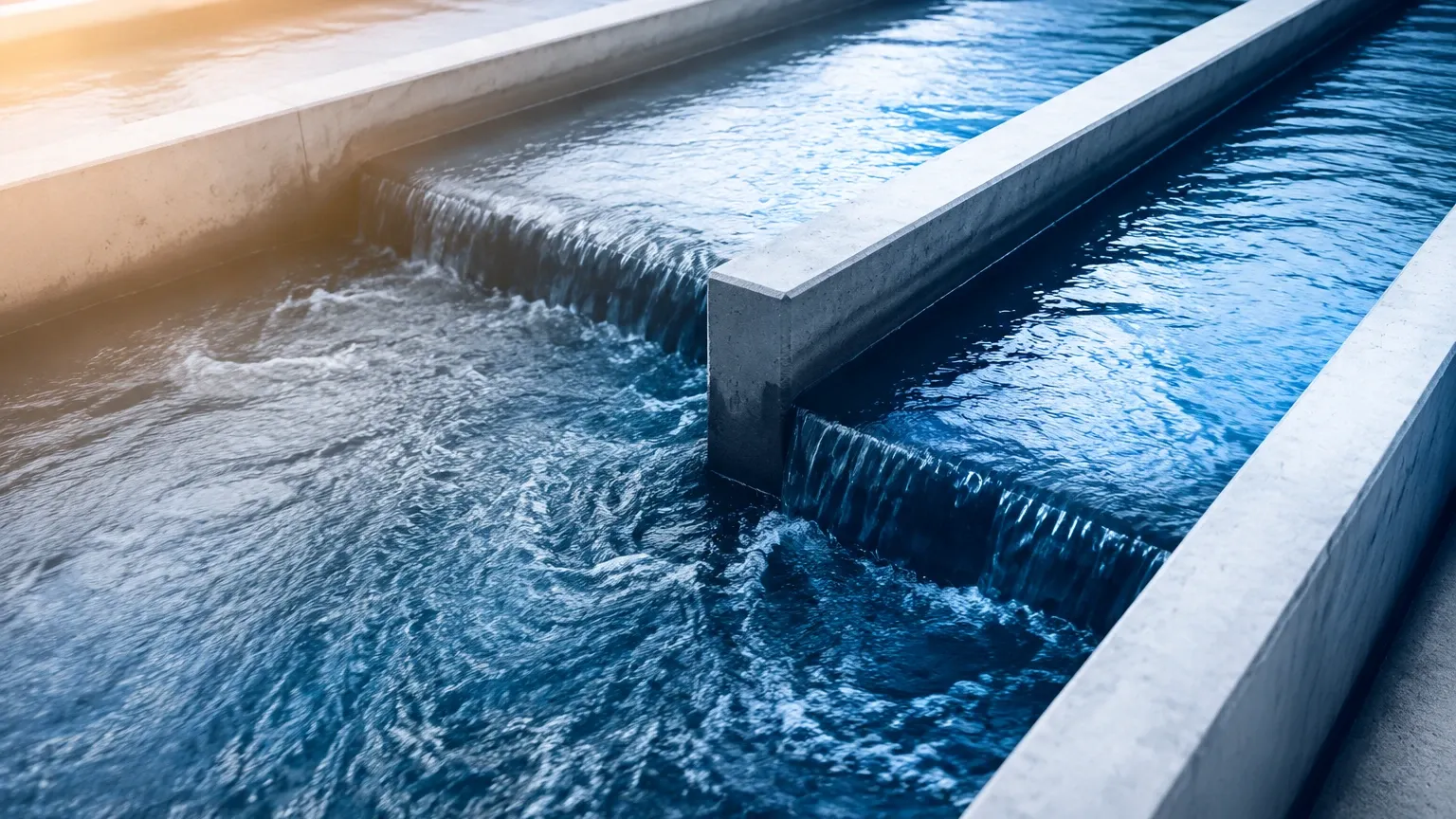
In many scenarios, flow is measured indirectly by monitoring the level of a fluid as it passes through a primary device like a flume or weir. Here, an ultrasonic transducer is mounted above the liquid surface. It emits a pulse that reflects off the surface and returns to the sensor. By measuring the time taken for the echo to return, the device calculates the distance (level). For flow measurement, the internal software applies a programmed mathematical formula (Q = h^n) to convert the "head" height into a volumetric flow rate.
The Significance of the 2-Inch (DN50) Specification
The "2" in a 2 ultrasonic flow meter typically refers to the nominal diameter of the pipe (DN50). This size is a critical standard in many industrial sectors for several reasons:
* Chemical Dosing: 2-inch lines are frequently used for the precise delivery of reagents and additives in water treatment plants.
* Food and Beverage: This diameter is common for clean-in-place (CIP) systems where non-contact measurement is vital to prevent contamination.
* HVAC Systems: 2-inch pipes often carry chilled or hot water for climate control in large industrial complexes.
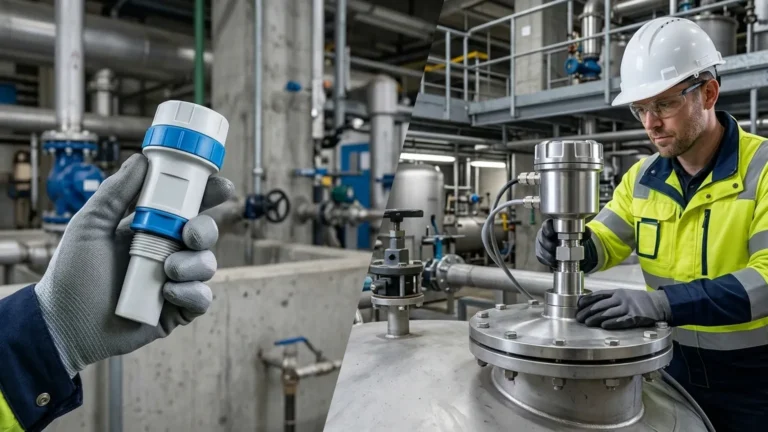
Choosing an ultrasonic solution for a 2-inch line allows for "clamp-on" installations, which eliminate the need to cut pipes or stop production, providing a significant cost advantage over traditional electromagnetic or turbine meters.
Key Evaluation Criteria for Selection
When selecting between various Ultrasonic Level Meters or flow systems, engineers must evaluate the specific environmental and fluid characteristics of their application.
Material Compatibility
The housing of the sensor and the transducer face must be compatible with the atmosphere or the fluid. For corrosive environments, PVDF or PTFE-coated sensors are recommended. For standard water applications, ABS or stainless steel may suffice.
Signal Processing and Accuracy
Modern digital signal processing (DSP) allows meters to filter out "false echoes" caused by tank agitators, pipe internal scaling, or structural obstructions. Accuracy for transit-time flow meters is typically within ±1% to ±2% of the flow rate, while open-channel level-to-flow systems depend heavily on the precision of the primary device (flume/weir).
Power and Output Options
* 2-Wire (Loop Powered): Ideal for simple level monitoring where power infrastructure is limited. The device draws power from the 4-20mA signal loop.
* 4-Wire: Required for high-power transducers or when integrated heating elements are needed to prevent condensation on the sensor face.
Comparison Table: 2-Inch Inline vs. Open Channel Ultrasonic Measurement
| Feature | 2" Inline Ultrasonic Flow Meter | Open Channel (Level-based) Flow |
| :— | :— | :— |
| Installation Type | Clamp-on or Flanged | Top-mounted (Non-contact) |
| Primary Application | Pressurized pipes (DN50) | Flumes, Weirs, Partially filled pipes |
| Fluid Requirements | Clean liquids (Transit-time) | Any liquid with a clear surface |
| Maintenance | Low (No moving parts) | Minimal (Keep sensor face clean) |
| Typical Accuracy | ±1.0% | ±2.0% to ±5.0% (System dependent) |
Installation Considerations for Maximum Accuracy
The performance of a 2 ultrasonic flow meter or level sensor is highly dependent on correct installation. Failure to follow geometric constraints can lead to signal loss or erratic readings.
Straight Pipe Requirements
For inline meters, the "10D Upstream / 5D Downstream" rule is a standard engineering guideline. This means the meter should be placed in a section of pipe with at least 10 diameters of straight pipe before the sensor and 5 diameters after it. This ensures a stable, laminar flow profile free from turbulence caused by elbows, valves, or pumps.
The Dead Zone (Blocking Distance)
Every ultrasonic sensor has a "dead zone" directly in front of the transducer face where it cannot accurately process a return signal. For a standard Ultrasonic Level Meters application, this range is typically 0.2m to 0.5m (approx. 8 to 20 inches). The sensor must be mounted high enough so that the maximum liquid level never enters this zone.
Beam Angle and Obstructions
Ultrasonic waves propagate in a cone shape. It is vital to ensure that no internal structures, such as ladders, pipes, or weld seams, intrude into this beam cone. If an obstruction is unavoidable, advanced meters with "False Echo Suppression" software can be programmed to ignore these static reflections.
Limitations and Environmental Factors
While ultrasonic measurement is highly versatile, it is not a universal solution. Engineers must account for the following limitations:
1. Heavy Foam: Thick foam on the surface of a liquid can absorb the ultrasonic pulse, preventing a return echo. In these cases, radar level meters are often a better alternative.
2. Vacuum Conditions: Sound waves require a medium (air or gas) to travel. In a total vacuum, ultrasonic sensors will not function.
3. High Temperature/Pressure: Extreme temperatures can alter the speed of sound significantly. While most Ultrasonic Level Meters include integrated temperature compensation, extreme gradients can still cause refraction of the sound beam.
4. High Solids Content: For inline flow measurement, transit-time meters require relatively clean fluids. If the fluid contains more than 5% total suspended solids (TSS) or significant aeration, a Doppler-style ultrasonic meter should be used instead.
Practical Maintenance and Troubleshooting
One of the primary B2B advantages of ultrasonic technology is the lack of moving parts, which drastically reduces the total cost of ownership (TCO). However, routine checks are still necessary:
* Transducer Face Cleaning: In humid or dusty environments, buildup on the sensor face can attenuate the signal. A simple wipe with a soft cloth is usually sufficient.
* Signal Strength Monitoring: Most modern meters provide a "Signal Quality" or "Gain" metric. A sudden drop in signal quality often indicates the onset of scaling in the pipe or the accumulation of debris in a flume.
* Recalibration: While the electronic components are stable, changes in the process fluid (e.g., a significant change in chemical concentration that alters the speed of sound) may require a recalibration of the distance-to-flow mapping.
Frequently Asked Questions (FAQ)
Q: Can a 2 ultrasonic flow meter be used for steam measurement?
A: No. Standard ultrasonic flow meters are designed for liquids. Steam measurement typically requires vortex shedding meters or specialized high-temperature differential pressure systems.
Q: How does ambient temperature affect the reading?
A: The speed of sound in air changes by approximately 0.6 m/s per degree Celsius. Welk's Ultrasonic Level Meters include a built-in temperature sensor to automatically compensate for these variations, ensuring accuracy across seasonal temperature shifts.
Q: Is it possible to use a clamp-on 2-inch meter on lined pipes?
A: Yes, provided the liner is sonically bonded to the pipe wall. If there is an air gap between the liner and the pipe (common in some older plastic-lined steel pipes), the ultrasonic signal will be reflected at the interface and will not reach the fluid.
Q: What is the maximum range for an ultrasonic level sensor used in flow applications?
A: Standard industrial sensors typically offer ranges from 5 meters up to 15 or 30 meters. However, for most open channel flow applications involving a 2 ultrasonic flow meter equivalent setup, a short-range, high-frequency sensor (5-10m) is preferred for higher precision.
Conclusion
Selecting the right 2 ultrasonic flow meter or level-based flow system requires a balance of physical understanding and application-specific knowledge. By prioritizing proper installation, accounting for the dead zone, and ensuring environmental compatibility, industrial operators can achieve reliable, maintenance-free measurement for years.
For engineers seeking to optimize their fluid management systems, Welk provides a robust portfolio of Ultrasonic Level Meters and technical support to ensure the right technology is matched to the right application. Whether you are managing a simple water storage tank or a complex chemical dosing line, our solutions offer the accuracy and durability required for modern industrial automation.