4 Ultrasonic Water Meter
The 4" (DN100) Ultrasonic Water Meter: A Technical Guide to Industrial Implementation
In modern industrial and municipal water management, the transition from mechanical measurement to digital, solid-state technology has become a standard for ensuring operational efficiency. Among the various sizes utilized in bulk water distribution and process cooling, the 4-inch (DN100) diameter is a critical threshold. A 4 ultrasonic water meter offers a high-precision, low-maintenance alternative to traditional Woltman or turbine meters. By utilizing acoustic waves to determine flow velocity, these instruments eliminate the friction-related wear and pressure loss associated with moving parts.
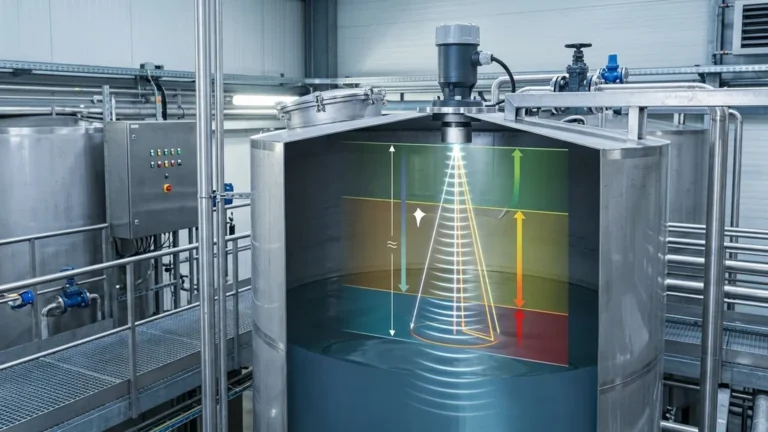
While flow measurement is essential for billing and distribution, it often works in tandem with tank inventory systems. For professionals managing complex fluid systems, integrating these flow solutions with Ultrasonic Level Meters provides a comprehensive view of both the volume entering a system and the real-time storage levels within industrial reservoirs.
Understanding Ultrasonic Measurement Principles
To effectively select and deploy a 4-inch ultrasonic meter, it is necessary to understand the physics governing its operation. Most industrial water meters of this size utilize Transit-Time Ultrasonic Technology.
Transit-Time Differential
In this method, the meter contains pairs of ultrasonic transducers located opposite each other within the pipe. One transducer sends a signal downstream, while the other sends a signal upstream.
1. Downstream Signal: Travels with the flow of the water, reaching the opposite transducer faster.
2. Upstream Signal: Travels against the flow, experiencing resistance and taking longer to reach its destination.
3. Calculation: The meter’s internal processor measures the time difference between these two signals (often in nanoseconds). This difference is directly proportional to the velocity of the water. When multiplied by the known cross-sectional area of the DN100 pipe, the meter calculates the volumetric flow rate.
Unlike Doppler Ultrasonic Meters, which require particles or bubbles to reflect signals, transit-time meters are designed for clean water or liquids with very low suspended solids, making them ideal for municipal supply and industrial process water.
Technical Specifications and Selection Criteria
When specifying a 4 ultrasonic water meter, engineers must look beyond the nominal pipe size. The performance of the meter is dictated by its dynamic range (R-ratio), pressure rating, and material compatibility.
Selection Table: DN100 (4-inch) Performance Standards
| Feature | Specification (Typical) | Industrial Requirement |
| :— | :— | :— |
| Nominal Diameter | DN100 (100mm / 4 inches) | Match existing flange standards |
| Accuracy Class | ISO 4064 Class 2 / R250 or R400 | High precision for billing/leak detection |
| Maximum Flow (Q3) | 100 m³/h to 160 m³/h | Dependent on pump capacity |
| Minimum Flow (Q1) | 0.25 m³/h to 0.40 m³/h | Critical for detecting small leaks |
| Pressure Rating | PN16 (1.6 MPa) / PN25 (2.5 MPa) | Must exceed system surge pressure |
| Temperature Range | T30 (0.1°C to 30°C) or T50 | Cooling water vs. ambient supply |
| Protection Class | IP68 | Submersible for pit installations |
Material Considerations
For industrial applications, the body of a 4-inch meter is typically constructed from ductile iron with protective epoxy coatings or stainless steel for corrosive environments. The transducers themselves are often made of piezoelectric ceramics encased in chemically resistant housings to prevent degradation over years of continuous immersion.
Integration with Process Automation
A 4-inch ultrasonic meter is rarely a standalone device in a B2B context. It serves as a data node within a larger SCADA (Supervisory Control and Data Acquisition) or Building Management System (BMS).
Modern units facilitate this through multiple communication protocols:
* Pulse Output: Traditional method for simple totalization.
* M-Bus / RS485 (Modbus): Standard for wired industrial networking.
* NB-IoT / LoRaWAN: Increasingly popular for remote municipal monitoring where wiring is impractical.
By combining flow data from these meters with height data from Ultrasonic Level Meters, operators can perform mass balance calculations. If the flow meter indicates 100 cubic meters have entered a tank, but the level sensor indicates only an 80 cubic meter rise, the system can automatically flag a potential leak or structural failure in the storage unit.
Installation Guidelines for 4-inch Meters
The accuracy of an ultrasonic meter is highly dependent on the flow profile of the water. Turbulent flow, caused by elbows, valves, or pumps, can lead to measurement errors.
Straight Pipe Requirements
Most 4-inch ultrasonic meters follow the U10/D5 rule:
* Upstream (U): There should be at least 10 diameters (1000mm or 1 meter) of straight, unobstructed pipe before the meter.
* Downstream (D): There should be at least 5 diameters (500mm or 0.5 meters) of straight pipe after the meter.
If space is constrained, some high-end models feature internal flow profilers that allow for U0/D0 installation, but these are typically more expensive and should be confirmed with the manufacturer's technical data sheet.
Orientation and Air Management
* Horizontal vs. Vertical: While ultrasonic meters can be installed in any orientation, they must always be full of water. In vertical installations, the flow should always be upward to ensure the pipe remains flooded.
* Air Pockets: Transducers must not be located at the highest point of a piping system where air pockets can collect. Air is a poor conductor of ultrasonic signals and will cause the meter to report a "Signal Loss" error.

Limitations and Operational Risks
While the 4 ultrasonic water meter is superior to mechanical designs in many ways, it is not without limitations. Understanding these risks is vital for long-term reliability.
1. Solid Content: If the water contains high concentrations of sand, grit, or heavy scaling, the ultrasonic signal can be scattered or absorbed. For wastewater or slurry applications, electromagnetic meters or specialized Doppler-based sensors are often preferred.
2. Signal Interference: High-frequency vibration from nearby heavy machinery or electrical noise from VFDs (Variable Frequency Drives) can occasionally interfere with the sensitive electronics of the meter. Proper grounding and shielded cabling are essential.
3. Scaling on Transducers: Over many years, calcium or mineral buildup on the inner walls of the meter can change the internal diameter or coat the transducer faces. While ultrasonic meters are less sensitive to this than mechanical meters, significant scaling will eventually degrade accuracy.
Maintenance and Life Cycle
One of the primary B2B drivers for adopting ultrasonic technology is the reduction in Total Cost of Ownership (TCO).
* No Moving Parts: Mechanical meters have bearings and impellers that wear out, especially in hard water. An ultrasonic meter maintains its factory calibration much longer because there is no mechanical degradation.
* Battery Life: For remote DN100 installations without power, modern lithium-thionyl chloride batteries can power the meter and its wireless radio for 10 to 15 years.
* Verification: Many industrial regulations require periodic verification. Ultrasonic meters often feature "internal health checks" that can be accessed via software, allowing for in-situ verification without removing the meter from the line.
Frequently Asked Questions (FAQs)
Q: Can a 4-inch ultrasonic water meter measure flow in both directions?
A: Yes. Most transit-time ultrasonic meters are inherently bi-directional. They can track both forward and reverse flow, which is particularly useful in ring-main distribution systems or fire-water loops.
Q: How does water temperature affect accuracy?
A: The speed of sound in water changes with temperature. High-quality ultrasonic meters include an integrated temperature sensor to compensate for these changes in real-time, maintaining accuracy across the rated temperature range.
Q: What is the difference between a "Full Bore" and "Clamp-on" 4-inch meter?
A: A "Full Bore" (inline) meter is a pipe section that is flanged into the system. It is generally more accurate and used for billing. A "Clamp-on" meter attaches to the outside of an existing pipe. Clamp-on models are excellent for temporary audits or where the pipe cannot be cut, but they require precise setup to match the inline accuracy of a dedicated DN100 unit.
Q: Is it necessary to install a strainer before the meter?
A: Unlike mechanical meters, which can be jammed by debris, ultrasonic meters have an open flow path. A strainer is usually not required for the meter's protection, though it may still be necessary for the protection of downstream valves or equipment.
Conclusion
The selection of a 4 ultrasonic water meter represents a strategic investment in data accuracy and system longevity. By eliminating the mechanical failures of the past and providing rich data outputs for SCADA integration, these meters allow industrial facilities to optimize water usage and reduce waste. When paired with reliable Ultrasonic Level Meters for tank and reservoir monitoring, operators gain the high-resolution visibility required for modern industrial automation and environmental compliance.