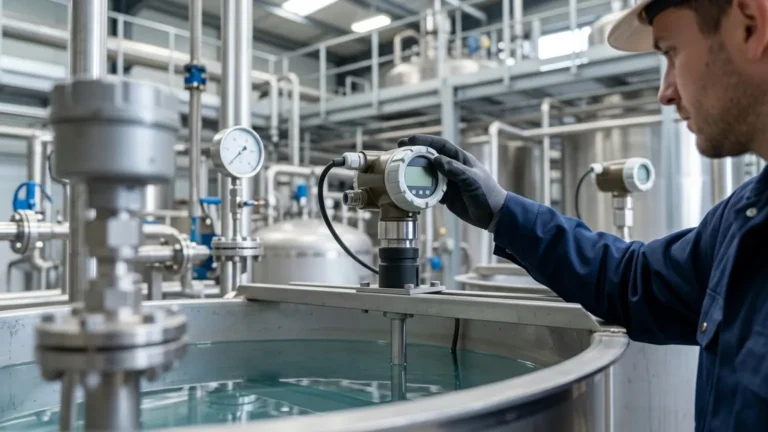
4 Ultrasonic Meter
4 Ultrasonic Meter
In industrial process automation, selecting the correct instrumentation for level monitoring is critical for operational efficiency and safety. Among the various technologies available, ultrasonic level measurement remains a primary choice due to its non-contact nature and versatility. This guide focuses on the technical nuances of the 4 ultrasonic meter, specifically addressing both the 4-wire configuration and the common 4-meter range applications, providing engineers and procurement specialists with the factual data needed for system integration.
Understanding Ultrasonic Level Measurement Principles
Before selecting a specific device, it is essential to understand the underlying physics of ultrasonic technology. Ultrasonic Level Meters operate on the Time-of-Flight (ToF) principle.
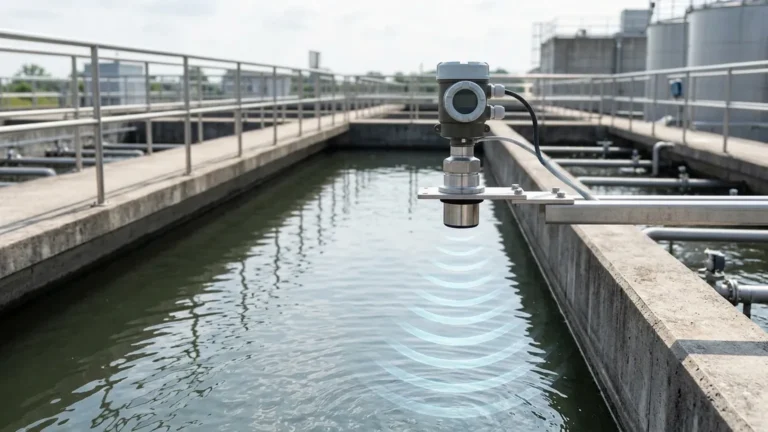
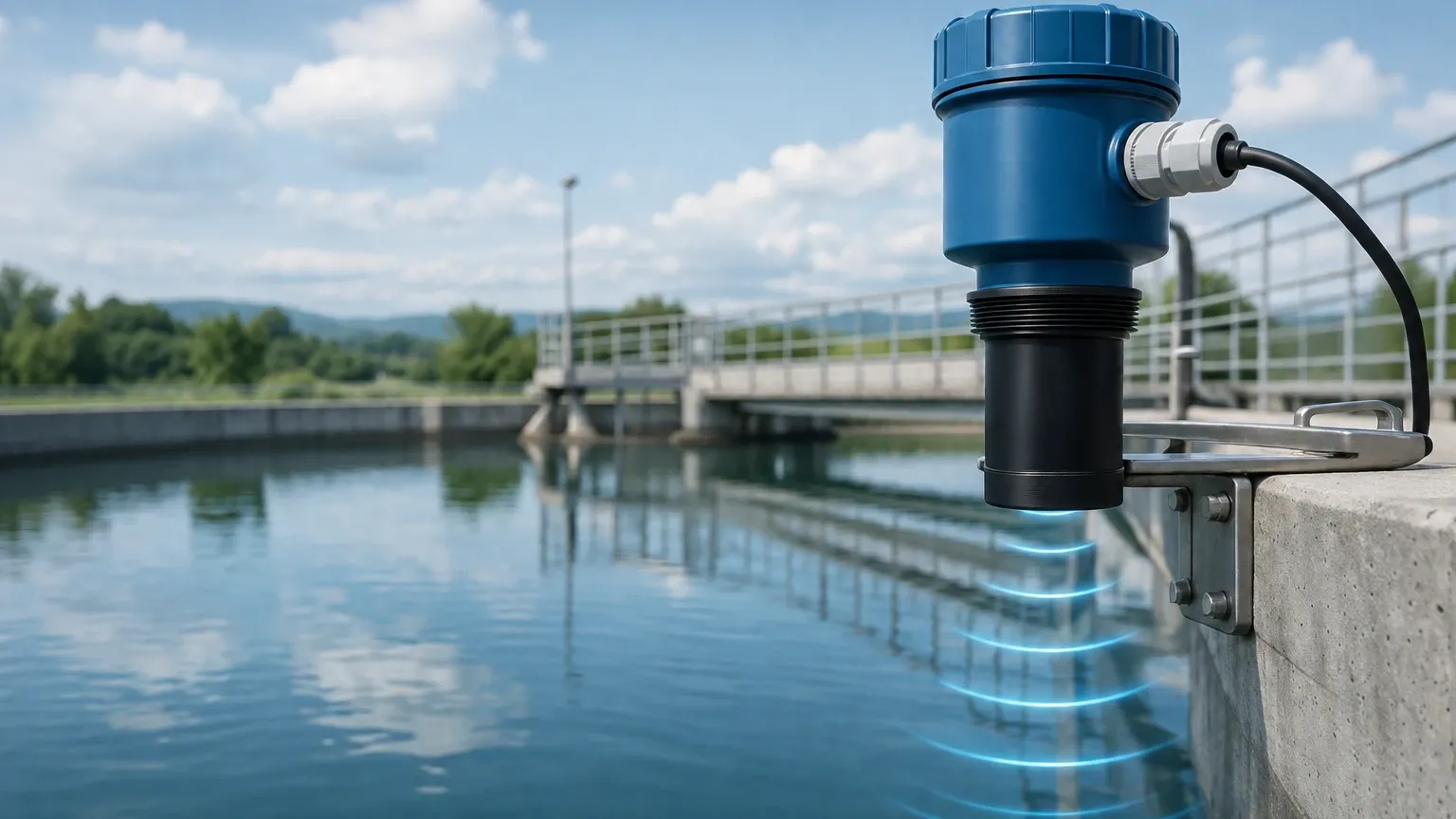
The sensor's transducer emits a high-frequency ultrasonic pulse (typically between 20 kHz and 200 kHz). This pulse travels through the air, strikes the surface of the medium (liquid or solid), and reflects back to the transducer. The instrument measures the time interval between the emission of the pulse and the reception of the echo.
The distance is calculated using the formula:
D = (c × t) / 2
Where:
* D is the distance from the sensor to the material surface.
* c is the speed of sound in the medium (usually air, approximately 343 m/s at 20°C).
* t is the total travel time of the pulse.
Since the speed of sound is affected by air temperature, professional-grade instruments like those from Welk include integrated temperature sensors to provide real-time compensation, ensuring accuracy remains within ±0.2% to ±0.5% of the measured range.
Technical Configurations: Decoding the "4" in Ultrasonic Meters
In the context of industrial procurement, the term "4 ultrasonic meter" typically refers to two distinct technical specifications: the wiring configuration (4-wire) or the maximum measurement range (4 meters).
4-Wire vs. 2-Wire Systems
A 4-wire ultrasonic meter utilizes separate pairs of conductors for power supply and signal output.
* Power Supply: Typically 24V DC or 220V AC.
* Signal Output: Usually a 4-20mA analog signal, often accompanied by RS485 (Modbus) or relay outputs.
The primary advantage of a 4-wire system is the availability of higher power. This allows the device to drive a stronger ultrasonic pulse, which is necessary for penetrating dusty environments or measuring materials with poor reflective properties. It also supports high-brightness backlit displays and multiple integrated relays for pump control without the power limitations of a loop-powered (2-wire) circuit.
4-Meter Range Applications
A 4m ultrasonic meter is a standard specification for small-to-medium-sized tanks. This range is ideal for:
* Intermediate Bulk Containers (IBCs).
* Chemical dosing tanks.
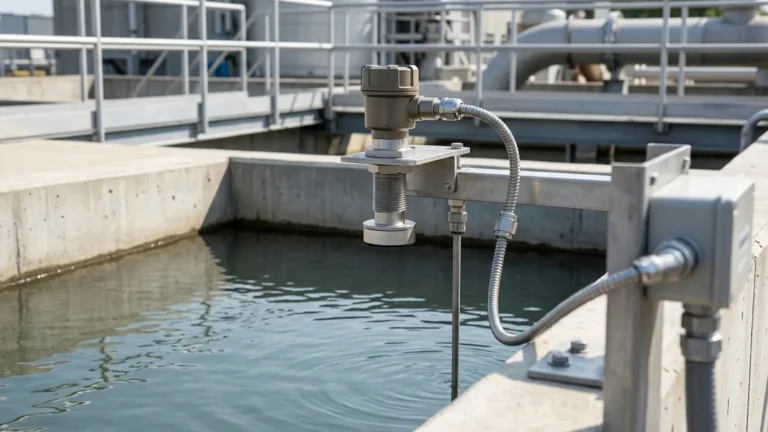
* Sumps and open channel flow measurement in small water treatment facilities.
* Standard 3-meter tall industrial storage tanks (allowing for a safety buffer and the sensor's dead zone).
Key Evaluation Criteria for Industrial Selection
When evaluating a 4 ultrasonic meter for a specific project, engineers must confirm several parameters to ensure long-term reliability.
1. The Dead Zone (Blocking Distance): Every ultrasonic sensor has a minimum distance it cannot measure, known as the dead zone. For a 4-meter range sensor, the dead zone is typically between 0.2m and 0.35m. The tank's maximum fill level must never enter this zone, or the sensor will provide erratic readings.
2. Beam Angle: The ultrasonic pulse spreads as it travels, forming a cone. A typical beam angle is between 5° and 12°. For a 4-meter measurement, a 10° beam angle results in a footprint diameter of approximately 0.7 meters at the bottom. The path must be clear of obstructions like ladders, pipes, or agitators.
3. Wetted Materials: For chemical applications, the transducer face must be compatible with the vapors present. Welk provides options in Polypropylene (PP) for general use and Polyvinylidene Fluoride (PVDF) for highly corrosive environments.
4. Process Pressure and Temperature: Ultrasonic meters are generally designed for atmospheric pressure. Significant pressure fluctuations change the air density, which alters the speed of sound and introduces measurement errors. Standard operating temperatures usually range from -20°C to +60°C.
Practical Selection Table for Engineering Design
The following table assists in comparing the specifications of common 4-wire and 2-wire ultrasonic configurations for a 4-meter range.
| Feature | 4-Wire Ultrasonic Meter (Standard) | 2-Wire Ultrasonic Meter (Loop-Powered) |
| :— | :— | :— |
| Power Consumption | High (supports relays/heating) | Low (limited to <20mA) |
| Output Options | 4-20mA, RS485, 2-4 Relays | 4-20mA (HART optional) |
| Installation Complexity | Requires separate power cable | Simplified (single pair) |
| Signal Strength | High (better for foam/dust) | Moderate |
| Typical Accuracy | ±0.25% of range | ±0.5% of range |
| Display | High-contrast LED/LCD | Low-power LCD |
Installation Considerations and Best Practices
Proper installation is the most significant factor in the performance of an ultrasonic level meter. Even the most advanced 4 ultrasonic meter will fail if the mounting geometry is incorrect.
Position and Orientation
* Perpendicularity: The sensor must be mounted perfectly perpendicular to the liquid surface. A deviation of even a few degrees can cause the reflected signal to miss the transducer, leading to a "Loss of Echo" (LOE) error.
* Wall Distance: To avoid interference from wall reflections (the "ringing" effect), the sensor should be mounted at a distance from the tank wall equal to at least 1/10th of the total tank height.
* Avoid the Center: In cylindrical tanks with domed tops, do not mount the sensor in the exact center. This can create a focal point for multiple reflections that confuse the signal processing algorithm.
Environmental Protection
* Sunlight: If installed outdoors, a sunshade is recommended. Direct sunlight can heat the sensor body beyond the ambient air temperature, causing the internal temperature compensation to provide inaccurate data.
* Vibration: High-vibration environments can interfere with the piezoelectric crystal in the transducer. Use rubber gaskets or dampening mounts if the tank is connected to high-power pumps or agitators.
Operational Limitations and Environmental Factors
While ultrasonic meters are robust, they are not universal solutions. Certain process conditions will inhibit their performance:
* Vacuum Conditions: Sound waves require a medium (air or gas) to travel. Ultrasonic meters cannot function in a vacuum.
* Heavy Foam: Dense, thick foam on the surface of a liquid absorbs the ultrasonic pulse rather than reflecting it. If foam is present, a radar level meter or a magnetic level gauge may be more appropriate.
* High Dust Levels: While 4-wire systems have higher power to penetrate some dust, extreme dust concentrations (such as in grain silos) can scatter the signal.
* Vapor Layers: Strong chemical vapors or temperature gradients can create layers with different densities, causing the sound wave to refract (bend), which leads to inaccurate distance calculations.
Frequently Asked Questions (FAQ)
Q: Can a 4-meter ultrasonic sensor be used for solids?
A: Yes, but the effective range is typically reduced by 50% because solids (like powders or granules) scatter the sound wave instead of reflecting it cleanly. For a 4-meter tank of solids, a sensor rated for 8 meters or 10 meters is usually required.
Q: What is the difference between an integrated and a split-type ultrasonic meter?
A: An integrated meter has the transducer and electronics in one housing. A split-type (remote) meter separates the transducer from the controller. Split types are used when the measurement point is difficult to access or when the display needs to be mounted at eye level far from the sensor.
Q: How does humidity affect the measurement?
A: Humidity has a negligible effect on the speed of sound at room temperature (less than 0.1% error). However, heavy condensation on the transducer face can attenuate the signal. Many Welk sensors feature a self-cleaning face design that uses the vibration of the pulse to shed water droplets.
Q: Is it possible to use an ultrasonic meter in a pressurized tank?
A: Most ultrasonic meters are rated for a maximum of 0.3 MPa (3 bar). Higher pressures significantly change the speed of sound and may damage the transducer diaphragm. For pressurized vessels, radar technology is generally preferred.
By adhering to these technical boundaries and selection criteria, engineers can ensure that their Ultrasonic Level Meters provide precise, maintenance-free service across their intended lifecycle. Whether choosing a 4-wire configuration for its control capabilities or a 4-meter range for specific tank geometries, understanding the interaction between the acoustic pulse and the process environment is the key to successful instrumentation.