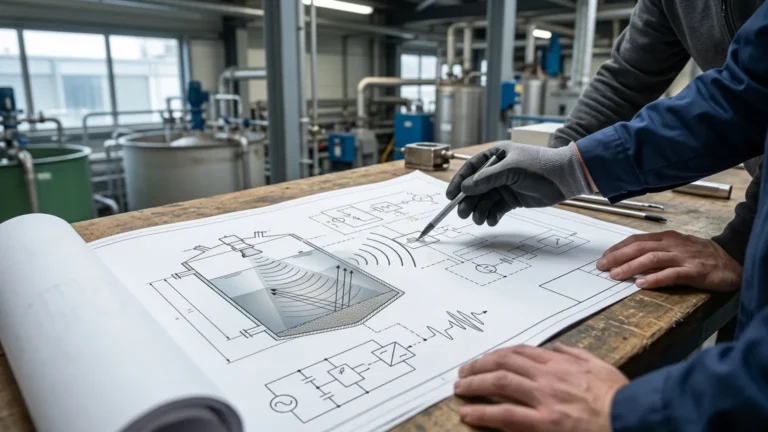
Ultrasonic Level Sensor Industrial
Industrial Ultrasonic Level Sensors: A Comprehensive Engineering Guide
In the landscape of industrial automation, the ability to monitor liquid and solid levels with precision is fundamental to operational efficiency and safety. Among the various technologies available, the ultrasonic level sensor industrial application has become a standard for non-contact measurement. These devices offer a balance of reliability, ease of installation, and cost-effectiveness, making them a preferred choice for engineers across water treatment, chemical processing, and manufacturing sectors.
As a professional manufacturer, Welk provides advanced Ultrasonic Level Meters designed to meet the rigorous demands of modern industrial environments. This guide explores the technical principles, selection criteria, and practical installation considerations necessary for successful deployment.
Understanding the Measurement Principle
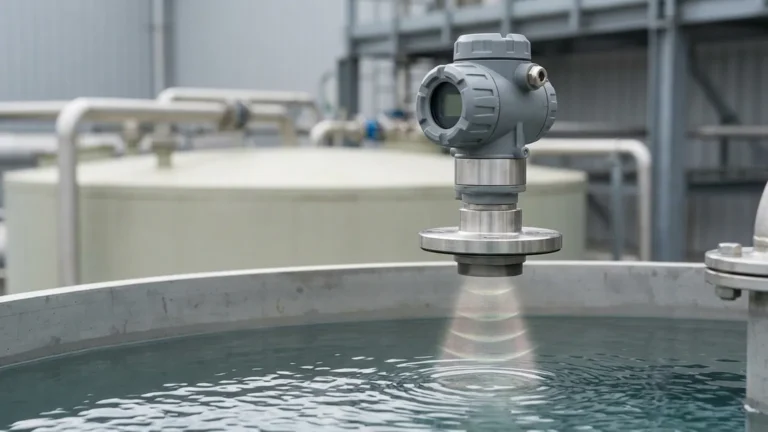
Ultrasonic level measurement is based on the "Time-of-Flight" (ToF) principle. The instrument’s transducer emits a high-frequency acoustic pulse—typically between 20 kHz and 200 kHz—which travels through the air toward the surface of the medium being measured. When the pulse hits the surface, it is reflected back as an echo to the transducer.
The sensor’s internal electronics calculate the distance ($D$) between the sensor and the material surface using the following formula:
$$D = \frac{v \times t}{2}$$
Where:
- $v$ is the speed of sound in the air (approximately 344 m/s or 1,128 ft/s at 20°C).
- $t$ is the total time elapsed from the emission of the pulse to the reception of the echo.
Because the speed of sound is influenced by air temperature, industrial-grade ultrasonic level meters incorporate integrated temperature sensors. These sensors provide real-time data to the microprocessor, allowing the device to compensate for temperature fluctuations and maintain high measurement accuracy.
The Dead Zone (Blocking Distance)
Every ultrasonic level sensor has a "dead zone" directly beneath the transducer face. This is the minimum distance required for the piezoelectric crystal to stop vibrating (ringing) after emitting a pulse before it can act as a receiver. If the material level enters this zone, the sensor cannot provide a reliable reading. Typically, this distance ranges from 0.2 meters (0.66 ft) to 0.6 meters (1.97 ft), depending on the frequency and power of the sensor.
Key Features of Ultrasonic Level Sensor Industrial Applications
Industrial environments present unique challenges that standard consumer-grade sensors cannot handle. Welk’s industrial solutions are engineered with specific features to address these complexities:
1. Non-Contact Measurement: Since the sensor never touches the medium, it is ideal for corrosive chemicals, wastewater, or abrasive slurries. This reduces maintenance requirements and prevents sensor degradation.
2. Digital Signal Processing (DSP): Modern sensors use advanced algorithms to filter out "false echoes" caused by internal tank obstructions like ladders, agitators, or pipes.
3. Versatile Outputs: Industrial units typically support standard process control interfaces, including 4-20mA analog signals, HART protocol, RS485 (Modbus), and programmable relay outputs for pump control or alarms.
4. Rugged Construction: Sensors are often housed in IP66, IP67, or IP68 rated enclosures, ensuring they can withstand dust, moisture, and outdoor exposure.
Selection Criteria for Industrial Level Measurement
Choosing the right ultrasonic level sensor industrial model requires a thorough analysis of the application environment. Engineers should evaluate the following parameters before procurement:
1. Measurement Range
The maximum range of the sensor must exceed the height of the tank or the depth of the sump. However, selecting a sensor with a significantly larger range than necessary can result in a larger dead zone and lower resolution. Standard industrial ranges vary from 5 meters (16.4 ft) up to 30 meters (98.4 ft) for liquid applications.
2. Medium Characteristics
Ultrasonic waves reflect best off flat, hard surfaces. While liquids generally provide excellent reflection, solids (such as powders or grains) may scatter the signal. For solids, a sensor with a higher power output and a narrower beam angle is often required.
3. Process Conditions
- Temperature: Most sensors operate between -20°C and +60°C (-4°F to 140°F). Extreme temperatures can alter the speed of sound beyond the compensation limits of the device.
- Pressure: Ultrasonic sensors are generally designed for atmospheric pressure. High-pressure environments change the density of the air, which significantly impacts sound wave propagation.
- Vapor and Dust: Heavy steam or thick dust can absorb the acoustic energy, reducing the signal strength and accuracy.
Selection Comparison Table
| Feature | Standard Liquid Sensor | Long-Range/Solid Sensor | Integrated Compact Sensor |
| :— | :— | :— | :— |
| Typical Range | 5m – 15m | 15m – 30m | 0m – 5m |
| Beam Angle | 8° – 12° | 5° – 8° | 10° – 15° |
| Accuracy | ±0.25% to 0.5% | ±0.5% | ±0.5% |
| Housing Material | ABS/PVC/PVDF | Aluminum/Stainless Steel | PVDF/PP |
| Best Use Case | Water tanks, chemical storage | Tall silos, deep sumps | Small chemical dosing skids |
Installation Best Practices for Maximum Accuracy
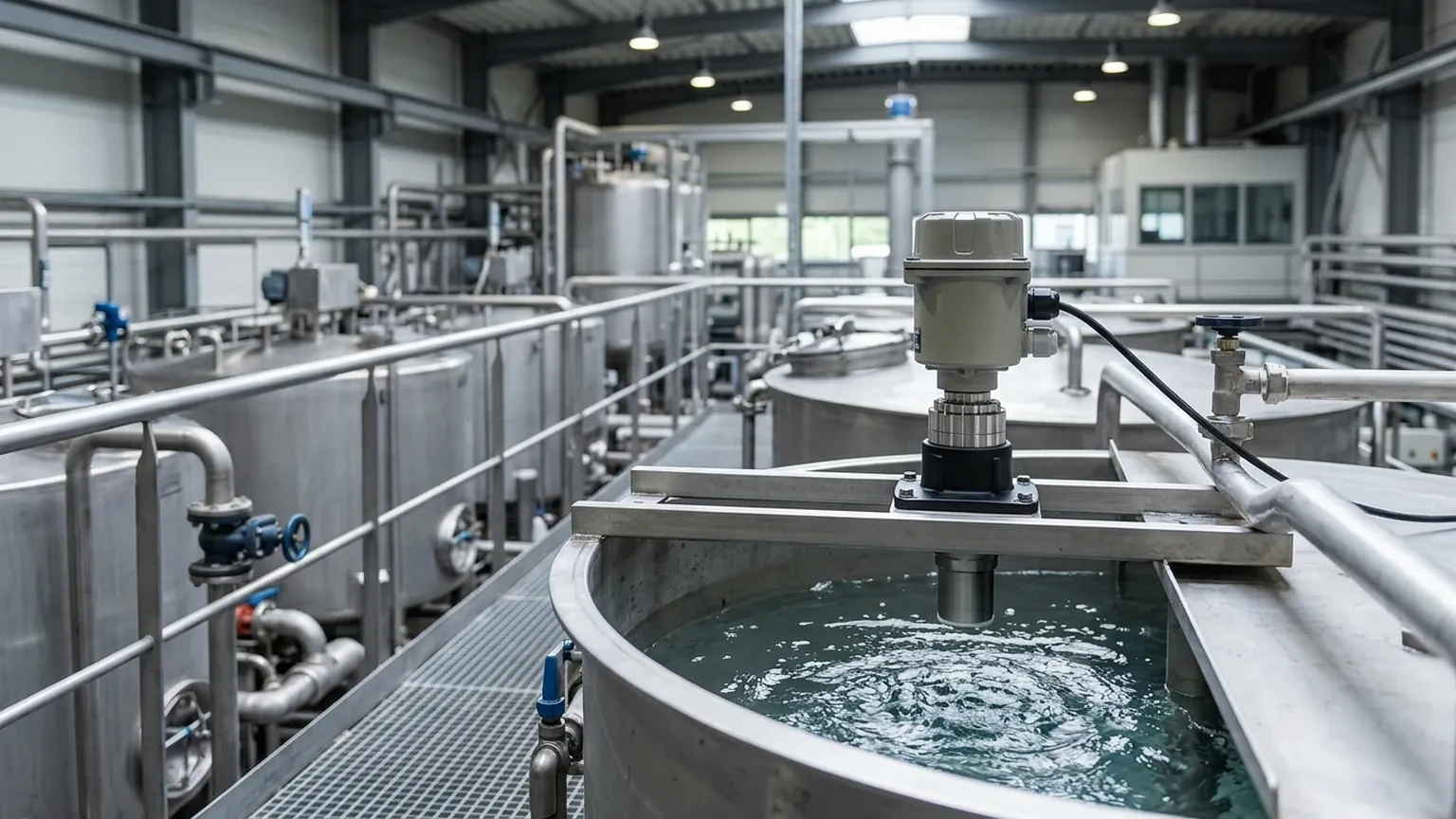
The performance of an ultrasonic level sensor industrial installation is largely dependent on proper placement. Poor installation is the primary cause of measurement errors and signal loss.
1. Placement and Orientation
The transducer face must be installed perfectly parallel to the liquid surface. If the sensor is tilted, the emitted sound wave will reflect away from the transducer rather than back toward it.
2. Avoiding Obstructions
The ultrasonic pulse spreads out in a cone shape (the beam angle). Any object within this cone—such as internal bracing, pipes, or ladders—will create a false echo. A general rule of thumb is to install the sensor at a distance from the tank wall equal to at least 1/6th of the tank height.
3. Turbulence and Inflow
Do not install the sensor directly above the tank’s inlet. The falling liquid creates turbulence and foam, both of which can scatter the ultrasonic signal and cause erratic readings. If turbulence is unavoidable, the use of a stilling well (a vertical pipe that dampens surface movement) may be necessary.
4. Outdoor Considerations
When installed outdoors, a sunshade should be used to prevent the sensor body from heating up significantly more than the surrounding air. If the internal temperature sensor measures a higher temperature than the air through which the sound wave is traveling, the distance calculation will be incorrect.
Limitations and Environmental Constraints
While highly versatile, Ultrasonic Level Meters are not suitable for every industrial scenario. Understanding these limitations prevents costly misapplications:
* Vacuum Conditions: Sound waves require a medium (air or gas) to travel. In a vacuum, ultrasonic sensors cannot function.
* Heavy Foam: Light, airy foam on the surface of a liquid acts as an acoustic absorber. It can soak up the ultrasonic pulse, resulting in no return echo.
* Complex Vapors: In chemical tanks where the headspace is filled with heavy solvent vapors or gases other than air, the speed of sound changes. Unless the specific gas composition is constant and the sensor is calibrated for it, accuracy will suffer.
* High Turbulence: Rapidly boiling liquids or high-speed agitators create surface waves that can deflect the signal.
Maintenance and Troubleshooting
One of the primary benefits of the ultrasonic level sensor industrial design is the low maintenance requirement. However, periodic checks are recommended to ensure long-term reliability.
* Transducer Cleaning: In environments with high humidity or splashing, condensation or material buildup can occur on the transducer face. This should be wiped clean with a soft cloth and mild detergent. Avoid using abrasive tools that could scratch the piezoelectric surface.
* Cable Integrity: Ensure that cable glands are tight and that there is no moisture ingress into the wiring compartment. Shielded cables should be used to prevent electromagnetic interference (EMI) from nearby high-voltage equipment.
* Signal Strength Monitoring: Most modern industrial meters provide a "signal quality" or "echo strength" metric. Monitoring this value can help identify potential issues, such as increasing dust or foam, before they result in a total signal loss.
Frequently Asked Questions (FAQ)
Q: Can ultrasonic sensors measure the level of solids like sand or grain?
A: Yes, but with caveats. Solids have an angle of repose that can deflect the signal. It is essential to use a sensor with a higher power rating and a narrower beam, and often a swiveling mounting flange to aim the sensor at the most reflective part of the material pile.
Q: How does wind affect outdoor ultrasonic level measurement?
A: Strong winds can "blow" the acoustic pulse away or create air turbulence that disrupts the signal path. For outdoor applications in windy areas, using a protective shroud or a stilling well can improve stability.
Q: What is the difference between a 2-wire and 4-wire ultrasonic sensor?
A: A 2-wire sensor is loop-powered, meaning it receives power and transmits the 4-20mA signal over the same pair of wires. A 4-wire sensor has separate wires for power (typically 24V DC or 110/220V AC) and signal output, allowing for higher-power transducers and more features like multiple relays.
Q: Can I use an ultrasonic sensor in a tank with an agitator?
A: Yes, provided the sensor is positioned to avoid the agitator blades. Advanced software features like "False Echo Suppression" allow the sensor to learn the position of the blades and ignore their reflections, focusing only on the liquid surface.
Conclusion
The ultrasonic level sensor industrial remains a cornerstone of process instrumentation due to its non-contact nature and adaptability. By understanding the underlying physics of sound propagation and following rigorous installation standards, industrial operators can achieve highly accurate and maintenance-free level monitoring. Whether managing water resources or monitoring chemical inventory, selecting the appropriate Ultrasonic Level Meters is a critical step toward optimizing industrial process control. For specialized applications, consulting with a manufacturer like Welk ensures that the chosen instrument is tailored to the specific chemical compatibility and environmental demands of the facility.