Ultrasonic 5
Ultrasonic 5
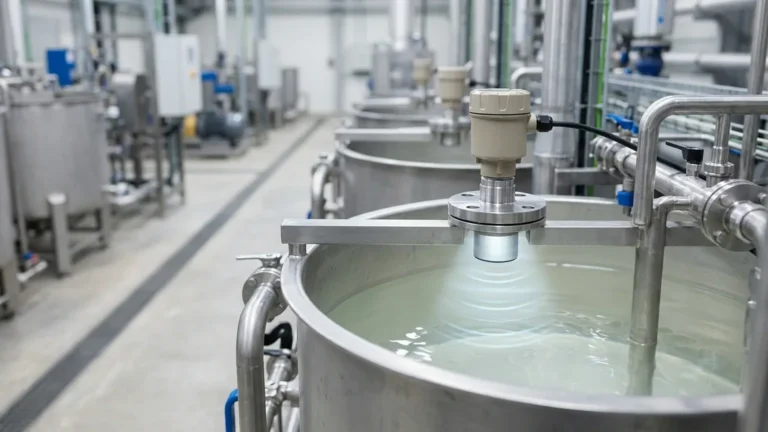
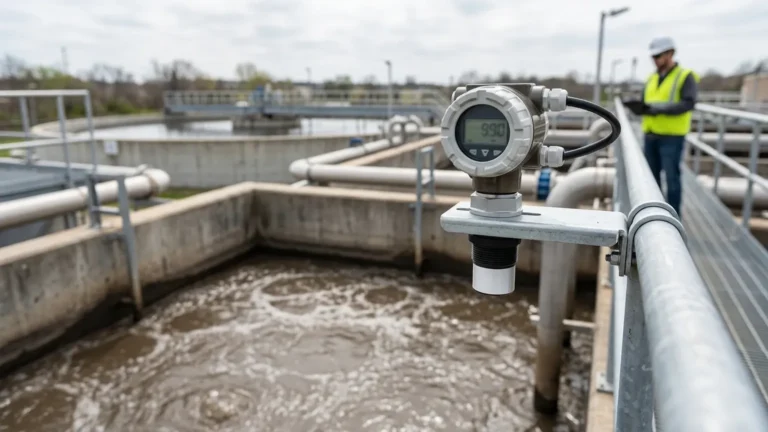
In the landscape of industrial automation, precise level monitoring is a cornerstone of operational efficiency and safety. Among the various technologies available, Ultrasonic Level Meters have emerged as a preferred non-contact solution for a wide array of liquid and solid applications. Specifically, the "ultrasonic 5" specification—often referring to sensors with a 5-meter effective measurement range—represents one of the most versatile categories for small-to-medium storage tanks, open channels, and chemical sumps.
This guide provides a comprehensive technical overview of ultrasonic measurement principles, selection criteria for 5-meter applications, and the practical installation considerations necessary to ensure long-term reliability in industrial environments.
1. Understanding the Measurement Principle
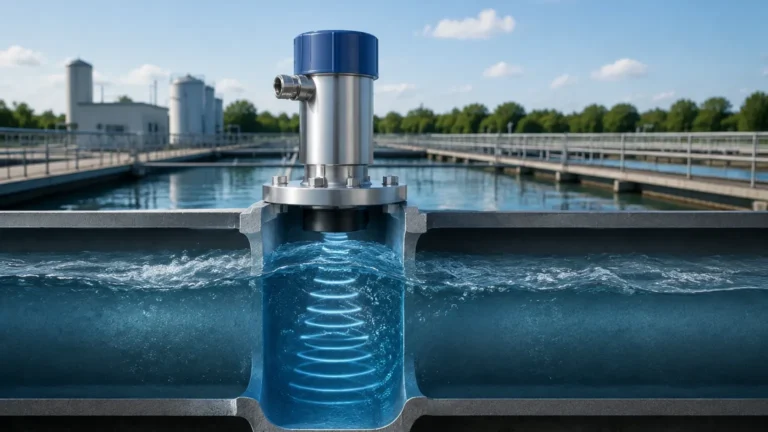
Ultrasonic level measurement is based on the Time-of-Flight (ToF) principle. The instrument’s transducer contains a piezoelectric crystal that converts electrical energy into mechanical pulses. These high-frequency sound waves travel through the air or gas space above the medium, bounce off the surface of the material, and return to the transducer.
The Calculation
The distance ($D$) between the sensor and the surface is calculated using the formula:
$$D = \frac{c \times t}{2}$$
Where:
* $c$ is the speed of sound in the medium (typically air, approximately 344 m/s at 20°C).
* $t$ is the total time elapsed between the emission of the pulse and the reception of the echo.
Because the sensor knows the total height of the tank ($H$), it can determine the actual level ($L$) by subtracting the measured distance from the total height ($L = H – D$).
Compensation for Temperature
The speed of sound is highly dependent on the temperature of the air through which it travels. A change of 1°C can result in a 0.17% error in distance measurement. Professional-grade Ultrasonic Level Meters include integrated temperature sensors to provide real-time compensation, ensuring accuracy remains within specified tolerances (typically ±0.25% to ±0.5% of the full scale).
2. Why the "Ultrasonic 5" Range is a Standard
In many industrial sectors, the 5-meter range (ultrasonic 5) is considered a "sweet spot" for several technical and economic reasons:
1. Tank Geometry: Many standard chemical storage tanks, IBCs (Intermediate Bulk Containers), and wastewater lift stations fall within the 2-meter to 5-meter depth range.
2. Transducer Frequency: A 5-meter sensor typically operates at a frequency between 40 kHz and 60 kHz. This frequency provides a balance between sufficient power to penetrate light dust/vapor and a narrow enough beam angle to avoid hitting tank walls.
3. Cost-Effectiveness: Sensors optimized for this range are often more compact and affordable than high-power long-range units (which may reach 20–40 meters) or high-frequency short-range precision units.
3. Key Evaluation and Selection Criteria
When selecting an ultrasonic 5 solution, engineers must look beyond the basic range. The following factors determine whether a sensor will succeed in a specific application.
Chemical Compatibility
The transducer face is the only part of the instrument exposed to the process environment. For water treatment, standard ABS or PVC housings may suffice. However, for corrosive chemicals like sulfuric acid or sodium hydroxide, a PVDF (Polyvinylidene Fluoride) or PTFE (Polytetrafluoroethylene) wetted part is mandatory to prevent degradation.
Output and Communication
Modern B2B applications require seamless integration with PLC or SCADA systems. Common configurations include:
* 4-20mA Analog: The industry standard for simple loop-powered integration.
* RS485/Modbus RTU: Ideal for multi-drop configurations where multiple sensors share a single communication line.
* HART Protocol: Allows for digital communication over the analog loop for remote configuration and diagnostics.
Selection Table: Ultrasonic vs. Alternative Technologies
| Feature | Ultrasonic 5 | Radar (60GHz/80GHz) | Hydrostatic Pressure |
| :— | :— | :— | :— |
| Contact Type | Non-contact | Non-contact | Contact (Submerged) |
| Accuracy | ±0.25% – 0.5% | ±1mm – 2mm | ±0.1% – 0.5% |
| Effect of Foam | High (Absorbs signal) | Moderate | None |
| Effect of Vapor | High (Slows sound) | Low | None |
| Maintenance | Low | Very Low | Moderate (Clogging) |
| Relative Cost | Low/Medium | High | Medium |
4. Installation Considerations and Best Practices
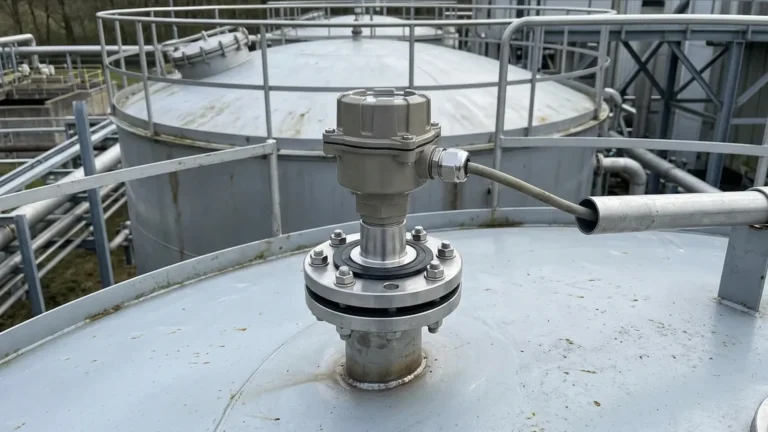
Even the most advanced ultrasonic level meter will fail if installed incorrectly. For a 5-meter range sensor, the following physical constraints are critical.
The Blocking Distance (Dead Zone)
Every ultrasonic sensor has a "dead zone" immediately below the transducer face where it cannot measure. For an ultrasonic 5 sensor, this is typically between 0.2m and 0.4m. If the liquid level rises into this zone, the sensor will provide an erratic or "full" reading erroneously.
Best Practice: Mount the sensor high enough so that the maximum possible liquid level never enters the dead zone.
Beam Angle and Obstructions
The ultrasonic pulse spreads out in a cone, usually between 5° and 12°. Any physical object within this cone—such as ladders, pipes, or agitator blades—will create a false echo.
* Avoid the Wall: Ensure the center of the sensor is far enough from the tank wall to prevent the beam from hitting the side.
* Clear Path: The path between the sensor and the lowest point of the tank must be free of obstructions.
Mounting Orientation
The sensor must be mounted perfectly perpendicular to the liquid surface. If the sensor is tilted, the sound pulse will reflect away from the transducer rather than back toward it, resulting in a "Loss of Echo" (LOE) error.

5. Limitations and Environmental Risks
While versatile, ultrasonic technology has physical limitations that must be confirmed before project implementation.
* Vacuum Conditions: Sound cannot travel through a vacuum. Ultrasonic sensors are unusable in vacuum tanks.
* Heavy Foam: Thick, protein-based foam acts as an acoustic insulator, absorbing the sound pulse rather than reflecting it. If foam is present, a radar level meter or a magnetic level gauge is often a better choice.
* High Pressure/Temperature: Extreme pressure changes the density of the air, significantly affecting the speed of sound beyond what standard temperature compensation can handle. Most ultrasonic 5 sensors are rated for atmospheric or near-atmospheric pressure.
* Heavy Dust/Steam: While light vapor is manageable, heavy steam or dense dust can scatter the acoustic signal.
6. Maintenance and Troubleshooting
Ultrasonic sensors are generally low-maintenance because they have no moving parts and do not touch the medium. However, occasional checks are recommended:
1. Transducer Cleaning: In applications with high humidity or splashing, condensation or crystalline buildup can form on the transducer face. This should be wiped periodically with a soft cloth and mild solvent (if compatible).
2. Signal Strength Monitoring: Most digital ultrasonic meters provide a "Signal-to-Noise Ratio" (SNR) or echo strength value. A dropping SNR often indicates a dirty transducer or a changing process environment (e.g., increasing vapor).
3. Firmware Updates: For smart sensors, ensure the latest echo-processing algorithms are used to better filter out false echoes from agitators or internal tank structures.
7. Frequently Asked Questions (FAQ)
Q: Can I use an ultrasonic 5 sensor for solids like grain or sand?
A: Yes, but with caveats. Solids do not reflect sound as uniformly as liquids. The effective range is often reduced by 50% due to the uneven surface and the angle of repose. A 5-meter liquid sensor may only be reliable for 2.5 meters of solid material.
Q: How do I handle a tank with an agitator?
A: Most modern Ultrasonic Level Meters feature "False Echo Suppression" or "Echo Mapping." You can program the sensor to recognize the stationary agitator blade as a fixed obstruction and ignore it, focusing only on the moving liquid level.
Q: What is the difference between a 2-wire and a 4-wire ultrasonic sensor?
A: A 2-wire sensor is loop-powered, meaning it draws power and sends the 4-20mA signal over the same two wires. This is easier to wire but provides less power for the transducer. A 4-wire sensor has separate power supply and signal wires, allowing for a more powerful pulse, which is often necessary for challenging environments with dust or long distances.
Q: Does the color of the liquid affect the measurement?
A: No. Unlike optical or laser sensors, ultrasonic waves are unaffected by the color, transparency, or dielectric constant of the liquid. The measurement is purely mechanical/acoustic.
8. Conclusion
The implementation of an ultrasonic 5 level measurement system offers a balance of precision, ease of installation, and cost-efficiency for the majority of industrial liquid applications. By understanding the acoustic principles and respecting the physical limitations of the technology—specifically the dead zone and beam angle—engineering teams can achieve reliable, non-contact monitoring that enhances process safety and inventory management.
Before proceeding with procurement, always confirm the chemical compatibility of the transducer housing and the presence of any environmental factors like foam or high-pressure steam that might necessitate a shift to alternative technologies such as radar or hydrostatic transmitters.