Abb Level Switches
Abb Level Switches
In the landscape of industrial automation and process control, point level detection remains a critical safety and operational requirement. Abb level switches are widely recognized for their reliability in monitoring the presence or absence of liquids, solids, and interfaces within tanks, silos, and pipelines. These devices serve as the primary line of defense against overfills, dry-running of pumps, and inventory inaccuracies. Understanding the technical nuances of these instruments is essential for engineers tasked with maintaining system integrity in sectors ranging from water treatment to chemical processing.
Fundamental Measurement Principles
Before selecting a specific instrument, it is vital to understand the physics governing point level detection. Level switches operate on various physical principles, each suited to different media characteristics and environmental conditions.
Vibrating Fork Technology
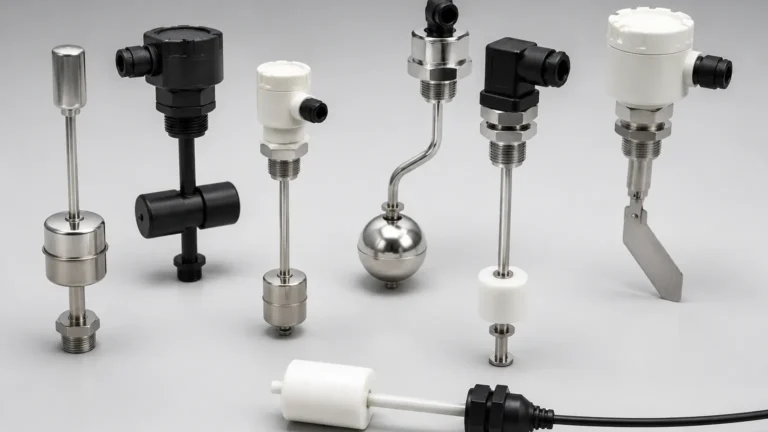
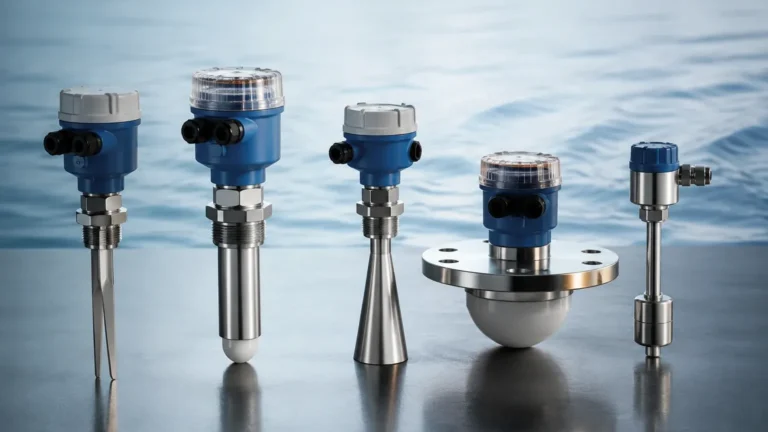
Often referred to as tuning fork switches, these devices utilize a piezoelectric crystal to vibrate the fork at its natural resonance frequency in free air. When the fork is submerged in a liquid or covered by a solid, the frequency shifts or the amplitude of vibration decreases. An internal electronic circuit detects this change and triggers a switching output. This method is highly resistant to changes in pressure, temperature, and dielectric constants.
Magnetic and Float Principles
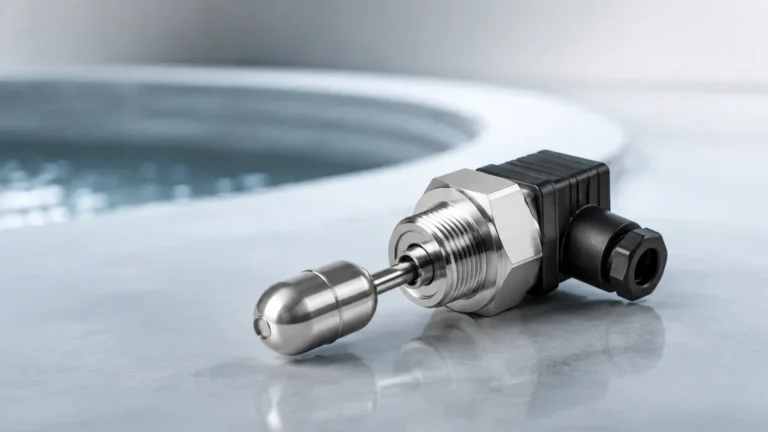
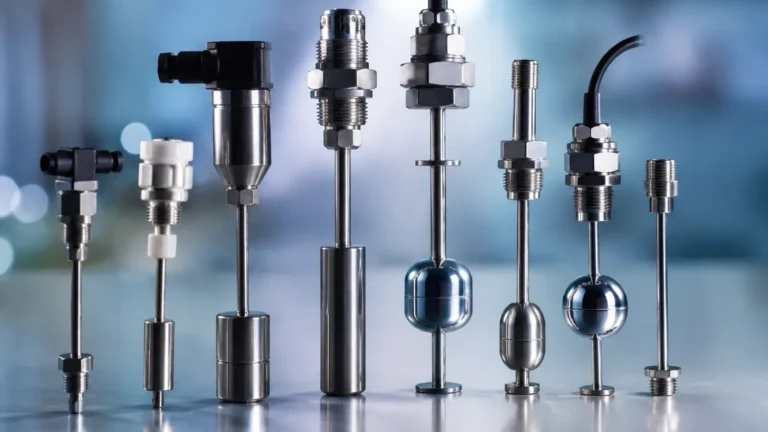
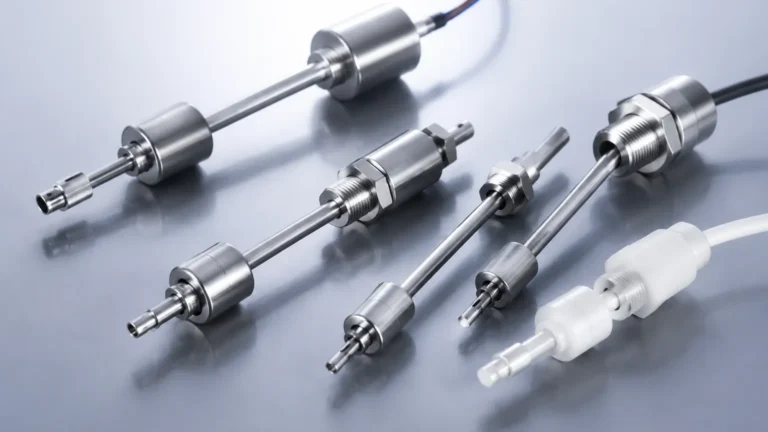
Buoyancy-based switches rely on a float containing a permanent magnet. As the fluid level rises or falls, the float moves along a stem, actuating a hermetically sealed reed switch. This principle is purely mechanical and electrical, requiring no external power for the sensing element itself, making it a robust choice for simple high/low alarms.
Thermal Dispersion
Thermal dispersion switches use two temperature sensors: one is heated, and the other measures the ambient process temperature. The rate of heat transfer from the heated sensor to the medium is significantly higher in liquids than in gases. By measuring the temperature differential between the two sensors, the electronics can determine if the probe is immersed in the process fluid.
Ultrasonic Gap Sensing
Ultrasonic switches employ a pair of crystals separated by a small gap. One crystal acts as a transmitter and the other as a receiver. When the gap is filled with air, the ultrasonic signal is attenuated. When the gap is filled with liquid, the signal is transmitted efficiently. This technology is particularly effective for non-contact sensing or for liquids that might coat a mechanical probe.
Key Technologies in the ABB Level Switch Portfolio
Abb level switches encompass a broad range of technologies designed for high-performance environments. Their portfolio is built around the need for precision and safety, often incorporating features required for hazardous area certifications (ATEX, IECEx).
Magnetostrictive and Magnetic Level Switches
While ABB is a leader in magnetostrictive continuous level transmitters (such as the LMT series), they also provide high-integrity magnetic level switches. These are frequently used in conjunction with magnetic level gauges. The switch is mounted externally to the gauge chamber, detecting the position of an internal float. This non-invasive approach is ideal for high-pressure or toxic media where tank penetrations must be minimized.
Capacitance Level Switches
Capacitance switches measure the change in electrical capacitance between the probe and the tank wall. As the medium displaces air, the dielectric constant changes, altering the capacitance. ABB's KCAP series is a notable example, designed to handle bulk solids and liquids with varying dielectric properties. These switches often feature advanced "guard" circuits to ignore material build-up on the probe.
Vibrating Fork Series
The RS series represents the vibrating fork technology within the portfolio. These are engineered for universal liquid applications. They are particularly valued for their "fit and forget" nature, as they do not require calibration and are unaffected by flow, turbulence, bubbles, or foam.
Technical Selection Criteria for Industrial Applications
Choosing the correct Level Switches requires a detailed analysis of the process parameters. Engineers must evaluate the chemical compatibility of the wetted parts, the physical state of the media, and the environmental conditions of the installation site.
Media Characteristics
* Viscosity: High-viscosity fluids may cause "bridging" on vibrating forks or stickiness on floats. Thermal dispersion or capacitance switches with build-up compensation are preferred here.
* Dielectric Constant: Critical for capacitance switches. If the dielectric constant is too low (e.g., certain oils), the sensitivity must be increased, or an alternative technology like vibrating forks should be used.
* Corrosivity: Wetted materials must be selected carefully. Standard 316L stainless steel is common, but aggressive chemicals may require Hastelloy, Monel, or PTFE coatings.
Process Conditions
* Temperature: Standard switches typically handle up to 150°C (302°F). High-temperature variants with cooling fins or ceramic seals can extend this to over 400°C (752°F).
* Pressure: Float switches and vibrating forks must be rated for the maximum vessel pressure. High-pressure applications (up to 200 bar / 2900 psi) often necessitate heavy-duty magnetic switches.
Selection Table: Technology Comparison
| Technology | Best For | Max Temp (Approx.) | Max Pressure (Approx.) | Limitations |
| :— | :— | :— | :— | :— |
| Vibrating Fork | Universal Liquids | 150°C (302°F) | 64 bar (928 psi) | Not for high-viscosity solids |
| Magnetic Float | Clean Liquids | 250°C (482°F) | 100 bar (1450 psi) | Sensitive to debris/scaling |
| Capacitance | Solids & Slurries | 200°C (392°F) | 35 bar (507 psi) | Requires calibration |
| Thermal Dispersion | Interface/Flow | 200°C (392°F) | 200 bar (2900 psi) | Slow response time |
| Ultrasonic Gap | Aerated Liquids | 125°C (257°F) | 70 bar (1015 psi) | Sensitive to heavy coating |
Installation and Maintenance Best Practices
Proper installation is as critical as the selection of the device itself. Even the most advanced abb level switches will fail if incorrectly positioned or wired.
Mechanical Considerations
1. Avoid Fill Streams: Never install a level switch directly in the path of the incoming material. The force of the falling product can damage the probe or cause false trips.
2. Nozzle Length: Ensure the active sensing element of the probe extends sufficiently into the vessel. For vibrating forks, the fork must be completely clear of the mounting nozzle to allow for free vibration.
3. Orientation: While many switches can be mounted horizontally or vertically, horizontal mounting is generally preferred for point level detection to ensure the most accurate trip point relative to the liquid surface.
Electrical and Safety Requirements
* Cable Entry: Always point cable entries downward to prevent moisture from entering the housing via the conduit. Use proper cable glands rated for the environment.
* Grounding: For capacitance switches, a solid ground connection to the tank wall is mandatory. In non-metallic tanks, a ground rod or reference electrode must be used.
* Functional Testing: Regular proof-testing is required, especially in safety-instrumented systems (SIS). Many modern switches include a test button or a magnetic test point to simulate a high-level condition without removing the device.
Limitations and Operational Risks
While industrial level switches are highly reliable, they are not infallible. Awareness of common failure modes can prevent costly downtime.
* Build-up and Coating: In applications involving wastewater or sticky chemicals, material can accumulate on the sensor. If the build-up becomes significant, it may damp the vibration of a fork or create a conductive path for a capacitance probe, leading to a "stuck" high-level alarm.
* Turbulence and Foam: High-speed agitators can create surface turbulence that causes a switch to oscillate between states. Using a switch with a programmable time delay (debounce) or installing a stilling well can mitigate this issue.
* Gas Bubbles: In boiling liquids or aerated processes, gas bubbles can change the effective density of the fluid. This can affect buoyancy-based float switches, causing them to sit lower in the liquid than expected.
Welk: Your Partner in Level Measurement
As a professional manufacturer of industrial level measurement instruments, Welk provides a comprehensive range of solutions that complement or serve as high-quality alternatives to standard industry models. Our expertise in radar, ultrasonic, and hydrostatic technologies allows us to support complex B2B requirements globally. We offer customized OEM/ODM services to ensure that every level switch or transmitter is perfectly matched to the specific demands of water treatment, chemical processing, and industrial automation.
Our commitment to strict quality control and advanced technology ensures that our Level Switches provide the accuracy and cost-effectiveness required in today’s competitive industrial landscape.
Frequently Asked Questions (FAQs)
Q: Can a vibrating fork switch be used in bulk solids?
A: Yes, but it requires a specific design. Standard liquid forks are too small and may be damaged by heavy solids. Dedicated solids vibrating forks are larger and more robust to handle the mechanical load of powders or granules.
Q: What is the advantage of a DPDT relay output over a PNP/NPN output?
A: A DPDT (Double Pole Double Throw) relay provides two independent sets of contacts, allowing you to trigger an alarm and a pump shutdown simultaneously using one device. PNP/NPN outputs are solid-state and better suited for high-speed switching and direct PLC integration.
Q: How do I handle level switching in a plastic tank?
A: For technologies like capacitance, you must install a reference ground. For vibrating forks or ultrasonic switches, the tank material does not affect the measurement principle, making them easier to install in non-metallic vessels.
Q: Are these switches suitable for SIL-rated loops?
A: Many abb level switches and Welk high-integrity models are designed according to IEC 61508 standards and come with SIL 2 or SIL 3 certifications, making them suitable for use in Safety Instrumented Systems (SIS).