Types of Level Switches PDF
Types of Level Switches PDF
In industrial process control, point level detection is a fundamental requirement for safety, inventory management, and automation. Level switches serve as the primary line of defense against tank overflows and pump cavitation caused by dry-running. For engineers and procurement specialists seeking a comprehensive reference, understanding the various technologies is essential before downloading a technical types of level switches pdf or specification sheet.
Selecting the correct level switch requires a deep dive into the physical properties of the media, the environmental conditions of the vessel, and the electrical requirements of the control system. This guide details the primary measurement principles, selection criteria, and installation considerations for modern industrial level switches.
Fundamental Principles of Point Level Detection
Unlike continuous level transmitters that provide a constant signal (such as 4-20mA or HART) representing the exact level in a tank, Level Switches are discrete sensors. They change state—typically opening or closing an electrical circuit—when the material reaches a specific height.
The choice of technology depends on how the sensor interacts with the material. These interactions are generally categorized into mechanical, vibrating, electrical, and optical principles.
1. Float Level Switches (Buoyancy Principle)
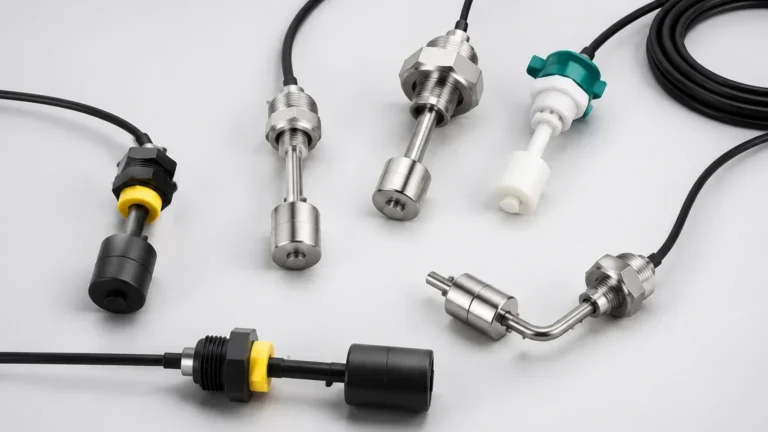
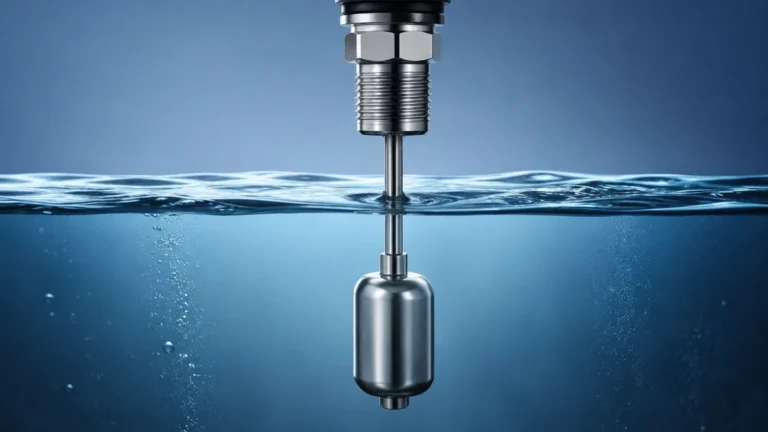
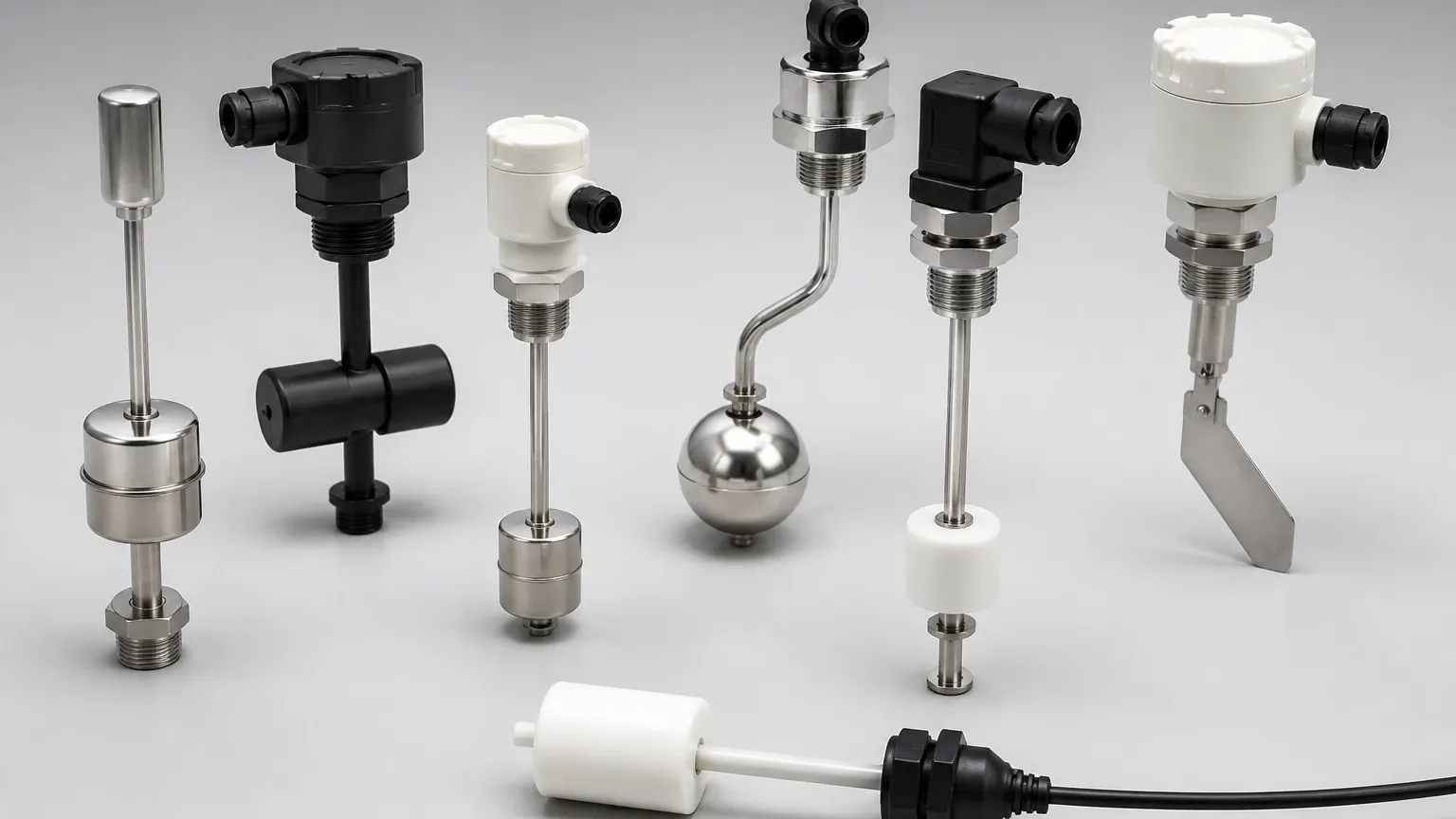
Float switches are among the most established technologies due to their simplicity and cost-effectiveness. They operate based on Archimedes' principle of buoyancy. A float, containing a permanent magnet, moves with the liquid level. When the float reaches a predetermined point, the magnetic field actuates a hermetically sealed reed switch located within the stem.
* Best For: Clean, non-coating liquids such as water, oils, and chemicals.
* Limitations: Not suitable for high-viscosity liquids or fluids with suspended solids that can cause the float to stick.
2. Vibrating Level Switches (Tuning Fork Principle)
Vibrating switches, often called tuning fork switches, utilize piezoelectric crystals to vibrate a metal fork at its natural resonance frequency in free air. When the fork is covered by a liquid or solid, the frequency shifts or the vibration is damped. An internal electronic circuit detects this change and triggers the output.
* Best For: A wide range of liquids and fine-grained solids. They are highly resistant to turbulence, bubbles, and foam.
* Limitations: Extremely high-viscosity materials may "bridge" between the forks, causing false triggers.
3. Capacitance Level Switches (Electrical Dielectric)
Capacitance switches treat the sensor probe and the tank wall (or a reference probe) as two plates of a capacitor. The material in the tank acts as the dielectric. As the level rises and covers the probe, the dielectric constant changes, increasing the measured capacitance.
* Best For: Both liquids and bulk solids. They are effective in high-temperature and high-pressure environments.
* Limitations: Conductive coatings or buildup on the probe can lead to inaccuracies unless the unit features "active shield" technology to ignore buildup.
4. Rotary Paddle Switches (Mechanical Resistance)
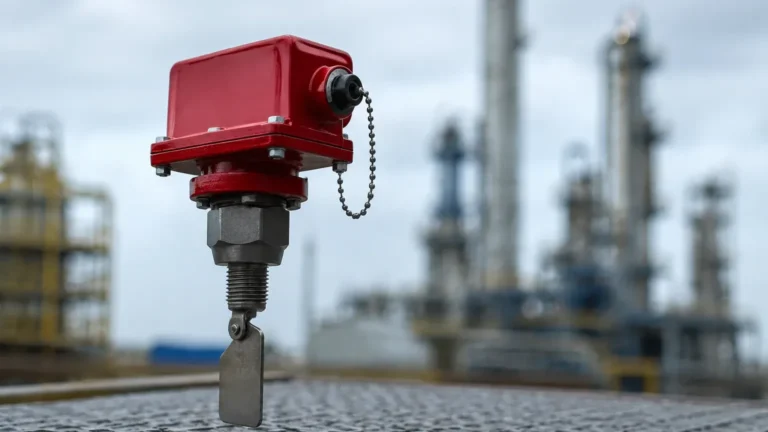
Specifically designed for bulk solids and powders, these switches use a low-speed motor that rotates a paddle. When the material reaches the paddle, it creates mechanical resistance, stalling the motor and tripping the switch.
* Best For: Silos containing grain, plastic pellets, sand, or cement.
* Limitations: Mechanical wear on the motor and seal over time; not for use in liquid applications.
5. Ultrasonic Level Switches (Acoustic Gap)
These sensors feature a small gap in the sensor head where an ultrasonic signal is transmitted. When the gap is filled with liquid, the signal travels across; when the gap is empty (filled with air or gas), the signal is attenuated.
* Best For: Non-contact (or minimal contact) detection in clean liquids.
* Limitations: Not suitable for aerated liquids or high-pressure steam environments where the acoustic signal might be disrupted.
Technical Selection Matrix
When evaluating different types of level switches, engineers often refer to a selection matrix to narrow down options based on media type and process conditions.
| Technology | Media Type | Temp. Range (Typical) | Pressure Range (Typical) | Main Advantage |
| :— | :— | :— | :— | :— |
| Float | Clean Liquids | -40°C to 200°C | Up to 40 bar (580 PSI) | Low cost, no power required |
| Tuning Fork | Liquids/Solids | -50°C to 150°C | Up to 64 bar (928 PSI) | Maintenance-free, versatile |
| Capacitance | Liquids/Solids | -100°C to 400°C | Up to 100 bar (1450 PSI) | High temp/pressure capability |
| Rotary Paddle | Bulk Solids | -20°C to 80°C | Atmospheric | Robust for heavy solids |
| Optical | Clear Liquids | -20°C to 120°C | Up to 50 bar (725 PSI) | Compact size, fast response |
Installation Considerations and Best Practices
Proper installation is as critical as selecting the right technology. Failure to account for tank geometry or flow dynamics can lead to premature failure or false alarms.
Orientation
* Top Mounting: Standard for float switches and ultrasonic switches. Ensure the probe length is correctly specified for the desired trigger point.
* Side Mounting: Common for tuning forks and rotary paddles. Ensure the switch is positioned so that material does not accumulate on top of the sensor body.
Avoiding False Triggers
* Inlet Flow: Never install a level switch directly under a fill pipe. The turbulence and falling material will cause intermittent switching.
* Agitators: If the tank has a mixer, ensure the switch is located away from the blades and account for the vortex created by the agitation.
* Standoff Pipes: For high-temperature applications, using a standoff pipe can help protect the electronics from direct heat, though this may not be suitable for materials that crystallize.
Electrical Integration
Most industrial level switches offer various output options, including:
* Relay (SPDT/DPDT): For direct control of pumps or valves.
* PNP/NPN: For integration with PLCs (Programmable Logic Controllers).
* Two-wire Contact: For simple loop-powered circuits.
Limitations and Environmental Factors
While level switches are robust, certain environmental factors can limit their effectiveness.
1. Viscosity and Coating: In the food or chemical industry, materials like syrup or resin can coat the sensor. In these cases, vibrating forks with polished surfaces or capacitance switches with coating rejection are preferred.
2. Corrosion: The wetted parts must be compatible with the process media. Stainless steel (316L) is standard, but aggressive chemicals may require PTFE, Hastelloy, or PVDF coatings.
3. Hazardous Areas: If the installation site contains explosive gases or dust, the switch must be rated (e.g., ATEX, IECEx, or Class/Division) and may require intrinsic safety barriers.
Maintenance and Troubleshooting
Industrial level switches are generally designed for long-term operation with minimal maintenance, but periodic checks are recommended:
* Visual Inspection: Check for signs of corrosion or physical damage to the probe or float.
* Cleaning: For applications involving wastewater or slurries, periodically clean the sensing element to prevent buildup.
* Functional Test: Manually actuate the switch (if safe to do so) or simulate a level change to ensure the control system responds correctly.
Frequently Asked Questions (FAQ)
Q: Can I use a liquid level switch for solids?
A: It depends on the technology. Tuning forks and capacitance switches often have versions designed for both, but a float switch will never work in solids, and a rotary paddle is generally ineffective in liquids.
Q: What is the difference between a level switch and a level transmitter?
A: A level switch provides an on/off signal at a specific point (e.g., "tank is 90% full"). A level transmitter provides a continuous measurement of the level (e.g., "tank is currently at 42.5%").
Q: How do I handle foam in a liquid level application?
A: Vibrating tuning forks are generally excellent at ignoring foam and only triggering when the liquid itself reaches the fork. Ultrasonic and optical switches may struggle with dense foam.
Q: Why is my switch triggering when the tank is empty?
A: This is often caused by material buildup (coating) on the sensor or electromagnetic interference in the cabling. Check if the sensor has a sensitivity adjustment or if it requires cleaning.
Conclusion
Selecting the right point level detection system requires balancing technical requirements with budget constraints. Whether you are managing water treatment, chemical processing, or bulk solid storage, understanding the nuances between float, vibrating, and electronic switches is the first step toward a reliable installation. For detailed technical specifications and wiring diagrams, engineers should always consult the manufacturer's specific types of level switches pdf documentation to ensure compliance with local safety standards and process requirements.