Level Switch Reed Type
Level Switch Reed Type
In the landscape of industrial automation and fluid management, the level switch reed type remains one of the most reliable and cost-effective solutions for point-level detection. Utilizing the fundamental principles of magnetism, these devices provide critical feedback for overfill protection, pump control, and low-level alarms across a vast array of industries. As a specialized manufacturer, Welk provides high-performance Level Switches designed to meet the rigorous demands of chemical processing, water treatment, and industrial manufacturing.
Understanding the mechanics, advantages, and limitations of a level switch reed type is essential for engineers and procurement specialists tasked with maintaining system integrity. This guide provides a comprehensive technical overview of reed-based level sensing technology, offering practical insights into selection and installation.
Measurement Principles of Reed Type Level Switches
The operation of a level switch reed type is deceptively simple, relying on the interaction between a permanent magnet and a hermetically sealed reed switch. To understand its reliability, one must first examine the internal components and the physical laws that govern them.
The Reed Switch Component
At the heart of the device is the reed switch itself. This component consists of two ferromagnetic blades (reeds) encapsulated within a glass envelope. The glass tube is typically filled with an inert gas, such as nitrogen, or evacuated to a vacuum to prevent oxidation of the contact surfaces. The contact tips are often plated with precious metals like rhodium, ruthenium, or iridium to ensure low contact resistance and a high number of switching cycles.
Magnetic Actuation
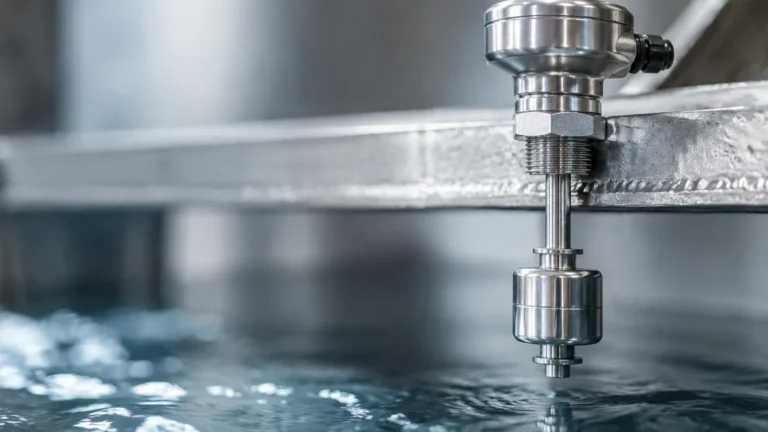
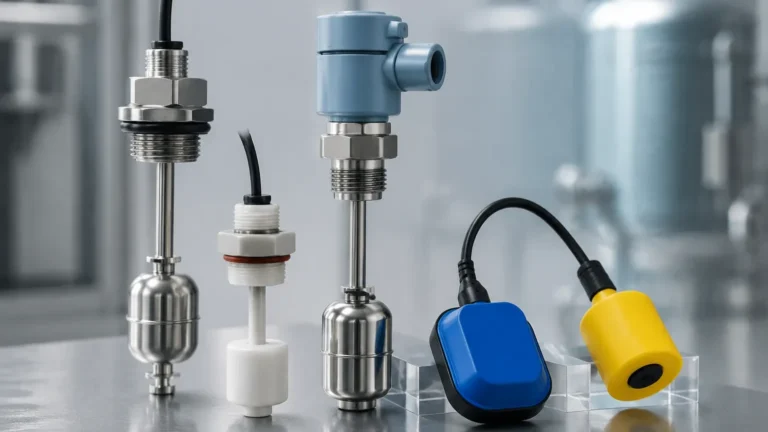
The reed switch is positioned inside a stationary stem or guide tube. A buoyant float, containing a permanent magnet, slides up and down this stem as the liquid level changes. When the float reaches the position of the reed switch, the magnetic field generated by the float’s magnet forces the two reeds to come into contact (for a Normally Open configuration) or to separate (for a Normally Closed configuration).
Because the switching action occurs within a sealed environment and is triggered by a magnetic field rather than mechanical linkage, there is no direct contact between the electrical components and the process fluid. This design inherently protects the switch from corrosion, humidity, and contamination, contributing to its long service life.
Design Variations and Configurations
Level switch reed type units are highly versatile and can be customized to suit specific tank geometries and process requirements. Manufacturers like Welk offer several configurations to address different industrial challenges.
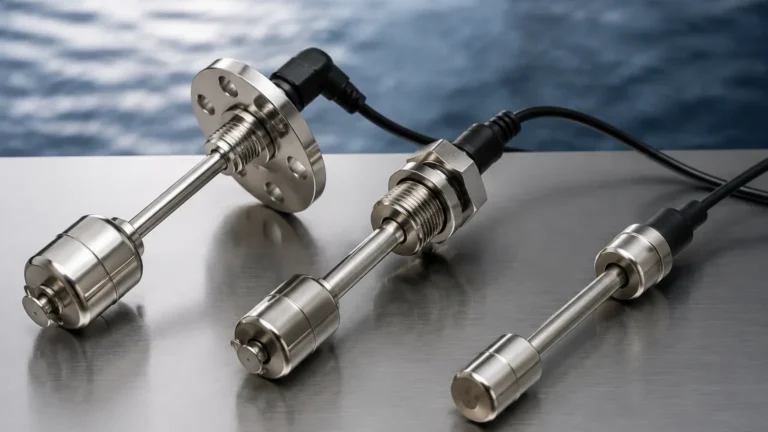
Single-Point vs. Multi-Point Switches
* Single-Point Switches: These are used for basic high or low-level detection. They are commonly found in small tanks or as secondary safety backups for continuous level transmitters.
* Multi-Point Switches: A single stem can house multiple reed switches at different heights. This allows a single entry point into the tank to provide signals for several levels, such as "Low-Low," "Low," "High," and "High-High." This is particularly useful for controlling complex pump sequences or multi-stage alarms.
Mounting Orientations
* Vertical Mounting: The most common configuration, where the switch is mounted from the top or bottom of the tank. The float travels along the vertical stem.
* Side Mounting: In applications where top access is restricted, side-mounted reed switches utilize a hinged float or a curved stem. When the liquid rises, the float pivots, bringing the magnet into proximity with the reed switch located inside the mounting plug.
Material Selection
The choice of material is dictated by the chemical compatibility of the fluid and the process temperature. Common materials include:
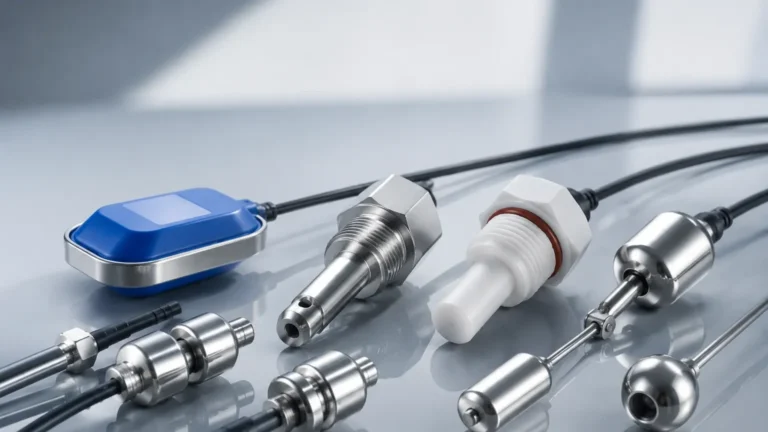
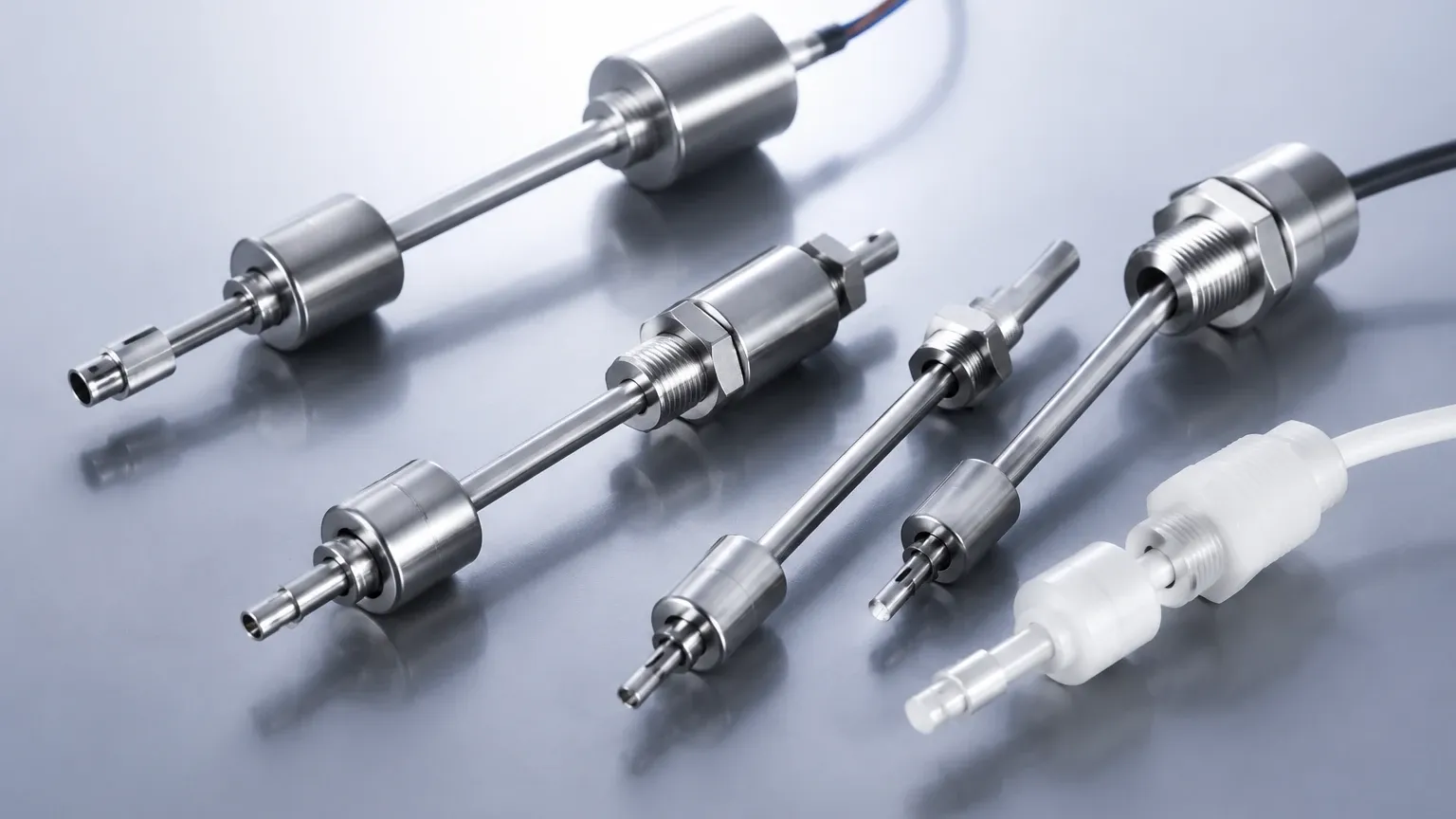
* Stainless Steel (304 or 316L): Ideal for high-pressure, high-temperature, and food-grade applications.
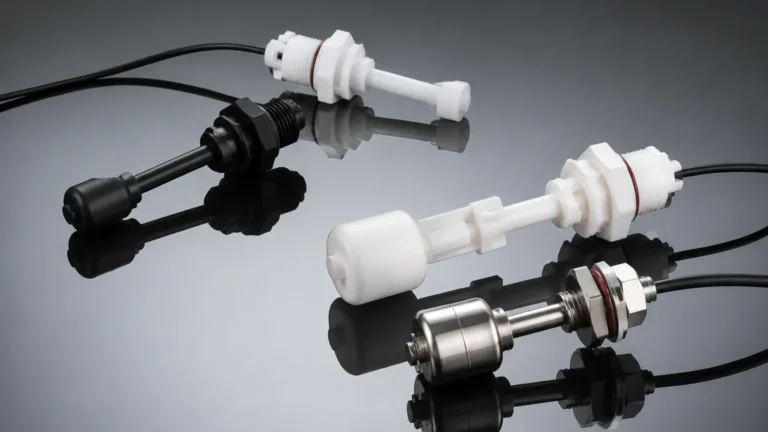
* Polypropylene (PP): A cost-effective choice for water and many acidic or alkaline chemicals at lower temperatures.
* PVDF/PTFE: Reserved for highly aggressive chemical environments where standard plastics or metals would fail.
Practical Selection Criteria
Choosing the right Level Switches involves more than just matching a thread size. Engineers must evaluate several physical and electrical parameters to ensure long-term reliability.
Specific Gravity (SG)
The float must be buoyant enough to rise and fall with the liquid. The specific gravity of the float must be lower than the minimum specific gravity of the process fluid. For example, if a fluid has an SG of 0.8 (like certain oils), a float designed for water (SG 1.0) may not rise sufficiently to actuate the switch. Welk provides floats specifically weighted for low-density hydrocarbons as well as heavy industrial sludges.
Temperature and Pressure Ratings
While reed switches are robust, the materials housing them have limits. High temperatures can degrade the magnetic strength of the float or cause plastic housings to soften. Similarly, high-pressure environments can crush hollow floats. Standard stainless steel models can typically handle up to 30 bar (435 psi) and temperatures exceeding 120°C, while plastic variants are generally limited to 2-5 bar and 80°C.
Electrical Load Considerations
One of the most common causes of failure in a level switch reed type is electrical overloading. Reed switches are designed for signal-level switching (typically 10W to 50W). They are not intended to drive high-current motors or heavy solenoids directly.
If the application requires switching a high-power load, the reed switch should trigger an intermediate relay or a PLC input. Additionally, when switching inductive loads (like small relay coils), back-EMF can cause arcing across the reed contacts, leading to contact welding. In these cases, a protection circuit (such as a varistor or an RC snubber) is mandatory.
Selection Table for Reed Type Level Switches
| Feature | Stainless Steel (316L) | Polypropylene (PP) | PVDF |
| :— | :— | :— | :— |
| Max Temperature | Up to 200°C | Up to 80°C | Up to 110°C |
| Max Pressure | Up to 40 bar | Up to 3 bar | Up to 6 bar |
| Chemical Resistance | Excellent (General) | Good (Acids/Bases) | Superior (Aggressive) |
| Specific Gravity Min | 0.50 – 0.75 | 0.60 – 0.85 | 0.70 – 0.90 |
| Typical Applications | Oil, Steam, Food & Beverage | Water Treatment, Cooling | Chemical Etching, Acids |
Installation and Maintenance Considerations
Proper installation is critical to the performance of a level switch reed type. Even the most robust sensor can fail if environmental factors are ignored.
Avoiding Magnetic Interference
Since the switch operates via magnetism, the presence of large ferromagnetic objects or strong external magnetic fields can interfere with operation. If installing in a steel tank, ensure the stem is positioned far enough from the walls to prevent magnetic "shunting." Furthermore, avoid placing the switch near high-power electric motors or transformers.
Mitigating Turbulence and Vibration
In tanks with heavy agitation or turbulent inflow, the float may bounce rapidly, causing the reed switch to "chatter." This leads to premature wear and false signals. To prevent this, engineers should:
1. Install a Stilling Well: A perforated pipe that surrounds the switch stem, dampening the movement of the fluid around the float.
2. Use Time-Delay Relays: Program the control system to ignore signals that do not persist for more than 1-2 seconds.
3. Positioning: Mount the switch away from inlet pipes where fluid velocity is highest.
Orientation and Verticality
For top-mounted vertical switches, the stem must be installed as close to vertical as possible (usually within ±20 degrees). Excessive tilting increases friction between the float and the stem, which can lead to the float sticking, especially in fluids that tend to crystallize or contain particulates.
Limitations and Common Risks
While the level switch reed type is a staple of industrial sensing, it is not a universal solution. Awareness of its limitations prevents costly downtime.
1. Contact Welding: As mentioned, switching inductive loads without protection can fuse the reeds together, leaving the switch permanently "ON." This is a significant risk in safety-critical applications.
2. Fluid Viscosity and Coating: Reed switches are generally unsuitable for highly viscous liquids or fluids that leave heavy deposits (like molasses or thick wastewater). If a coating builds up on the stem or inside the float, the float will eventually seize.
3. Mechanical Wear: Although there are no linkages, the float does slide on the stem. Over millions of cycles, or in the presence of abrasive grit, the stem or the float's inner bore can wear down.
4. Ferrous Particles: If the process fluid contains iron filings or magnetic scale, these particles will be attracted to the float's magnet. Over time, this accumulation can weigh down the float or jam it against the stem.
Why Choose Welk for Level Measurement?
Welk stands at the forefront of level measurement technology, providing not just products, but engineered solutions. Our level switch reed type units are manufactured under strict quality control protocols to ensure that every reed capsule and magnetic float meets international standards for accuracy and durability.
Beyond reed switches, Welk offers a complete portfolio of industrial instrumentation, including radar level meters for non-contact measurement and ultrasonic sensors for challenging chemical environments. This breadth of expertise allows us to provide unbiased recommendations, ensuring you receive the technology best suited for your specific process conditions.
Frequently Asked Questions (FAQs)
Q: Can a level switch reed type be used in hazardous (Ex) areas?
A: Yes, but they must be used in conjunction with intrinsically safe (IS) barriers. Because the reed switch is a "simple apparatus" (it does not generate or store significant energy), it can be used in explosive atmospheres when wired to an approved IS interface.
Q: How do I change the switch logic from Normally Open (NO) to Normally Closed (NC)?
A: On many single-point float switches, the logic can be reversed by removing the retaining clip and flipping the float 180 degrees. This reverses the position of the magnet relative to the internal reed switch.
Q: What is the typical lifespan of a reed-type level switch?
A: Under ideal electrical conditions (low current, resistive load), a reed switch can perform over 10 million operations. However, in high-vibration or electrically noisy environments, this lifespan can be significantly reduced.
Q: Are these switches suitable for sanitary applications?
A: Yes, Welk produces stainless steel models with polished finishes and tri-clamp fittings specifically for the food, beverage, and pharmaceutical industries, where hygiene and CIP (Clean-In-Place) compatibility are required.
Q: What happens if the liquid contains solids?
A: If the solids are small and non-magnetic, the switch may function, but there is a risk of the float sticking. For fluids with high solids content, a non-contact technology like radar or a different point-level solution like a tuning fork switch might be more appropriate.
For more information on selecting the right technology for your application, or to explore our full range of industrial Level Switches, contact the Welk engineering team today.