What Are Level Switches
What Are Level Switches
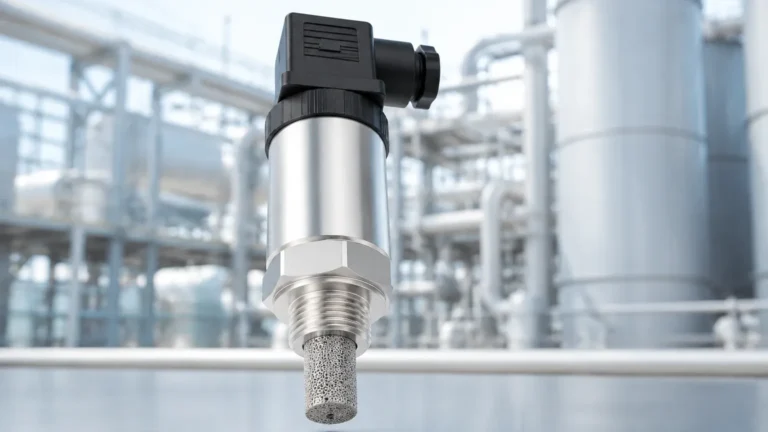
In the landscape of industrial automation and process control, ensuring the safety and efficiency of liquid and solid storage is paramount. One of the most fundamental tools used to achieve this is the level switch. But specifically, what are level switches? At their core, level switches are point-level detection devices designed to signal the presence or absence of a material at a specific height within a tank, silo, or pipe. Unlike continuous level transmitters that provide a constant stream of data regarding the exact level, a level switch acts as an "on/off" trigger, typically used to prevent overflows, protect pumps from running dry, or manage automated filling cycles.
For engineers and plant operators, understanding the nuances of these instruments is critical for maintaining system integrity. This guide explores the mechanical and electronic principles behind these devices, their practical applications, and the criteria for selecting the right technology for specific industrial environments.
Measurement Principles of Level Switches
To answer the question of what are level switches in a technical context, one must look at the physical principles they employ. Because industrial media ranges from potable water to corrosive chemicals and granular solids, various technologies have been developed to detect level reliably.
Float and Displacement Switches
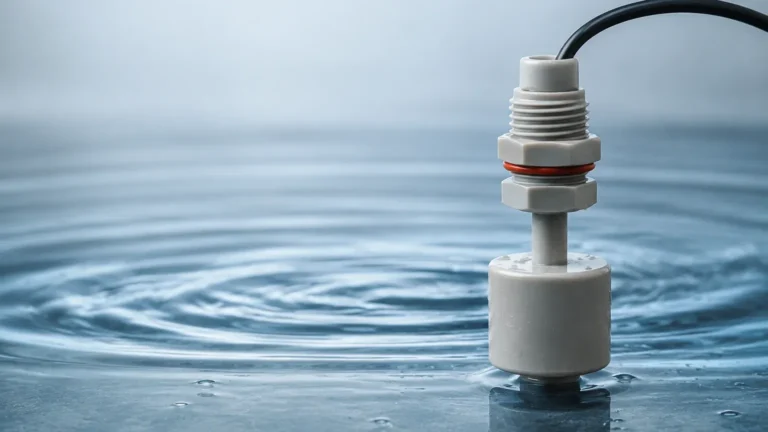
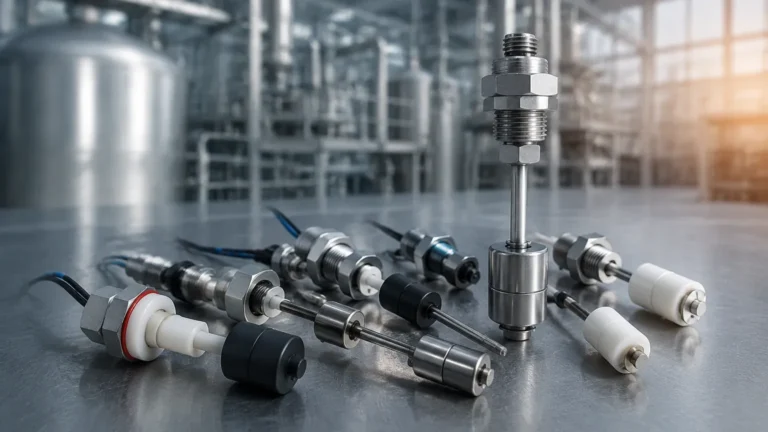
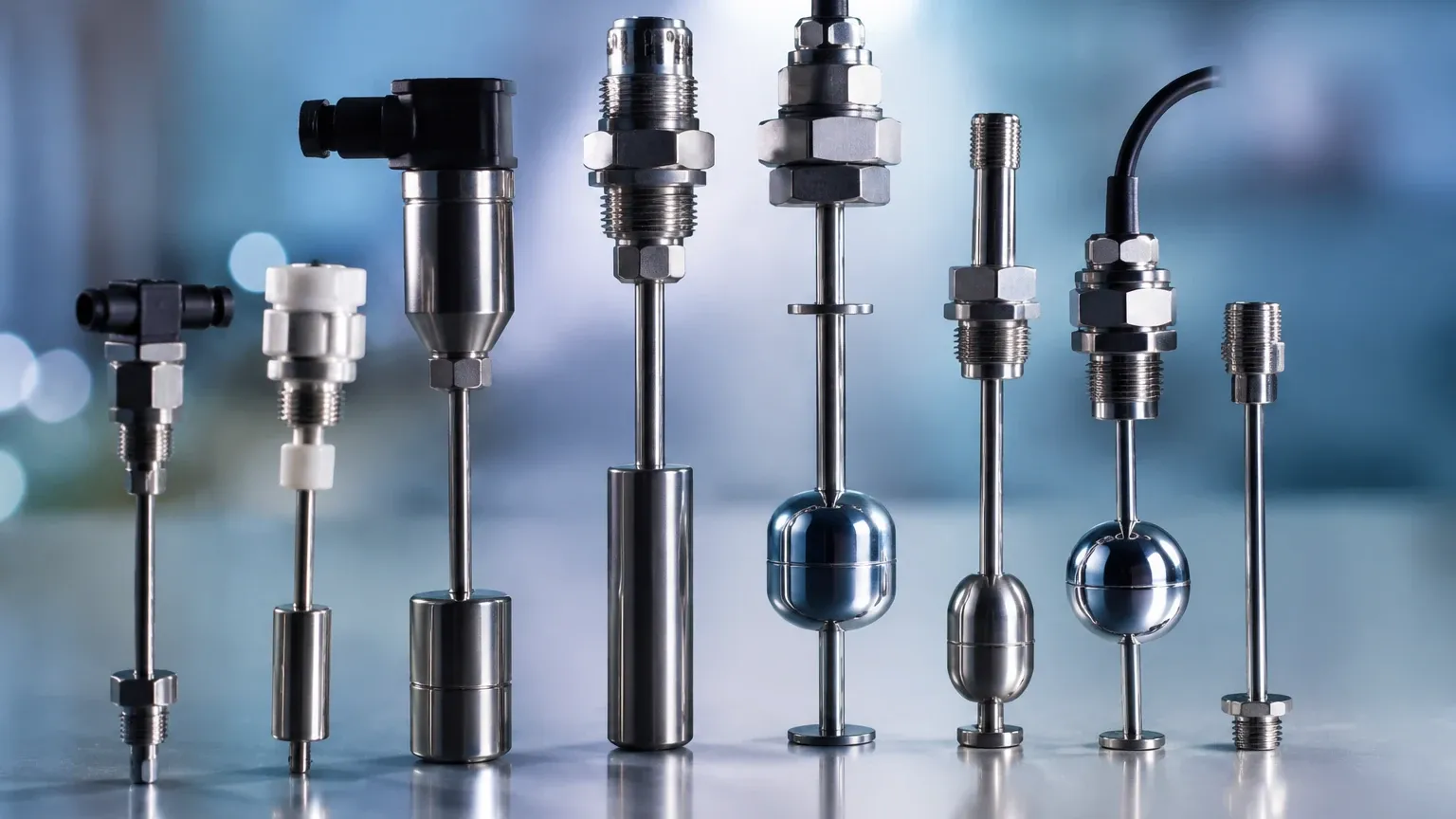
These are among the oldest and most straightforward types of Level Switches. They operate on the principle of buoyancy. A float, typically made of stainless steel or plastic, sits on the liquid surface. As the liquid level rises or falls, the float moves a mechanical arm or slides along a stem containing a reed switch. When the internal magnet in the float reaches the reed switch, it closes or opens the circuit.
Vibrating Point (Tuning Fork) Switches
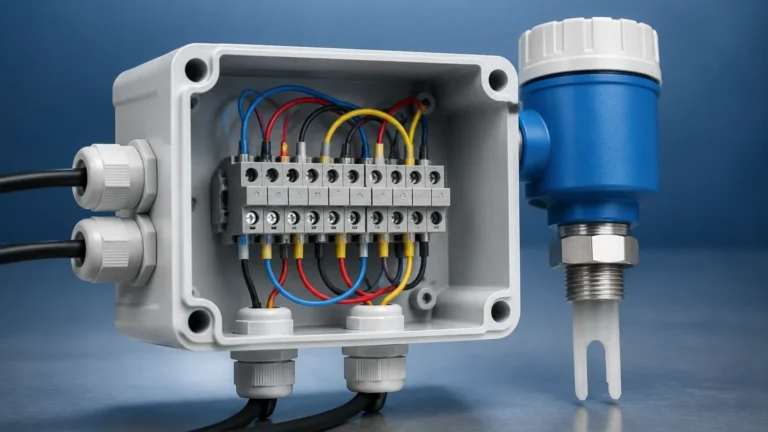
The sensing element consists of two tines (a fork) that vibrate at their natural resonant frequency in the air. When the tines are covered by liquid or solid media, the frequency changes or the vibration is damped. An electronic circuit detects this shift and converts it into a switching signal. These are highly versatile and unaffected by flow, turbulence, or bubbles.
Capacitance Level Switches
These switches treat the probe and the tank wall (or a second probe) as two plates of a capacitor. The material being measured acts as the dielectric. As the level rises and covers the probe, the dielectric constant changes, increasing the measured capacitance. Once a pre-set threshold is reached, the switch triggers. This technology is excellent for both liquids and solids but requires calibration based on the material's dielectric properties.
Conductive Level Switches
Specifically for conductive liquids (like water or acids), these switches use electrodes. When the liquid touches the electrode, it completes an electrical circuit between the probe and the tank wall (or a reference electrode). The low-voltage current is detected by a controller to trigger the switch. These are cost-effective but limited to conductive media.
Ultrasonic Point Level Switches
These devices emit high-frequency sound waves. In a gap-style ultrasonic switch, the signal travels across a small gap in the sensor head. When liquid fills the gap, the sound waves are transmitted more efficiently than through air, signaling the presence of the liquid. This non-contact-style sensing is useful for preventing contamination.
Key Evaluation Criteria for Selection
Choosing the correct instrument requires more than just knowing what are level switches; it requires a deep dive into the process conditions. Selecting the wrong technology can lead to false triggers or premature sensor failure.
1. Media Characteristics: Is the material a liquid, slurry, or granulate? Is it corrosive, coating-prone, or viscous? For example, tuning fork switches are better for coating materials than capacitance probes in some instances.
2. Process Temperature and Pressure: Standard plastic float switches may fail at temperatures above 80°C or pressures exceeding 2 bar. High-pressure reactors might require heavy-duty stainless steel or magnetic level gauges with integrated switches.
3. Output Requirements: Do you need a dry contact (SPDT/DPDT) for direct pump control, or a transistor output (PNP/NPN) for a PLC input?
4. Hygienic Requirements: In food and pharmaceutical applications, the switch must feature polished surfaces (Ra < 0.8 μm) and Tri-Clamp connections to prevent bacterial growth.
Practical Selection Table
| Technology | Best For | Limitations | Typical Media |
| :— | :— | :— | :— |
| Float | Simple water tanks, sumps | Moving parts can jam; not for viscous fluids | Water, Oils |
| Vibrating Fork | General purpose, overfill protection | Not ideal for very high-viscosity pastes | Chemicals, Powders, Beverages |
| Capacitance | High temperature/pressure | Requires calibration; sensitive to dielectric changes | Acids, Grains, Slurries |
| Conductive | Low-cost conductive liquid detection | Only works with conductive liquids | Wastewater, Acids, Bases |
| Optical | Small spaces, clean liquids | Sensitive to coating and ambient light interference | Pharmaceutical fluids, Clean water |
Installation Considerations and Best Practices
Proper installation is as critical as the technology selection itself. Even the highest quality Level Switches will fail if positioned incorrectly.
* Orientation: Most vibrating fork and capacitance switches can be mounted horizontally (from the side) or vertically (from the top). However, if mounted horizontally, the tines of a tuning fork should be oriented so that the material can easily drain off them, preventing "bridging" or false positives.
* Turbulence and Agitators: If a tank has an internal agitator, the switch must be placed in a position where it is not hit by the blades or subjected to extreme mechanical stress from the fluid's motion. Stilling wells are often used to protect float switches in turbulent tanks.
* Dead Zones: Ensure the switch is not mounted in a "dead zone" where material might accumulate and not drain away, such as in a narrow nozzle or near a fill pipe where splashing occurs.
* Wiring and Grounding: For capacitance and conductive switches, proper grounding to the metal tank is essential. If the tank is plastic, a reference electrode or a grounding strap is required to complete the sensing circuit.
Limitations and Common Risks
While level switches are robust, they are not universal solutions. Understanding their limitations prevents operational downtime.
* Material Buildup: In applications involving sticky resins or wastewater, material can build up on the sensor. This is known as "coating." While some technologies like vibrating forks are designed to ignore minor coating, heavy buildup will eventually cause a permanent "high" signal.
* Turbulence and Foam: Mechanical float switches can bounce in turbulent water, leading to "chatter" in the relay. Similarly, some ultrasonic and optical switches may struggle to distinguish between the actual liquid level and a thick layer of foam.
* Specific Gravity Changes: Float switches rely on the density of the liquid. If a process switches from a heavy oil to a light solvent, the float may no longer sit at the same level relative to the surface, or it may sink entirely if the liquid density drops below the float's design limit.
Industrial Applications
Water and Wastewater Treatment
In this sector, level switches are used for pump control in lift stations and to prevent chemical tanks (like those holding alum or chlorine) from running dry. Conductive and ultrasonic point switches are common here due to the conductive nature of the water and the need for reliable, low-maintenance operation.
Chemical Processing
Chemical plants often deal with aggressive media and explosive atmospheres. Here, stainless steel or PTFE-coated level switches with ATEX/Ex-proof certifications are mandatory. Vibrating forks are the industry standard for overfill prevention in these high-risk environments.
Food and Beverage
Clean-in-Place (CIP) processes require switches that can withstand high-temperature caustic washes. Hygienic tuning forks or capacitance switches with stainless steel housings are used to monitor levels in milk silos, brewery fermentation tanks, and bottling lines.
Frequently Asked Questions (FAQs)
Q: Can I use a level switch for continuous monitoring?
A: No. A level switch only tells you if the material has reached a specific point. For continuous data (e.g., "the tank is 45% full"), you need a level transmitter, such as a radar or ultrasonic sensor.
Q: What is the difference between N/O and N/C contacts?
A: N/O (Normally Open) means the circuit is open when the switch is not activated. N/C (Normally Closed) means the circuit is closed until the material triggers the switch. For fail-safe overfill protection, N/C is usually preferred so that a power failure or broken wire triggers an alarm.
Q: How do I maintain a level switch?
A: Maintenance depends on the media. In clean water, an annual visual inspection is often enough. In coating or corrosive media, sensors should be cleaned and checked for pitting or buildup every 3 to 6 months to ensure the sensing element remains responsive.
Q: Are there non-contact level switches?
A: Yes. Some ultrasonic and microwave barrier switches can detect levels through tank walls (if the wall is non-metallic) or across a distance, ensuring the sensor never touches the media. This is ideal for highly toxic or sterile substances.
Conclusion
Understanding what are level switches is the first step toward designing a safe and automated process system. By selecting the appropriate measurement principle—whether it be the mechanical simplicity of a float or the sophisticated electronics of a vibrating fork—operators can ensure their facilities run without the risk of spills, dry-run damage, or process interruptions. When specifying these components, always consider the physical properties of your media and the environmental constraints of your installation site to ensure long-term reliability.
For more detailed technical specifications and to explore a range of industrial-grade sensing solutions, you can Review product options and application support to find the exact match for your engineering requirements.