Level Zero Sensor
Level Zero Sensor
In industrial process control, the term "level zero" refers to the baseline or the lowest measurable point within a vessel, tank, or silo. A level zero sensor is a critical component in ensuring that processes operate within safe parameters, preventing equipment damage, and maintaining inventory accuracy. Whether it is used to prevent a pump from running dry or to signal the start of a filling cycle, the precision of this baseline measurement is fundamental to automation.
Accurately identifying the "zero" state requires a deep understanding of the physical properties of the medium and the mechanical constraints of the container. This guide explores the principles, selection criteria, and installation requirements for implementing a reliable level zero sensor solution using various technologies, including point-level detection and continuous measurement systems.
Measurement Principles for Level Zero Detection
To effectively monitor the bottom-most level of a tank, engineers typically employ one of two strategies: continuous level measurement or point-level switching. Each technology interacts with the "zero" point differently.
1. Vibrating Fork (Tuning Fork) Technology
As a primary choice for Level Switches, vibrating forks operate on the principle of frequency shift. An internal piezo-electric crystal vibrates the fork at its natural resonance in free air. When the liquid reaches the fork (the zero point), the frequency drops significantly. This change is detected by the electronics and converted into a switching signal. This is highly effective for zero-level detection because it is largely unaffected by flow, turbulence, or bubbles.
2. Hydrostatic Pressure Measurement
Hydrostatic sensors measure the weight of the liquid column above the sensor diaphragm. For zero-level applications, the sensor is typically mounted at the lowest point of the tank. The pressure (P) is proportional to the height (h) and density (ρ) of the liquid ($P = \rho \times g \times h$). When the pressure reaches zero (relative to atmospheric pressure), the tank is considered empty. This is a robust method for continuous monitoring of the baseline.
3. Ultrasonic and Radar (Non-Contact)
These sensors emit pulses (sound waves or electromagnetic waves) that reflect off the surface of the medium. The time-of-flight is used to calculate the distance. In a level zero sensor application, the sensor is calibrated so that the distance to the tank bottom represents the "zero" value. Radar is generally preferred for volatile or high-pressure environments, while ultrasonic is cost-effective for water treatment.
4. Capacitive Level Switches
Capacitive sensors detect changes in the dielectric constant between the sensor probe and the tank wall. When the medium recedes from the probe at the bottom of the tank, the capacitance changes, triggering the "zero" or "empty" alarm. This is particularly useful for detecting the presence or absence of solids or non-conductive liquids.
Selecting the Right Technology for Zero-Level Monitoring
Choosing the correct level zero sensor depends on the physical state of the material, the tank geometry, and the environmental conditions. The following table provides a comparison of common technologies used for baseline detection.
| Technology | Medium Type | Accuracy | Main Advantage | Primary Limitation |
| :— | :— | :— | :— | :— |
| Vibrating Fork | Liquids / Fine Solids | High (Point) | Unaffected by foam/bubbles | Sensitive to heavy build-up |
| Hydrostatic | Liquids | High (Continuous) | Simple installation | Requires density consistency |
| Ultrasonic | Liquids / Slurries | Moderate | Non-contact | Affected by heavy vapors/foam |
| Radar (80GHz) | Liquids / Solids | Very High | Works in vacuum/pressure | Higher initial cost |
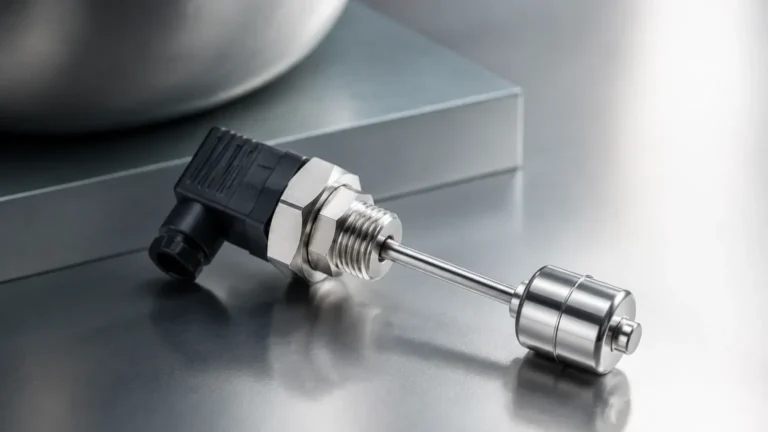
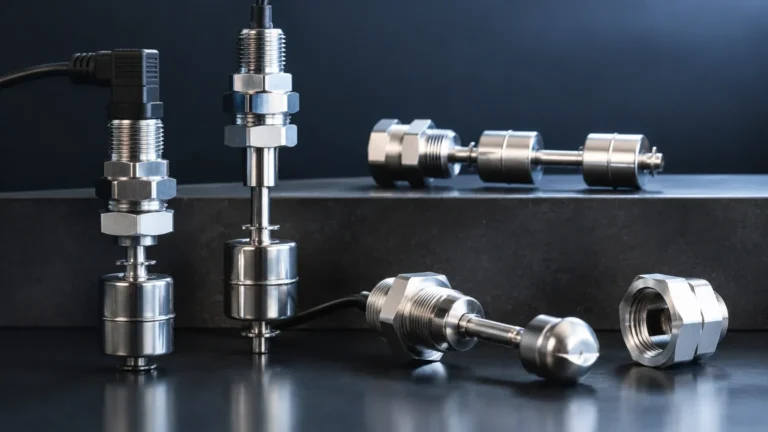
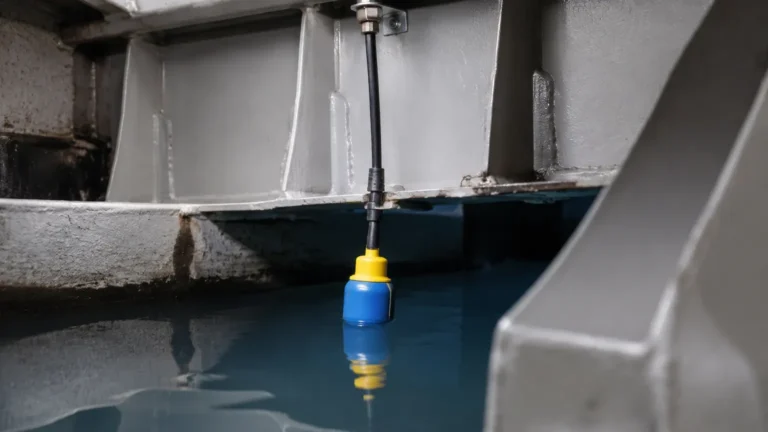
| Float Switch | Clean Liquids | Low (Point) | Low cost, no power needed | Moving parts can jam |
| Capacitive | Solids / Liquids | Moderate | No moving parts | Requires calibration for medium |
Practical Applications of the Level Zero Sensor
The implementation of a level zero sensor is rarely about just knowing the tank is empty; it is about protecting the downstream process.
Pump Dry-Run Protection
Centrifugal pumps rely on the fluid they move for cooling and lubrication. If a pump continues to operate when the tank is empty, it can lead to catastrophic seal failure and motor burnout within minutes. A level zero sensor, often configured as a low-level switch, provides a hard-wired interlock to shut down the pump immediately when the liquid level falls below the suction intake.
Accurate Batching and Inventory
In chemical processing, a "zero" reference is essential for batching. If a tank is not truly empty before a new batch begins, the ratio of ingredients will be incorrect. A level zero sensor ensures that the vessel is fully evacuated before the next cycle starts, maintaining product quality and consistency.
Sediment and Sludge Monitoring
In water treatment, the "zero" point might not be the physical bottom of the tank but rather the top of a sediment layer. Specialized sensors can be calibrated to detect the interface between water and sludge, ensuring that only clear water is drawn while preventing the intake of debris.

Installation and Calibration Considerations
Proper installation is the most critical factor in the performance of a level zero sensor. Even the most advanced sensor will fail if it is placed in a location where it cannot accurately perceive the baseline.
1. The Dead Zone (Blocking Distance): Non-contact sensors like ultrasonic and radar have a "dead zone" near the transducer face where measurements are impossible. For zero-level detection, this is usually not an issue as the sensor is mounted at the top, looking down. However, if the tank is very shallow, the sensor must be mounted on a nozzle or stand-off to ensure the "zero" point (the bottom) is outside the dead zone.
2. Bottom Geometry: In tanks with conical or dished bottoms, the "zero" point must be clearly defined. Is it the absolute lowest point of the cone, or the point where the cylindrical wall meets the cone? The level zero sensor should be positioned to account for the "unmeasurable volume" at the very bottom of a cone if the suction outlet is located higher up.
3. Nozzle Interference: For top-mounted sensors, ensure the signal beam does not hit the sides of the mounting nozzle or internal structures like ladders and agitators. This is especially important when measuring near the bottom, as the signal strength is weakest at the maximum distance.
4. Hydrostatic Zeroing: When using hydrostatic transmitters, the sensor must be zeroed to account for the mounting height. If the sensor is mounted 100 mm (approx. 4 inches) below the actual tank bottom in a pipe run, the electronics must be offset so that the display reads "0" when the tank is empty, not a negative value or a value representing the liquid in the pipe.
Limitations and Common Challenges
While level zero sensors are designed for reliability, certain industrial conditions can interfere with their accuracy:
* Build-up and Coating: In the chemical industry, materials can crystallize or coat the sensor. A vibrating fork or capacitive switch may "see" this coating as the presence of liquid even when the tank is empty. In these cases, sensors with "active shield" technology or high-frequency radar are recommended.
* Turbulence and Vortexing: During rapid emptying, a vortex can form at the bottom of the tank. This can cause a level zero sensor to toggle rapidly between "empty" and "not empty." Using a switch with a programmable delay (e.g., 3 to 5 seconds) can prevent false alarms and "chatter" in the control system.
* Bottom Reflectivity: For radar and ultrasonic sensors, a flat metal tank bottom can act like a mirror, reflecting the signal away from the receiver or causing multiple reflections. This can be mitigated by angling the sensor slightly or using advanced signal processing algorithms that recognize the tank bottom signature.
Frequently Asked Questions (FAQs)
Q: What is the difference between a level zero sensor and a low-level switch?
A: While they are often the same device, a "level zero sensor" typically refers to the baseline reference for a continuous measurement system, whereas a "low-level switch" is a point-level device designed specifically to trigger an alarm or action when the level drops to a specific threshold.
Q: Can I use a level zero sensor for both empty and full detection?
A: A continuous sensor (like radar or ultrasonic) can monitor the entire range from zero to 100%. However, for safety-critical applications, it is industry best practice to use independent Level Switches for high-high (overflow) and low-low (dry run) protection to provide redundancy.
Q: How often should a level zero sensor be calibrated?
A: This depends on the technology. Hydrostatic sensors should be checked annually for drift. Non-contact radar sensors are generally more stable and may only require verification every 2-3 years, provided there are no changes to the medium or tank internals.
Q: How do I handle "zero" in a tank with a thick layer of sediment?
A: In these environments, a hydrostatic sensor may give a false reading because it measures the total weight, including the sediment. A vibrating fork or an ultrasonic sensor is often better, as they can be positioned above the expected sediment line to define a "functional zero."
Q: What is the best level zero sensor for a small 1-meter (3.2 ft) plastic tank?
A: For small, non-metallic tanks, an ultrasonic sensor is often the most cost-effective solution for continuous monitoring, while a simple capacitive or vibrating fork switch provides the most reliable point-level zero detection.
By carefully matching the sensor technology to the specific requirements of the application, process engineers can ensure that the "zero" point remains a reliable foundation for their automation and safety systems.