Doom 2016 Secret Level Switches
Doom 2016 Secret Level Switches
In the realm of industrial automation and process control, the term "level switches" refers to critical components designed to detect the presence or absence of liquids, powders, or granulated solids at specific heights within a vessel. While enthusiasts might search for "doom 2016 secret level switches" to unlock hidden corridors in a digital environment, engineers and plant managers understand that in a real-world industrial facility, finding the right "secret" to level switch configuration is the difference between seamless operation and catastrophic overflow or pump dry-run.
Reliable point-level detection is the backbone of safety instrumented systems (SIS). Whether managing caustic chemicals, potable water, or volatile hydrocarbons, selecting the correct technology requires an understanding of fluid dynamics, material properties, and mechanical engineering. This guide explores the technical landscape of industrial Level Switches, providing a professional framework for selection, installation, and maintenance.
Measurement Principles: How Level Switches Work
Before recommending a specific device, it is essential to understand the physical principles that govern different types of level switches. Unlike continuous level transmitters that provide a constant 4-20mA or digital output of the current level, a level switch is a binary device. It triggers a state change (normally open to normally closed, or vice versa) when the material reaches a predetermined point.
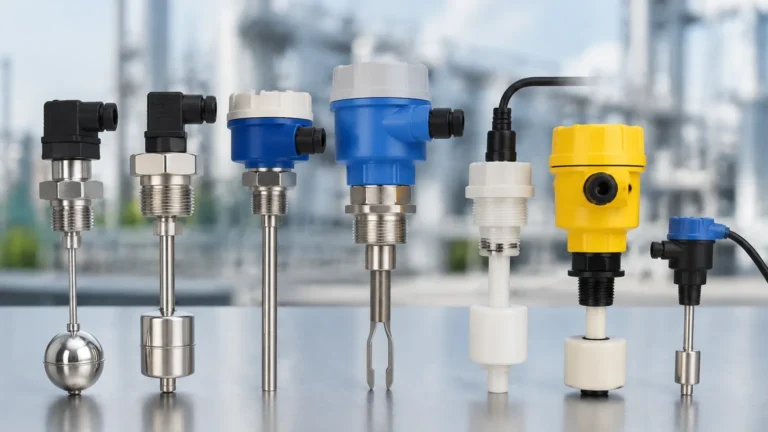
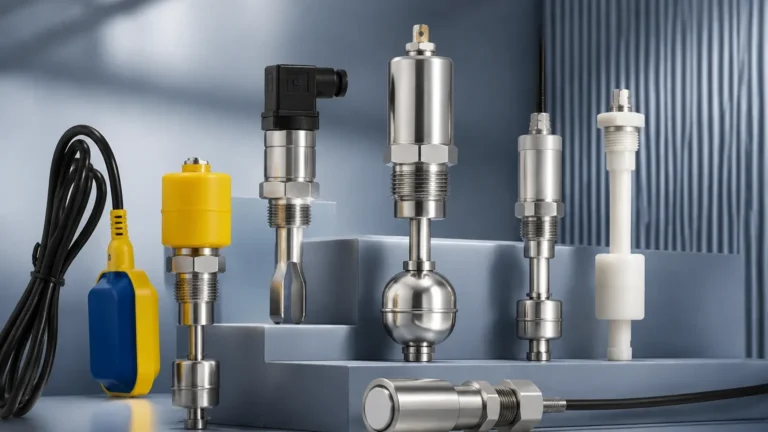
1. Vibrating Level Switches (Tuning Fork)
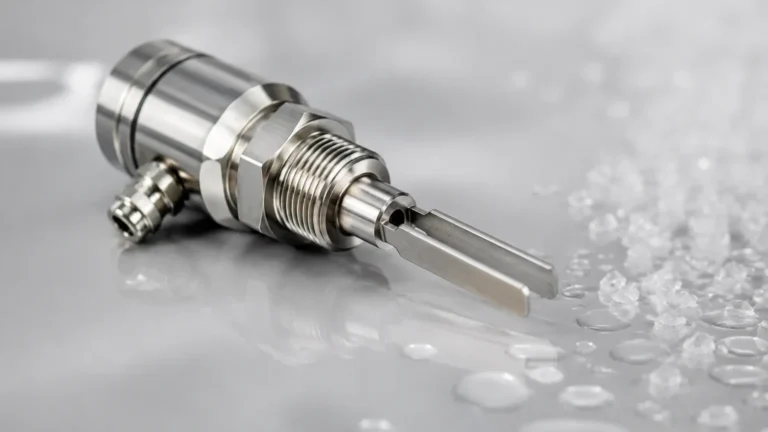
These switches utilize a tuning fork-shaped sensing element that is vibrated at its resonant frequency by internal piezoelectric crystals. When the fork is immersed in a medium (liquid or solid), the frequency of vibration changes. The electronics detect this shift and trigger the output.
* Best for: General purpose liquid detection, high-viscosity fluids, and powders.
* Advantage: Unaffected by flow, turbulence, bubbles, or foam.
2. Float Level Switches
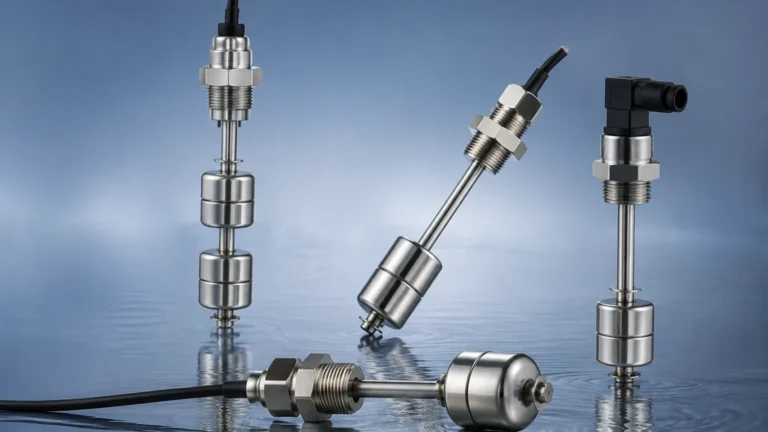
Operating on the principle of buoyancy, a float containing a magnet moves with the liquid level. When the float reaches a reed switch located within a stationary stem, the magnetic field causes the switch to close or open.
* Best for: Simple water tanks, fuel storage, and low-viscosity clean liquids.
* Advantage: Cost-effective and requires no external power for the sensing element itself.
3. Capacitive Level Switches
Capacitance switches measure the change in electrical capacitance between the sensor probe and the tank wall (or a reference probe). As the medium displaces air around the probe, the dielectric constant changes, altering the capacitance value.
* Best for: Granular solids, powders, and liquids with consistent dielectric properties.
* Advantage: No moving parts, making them ideal for abrasive materials.
4. Ultrasonic Level Switches
These devices use high-frequency sound waves. A gap in the sensor probe prevents the signal from crossing until a liquid fills the gap, allowing the ultrasonic energy to pass through to the receiver.
* Best for: Highly aerated liquids or applications where mechanical contact must be minimized.
* Advantage: Very fast response times.
The "Secret" to Selection: Key Evaluation Criteria
Identifying the optimal switch for an application is not a matter of chance. While the phrase "doom 2016 secret level switches" implies a hidden mechanism, the "secrets" of industrial level detection are found in the rigorous analysis of process variables. To ensure long-term reliability, engineers must confirm several factors before procurement.
Media Characteristics
The physical and chemical properties of the material being measured are the most significant factors.
* Density/Specific Gravity: For float switches, the float must be less dense than the liquid. For vibrating switches, there is a minimum density requirement (often >0.5 g/cm³ for liquids).
* Viscosity: High-viscosity materials can cause "clinging" or buildup on tuning forks or floats, leading to false positives.
* Corrosiveness: The wetted parts must be compatible with the medium. Common materials include 316L Stainless Steel, PTFE, or PP.
Process Conditions
* Temperature: Standard switches often operate up to 150°C, but specialized high-temperature versions are required for steam or molten processes.
* Pressure: The housing and process connection must withstand the maximum vessel pressure, often rated in bar or MPa (e.g., 40 bar / 4.0 MPa).
* Turbulence and Agitation: In tanks with mixers, a float switch might be damaged by mechanical force, whereas a vibrating fork or non-contact sensor would be more appropriate.
Technical Selection Table
The following table provides a quick reference for matching technology to common industrial scenarios.
| Technology | Suitable Media | Max Temp (Typical) | Pressure Rating | Key Limitation |
| :— | :— | :— | :— | :— |
| Vibrating Fork | Liquids, Slurries, Powders | -50°C to +150°C | Up to 64 bar | Material buildup between forks |
| Float Switch | Clean Liquids | -20°C to +120°C | Up to 20 bar | Moving parts can jam in dirty media |
| Capacitance | Solids, Liquids, Interface | -40°C to +200°C | Up to 100 bar | Sensitive to dielectric changes |
| Conductivity | Conductive Liquids | -20°C to +100°C | Low Pressure | Only works with conductive media |
| Optical | Clear Liquids | -20°C to +80°C | Up to 10 bar | Sensitive to coating/fouling |
Installation and Engineering Considerations
Proper installation is the second "secret" to avoiding system failure. Even the most advanced level switch will fail if mounted incorrectly.
Mounting Orientation
* Top Mounting: Ideal for high-level alarms. It allows for easy access for maintenance without draining the tank.
* Side Mounting: Common for low-level or mid-level detection. Ensure the probe length is sufficient to clear any internal tank structures or nozzles.
Avoiding False Triggers
When installing vibrating forks, the forks should be oriented so that material can easily drain off them. For horizontal installations, the forks should be oriented vertically (one prong above the other) to prevent material from resting on the flat surface.
In silos containing solids, the switch should be positioned away from the fill stream to prevent the weight of falling material from damaging the probe or causing premature switching. Use a protective shield or "baffle" if the switch must be located near an inlet.
Wiring and Signal Integration
Modern level switches offer various output options:
* Relay (SPDT/DPDT): Direct control of pumps or valves.
* Transistor (PNP/NPN): For integration with PLC inputs.
* Two-wire (8/16mA): For use in loop-powered circuits.
* NAMUR: For intrinsically safe applications in hazardous zones.

Common Risks and Limitations
No level switch is universal. Understanding the limitations prevents operational downtime.
1. Coating and Buoyancy: In wastewater applications, grease or biological growth can coat a float, increasing its weight until it no longer floats. Vibrating forks with "active shield" technology or capacitance probes with coating rejection are better suited for these "secret" challenges.
2. Dielectric Shifts: Capacitance switches calibrated for oil may fail if the tank is later used for water, as the dielectric constant (εr) of water (~80) is significantly higher than oil (~2).
3. Mechanical Fatigue: In high-vibration environments (e.g., near large compressors), the internal components of a reed switch or the electronics of a tuning fork may suffer from fatigue. Remote-mounted electronics are often the solution here.
Frequently Asked Questions (FAQ)
Q: How do I choose between a level switch and a continuous level transmitter?
A: Use a level switch if you only need to know when a specific point is reached (e.g., "tank full" or "tank empty"). Use a continuous transmitter if you need to know the exact volume or percentage of the tank at all times.
Q: Can I use a liquid level switch for dry powders?
A: Only if it is a vibrating fork specifically designed for solids. Standard liquid forks are tuned to a frequency that may not be sensitive enough for low-density powders like flour or plastic pellets.
Q: What is the significance of "fail-safe" modes?
A: Fail-safe high (FSH) means the switch will signal an alarm if power is lost, preventing an overflow. Fail-safe low (FSL) ensures that a power failure triggers a low-level alarm, protecting pumps from running dry.
Q: Are there level switches for hazardous areas?
A: Yes. Look for ATEX, IECEx, or UL certifications. These switches are designed to be intrinsically safe or explosion-proof to prevent the electrical circuit from igniting flammable vapors.
Conclusion
Navigating the complexities of industrial automation requires more than just basic hardware; it requires a strategic approach to component selection. While the search for "doom 2016 secret level switches" might lead to gaming achievements, the professional search for the right level switch leads to operational excellence, safety compliance, and cost efficiency. By understanding the measurement principles and respecting the physical limitations of each technology, engineers can unlock the full potential of their process control systems.
For those seeking reliable, accurate, and cost-effective measurement solutions, Welk provides a comprehensive range of industrial instruments. To ensure your facility is equipped with the highest standard of point-level detection, Review product options and application support to find the ideal match for your specific industrial requirements.