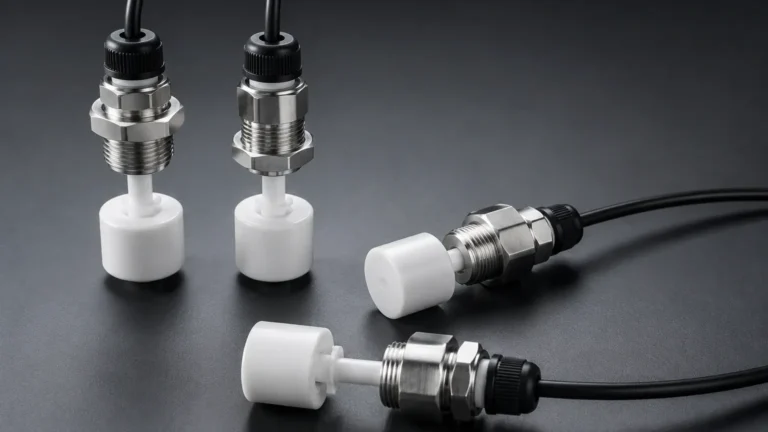
Sst Liquid Level Switches
Sst Liquid Level Switches
In industrial process control, the reliability of point-level detection often hinges on the material integrity of the sensor. Stainless steel (SST) liquid level switches represent the industry standard for applications requiring high durability, corrosion resistance, and hygienic compliance. Whether used in water treatment, chemical processing, or oil and gas production, these instruments provide critical high-level or low-level alarms to prevent tank overfills or pump dry-running.
As a professional manufacturer of industrial level measurement instruments, Welk provides a range of Level Switches designed to meet the rigorous demands of modern automation. Understanding the underlying measurement principles and material properties of sst liquid level switches is essential for engineers and plant managers to ensure long-term operational stability.
Measurement Principles of SST Liquid Level Switches
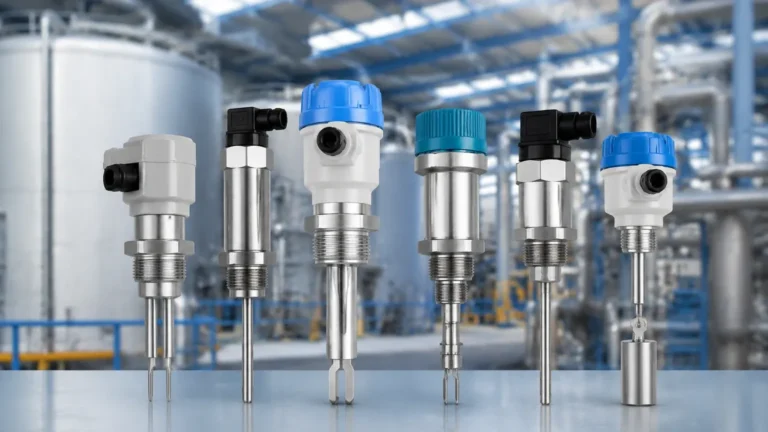
SST liquid level switches utilize several distinct physical principles to detect the presence or absence of a medium. Selecting the correct principle depends on the liquid's viscosity, density, and the presence of foam or turbulence.
1. Float-Operated Switches (Buoyancy Principle)
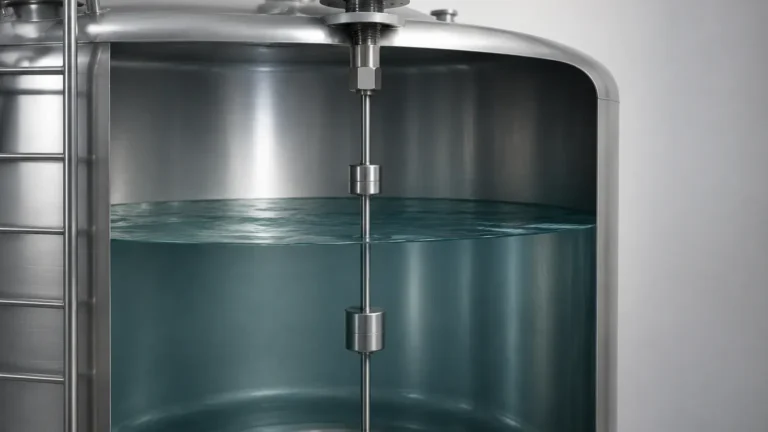
Float switches are the most traditional form of point-level detection. They operate on the principle of buoyancy, where a stainless steel float moves with the liquid level. Inside the float or the stationary stem, a magnet is housed. As the float reaches a predetermined point, the magnetic field actuates a hermetically sealed reed switch or a microswitch.
* Advantages: Simple, cost-effective, and requires no external power for the switch mechanism itself.
* SST Specifics: 316L stainless steel floats are preferred for their resistance to pitting and crevice corrosion in chloride-rich environments.
2. Vibrating Fork Switches (Frequency Principle)
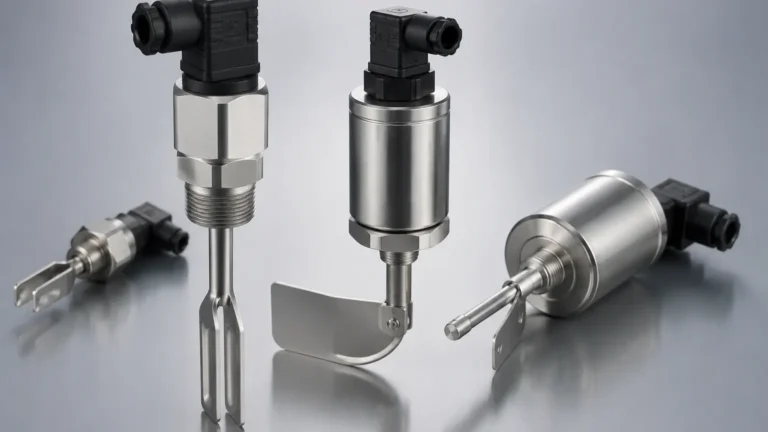
Often referred to as tuning fork switches, these devices use piezoelectric crystals to vibrate a dual-tine fork at its natural resonance frequency in the air. When the fork is submerged in a liquid, the frequency shifts significantly. The electronics detect this change and trigger the output relay.
* Advantages: Highly resistant to foam, bubbles, and turbulence. They are virtually maintenance-free due to the lack of moving parts.
* SST Specifics: The polished SST tines prevent material buildup, making them ideal for viscous liquids or food-grade applications.
3. Optical Level Switches (Refraction Principle)
Optical sensors use an infrared LED and a light receiver. Inside a stainless steel housing, a glass or polysulfone tip acts as a prism. When the tip is in the air, the infrared light reflects back to the receiver. When submerged, the light refracts into the liquid, and the receiver detects a loss of signal.
* Advantages: Extremely compact and capable of detecting very small amounts of liquid.
* SST Specifics: The SST body provides the mechanical strength needed for high-pressure environments where plastic sensors would fail.
4. Conductive Level Switches (Electrical Conductivity)
These switches use the electrical conductivity of the liquid to close a circuit between two SST electrodes or between an electrode and the tank wall. They are only suitable for conductive liquids like water, acids, or alkalis.
* Advantages: No moving parts and very low cost for multi-point detection.
* SST Specifics: SST electrodes are essential to prevent the probe from dissolving or contaminating the medium through electrolysis.
Material Grades and Chemical Compatibility
When specifying sst liquid level switches, the choice of stainless steel grade is critical. While "SST" is a broad term, industrial applications typically focus on two main grades:
1. 304 Stainless Steel: Suitable for general-purpose applications, fresh water, and mild chemicals. It offers good mechanical strength but can be susceptible to corrosion in high-salinity environments.
2. 316/316L Stainless Steel: The standard for process industries. The addition of molybdenum provides superior resistance to chlorides and acids. 316L (low carbon) is preferred for welded components to prevent intergranular corrosion.
For highly aggressive media where even 316L may fail, specialized coatings like PTFE (Teflon) or Hastelloy components may be integrated into the SST framework.
Practical Selection Criteria
Selecting the right sst liquid level switches involves more than just choosing a material. Engineers must evaluate the following technical parameters:
Media Density and Viscosity
For float switches, the liquid must have a specific gravity higher than the float's design (typically >0.7 g/cm³). For vibrating forks, high viscosity can dampen the vibration excessively, though modern Welk sensors are designed to handle viscosities up to 10,000 mm²/s.
Operating Pressure and Temperature
Stainless steel is favored for its ability to withstand extreme conditions. Standard SST switches can often handle temperatures from -40°C to +150°C (with high-temp variants reaching +250°C) and pressures up to 64 bar (approx. 928 psi).
Output Type
* SPDT/DPDT Relays: For direct control of pumps or valves.
* PNP/NPN Transistor: For high-speed switching and direct PLC integration.
* Two-wire (NAMUR): For intrinsically safe circuits in hazardous areas.
Technical Comparison Table
| Feature | SST Float Switch | SST Vibrating Fork | SST Optical Switch | SST Conductive Probe |
| :— | :— | :— | :— | :— |
| Moving Parts | Yes | No | No | No |
| Foam Resistance | Poor | Excellent | Moderate | Poor |
| Viscosity Limit | Low | High | Medium | N/A (Conductivity based) |
| Max Pressure | Up to 30 bar | Up to 64 bar | Up to 50 bar | Up to 20 bar |
| Hygienic Design | Difficult | Excellent | Good | Good |
| Typical Application | Water tanks, Sumps | Chemical tanks, Slurries | Leak detection, Small pipes | Conductive acids/water |
Installation Considerations
Proper installation is vital to the longevity and accuracy of sst liquid level switches. Consider the following engineering guidelines:
1. Orientation: Float switches are often side-mounted or top-mounted. Vibrating forks can be mounted in any orientation, but if mounted horizontally, the tines should be oriented vertically to allow the liquid to drain freely.
2. Turbulence and Agitation: In tanks with heavy agitation, float switches may require a stilling well (a perforated pipe) to prevent mechanical fatigue of the stem. Vibrating forks are generally immune to turbulence but should be placed away from direct fill streams.
3. Nozzle Length: For vibrating forks and optical switches, ensure the sensing element extends fully into the vessel. If the nozzle is too long, a "dead zone" may be created where liquid or air becomes trapped, leading to false readings.
4. Electrical Shielding: Use shielded cables for electronic switches (vibrating and optical) to prevent electromagnetic interference (EMI) from nearby high-voltage pumps or motors.

Limitations and Common Risks
While sst liquid level switches are robust, they are not universal solutions. Users should be aware of the following risks:
* Coating and Buoyancy: In float switches, if the medium is prone to crystallization or heavy coating, the float may stick to the stem, resulting in a failure to switch. Regular inspection is required in these environments.
* Dielectric Changes: While not affecting SST forks, conductive probes are highly sensitive to changes in the liquid's conductivity. If the process switches from a conductive liquid to a non-conductive one (e.g., water to oil), the probe will fail to detect the level.
* Cavitation and Bubbles: Optical sensors can be fooled by heavy aeration or bubbles, which refract light in the same way as the liquid itself, potentially causing false high-level alarms.
Maintenance Guidance
Stainless steel instruments are prized for their low maintenance, but they are not "fit and forget" devices. A proactive maintenance schedule should include:
* Visual Inspection: Check for signs of pitting or surface corrosion, especially in chemical applications.
* Cleaning: For vibrating forks used in food or pharmaceutical processes, ensure that the Clean-in-Place (CIP) or Sterilize-in-Place (SIP) cycles are effectively reaching the sensor tines.
* Function Testing: Periodically manually actuate the switch (if safe) or use the test button found on many modern electronic level switches to verify the signal chain to the control room.
Frequently Asked Questions (FAQs)
Q: Can I use 304 SST switches for seawater applications?
A: It is not recommended. Seawater contains high levels of chlorides which cause rapid pitting in 304 stainless steel. 316L is the minimum requirement, and for long-term immersion, materials like Duplex SST or Titanium are preferred.
Q: How do I handle sst liquid level switches in hygienic (food/pharma) environments?
A: Look for switches with an Ra < 0.8 µm surface finish and Tri-clamp connections. Vibrating forks are particularly well-suited for these applications because they lack the crevices found in float mechanisms.
Q: What is the difference between a "Normally Open" (NO) and "Normally Closed" (NC) configuration?
A: This refers to the state of the switch when the liquid is not present. For overfill protection, a "Normally Closed" (fail-safe) configuration is often used, so that if a wire breaks, the system interprets it as a high-level alarm.
Q: Can SST switches be used in hazardous (Ex) zones?
A: Yes, provided they are certified (e.g., ATEX, IECEx). Welk offers Level Switches with explosion-proof housings or intrinsically safe electronics for use in flammable environments.
Conclusion
Sst liquid level switches remain a cornerstone of industrial automation due to their versatility and resilience. By matching the specific measurement principle—whether it be the simplicity of a float or the sophistication of a vibrating fork—to the chemical and physical properties of the process media, engineers can achieve reliable point-level control. For complex applications, consulting with a manufacturer like Welk ensures that the selected instrument meets all regulatory and safety standards while providing the best return on investment through reduced downtime and maintenance.