Level Switch vs Level Indicator
Level Switch vs Level Indicator
In industrial process automation, the ability to monitor the contents of a vessel accurately is fundamental to operational safety, efficiency, and inventory management. When designing a level control system, engineers frequently encounter the choice between point-level detection and continuous-level monitoring. This decision typically centers on the comparison of a level switch vs level indicator (often referred to as a level transmitter or gauge).
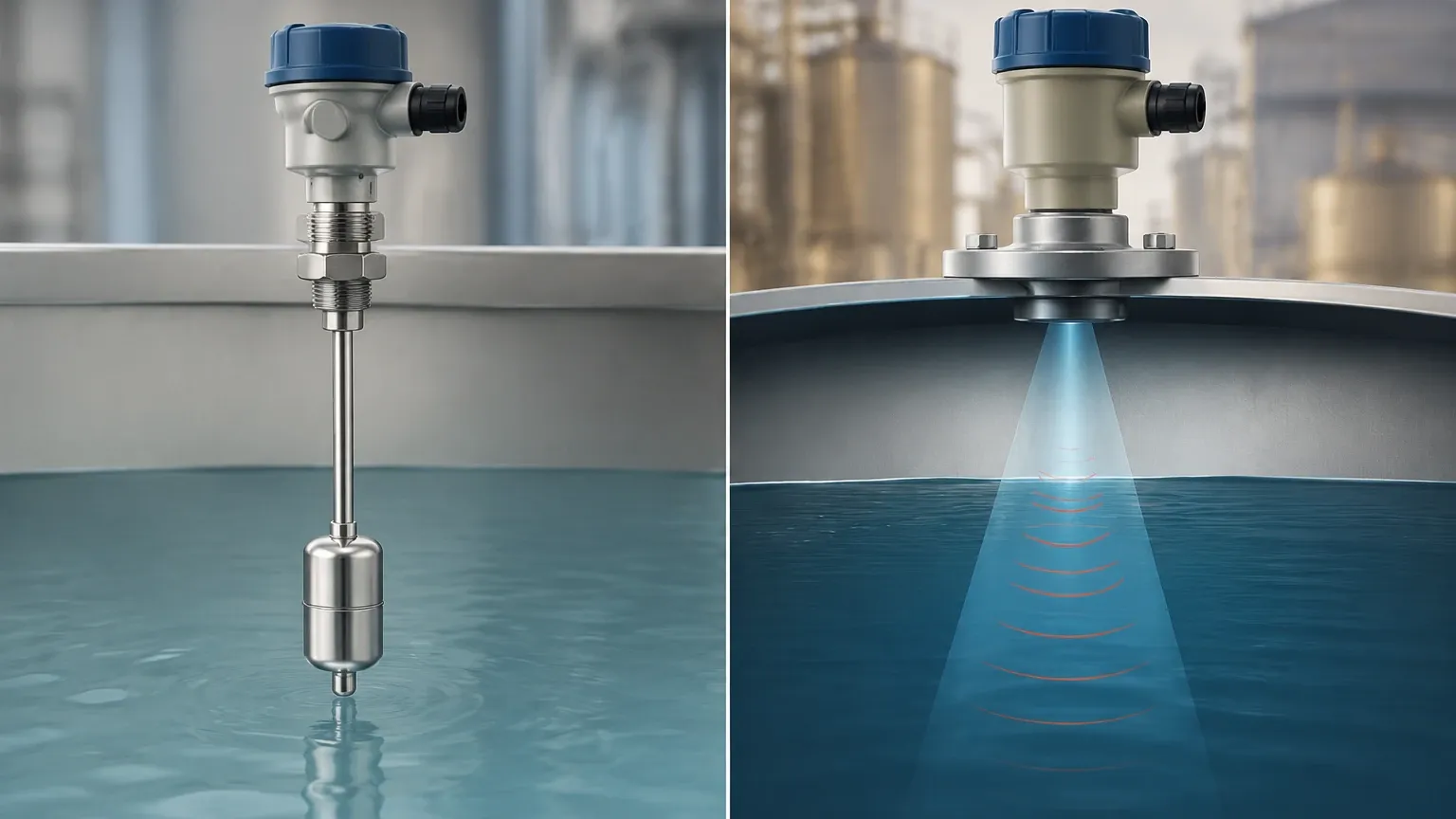
While both instruments serve the purpose of level measurement, they function on fundamentally different principles and provide different types of data. A level switch acts as a binary trigger, signaling when a material reaches a specific height, whereas a level indicator provides a real-time, continuous reading of the total volume or height of the material within a tank or silo. Understanding the technical nuances of each technology is essential for selecting the right instrumentation for applications ranging from water treatment to volatile chemical processing.
Measurement Principles of Level Switches
A level switch is a point-level sensor designed to detect the presence or absence of a substance at a predetermined elevation. These devices do not provide a measurement of how much material is in the tank; instead, they change state (from open to closed or vice versa) when the process medium makes contact with the sensing element.
Mechanical and Buoyancy Principles
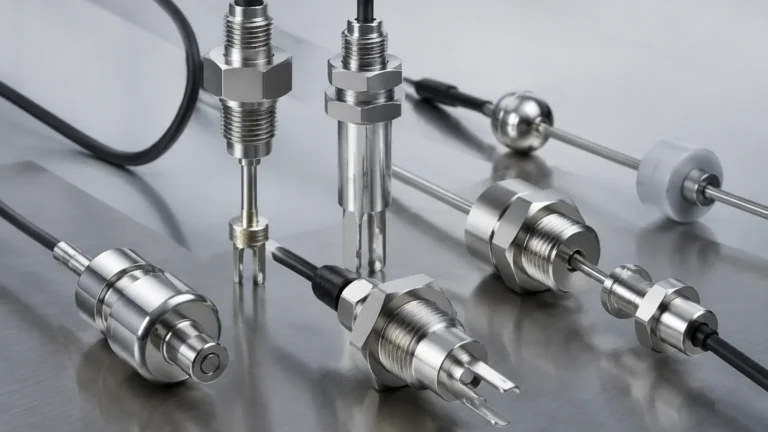
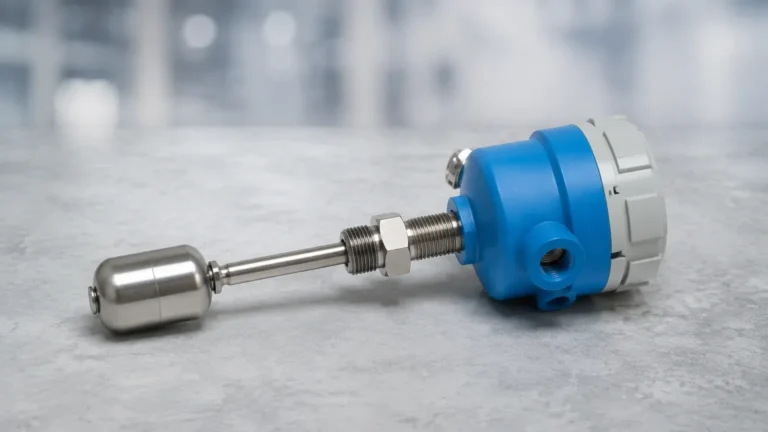
The most traditional form of point-level detection is the float switch. This device utilizes a float containing a magnet that rises and falls with the liquid level. When the float reaches a specific point, the magnetic field actuates a reed switch. This is a simple, cost-effective solution for clean liquids where high precision is not the primary concern.
Vibrating Fork (Tuning Fork) Principle
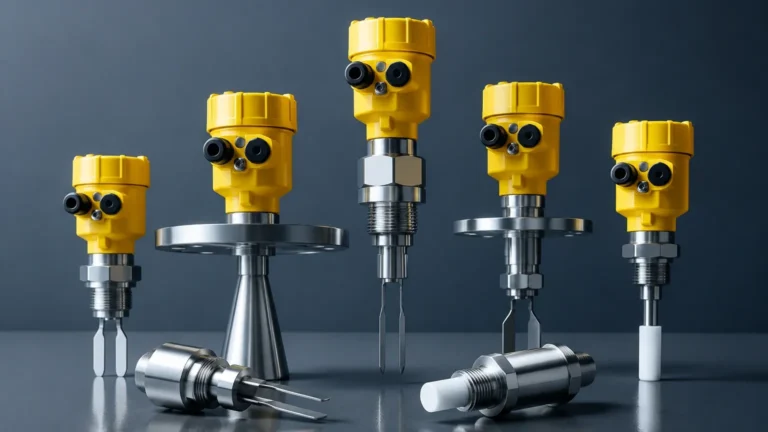
Modern industrial applications often utilize vibrating fork Level Switches. These instruments feature a sensing element that vibrates at its natural resonant frequency in the air. When the fork is submerged in a liquid or solid, the frequency shifts. The internal electronics detect this frequency change and trigger a relay output. This technology is highly reliable as it is largely unaffected by flow, turbulence, bubbles, or foam.
Capacitance and Conductivity
Capacitive switches measure the change in electrical capacitance between the probe and the vessel wall. When the medium covers the probe, the dielectric constant changes, signaling the switch. Conductive switches, conversely, rely on the electrical conductivity of the liquid itself to complete a circuit between two electrodes.
Measurement Principles of Level Indicators
Level indicators, or continuous level transmitters, provide a constant stream of data representing the exact level of the media. This allows for sophisticated process control, trend analysis, and precise inventory management.
Non-Contact Radar and Ultrasonic
Radar level meters emit high-frequency electromagnetic pulses that reflect off the surface of the material. By measuring the Time of Flight (ToF) of the signal, the device calculates the distance to the surface. Ultrasonic sensors operate on a similar principle but use sound waves. Radar is generally preferred for high-temperature or high-pressure environments, or where dust and vapor might interfere with sound waves.
Hydrostatic Pressure
Hydrostatic level transmitters are installed at the bottom of a tank. They measure the pressure exerted by the liquid column above them. Since pressure is directly proportional to the height of the liquid (based on the density of the fluid), the sensor can accurately calculate the level. This is a common choice for water reservoirs and deep wells.
Magnetic Level Gauges
A magnetic level indicator provides both a visual representation and, often, a remote signal. It consists of a bypass chamber attached to the tank. A float inside the chamber moves with the liquid level, and its internal magnet flips colored flaps on an external scale. This provides a clear, local visual confirmation for operators without requiring power for the visual component.
Key Comparison: Level Switch vs Level Indicator
When evaluating level switch vs level indicator, the decision is usually driven by the functional requirement of the control loop.
| Feature | Level Switch | Level Indicator |
| :— | :— | :— |
| Data Output | Discrete (On/Off) | Continuous (4-20mA, HART, RS485) |
| Primary Function | Alarm, Overfill Protection, Pump Control | Inventory Tracking, Process Management |
| Complexity | Low (Simple calibration) | High (Requires scaling and mapping) |
| Installation | Can be side or top-mounted | Usually top-mounted (except Hydrostatic) |
| Cost | Generally lower per unit | Generally higher due to advanced electronics |
| Redundancy | Often used as a safety backup | Used as the primary control instrument |
Point Level vs. Continuous Monitoring
The fundamental difference in the level switch vs level indicator debate is the granularity of information. A level switch is ideal for "event-based" actions. For example, if a tank must stop filling at 90% capacity to prevent a spill, a high-level switch is the most reliable tool. It provides a hard-wired safety interlock that is independent of the primary control system.
In contrast, if a facility needs to know exactly how many liters of a chemical are consumed per hour, a level indicator is required. It provides a 0% to 100% scale, allowing the PLC (Programmable Logic Controller) to modulate pump speeds or calculate flow rates based on volume changes over time.
Practical Selection Criteria
Choosing the correct instrument requires a thorough analysis of the process conditions and the physical properties of the media.
1. Media Characteristics
* Viscosity: High-viscosity liquids or those prone to coating may cause mechanical float switches to stick. In these cases, a vibrating fork switch or a non-contact radar indicator is superior.
* Dielectric Constant: For capacitive switches or radar indicators, the dielectric constant of the material dictates the strength of the reflected signal.
* Solids vs. Liquids: For bulk solids (like grain or plastic pellets), rotary paddle switches are common for point detection, while 3D radar scanners are used for continuous indication.
2. Process Environment
* Pressure and Temperature: Level switches are available in heavy-duty versions capable of withstanding over 100 bar (1450 psi) and temperatures exceeding 250°C (482°F). Level indicators, particularly radar, are also designed for these extremes, but ultrasonic sensors are typically limited to atmospheric or low-pressure applications due to the way sound travels.
* Turbulence and Foam: If the liquid surface is turbulent, a level indicator may provide erratic readings unless dampening filters are applied. A level switch with a built-in time delay can ignore momentary splashes to prevent "chattering" of the relay.
3. Safety and Redundancy
In many high-risk industries, such as oil and gas or chemical manufacturing, the "best practice" is not to choose one over the other, but to use both. A continuous level indicator manages the daily operation, while independent high and low level switches act as the Safety Instrumented System (SIS). This ensures that if the indicator fails or the PLC freezes, the hardware-based switches will still prevent a catastrophic overfill or a pump running dry.
Installation Considerations
Proper installation is as critical as instrument selection. For both switches and indicators, several factors must be considered:
* Dead Zones (Blocking Distance): Continuous indicators like ultrasonic and radar have a "dead zone" near the sensor face where measurements cannot be taken. This must be factored into the tank height calculations. Switches generally do not have this issue but must be positioned far enough from the tank wall to avoid interference.
* Nozzle Geometry: For top-mounted indicators, the internal diameter and height of the mounting nozzle can cause signal interference (false echoes). Modern radar units allow for "false echo suppression" to map out these obstructions.
* Orientation: Vibrating fork switches should be installed so that the forks are oriented vertically (if side-mounted) to allow material to flow through them easily, preventing build-up between the tines.
Limitations and Risks
Level Switch Limitations
The primary risk with a level switch is its "blindness" between points. If a tank has only a high and a low switch, the operator has no information regarding the level when it is at 50%. Furthermore, mechanical switches are subject to wear and tear; a stuck float can lead to a failure to signal an alarm.
Level Indicator Limitations
Indicators are more susceptible to signal interference. In silos containing powders, dust clouds can attenuate ultrasonic signals. In liquids, heavy foam can absorb radar pulses, leading to a "loss of echo" error. Additionally, indicators require more sophisticated calibration—mapping the tank shape (especially if it has a conical bottom) is necessary to convert height into accurate volume.
Frequently Asked Questions (FAQ)
Q: Can I use a level indicator to perform the function of a level switch?
A: Yes, most modern level transmitters have programmable relay outputs or can trigger alarms via the control system. However, for safety-critical applications, a dedicated, independent level switch is recommended to provide true redundancy.
Q: Which is more cost-effective for a simple water tank?
A: For basic pump control (start at low, stop at high), a pair of float switches is significantly more affordable. If you need to monitor water usage trends, a hydrostatic level indicator is the better investment.
Q: How do I handle build-up on the sensor?
A: For sticky media, use a vibrating fork switch with a polished surface or a non-contact radar indicator. These technologies are designed to ignore a certain amount of material coating on the probe or to avoid contact with the media entirely.
Q: What units of measurement are standard?
A: In global industrial applications, metric units are standard. Levels are typically measured in millimeters (mm) or meters (m), with pressures in bar or kilopascals (kPa). For North American projects, these are often converted to inches/feet and PSI.
Conclusion
The choice between a level switch vs level indicator is defined by the specific needs of the process. Level switches provide essential, reliable point-level detection for alarms and basic control, while level indicators offer the comprehensive data required for modern, automated process management. By understanding the physical principles and limitations of each, engineers can design systems that are both safe and highly efficient. For complex vessels, the integration of both technologies remains the gold standard for industrial reliability.