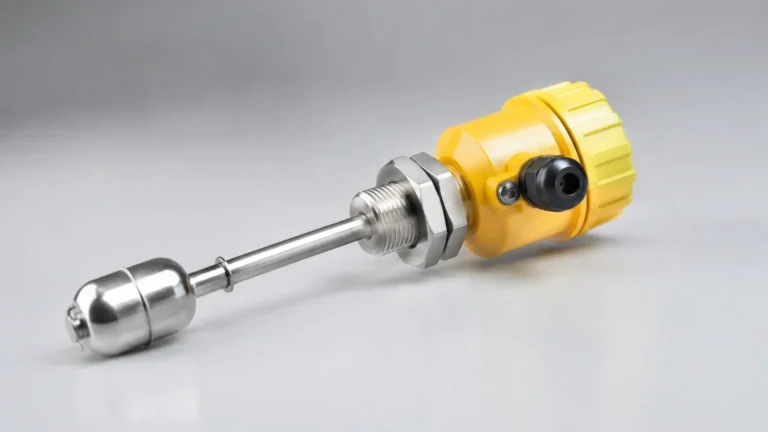
Level Switch Enm 10
Level Switch Enm 10
In the realm of industrial fluid management, the level switch ENM 10 represents one of the most straightforward yet essential components for automated liquid level control. Primarily utilized in wastewater, sewage, and water treatment applications, this float-type sensor provides a reliable binary signal to control pumps, actuate valves, or trigger high/low-level alarms. For process engineers and facility managers, understanding the mechanical nuances and application boundaries of the ENM 10 is critical for ensuring system longevity and preventing costly overflows or dry-run conditions.
As a professional manufacturer of industrial level measurement instruments, Welk provides a comprehensive range of Level Switches designed to meet the rigorous demands of industrial automation. While the ENM 10 is a staple for simple liquid regulation, it is part of a broader hierarchy of level measurement technologies that include ultrasonic, radar, and hydrostatic sensors.
Understanding the Operating Principle of Tilt Float Level Switches
The level switch ENM 10 operates on the principle of buoyancy and gravity-induced tilting. Unlike vertical float switches that slide up and down a stationary stem, the ENM 10 is a "free-hanging" float switch. It consists of a buoyant body—usually constructed from high-density polypropylene—connected to a flexible electrical cable.
The Physics of the Tilt Mechanism
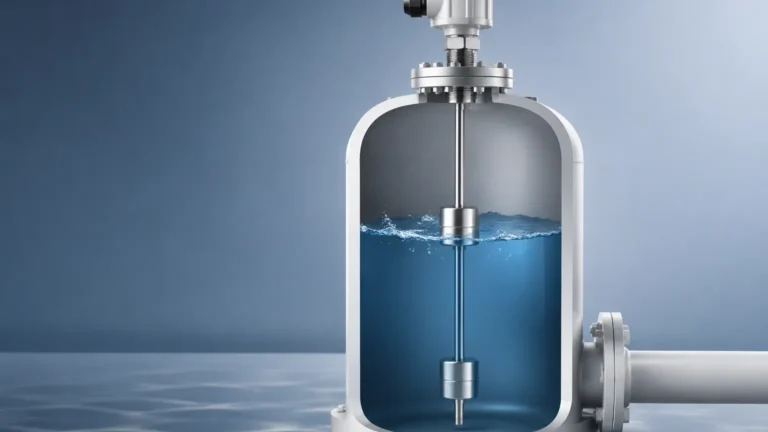
Inside the hermetically sealed housing of the ENM 10 is a mechanical microswitch and a moving weight (typically a steel ball). The operation follows a specific sequence:
1. Rising Level: As the liquid level in the tank or sump rises, the buoyant force ($F_b$) eventually exceeds the weight of the float body. The float begins to rise with the liquid surface.
2. The Tilt Point: Once the liquid reaches a certain height determined by the cable's anchor point, the float body is forced to tilt or tip over.
3. Contact Actuation: When the tilt angle reaches a specific threshold (often around 45 degrees), the internal weight slides across the microswitch, changing the electrical state from "Open" to "Closed" (or vice versa, depending on the wiring configuration).
4. Falling Level: As the liquid level recedes, the float returns to a vertical hanging position, the weight slides back, and the switch resets.
This mechanical simplicity is the ENM 10's greatest strength, as it requires no external power to sense the level, relying entirely on the physical properties of the liquid and the mechanical design of the internal switch.
Technical Specifications and Material Composition
To select the correct level switch for a specific environment, engineers must evaluate the material compatibility and electrical ratings. The ENM 10 is designed for durability in harsh environments, but it has specific operational limits.
Material Standards
* Float Housing: Typically Polypropylene (PP), which offers excellent resistance to many alcohols, acids, and alkalis. It is the standard choice for sewage and greywater applications.
* Cable Jacket: Often available in PVC or specialized rubber (such as Chloroprene). The choice of cable material is vital; for example, PVC is suitable for standard water, while rubber or specialized polymers are required for oily or chemically aggressive fluids.
* Internal Switch: A microswitch with gold-plated or silver contacts to ensure low electrical resistance and high reliability over thousands of cycles.
Electrical and Physical Parameters
| Parameter | Typical Value (Metric) | Notes |
| :— | :— | :— |
| Maximum Temperature | 60°C to 80°C | Dependent on cable material |
| Pressure Rating | 0.2 MPa (2 bar) | Designed for non-pressurized tanks |
| Enclosure Rating | IP68 | Dust-tight and continuous immersion |
| Liquid Density | 0.95 to 1.10 g/cm³ | Must be buoyant in the specific media |
| Switching Voltage | 250V AC / 24V DC | Compatibility with PLCs and relays |
| Cable Lengths | 6m, 10m, 20m, 30m | Must be specified at time of order |
Selection Criteria: When to Choose the ENM 10 vs. Other Level Switches
While the level switch ENM 10 is highly effective for wastewater, it is not a universal solution. Choosing the right technology requires a comparison of the ENM 10 against other common Level Switches found in the Welk catalog.
Comparison Table: Point Level Technologies
| Technology | Best For | Limitations | Maintenance Level |
| :— | :— | :— | :— |
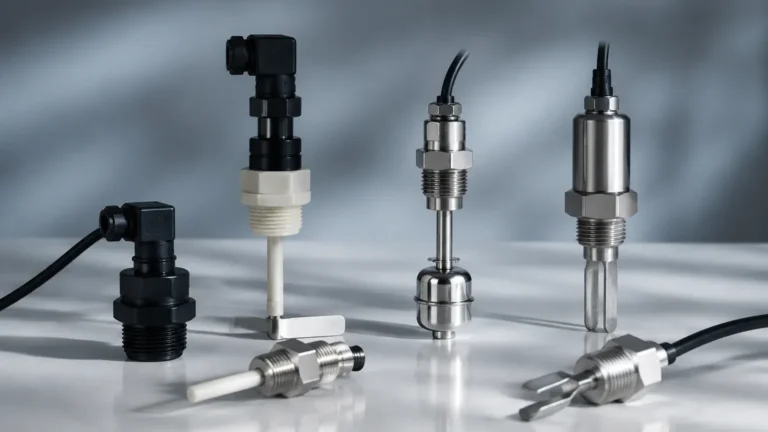
| Tilt Float (ENM 10) | Sewage, sumps, large tanks | High turbulence, narrow spaces | Low (check for debris) |
| Tuning Fork | Powders, granules, liquids | Viscous fluids that coat the fork | Very Low |
| Ultrasonic Switch | Non-contact, corrosive media | Foam, vapor, high pressure | Low |
| Magnetic Float | Clean water, small tanks | Susceptible to magnetic particles | Moderate |
| Capacitance Probe | High temperature, high pressure | Requires calibration for media | Moderate |
Key Evaluation Questions
Before deploying an ENM 10, project managers should confirm:
1. Is there sufficient space? The ENM 10 requires a "swing radius" to tilt. In very narrow pipes or confined wells, the float may get stuck against the wall.
2. Is the media turbulent? Rapidly moving water can cause the float to bounce, leading to "chatter" (rapid switching) which can damage pump motors. In these cases, a stilling well or a damping relay is required.
3. What is the chemical profile? While PP is robust, certain industrial solvents can soften the plastic over time. Always cross-reference the media's CAS number with a material compatibility chart.
Installation Best Practices for Reliable Operation
The reliability of a level switch ENM 10 is often determined more by its installation than its manufacture. Improper anchoring is the leading cause of switch failure.
Setting the Switching Level
The switching level is adjusted by changing the length of the "free cable" between the anchor point and the float body.
* The Pivot Point: The cable should be secured to a stationary pipe or a weighted cable hanger.
* The Differential: A longer free cable creates a larger differential (the distance between the "on" and "off" points). A shorter cable provides a tighter control range but increases the risk of the float not having enough leverage to tilt properly.
Installation Checklist
* Avoid Turbulence: Do not install the switch directly under an inlet pipe where falling water can push the float down.
* Cable Weights: Use a dedicated sliding weight on the cable to ensure the pivot point remains submerged and stable. This prevents the entire cable from floating, which would delay the switching action.
* Strain Relief: Ensure the cable is not pulled tight against sharp edges. Use a cable gland or a rounded support bracket to prevent insulation wear.
* Multi-Switch Arrays: In most pump control systems, two or three switches are used: one for "Pump Start," one for "Pump Stop," and one for "High-Level Alarm."
Maintenance, Troubleshooting, and Limitations
Although the ENM 10 is marketed as a low-maintenance device, industrial environments necessitate periodic inspection.
Common Risks and Limitations
1. Fouling and Ragging: In sewage applications, fibrous materials (rags, wet wipes) can wrap around the cable or the float. This added weight or physical tethering can prevent the switch from rising or tilting, leading to system failure.
2. Fatigue: While the microswitch is rated for high cycles, the constant flexing of the cable at the entry point of the float can eventually lead to copper fatigue and an open circuit.
3. Specific Gravity: If the liquid density changes significantly (e.g., heavy sludge or thick oil), the float may not be buoyant enough to reach the tilt angle.
Troubleshooting Steps
* Switch won't trigger: Check for debris preventing the tilt. Use a multimeter to check continuity at the terminal block while manually tilting the float.
* Intermittent Signal: Inspect the cable jacket for nicks or cracks that might allow moisture to enter, causing a short circuit.
* Pump won't stop: The float may be caught on a ladder, pipe, or pump housing. Ensure the "swing zone" is clear of obstructions.
Frequently Asked Questions (FAQ)
Q: Can the ENM 10 be used in drinking water?
A: Yes, provided the model is specified with a non-toxic cable jacket (such as specialized EPDM or certified PVC) and the housing is food-grade polypropylene. Always verify local health department certifications.
Q: What is the maximum depth the ENM 10 can be submerged?
A: Most ENM 10 switches are rated for IP68 up to 20 meters of water column (approx. 2 bar). Exceeding this depth may compress the float body or force moisture through the cable seals.
Q: How do I wire the switch for "Emptying" vs. "Filling"?
A: Most tilt switches feature three wires: Common (COM), Normally Open (NO), and Normally Closed (NC). For emptying a tank (pump down), use COM and NO. For filling a tank (pump up), use COM and NC.
Q: Is the ENM 10 suitable for hazardous (Ex) zones?
A: Standard models are not. If your application involves flammable gases or vapors (such as in certain chemical sumps), you must use an intrinsically safe version of the switch paired with an isolation barrier in the control panel.
Conclusion
The level switch ENM 10 remains a cornerstone of liquid level management due to its cost-effectiveness and mechanical simplicity. By understanding the physics of the tilt mechanism and adhering to strict installation guidelines, engineers can implement a robust control solution for water and wastewater applications. However, for more complex industrial processes involving high pressure, extreme temperatures, or the need for continuous data, Welk recommends exploring advanced Level Switches and transmitters to ensure maximum process safety and efficiency.