Level Switch Jf302t
Level Switch Jf302t
In the landscape of industrial automation, point level detection serves as a critical safeguard against tank overflows, dry-running pumps, and material shortages. Among the various technologies available, the level switch jf302t represents a specialized category of vibrating level switches designed primarily for solid materials. This guide examines the technical foundations, selection criteria, and practical installation requirements for this specific instrument type within the broader context of industrial Level Switches.
Measurement Principles: The Vibrating Tuning Fork
Before selecting or installing a level switch jf302t, it is essential to understand the physical principles that govern its operation. This device belongs to the family of vibrating probe sensors, often referred to as tuning fork switches.
Piezoelectric Excitation
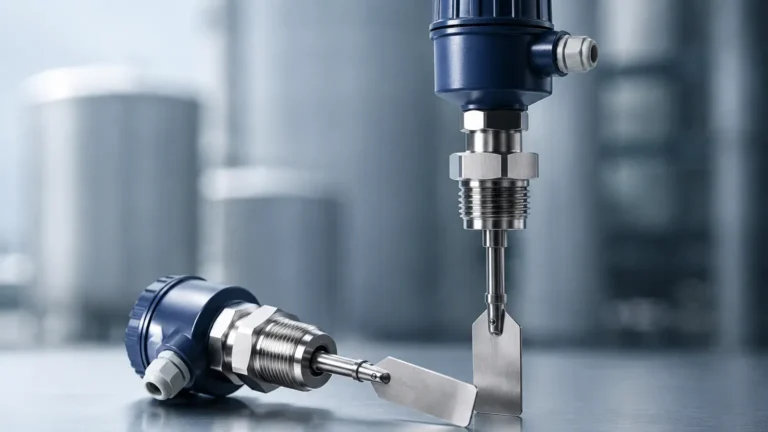
The core of the level switch jf302t consists of two tines (the fork) and a set of piezoelectric crystals housed within the electronic assembly. One crystal is energized with a high-frequency electrical signal, causing the fork to vibrate at its natural resonant frequency in the air. This frequency is typically in the range of 80 Hz to 400 Hz, depending on the specific fork geometry.
Frequency Shift Detection
When the process material—such as powder, granules, or pellets—reaches the level of the probe and covers the tines, the mechanical vibration is dampened. This contact causes a significant shift in the resonant frequency or a complete cessation of vibration. A second piezoelectric crystal acts as a receiver, detecting this change in frequency or amplitude. The internal electronics process this signal and trigger a relay or transistor output to signal the high or low level state.
Advantages of the Vibrating Principle
Unlike rotary paddle switches, the level switch jf302t has no moving parts that can wear out or jam. Unlike capacitive sensors, it is largely unaffected by changes in the dielectric constant of the material, making it a highly stable choice for varying bulk solids.
Key Technical Features of the Level Switch Jf302t
The level switch jf302t is engineered for versatility in dry bulk applications. Its design features usually include components that prioritize durability and signal integrity in harsh environments.
* Material Construction: The wetted parts are typically manufactured from stainless steel (SS304 or SS316L), providing resistance to abrasion and corrosion from common industrial chemicals.
* Sensitivity Adjustment: Most models feature a sensitivity potentiometer or dip switches. This allows the operator to calibrate the device for different bulk densities, ranging from light powders (as low as 0.05 g/cm³) to heavy aggregates.
* Output Options: Standard configurations provide a DPDT (Double Pole Double Throw) relay output, though NPN/PNP transistor outputs are common for direct integration into PLC (Programmable Logic Controller) systems.
* Temperature and Pressure Ratings: Standard models are rated for process temperatures between -40°C and 150°C, with pressure ratings typically reaching up to 20 bar (approx. 290 psi).
Selection Criteria and Comparison
Choosing the correct instrument requires comparing the level switch jf302t against alternative technologies. The following table provides a comparison based on typical industrial performance metrics.
| Feature | Level Switch Jf302t (Vibrating) | Rotary Paddle Switch | RF Admittance Switch |
| :— | :— | :— | :— |
| Moving Parts | None | Mechanical Motor/Paddle | None |
| Material Density | Very Low to High | Medium to High | Low to High |
| Build-up Resistance | Moderate | Low | High |
| Maintenance | Minimal | Periodic (Motor/Seal) | Minimal |
| Primary Application | Powders, Fine Granules | Heavy Solids, Grains | Slurries, Sticky Solids |
| Sensitivity | Adjustable | Fixed by Paddle Size | Highly Adjustable |
When evaluating the level switch jf302t for a specific project, engineers must confirm the bulk density of the material. If the material is extremely light (e.g., fumed silica), the vibration damping might be insufficient unless the switch is specifically calibrated for low-density detection.
Installation and Mounting Best Practices
Correct installation is the most significant factor in the longevity and reliability of any level switch. For the level switch jf302t, several mechanical considerations must be addressed during the engineering phase.
Orientation and Positioning
* Top Mounting: When installed from the top of a silo, the probe length must be specified to reach the desired high-level trip point. For long probes, support brackets may be necessary to prevent the fork from bending under the lateral force of moving material.
* Side Mounting: This is the most common installation for the level switch jf302t. The tines should be oriented vertically (the "flat" side of the forks facing the flow) to prevent material from building up between the tines, which could cause a false trigger.
Protection from Material Impact
In silos where material is dropped from a significant height, the falling product can exert massive force on the probe. It is recommended to install a protective baffle or "roof" (a V-shaped metal plate) approximately 100mm to 150mm above the sensor to divert the direct impact of the material.
Cable Entry and Sealing
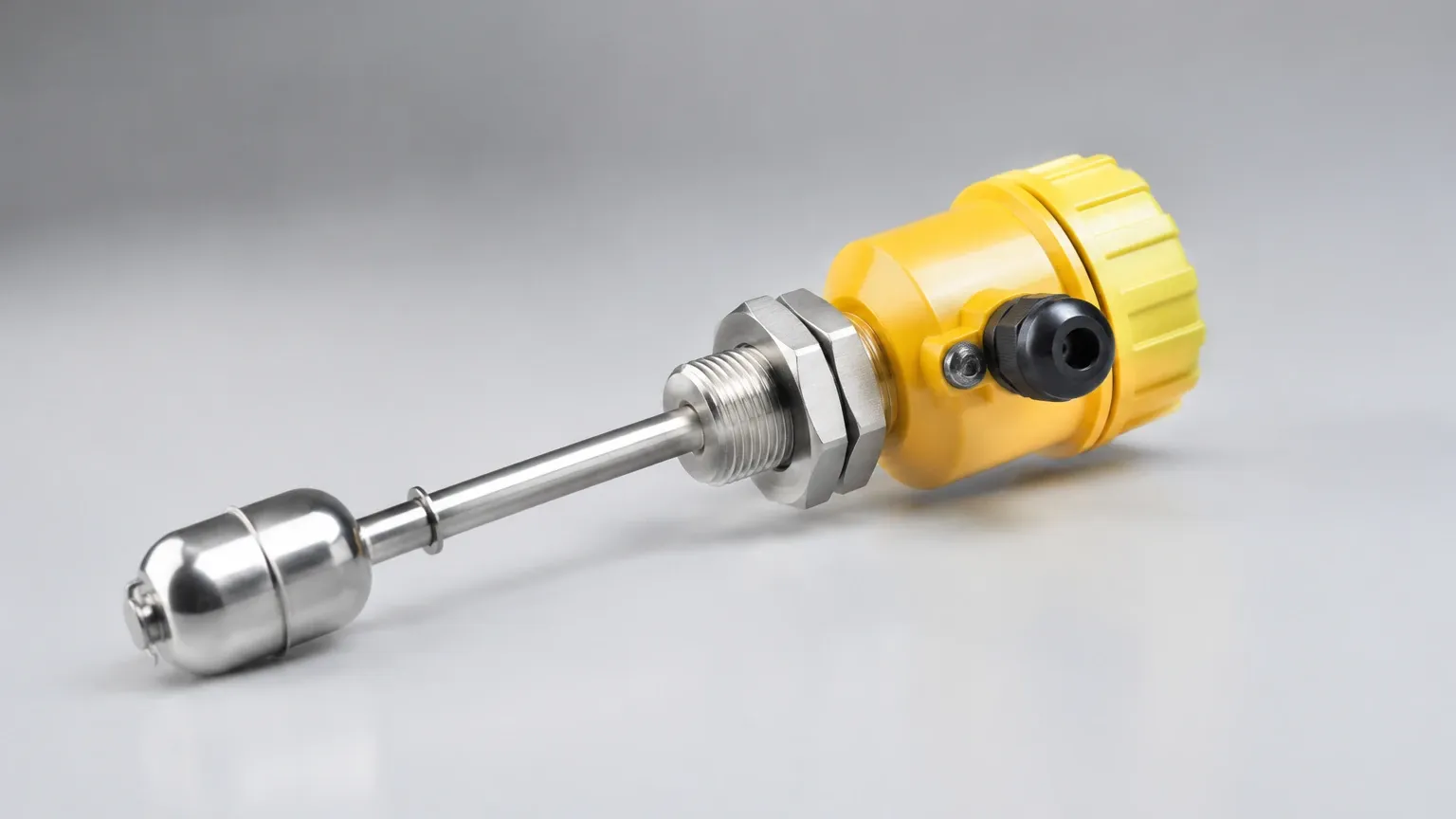
The housing should always be installed with the cable entries facing downward to prevent moisture from entering the enclosure via the conduit. Using a drip loop in the cabling is a standard industry practice to ensure that rainwater or condensation runs off the cable before reaching the gland.
Operational Limitations and Environmental Factors
While the level switch jf302t is robust, it is not universal. Understanding its limitations prevents premature failure or inaccurate readings.
1. Material Bridging: If the material is damp or prone to clumping, it may bridge the gap between the two tines of the fork. Once bridged, the fork will continue to signal a "covered" state even if the silo level drops. In such cases, a single-probe vibrating rod or an RF admittance sensor may be more appropriate.
2. Extreme Vibration: If the tank or silo itself is subject to heavy external vibration (from nearby heavy machinery or pneumatic vibrators), the sensor's internal electronics may struggle to distinguish the process signal from the background noise. Mounting the electronics remotely or using vibration-dampened mounts can mitigate this.
3. Coating and Buildup: While the vibration naturally sheds some material, heavy coatings of sticky substances will eventually dampen the vibration permanently. Regular inspection is required in applications involving hygroscopic powders.
Maintenance and Troubleshooting Guide
The level switch jf302t is designed for low-maintenance operation, but periodic checks ensure system integrity.
* Visual Inspection: Every 6 to 12 months, the probe should be inspected for signs of mechanical wear or significant material buildup. If the tines are eroded (common in abrasive sand or glass cullet applications), the resonant frequency will change, and the unit may fail.
* Signal Testing: Most modern Level Switches include a test magnet or a button on the internal circuit board. This allows technicians to simulate a "covered" state to verify that the downstream alarms, pumps, or valves respond correctly.
* Troubleshooting False Alarms: If the switch indicates a full state when the tank is empty, check for material bridging between the tines. If the tines are clear, the sensitivity may be set too high, causing the unit to trigger on minor dust accumulation.
Frequently Asked Questions (FAQ)
Q: Can the level switch jf302t be used for liquids?
A: While specifically designed for solids, some vibrating fork switches can be used for liquids. However, the tuning fork for liquids is usually smaller and tuned to a much higher frequency. It is best to consult the manufacturer's technical datasheet to ensure the jf302t model version is compatible with the specific density and viscosity of your liquid.
Q: What is the maximum grain size the switch can handle?
A: Generally, the level switch jf302t can handle granules up to 10mm in diameter. For larger rocks or heavy aggregates, a rotary paddle switch or a heavy-duty tilt switch is often more durable.
Q: Is the device explosion-proof?
A: Many versions of the level switch jf302t are available with ATEX or IECEx certifications for use in hazardous dust environments (Zone 20, 21, or 22). Always verify the marking on the individual unit's nameplate before installing in a classified area.
Q: How do I adjust the sensitivity for very light powders?
A: Locate the sensitivity adjustment (usually a small screw or dial on the electronic module). With the probe uncovered, turn the sensitivity toward the "High" setting until the unit triggers, then back it off slightly until the output resets. Always test the operation with the actual material to ensure a reliable switch point.
By following these engineering guidelines and selecting the appropriate configuration for the material density and environmental conditions, the level switch jf302t provides a reliable, long-term solution for point level control in modern bulk handling systems.