Level Switch Working Principle
Level Switch Working Principle
In industrial process control, level switches serve as the primary line of defense for safety and automation. Unlike continuous level transmitters that provide a constant data stream of the fluid or solid height, a level switch is a point-level detection device. Its primary function is to open or close an electrical circuit when a specific level is reached. This "on/off" signal is critical for preventing tank overflows, protecting pumps from dry running, and managing inventory in silos.
Understanding the level switch working principle is essential for engineers and maintenance professionals to ensure they select the correct technology for their specific application environment. Because no single technology fits every scenario, industrial facilities utilize various physical principles—ranging from buoyancy and vibration to capacitance and conductivity—to achieve reliable point-level detection.
Core Concepts of Level Switching
At its most basic level, a level switch consists of a sensing element and an output signal (usually a relay, transistor, or current switch). When the process material—whether liquid, slurry, or bulk solid—comes into contact with or reaches the proximity of the sensor, the physical state of the sensor changes. This change is then converted into an electrical signal to trigger an alarm or control a valve or pump.
Reliable Level Switches are designed to withstand harsh industrial conditions, including high pressures, corrosive chemicals, and extreme temperatures. The choice of working principle depends heavily on the physical properties of the medium, such as density, dielectric constant, conductivity, and viscosity.
Primary Level Switch Working Principles
1. Float and Magnetic Level Switches
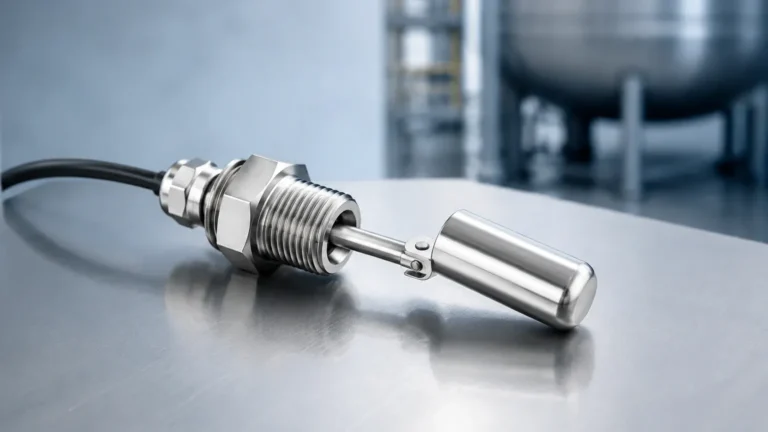
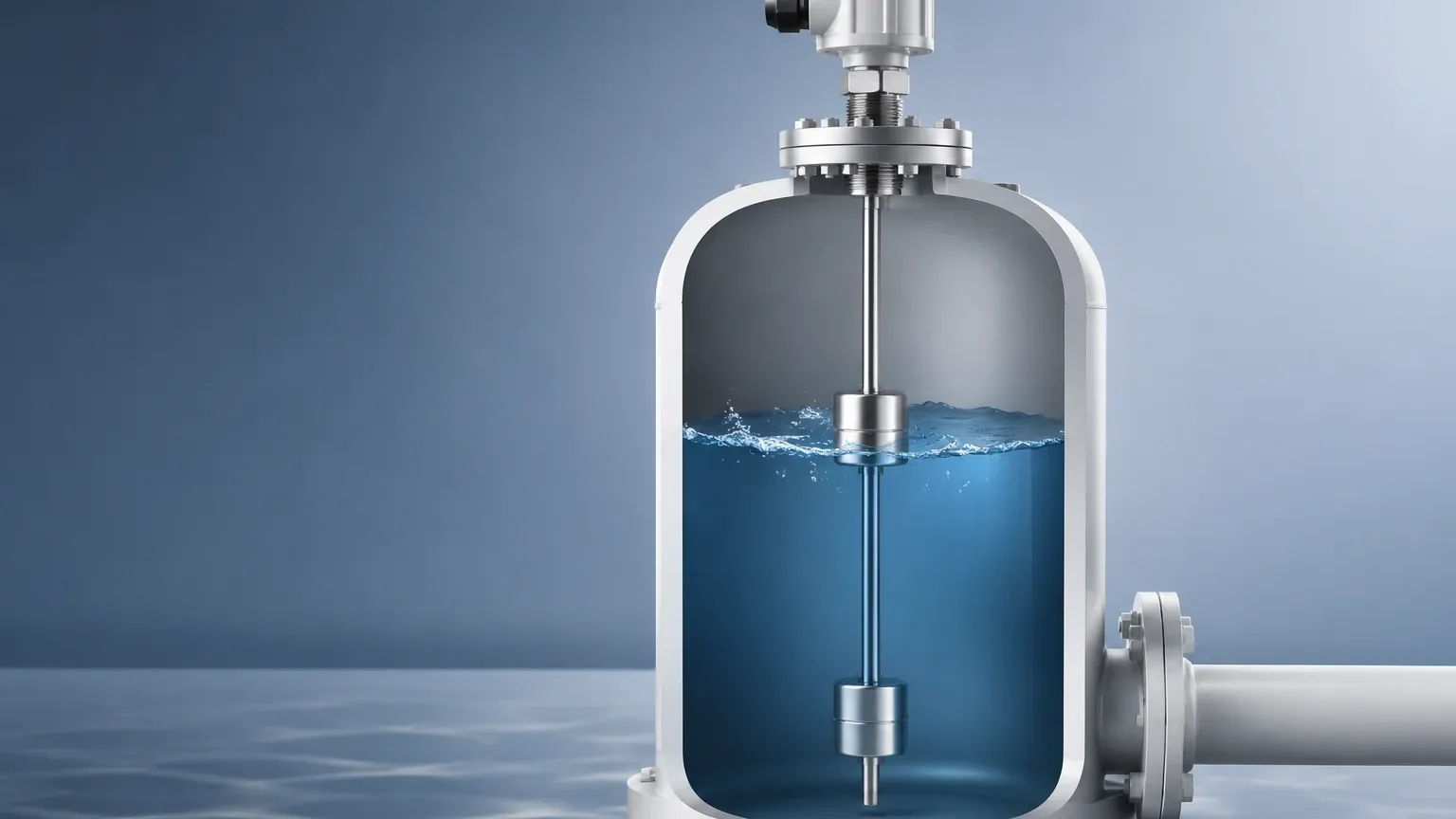
The float level switch is one of the oldest and most straightforward technologies. It operates on the principle of buoyancy.
* Working Principle: A buoyant float contains an internal magnet. As the liquid level rises or falls, the float moves along a stem. Inside the stem, a hermetically sealed reed switch is positioned at a specific height. When the float's magnet reaches the reed switch, the magnetic field causes the reed contacts to close (or open), completing the circuit.
* Best For: Clean liquids with low viscosity, such as water, oils, and fuels.
* Limitations: They are prone to mechanical failure if the liquid contains debris or if the medium is highly viscous, which can cause the float to stick to the stem.
2. Tuning Fork (Vibrating) Level Switches
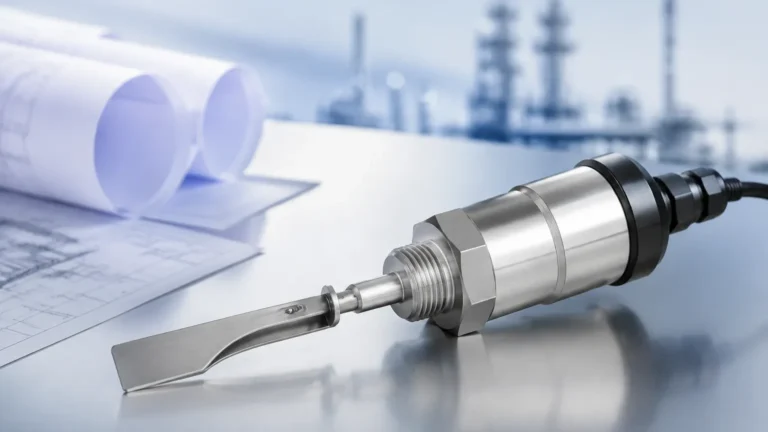
Vibrating level switches, often called tuning fork switches, are widely used for both liquids and granulated solids.
* Working Principle: The sensor consists of a fork-shaped element that is piezoelectrically energized to vibrate at its natural resonant frequency in air. When the fork is submerged in a liquid or covered by a solid, the frequency of vibration changes or the vibration is dampened entirely. An internal electronic circuit detects this change in frequency and converts it into a switching command.
* Best For: Applications requiring high reliability with minimal maintenance. They are largely unaffected by flow, turbulence, bubbles, or foam.
* Limitations: Not suitable for extremely sticky media that might bridge the gap between the fork tines, as this would simulate a "covered" state even when the level has dropped.
3. Capacitance Level Switches
Capacitance switches operate based on the electrical property of capacitance, which is the ability of a system to store an electric charge.
* Working Principle: The sensor probe and the vessel wall (or a second reference probe) act as two plates of a capacitor. The medium in the tank acts as the dielectric material. As the level rises and replaces air (which has a low dielectric constant) with the process material (which has a higher dielectric constant), the capacitance of the system increases. Once the capacitance reaches a pre-set threshold, the switch is activated.
* Best For: Powders, granules, and liquids with consistent dielectric properties. They are often used in chemical processing.
* Limitations: They require calibration for the specific material being measured. Changes in the moisture content of solids can affect the dielectric constant and lead to false readings.
4. Conductivity Level Switches
Conductivity switches are specialized for detecting the level of conductive liquids.
* Working Principle: These switches use a low-voltage, current-limited power source applied between two electrodes (or one electrode and a metallic tank wall). When the conductive liquid touches the electrode, it completes an electrical circuit. This flow of current is detected by a controller, which then toggles the switch output.
* Best For: Water, acids, alkalis, and other aqueous solutions.
* Limitations: They cannot be used with non-conductive liquids like oils or ultrapure water. They are also susceptible to electrode fouling or coating if the liquid contains minerals that build up over time.
5. Rotary Paddle Level Switches
Specifically designed for bulk solids, the rotary paddle switch is a mechanical solution for silos and hoppers.
* Working Principle: A low-speed motor rotates a paddle. When the solid material rises to the level of the paddle, it creates resistance that stops the rotation. This stall in the motor triggers a microswitch that provides the signal output. When the material level drops, the paddle is free to rotate again, and the switch resets.
* Best For: Sand, cement, plastic pellets, and grains.
* Limitations: Mechanical wear is a factor over long periods. They are not suitable for liquids.
Technical Selection Criteria
Selecting the right level switch working principle requires a detailed analysis of the process conditions. Engineers should use the following table as a preliminary guide for technology selection:
| Technology | Suitable Media | Max Temp (Approx.) | Max Pressure (Approx.) | Key Advantage |
| :— | :— | :— | :— | :— |
| Float | Clean Liquids | 200°C (392°F) | 40 bar (580 psi) | Simple, no power needed |
| Tuning Fork | Liquids/Solids | 250°C (482°F) | 64 bar (928 psi) | Versatile, no calibration |
| Capacitance | Liquids/Solids | 400°C (752°F) | 100 bar (1450 psi) | High temp/pressure capability |
| Conductivity | Conductive Liquids | 150°C (302°F) | 20 bar (290 psi) | Low cost, multi-point |
| Rotary Paddle | Bulk Solids | 80°C (176°F) | Atmospheric | Robust for heavy solids |
Installation and Engineering Considerations
Proper installation is just as important as selecting the right working principle. Even the most advanced level switch will fail if it is improperly positioned or installed.
Orientation and Positioning
Level switches can typically be mounted either vertically (from the top of the tank) or horizontally (through the side wall).
* Horizontal Mounting: Ideal for high or low-level alarms where the switch needs to actuate at a very specific point. For tuning fork switches, ensure the tines are oriented so that material can flow through them rather than build up on top of them.
* Vertical Mounting: Often used for multi-point float switches or when side-wall access is restricted. For ultrasonic or capacitance probes, ensure the probe is not too close to the tank wall to avoid interference.
Turbulence and Agitation
In tanks with mixers or high-velocity inflow, the physical force of the liquid can damage delicate sensors like floats or thin probes. In these cases, a stilling well (a pipe that surrounds the sensor to provide a calm area) should be installed to protect the device and prevent "chatter"—the rapid opening and closing of the switch due to surface waves.
Nozzle Length
When installing switches in nozzles, ensure the sensing element extends far enough into the vessel. If the sensor is recessed too far back into a narrow nozzle, material may become trapped (especially in solids or viscous liquids), leading to a permanent "high level" false alarm.
Limitations and Common Risks
While level switches are robust, they are not infallible. Understanding their limitations prevents process downtime:
1. Material Build-up: In applications involving slurries or sticky resins, material can coat the sensor. While tuning fork and capacitance switches often have "coat-rejection" logic, excessive build-up will eventually interfere with the level switch working principle.
2. Dielectric Changes: For capacitance switches, if the process changes from one chemical to another with a different dielectric constant, the switch may require recalibration to avoid false triggers.
3. Mechanical Wear: Moving parts, such as those in float and rotary paddle switches, are subject to fatigue and wear. In high-cycle applications, solid-state options like tuning forks are often preferred for their longer service life.
4. Electromagnetic Interference (EMI): Electronic switches must be properly shielded and grounded, especially in environments with large motors or variable frequency drives (VFDs) that generate significant electrical noise.
Frequently Asked Questions (FAQ)
Q: Can a level switch be used for continuous level measurement?
A: No. A level switch only detects whether the material has reached a specific point. For continuous tracking (0-100%), a level transmitter (radar, ultrasonic, or hydrostatic) is required.
Q: What is the difference between NPN and PNP outputs in electronic level switches?
A: These refer to the type of transistor output. PNP (Source) switches provide a positive voltage when activated, while NPN (Sink) switches provide a path to ground. The choice depends on the input requirements of your PLC (Programmable Logic Controller).
Q: How do I test if a level switch is working?
A: Most modern switches include a manual test button or a magnetic test point. For mechanical switches, you can manually move the float or paddle to observe the change in the electrical state using a multimeter.
Q: Are level switches safe for explosive environments?
A: Yes, but you must specify an intrinsically safe (IS) or explosion-proof (Ex d) version. These are designed to prevent the electrical circuit from providing enough energy to ignite a combustible atmosphere.
Conclusion
Selecting the appropriate level switch requires a balance between understanding the physical properties of the medium and the mechanical constraints of the vessel. By analyzing the level switch working principle—whether it be the buoyancy of a float, the resonance of a tuning fork, or the electrical conductivity of a liquid—engineers can implement a reliable and cost-effective solution for process safety. For high-demand industrial environments, consulting with a manufacturer like Welk ensures that the selected instrument meets the necessary accuracy and durability standards for long-term operation.