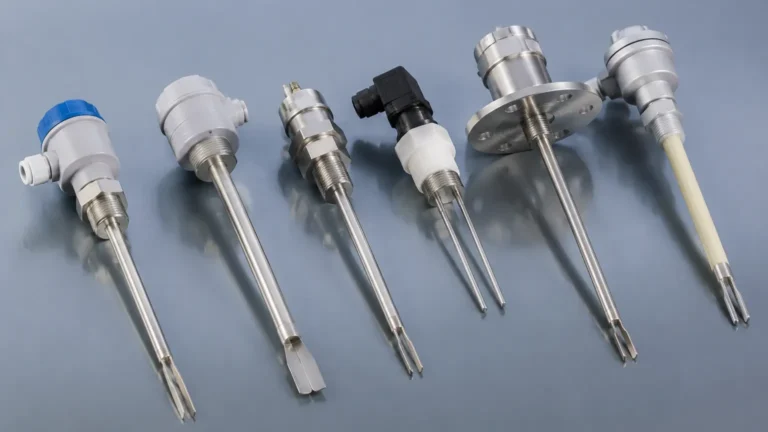
Enterprise Level Switches
Enterprise Level Switches
In the context of industrial automation and process control, enterprise level switches refer to high-reliability, point-level detection instruments designed for large-scale facility integration. Unlike basic residential or light-commercial sensors, enterprise-grade level switches are engineered to withstand the rigorous demands of chemical processing, water treatment, and oil and gas production. These devices serve as the primary line of defense for overfill protection, pump control, and dry-run prevention across vast industrial infrastructures.
Selecting the appropriate technology for enterprise-level applications requires a deep understanding of measurement principles, media characteristics, and environmental constraints. This guide provides a technical overview of level switch technologies, selection criteria, and installation best practices for engineering professionals.
Core Measurement Principles of Level Switches
Before implementing a level detection strategy, it is essential to understand the physics behind different switch types. Each technology interacts with the process media differently, influencing its suitability for specific enterprise environments.
1. Float Level Switches
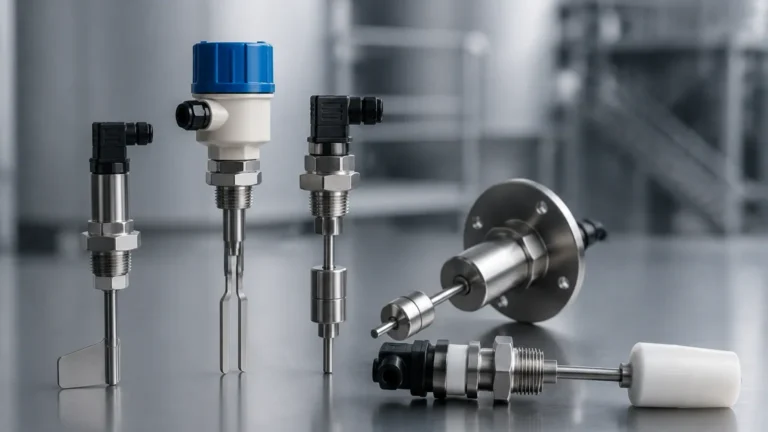
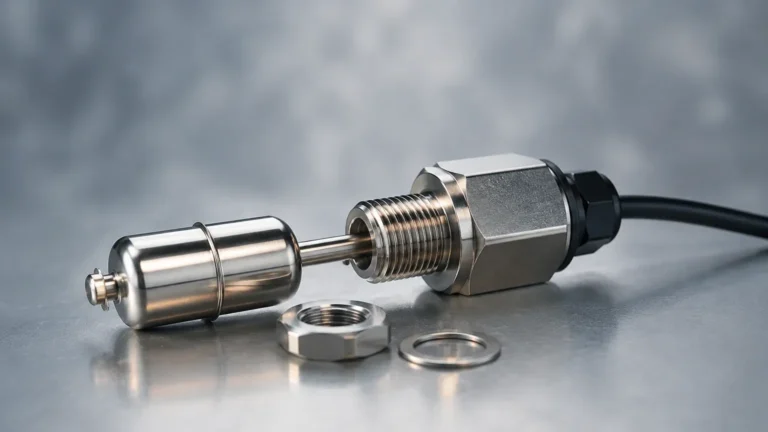
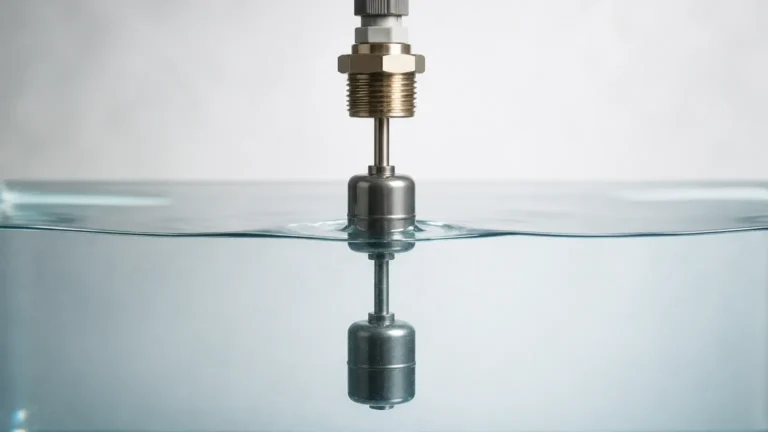
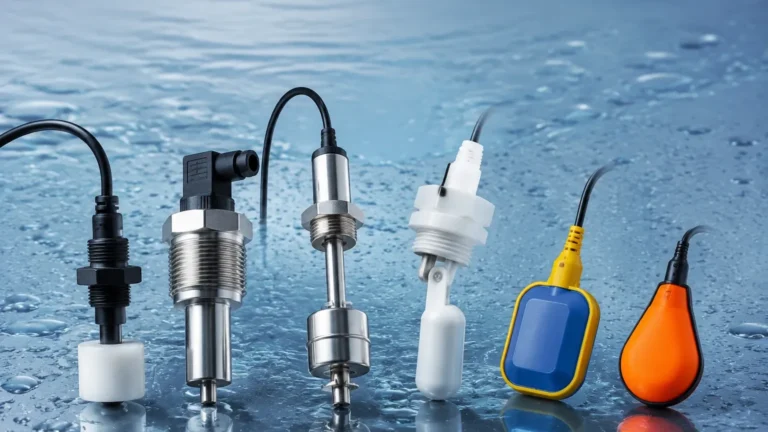
Float switches operate on the principle of buoyancy. A float containing a permanent magnet moves with the liquid level. When the float reaches a predetermined point, the magnetic field actuates a reed switch located within the stationary stem.
* Advantages: Simple, requires no external power for the sensing element, and is highly cost-effective.
* Limitations: Susceptible to mechanical wear and fouling if the liquid contains debris or high viscosity.
2. Vibrating Tuning Fork Switches
A tuning fork sensor uses piezoelectric crystals to vibrate the tines at their natural resonant frequency in the air. When the tines are submerged in a liquid or covered by solids, the frequency shifts or the vibration is damped. An electronic circuit detects this change and triggers the output.
* Advantages: Immune to changes in flow, turbulence, bubbles, or foam. High reliability for "fail-safe" applications.
* Limitations: Not suitable for extremely sticky media that might bridge the tines.
3. Capacitive Level Switches
Capacitive switches treat the sensor probe and the vessel wall (or a reference probe) as two plates of a capacitor. As the media rises and displaces air, the dielectric constant changes, altering the total capacitance. Once a specific threshold is reached, the switch changes state.
* Advantages: Can detect both liquids and solids; no moving parts.
* Limitations: Requires calibration for different media; sensitive to coating or build-up on the probe.
4. Ultrasonic Level Switches
These switches utilize high-frequency sound waves. A pair of piezoelectric crystals is mounted in a gap. When the gap is filled with liquid, the ultrasonic signal is transmitted across; when the gap is empty (filled with air), the signal is attenuated.
* Advantages: Non-contact options available; excellent for corrosive liquids.
* Limitations: Performance can be affected by high pressure or heavy foam which absorbs the sound signal.
5. Conductivity Level Switches
Designed for conductive liquids, these switches use low-voltage electrodes. When the liquid touches the electrode, an electrical circuit is completed through the media back to the tank wall or a ground probe.
* Advantages: Extremely simple and robust for water-based applications.
* Limitations: Only works with conductive liquids; cannot be used for oils or hydrocarbons.
Defining the "Enterprise" Requirement in Industrial Switches
When we discuss Level Switches at an enterprise scale, we are moving beyond simple on/off functionality. Enterprise-level systems demand specific features that ensure site-wide safety and data integration:
* Network Integration: Modern enterprise level switches often feature digital communication protocols such as IO-Link, HART, or Modbus. This allows for remote diagnostics, parameterization, and predictive maintenance.
* Material Integrity: For chemical or offshore applications, switches must be constructed from high-grade materials like 316L Stainless Steel, Hastelloy, or PTFE-coated alloys to resist corrosion.
* Certifications: Enterprise environments often require hazardous area certifications (ATEX, IECEx, or SIL2/3) to meet insurance and safety regulatory standards.
* Redundancy: Large-scale operations typically employ redundant switch configurations (e.g., 2-out-of-3 voting logic) to prevent false trips that could lead to costly plant shutdowns.
Practical Selection Table
The following table provides a quick reference for matching enterprise level switches to common industrial scenarios.
| Technology | Suitable Media | Max Temp (Typical) | Max Pressure (Typical) | Best Use Case |
| :— | :— | :— | :— | :— |
| Float | Clean Liquids | 150°C | 40 bar | Simple tank alarms |
| Tuning Fork | Liquids/Powders | 250°C | 64 bar | Overfill protection |
| Capacitive | Slurries/Solids | 200°C | 100 bar | Interface detection |
| Ultrasonic | Corrosive Liquids | 100°C | 10 bar | Chemical dosing |
| Conductivity | Water/Acids | 120°C | 20 bar | Boiler level control |
Installation Considerations for Enterprise Applications
Proper installation is as critical as technology selection. Even the most advanced enterprise level switches will fail if incorrectly positioned.
1. Avoid Turbulence: Do not install switches directly under a fill pipe. The turbulence and splashing can cause "chatter" or false triggering. If the location is unavoidable, use a stilling well.
2. Mounting Orientation: While many tuning fork switches can be mounted horizontally or vertically, float switches are often restricted to specific orientations. Ensure the switch has enough clearance to actuate fully without hitting internal tank structures like baffles or ladders.
3. Dead Zones: Be aware of the "dead zone" or unmeasurable region near the process connection. For top-mounted ultrasonic or capacitive switches, ensure the maximum level does not enter the blocking distance of the sensor.
4. Cable Entry: Always install cables with a drip loop. This prevents moisture from running down the cable and entering the housing, which is a leading cause of electronics failure in outdoor enterprise environments.

Limitations and Common Risks
Engineering teams must account for the following risks when deploying level switches at scale:
* Media Build-up: In wastewater or mining applications, material can accumulate on the sensor. Vibrating forks and capacitive sensors with "active shield" technology are better at ignoring build-up than traditional float switches.
* Gas Pockets: In high-pressure liquid lines, gas pockets can form. If a switch is placed at the top of a horizontal pipe, it may trigger a "dry" alarm even if the pipe is mostly full.
* Density Changes: Float switches rely on the density of the liquid. If an enterprise process switches from a high-density chemical to a low-density solvent, the float may no longer be buoyant enough to actuate the switch.
Maintenance and Calibration
For enterprise-level operations, a reactive maintenance strategy is rarely sufficient. Welk recommends a proactive approach:
* Proof Testing: Regularly simulate a high-level condition to ensure the switch and the subsequent alarm/interlock system function correctly. This is a requirement for SIL-rated safety loops.
* Cleaning Cycles: For sticky media, schedule periodic inspections to remove crusting or scaling from the sensing elements.
* Seal Inspection: Check cable glands and housing gaskets for signs of degradation, especially in environments with high UV exposure or temperature fluctuations.
Frequently Asked Questions (FAQ)
Q: Can one level switch handle both high and low alarms?
A: Generally, a single point-level switch detects one specific level. However, some multi-point float switches or specialized ultrasonic gap switches can have multiple sensing points on a single stem to provide both high and low signals.
Q: What is the difference between a level switch and a level transmitter?
A: A level switch provides a discrete output (on/off) at a specific point. A level transmitter provides a continuous measurement (e.g., 0-100%) of the level throughout the entire tank range.
Q: Are enterprise level switches compatible with PLC/SCADA systems?
A: Yes. Most industrial switches provide standard relay outputs (SPDT/DPDT), PNP/NPN transistors, or digital protocols like IO-Link specifically for integration into enterprise automation architectures.
Q: How do I handle foam in my process?
A: Foam can be problematic for ultrasonic and capacitive sensors. Tuning fork switches are usually the best choice for foamy liquids as they detect the density of the liquid phase and ignore the lighter foam layer.
Conclusion
Deploying enterprise level switches involves more than just purchasing hardware; it requires a systematic evaluation of the process environment and integration needs. By selecting the right measurement principle—whether it be the simplicity of a float or the advanced reliability of a tuning fork—and adhering to strict installation standards, enterprises can ensure long-term operational safety and efficiency. For specialized requirements or custom OEM configurations, consulting with a professional manufacturer like Welk ensures that the selected instruments meet the specific demands of your industrial application.