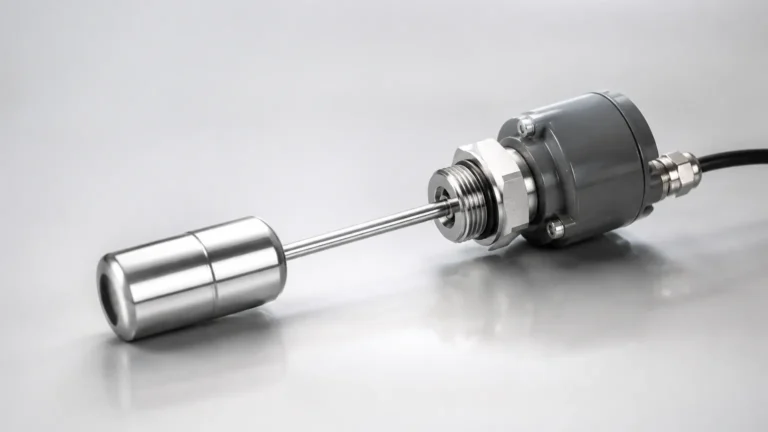
1 2 Level Switch
1 2 Level Switch
In the landscape of industrial automation and process control, the requirement for precise point-level detection often intersects with the need for compact hardware. The "1 2 level switch"—referring primarily to devices equipped with a 1/2-inch NPT or G thread connection—represents one of the most versatile and widely utilized specifications in the industry. These small-form-factor switches are essential for monitoring liquid levels in pipes, small tanks, and OEM machinery where space is at a premium but reliability cannot be compromised.
As a professional manufacturer, Welk provides a range of Level Switches designed to meet these rigorous industrial standards. Understanding the underlying measurement principles and the specific advantages of the 1/2-inch interface is critical for engineers and procurement specialists tasked with maintaining system integrity.
Measurement Principles of Compact Level Switches
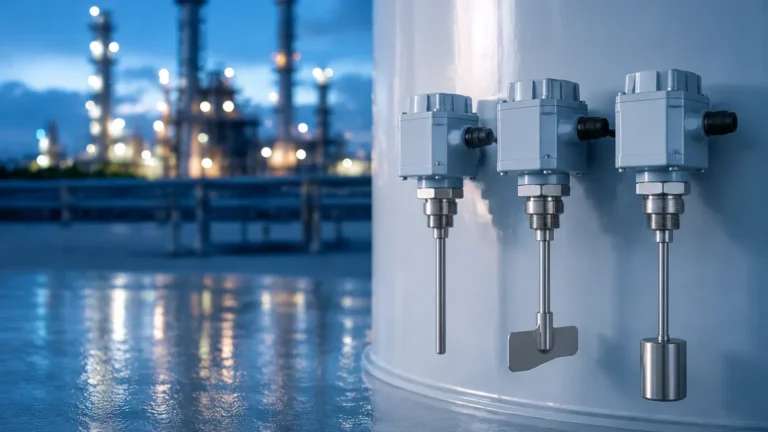
Before selecting a 1 2 level switch, it is necessary to understand how different technologies interact with the process media. Each principle offers distinct advantages depending on the viscosity, conductivity, and chemical composition of the liquid.
Magnetic Float Principle
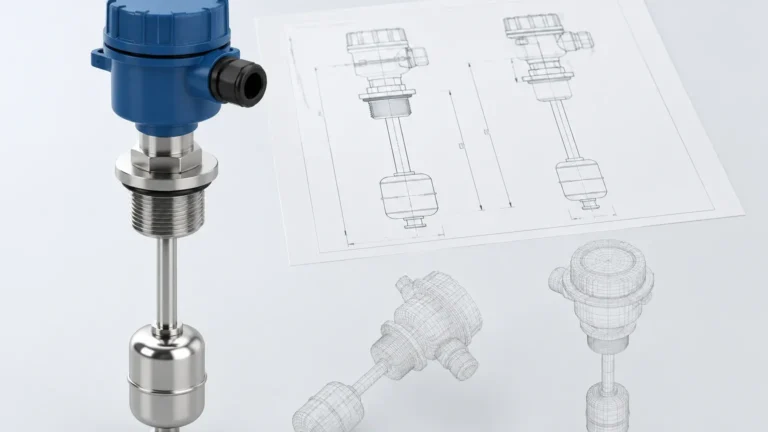
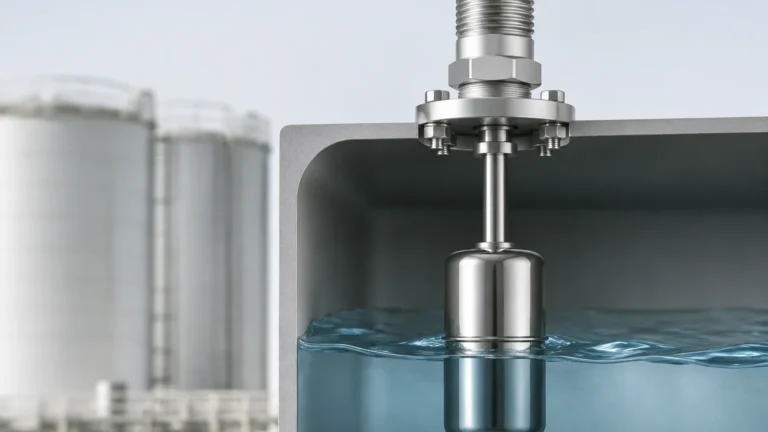
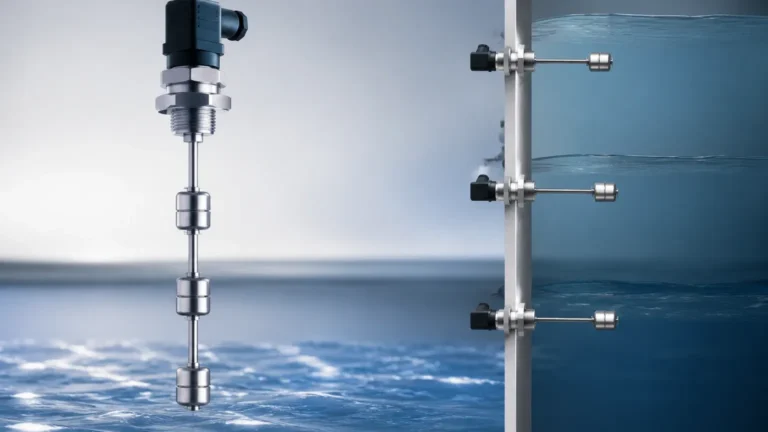
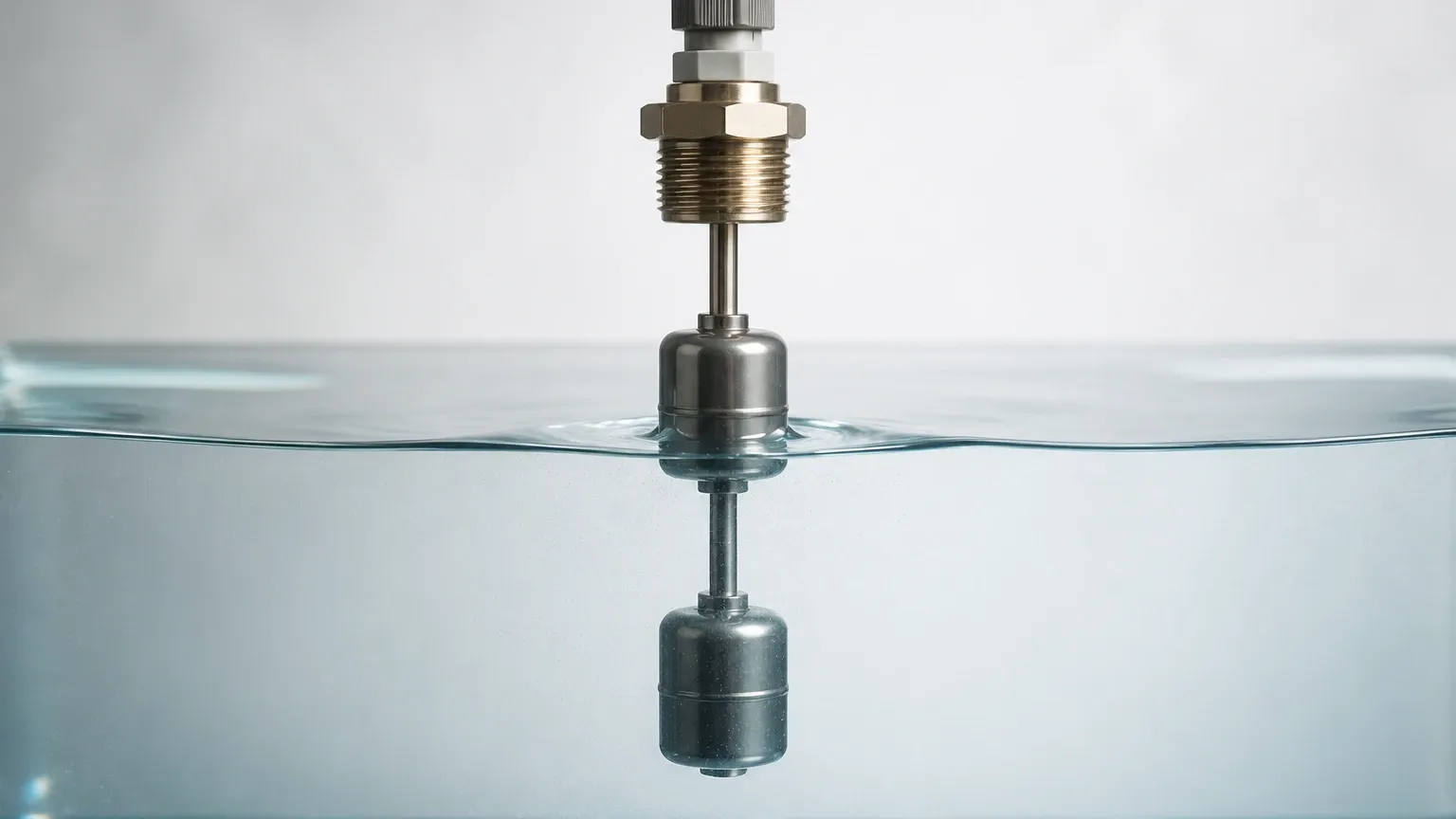
The magnetic float switch is the most common mechanical method for level detection. It consists of a hollow float containing a permanent magnet that slides up and down a stationary stem. Inside the stem, a hermetically sealed reed switch is positioned. As the liquid level rises or falls, the float moves accordingly; when the magnet reaches the reed switch, the circuit opens or closes. This technology is highly reliable for clean liquids and requires no external power to operate the sensing element.
Vibrating Tuning Fork Principle
Electronic vibrating switches utilize a piezo-electric crystal to energize a tuning fork at its natural resonant frequency. When the fork is immersed in a liquid, the frequency shifts. This change is detected by the internal electronics and converted into a switching signal. Tuning fork switches are ideal for turbulent liquids, aerated liquids, and applications where the density of the media might vary.
Capacitance Principle
Capacitive level switches measure the change in electrical capacitance between the sensor probe and the tank wall (or a reference electrode). As the liquid covers the probe, the dielectric constant changes, triggering the switch. This method is effective for detecting various media, including powders and granulates, though it is most frequently used for liquids in 1/2-inch configurations. It is particularly useful for sticky substances that might foul a mechanical float.
Optical Principle
Optical switches use an infrared LED and a light receiver. When the sensor tip is in the air, the infrared light is reflected within a prism back to the receiver. When the tip is submerged in liquid, the light is refracted into the medium, causing the receiver to detect a loss of signal. These are exceptionally compact, making them the quintessential 1 2 level switch for leak detection and small vessel monitoring.
The Significance of the 1/2 Inch Connection
The designation "1 2 level switch" typically refers to the process connection size. In the North American market, this is usually 1/2" NPT (National Pipe Tapered), while in European and Asian markets, 1/2" G (BSP) threads are more common.
This specific size is a standard because it balances structural integrity with a small footprint. A 1/2-inch port is large enough to house robust sensing elements—such as a stainless steel tuning fork or a durable float—while remaining small enough to be installed directly into existing pipework or small hydraulic reservoirs. For many industrial systems, standardizing on a 1 2 level switch simplifies inventory and maintenance, as 1/2-inch fittings are ubiquitous in plumbing and instrumentation.
Selection Criteria and Technical Specifications
Choosing the correct switch requires a comparison of environmental factors and media characteristics. The following table provides a general guideline for evaluating common 1/2-inch level switch types.
| Feature | Magnetic Float | Vibrating Tuning Fork | Capacitive | Optical |
| :— | :— | :— | :— | :— |
| Media Type | Clean liquids | Liquids, slurries | Liquids, solids | Clean liquids |
| Viscosity Limit | Low | Up to 10,000 cP | Medium | Low |
| Max Pressure | 30 bar (3.0 MPa) | 40 bar (4.0 MPa) | 25 bar (2.5 MPa) | 50 bar (5.0 MPa) |
| Max Temp | 120°C (248°F) | 150°C (302°F) | 200°C (392°F) | 125°C (257°F) |
| Moving Parts | Yes | No | No | No |
| Power Required | No (Passive) | Yes (Active) | Yes (Active) | Yes (Active) |
Installation Considerations for 1 2 Level Switches
Proper installation is vital to ensure the longevity and accuracy of a level switch. Because a 1 2 level switch is often installed in tight spaces, several engineering factors must be addressed:
1. Orientation: Float switches are often restricted to vertical or horizontal mounting depending on the design. Tuning forks and capacitive sensors are generally more flexible but should be angled slightly downward if installed horizontally to allow the media to drain off the sensing element.
2. Turbulence and Agitation: If the switch is installed near an inlet or an agitator, the resulting turbulence can cause "chatter" (rapid switching). In such cases, a stilling well or a software-defined switching delay is recommended.
3. Thread Sealing: For 1/2" NPT connections, PTFE (Teflon) tape or a suitable pipe sealant must be used to ensure a leak-proof seal. For G threads, a bonded seal or O-ring is typically required at the base of the thread.
4. Wiring and Conduits: Ensure the electrical housing is oriented so that the cable entry points downward. This prevents moisture from migrating along the cable and into the electronics via capillary action.
Industrial Applications
The 1 2 level switch is found across a diverse range of sectors due to its standardized size and reliable performance.
* Water Treatment: Used in small chemical dosing tanks to prevent pumps from running dry. The compact size allows for installation in the narrow necks of plastic drums.
* Food and Beverage: Stainless steel 1/2-inch switches are used for high-level alarms in small mixing tanks and CIP (Clean-In-Place) systems. Materials such as SS316L are standard here to meet hygiene requirements.
* Hydraulic Systems: Monitoring oil levels in reservoirs for industrial presses and CNC machinery. A 1 2 level switch can detect low oil levels before air enters the pump, preventing catastrophic equipment failure.
* Pharmaceuticals: Used in laboratory-scale reactors where precise volume control is necessary and space for instrumentation is extremely limited.
Limitations and Maintenance
While highly versatile, 1/2-inch level switches have limitations. Their small size means they may be more susceptible to "bridging" or coating if used with extremely viscous or fibrous materials. For example, a tuning fork switch with a 1/2-inch connection has smaller gaps between the tines; if the media contains long fibers, they may become trapped, causing a false positive signal.
Maintenance should involve periodic visual inspections for scaling or corrosion. For mechanical float switches, it is important to ensure the float moves freely and that no magnetic debris has accumulated on the stem, which could impede movement.
Frequently Asked Questions (FAQ)
Q: Can a 1 2 level switch be used for both high and low-level detection?
A: Yes. Most switches can be configured as Normally Open (NO) or Normally Closed (NC). By installing the switch at the top of the tank, it acts as a high-level alarm; at the bottom, it serves as a low-level or dry-run protection sensor.
Q: What is the difference between NPT and G threads for these switches?
A: NPT (National Pipe Tapered) threads are tapered and seal by the interference of the threads themselves. G threads (BSP) are parallel and require a gasket or O-ring to create a seal. It is critical to confirm which thread type your tank or pipe uses before ordering.
Q: Are 1/2-inch switches available in plastic materials?
A: Yes, Welk offers 1 2 level switches in materials like PP (Polypropylene) or PVDF for applications involving corrosive acids or bases where stainless steel is not suitable.
Q: How do I handle foam in the tank?
A: If foam is present, a magnetic float switch or an optical switch is generally preferred, as they are less likely to be triggered by the light density of foam compared to a capacitive sensor, which might detect the foam as a liquid level.
For technical assistance in selecting the appropriate configuration for your specific process, we invite you to Review product options and application support to ensure your level measurement solution meets all safety and operational requirements.