Gateron Switches Noise Level
Gateron Switches Noise Level
In the realm of industrial automation and process control, the term "noise level" carries a dual significance. It refers both to the acoustic sound generated by mechanical components and the electrical interference that can disrupt sensitive signal transmissions. While the Gateron switches noise level is a frequent topic of discussion in the design of human-machine interfaces (HMI) and control room ergonomics, the principles of noise management extend deeply into the selection and installation of industrial level measurement instruments.
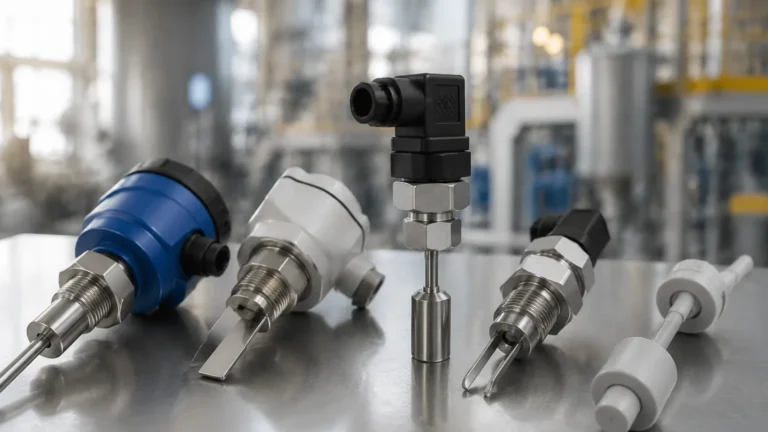
For engineers managing complex liquid or solid storage systems, understanding how switching mechanisms—whether they are the tactile keys on a control console or the robust Level Switches inside a chemical tank—interact with their environment is critical for operational efficiency and worker safety. This guide explores the measurement principles of level switches, the impact of acoustic and electrical noise, and how to select the right technology for quiet and reliable performance.
Measurement Principles of Level Switches
Before evaluating the noise characteristics of a system, it is essential to understand how different level switches operate. These devices are designed to detect the presence or absence of material at a specific point (point-level detection) and trigger an action, such as stopping a pump or sounding an alarm.
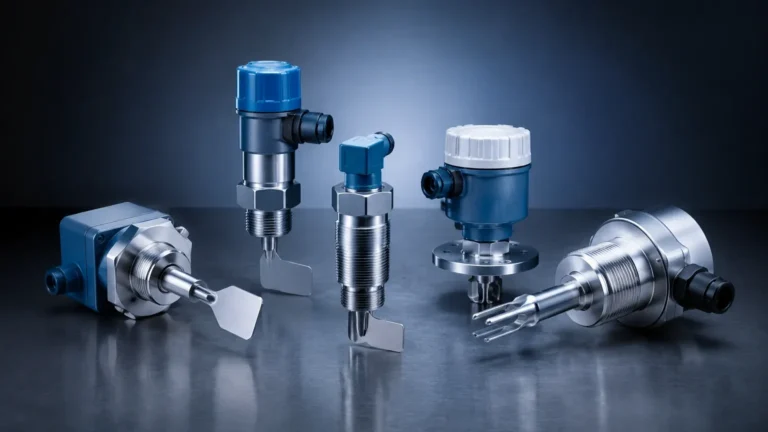
1. Vibrating Tuning Fork Switches
These switches utilize a piezoelectric crystal to vibrate a fork-shaped element at its natural resonant frequency (typically around 1,200 Hz). When the medium (liquid or powder) covers the fork, the frequency shifts or the vibration is damped. This change is detected by the electronics and converted into a switching signal. Because they rely on high-frequency vibration, they are largely immune to bubbles, turbulence, and external vibrations.
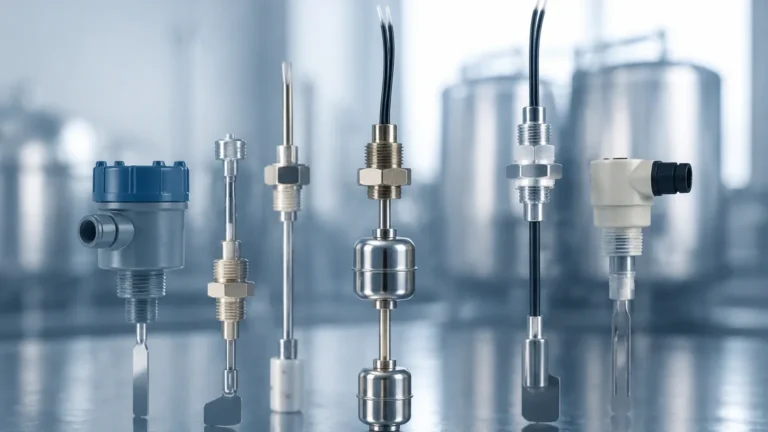
2. Float Level Switches
Operating on a simple mechanical principle, a float containing a magnet moves with the liquid level. When the float reaches a reed switch housed within a stationary stem, the magnetic field causes the switch to open or close. These are "passive" in terms of acoustic noise during operation, though the mechanical contact can produce a faint click.
3. Ultrasonic Level Switches
Ultrasonic switches emit high-frequency sound waves (usually above 20 kHz, well beyond human hearing). The sensor measures the time it takes for the pulse to reflect off the material surface. In point-level applications, the switch detects the change in acoustic impedance when the sensor tip is submerged. While silent to the human ear, the "noise" concern here is ultrasonic interference from high-pressure leaks or pneumatic equipment.
4. Capacitive Level Switches
These sensors measure the change in capacitance between the probe and the tank wall (or a reference electrode). When the material fills the gap, the dielectric constant changes, triggering the switch. These are entirely solid-state, meaning they have a zero-decibel acoustic noise profile and no moving parts to wear out.
Acoustic Noise vs. Electrical Signal Noise
In an industrial B2B context, noise is categorized into two main types: acoustic (audible) and electrical (signal interference).
Acoustic Noise Levels
In control room environments, the acoustic footprint of equipment matters for operator focus. This is where the Gateron switches noise level serves as a useful engineering benchmark. Gateron switches, commonly used in high-end mechanical keyboards for industrial control consoles, range from "Linear" (quiet, approx. 45-50 dB) to "Clicky" (audible feedback, approx. 55-65 dB).
In comparison, most industrial level switches are designed to be quiet. However, mechanical relays within a control panel that are triggered by these level switches can produce significant clicking sounds. If a facility requires a near-silent environment, engineers should opt for solid-state outputs (PNP/NPN) rather than electromechanical relays.
Electrical Signal Noise
Signal noise refers to unwanted electrical interference that can cause a level switch to "chatter" (rapidly toggle on and off). This is often caused by Electromagnetic Interference (EMI) from large motors or variable frequency drives (VFDs). To combat this, high-quality level switches utilize shielded cables and internal filtering algorithms to ensure that the switching logic remains stable despite the electrical noise floor.
Comparative Selection Table
When selecting a level switch, engineers must balance the physical environment with the required noise tolerances. The following table provides a comparison of common technologies.
| Technology | Acoustic Noise Level | Signal Stability | Best Application |
| :— | :— | :— | :— |
| Tuning Fork | Negligible | Excellent | High-viscosity liquids, powders |
| Float Switch | Low (Mechanical click) | Moderate | Clean water, oil tanks |
| Ultrasonic | Inaudible (>20kHz) | High (Sensitive to foam) | Non-contact liquid detection |
| Capacitive | Zero | High | Corrosive chemicals, acids |
| Rotary Paddle | Low (Motor hum) | High | Bulk solids, grains, sand |
Engineering Benchmarks: Gateron Switches Noise Level in HMI Design
For the personnel monitoring these industrial systems, the tactile and acoustic feedback of the control interface is a matter of ergonomic precision. When designing a control desk to monitor Level Switches, the Gateron switches noise level is often analyzed to ensure the environment remains within OSHA (Occupational Safety and Health Administration) guidelines for office-like settings (typically below 85 dB for 8-hour shifts, though 55-60 dB is preferred for concentrated work).
* Gateron Red/Black (Linear): Preferred for quiet control rooms where constant data entry is required without distracting others.
* Gateron Brown (Tactile): Provides a physical bump without a loud click, useful for confirming a command in a moderately noisy industrial office.
* Gateron Blue (Clicky): Used where audible confirmation of a keypress is necessary, mimicking the "positive action" feel of heavy-duty industrial pushbuttons.

Installation Considerations to Minimize Noise
Proper installation is the most effective way to manage both acoustic and signal noise in level measurement systems.
1. Stilling Wells: For float or ultrasonic switches in turbulent tanks, installing the sensor inside a stilling well (a vertical pipe) prevents the mechanical "clatter" of the float against the sides and reduces signal noise from surface ripples.
2. Cable Separation: Always run signal wires for level switches in separate conduits from high-voltage power lines. This prevents inductive coupling, which is a primary source of electrical noise.
3. Damping Settings: Many modern electronic level switches allow for a "switch-on delay." By setting a delay of 1 to 5 seconds, you can prevent the switch from reacting to momentary splashes or "noise" in the liquid level.
4. Mounting Orientation: Ensure that vibration-based switches (like tuning forks) are not mounted directly near a pump intake, as the mechanical vibration of the pump can interfere with the fork’s resonance.
Limitations and Environmental Factors
While level switches are robust, certain environmental factors can increase the "noise" in the system:
* Aeration and Foam: Ultrasonic and tuning fork switches may struggle with heavy foam. Foam acts as an acoustic insulator, absorbing the signal and creating "noise" that the sensor cannot interpret accurately.
* Coatings and Buildup: In wastewater applications, material buildup on a capacitive probe can create a "false positive" signal. Using a switch with "active shield" technology helps ignore the noise created by coating.
* Temperature Extremes: High temperatures (above 150°C) can affect the piezoelectric crystals in ultrasonic and tuning fork models, potentially increasing the internal electronic noise floor.
Frequently Asked Questions (FAQ)
Q: Can the noise from an industrial pump trigger a tuning fork level switch?
A: Generally, no. Most tuning fork switches operate at a specific frequency (approx. 1,200 Hz) and use internal filters to ignore common industrial vibration frequencies, which are usually much lower.
Q: How do I reduce the "clicking" noise of my level control panel?
A: Replace electromechanical relays with Solid State Relays (SSRs). SSRs have no moving parts, generate zero acoustic noise, and have a much longer cycle life.
Q: Does the Gateron switches noise level matter in a factory floor environment?
A: On a loud factory floor (90+ dB), the noise level of a keyboard switch is irrelevant. However, in the centralized control room where the ambient noise is kept low for operator safety, choosing a quiet switch (like a Gateron Linear) is standard practice for ergonomic comfort.
Q: What is the best level switch for a silent laboratory application?
A: Capacitive level switches are the best choice. They have no moving parts, emit no sound, and provide a clean electrical output that is easy to integrate into quiet data acquisition systems.
Conclusion
Whether you are evaluating the Gateron switches noise level for a new control console or selecting the most reliable Level Switches for a high-pressure reactor, the goal remains the same: achieving clarity and precision. By understanding the measurement principles and the various forms of noise—from acoustic decibels to electrical interference—engineers can design systems that are both high-performing and ergonomically sound. For professional-grade level measurement, always prioritize sensors that offer robust signal filtering and high-quality construction to ensure long-term, noise-free operation.