Level Switch Tokyo Keiso
Level Switch Tokyo Keiso
In the landscape of industrial automation and process safety, point-level detection serves as a critical fail-safe. Among the established manufacturers in this sector, Tokyo Keiso Co., Ltd. has built a reputation for high-precision instrumentation, particularly in the Japanese and broader Asian markets. Understanding the technical nuances of a level switch Tokyo Keiso provides is essential for engineers tasked with designing reliable tank monitoring systems, overfill protection, and pump control logic.
This guide explores the engineering principles behind these instruments, compares different technologies, and provides practical selection criteria for industrial applications ranging from water treatment to high-pressure petrochemical processing.
Understanding Level Switch Principles
Before selecting a specific model, it is vital to understand the physics governing point-level detection. Level switches are designed to provide a discrete output (typically a relay or transistor switch) when a liquid or solid reaches a predetermined height. Unlike continuous level transmitters, which provide a constant data stream, switches are binary devices used for alarms and control triggers.
Buoyancy-Based Principles
Most mechanical level switches rely on buoyancy. This is categorized into two main types:
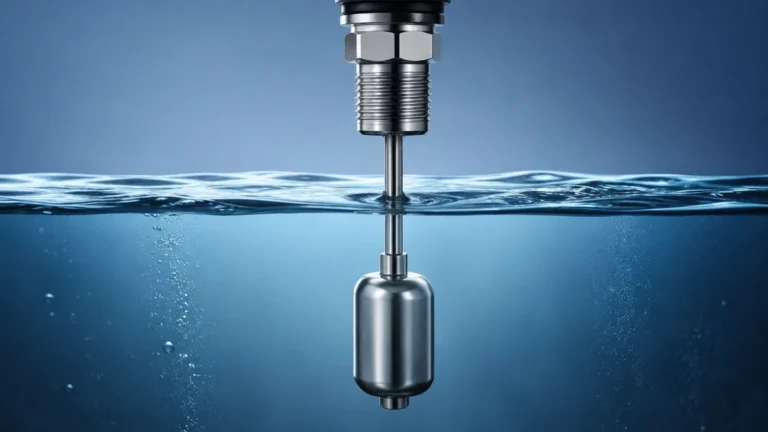
1. Float Switches: These utilize a float with a lower density than the process liquid. As the liquid level rises, the float moves, eventually triggering a reed switch or a microswitch via a mechanical linkage or magnetic coupling.
2. Displacer Switches: These do not float on the surface. Instead, they are suspended in the liquid. As the liquid rises and submerses the displacer, the apparent weight of the displacer decreases (Archimedes' Principle). This change in force is detected by a spring or torque tube mechanism to actuate a switch.
Thermal Dispersion
Thermal level switches utilize the difference in thermal conductivity between a gas (like air) and a liquid. A heated sensor tip experiences a rapid drop in temperature when immersed in a liquid, as liquids generally conduct heat away more efficiently than gases. This temperature delta is converted into a switching signal.
Vibrating (Tuning Fork) Technology
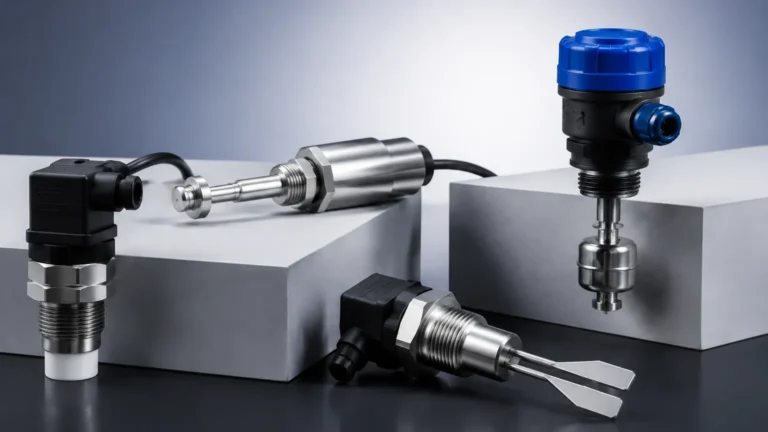
A sensing element in the shape of a tuning fork is vibrated at its resonant frequency by a piezoelectric crystal. When the fork is covered by a medium (liquid or powder), the frequency changes or the vibration is damped. This change is detected by the electronics to signal the presence of the material.
Key Technologies in Tokyo Keiso’s Portfolio
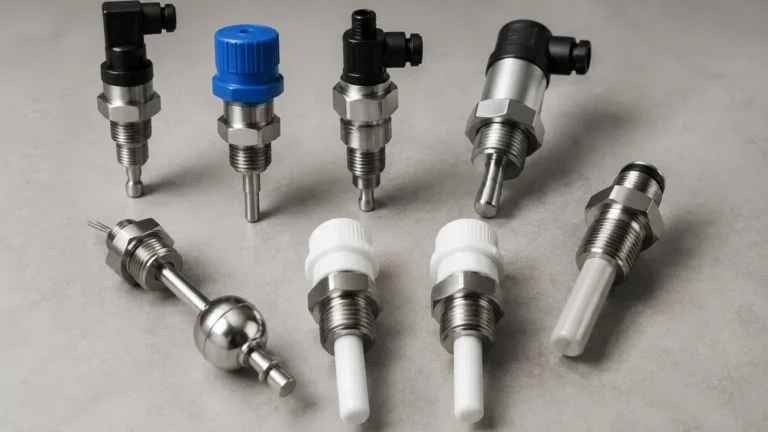
Tokyo Keiso offers a diverse range of level switches tailored for specific industrial environments. Their product line is often characterized by robust mechanical construction and suitability for hazardous areas.
Magnetic Float Level Switches (FS Series)
The FS series is widely used for general-purpose liquid level detection. These units typically feature a float containing a permanent magnet. As the float slides up and down a stem, it actuates reed switches positioned inside the stem. These are favored for their simplicity and the fact that the electrical components are completely isolated from the process media.
Displacer Type Level Switches (FQ Series)
For high-pressure and high-temperature applications, such as boiler drum level control or refinery separators, the FQ series displacer switches are often preferred. Because they rely on weight change rather than a floating action on the surface, they are less affected by turbulence or surface foam compared to standard float switches.
Thermal Level Switches
Tokyo Keiso also provides thermal dispersion switches, which are excellent for detecting the interface between different fluids or for applications where moving parts are undesirable due to the risk of clogging or mechanical wear.
Technical Evaluation and Selection Criteria
Selecting the correct Level Switches requires a thorough analysis of the process conditions. Engineers must look beyond the basic function and consider the long-term reliability of the instrument.
Media Properties
* Density (Specific Gravity): Float and displacer switches are density-dependent. A float designed for water (SG 1.0) may sink in a light hydrocarbon (SG 0.6). Always confirm the minimum operating density.
* Viscosity: High-viscosity liquids can cause mechanical floats to stick. In these cases, non-contact or vibrating switches are more appropriate.
* Corrosivity: The wetted parts must be chemically compatible with the media. Common materials include 316L Stainless Steel, Hastelloy, or plastics like PVC and PVDF.
Process Environment
* Pressure and Temperature: Standard float switches may have limits of 20 bar and 150°C. For extreme conditions, specialized displacer switches or heavy-duty magnetic gauges with integrated switches are required.
* Hazardous Areas: If the environment contains explosive gases or dust, the switch must be certified (e.g., ATEX, IECEx, or TIIS in Japan) as intrinsically safe or explosion-proof.
Output Requirements
Decide whether the application requires a Single Pole Double Throw (SPDT) or Double Pole Double Throw (DPDT) contact. DPDT is often used when one set of contacts triggers a local alarm and the other provides a signal to a Distributed Control System (DCS).
Practical Selection Table
| Technology | Best For | Limitations | Typical Media |
| :— | :— | :— | :— |
| Magnetic Float | Simple tank control, low cost | Sensitive to build-up | Water, oils, clean chemicals |
| Displacer | High pressure, high temp, turbulence | Heavy, requires vertical mounting | Steam drums, crude oil |
| Thermal Dispersion | Flow/No-flow detection, interface | Sensitive to coating on probe | Water/oil interface, cooling lines |
| Vibrating Fork | Overfill protection, powders | Not for highly viscous/sticky media | Food processing, cement, liquids |
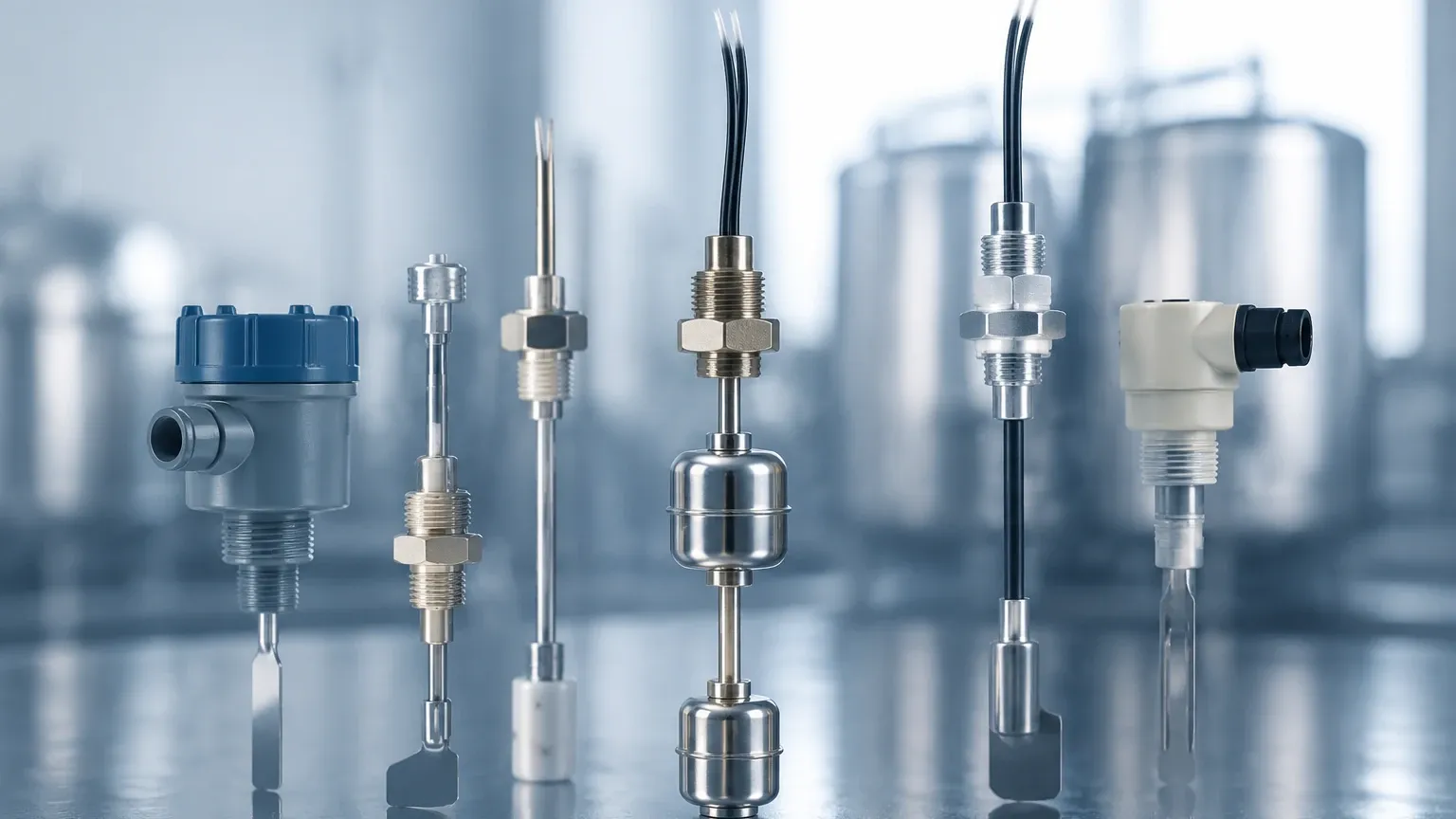
Installation Considerations for Industrial Level Switches
Proper installation is as important as selecting the right technology. Failure to follow engineering best practices can lead to false triggers or premature mechanical failure.
1. Mounting Position: Ensure the switch is mounted where it will not be directly in the path of the tank's inlet flow. Turbulent flow can cause "chatter" in the switch contacts, leading to rapid wear of pumps or valves.
2. Stilling Wells: In tanks with heavy agitation or surface ripples, a stilling well (a pipe surrounding the float or displacer) should be used to provide a calm surface for accurate measurement.
3. Orientation: While many switches are designed for top-mounting, side-mounted horizontal switches are common for low-level alarms. Ensure there is enough clearance for the float's arc of motion.
4. Wiring and Sealing: Use appropriate cable glands to maintain the IP (Ingress Protection) rating of the housing. In outdoor installations, a drip loop in the conduit prevents moisture from entering the switch enclosure.
Limitations and Application Risks
While a level switch Tokyo Keiso or a similar high-quality instrument from Welk is built for durability, certain conditions pose risks to any point-level device:
* Coating and Scaling: In wastewater or chemical applications, material can build up on the float or the tuning fork. This increases the mass of the sensing element, potentially preventing it from moving or vibrating at the correct frequency.
* Density Fluctuations: If a process involves mixing different chemicals, the resulting change in specific gravity can affect the buoyancy of a float switch. If the density drops below the float's design limit, the switch will fail to rise.
* Mechanical Fatigue: In applications with high-frequency switching, the mechanical life of the relay or the pivot point of the float should be monitored. Solid-state switches are often a better choice for high-cycle applications.
Integrating Level Switches into Modern Control Systems
In modern industrial plants, level switches rarely act in isolation. They are typically part of a layered protection strategy. For instance, a Welk radar level meter might provide continuous 0-100% level data for process control, while a Tokyo Keiso mechanical level switch provides an independent high-high (HH) alarm for emergency shutdown (ESD).
This redundancy is a cornerstone of Functional Safety (SIL) standards. By using different technologies (e.g., radar for continuous and float for point-level), engineers reduce the risk of "common cause failure," where a single environmental factor might disable both instruments simultaneously.
Welk provides a comprehensive range of level measurement solutions, including radar, ultrasonic, and hydrostatic transmitters that complement point-level switches. For complex applications, integrating these various technologies ensures that the process remains within safe operational boundaries regardless of the media's characteristics.
Frequently Asked Questions (FAQ)
Q: Can a float level switch be used in turbulent liquids?
A: It is not recommended without a stilling well. Turbulence can cause the float to bounce, leading to intermittent switching signals. For high-turbulence environments, a vibrating fork or a displacer switch is generally more stable.
Q: What is the difference between a reed switch and a microswitch in a level switch?
A: Reed switches are hermetically sealed and actuated by a magnet; they are excellent for low-power signals and corrosive environments. Microswitches are mechanical and can usually handle higher electrical currents, but they may be more susceptible to environmental wear if the housing is breached.
Q: How do I test a level switch during maintenance?
A: Most industrial level switches feature a manual test lever or a magnetic test point that allows technicians to simulate a high or low level without filling the tank. This is essential for verifying the logic of the safety system.
Q: Are Tokyo Keiso switches compatible with Welk control systems?
A: Yes, most level switches use standard dry contact outputs (SPDT/DPDT) or 2-wire loops, making them universally compatible with industrial controllers, PLCs, and Welk's monitoring instrumentation.
For engineers and procurement specialists looking for reliable point-level detection and continuous measurement, exploring the full range of Level Switches and associated sensors is the first step toward a safer and more efficient process.