Low Level Switches
Low Level Switches
In industrial fluid management, the ability to detect when a tank or vessel reaches its minimum safe operating limit is critical. Low level switches serve as the primary line of defense against pump cavitation, dry running, and process interruptions. These point-level detection devices are engineered to trigger an alarm or control action when the material level drops below a predefined set point.
For engineers and plant operators, selecting the correct low level switch requires a deep understanding of the media properties, the physical environment of the vessel, and the specific mechanical or electronic principle that best suits the application. This guide explores the engineering fundamentals, selection criteria, and installation best practices for Level Switches used in low-level detection.
Measurement Principles of Low Level Switches
Before selecting a device, it is essential to understand how different technologies interact with the process media. Low level switches operate on various physical principles, ranging from simple mechanical buoyancy to advanced electronic frequency shifts.
Float-Based Detection (Buoyancy)
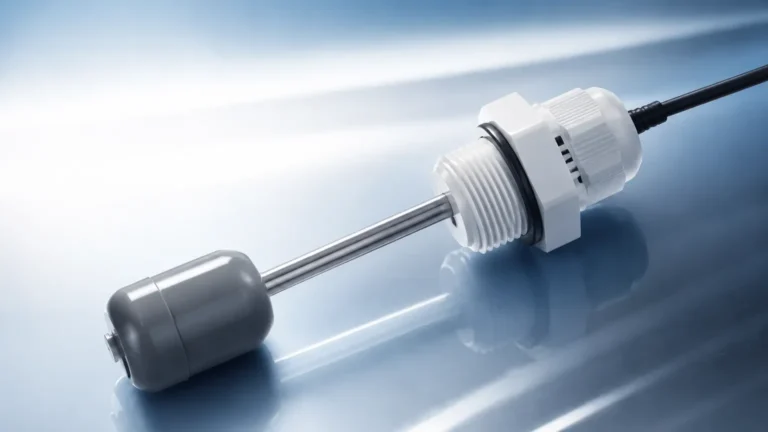
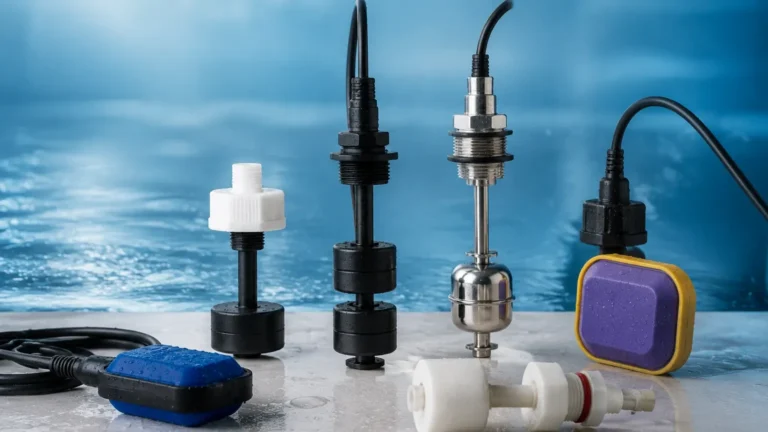
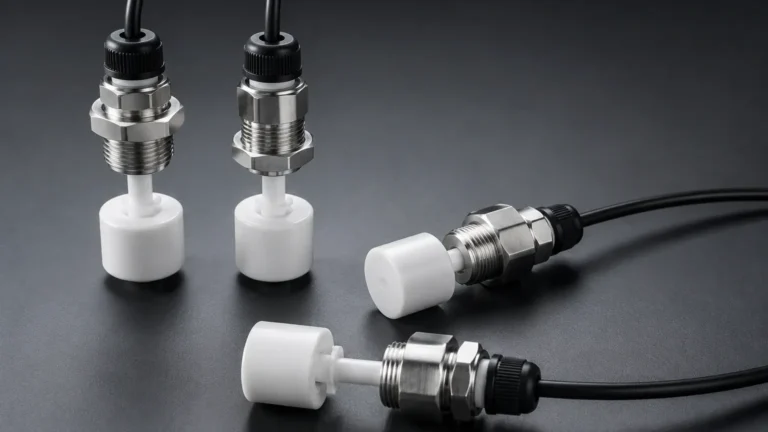
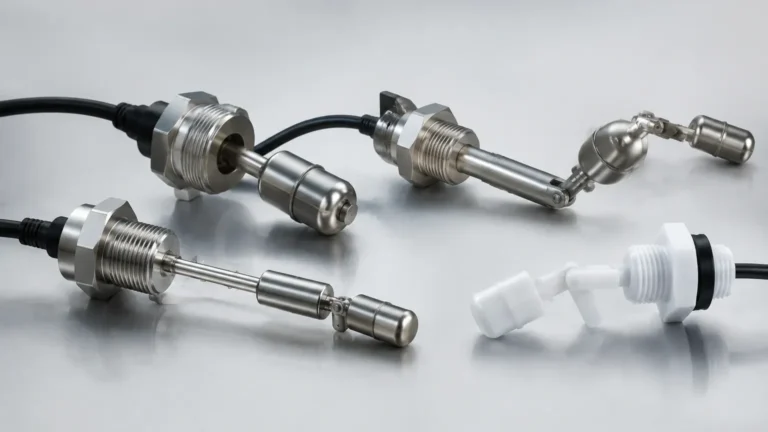
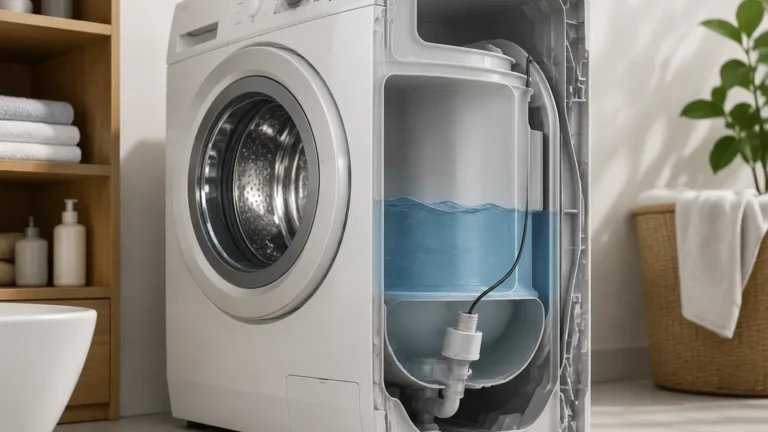
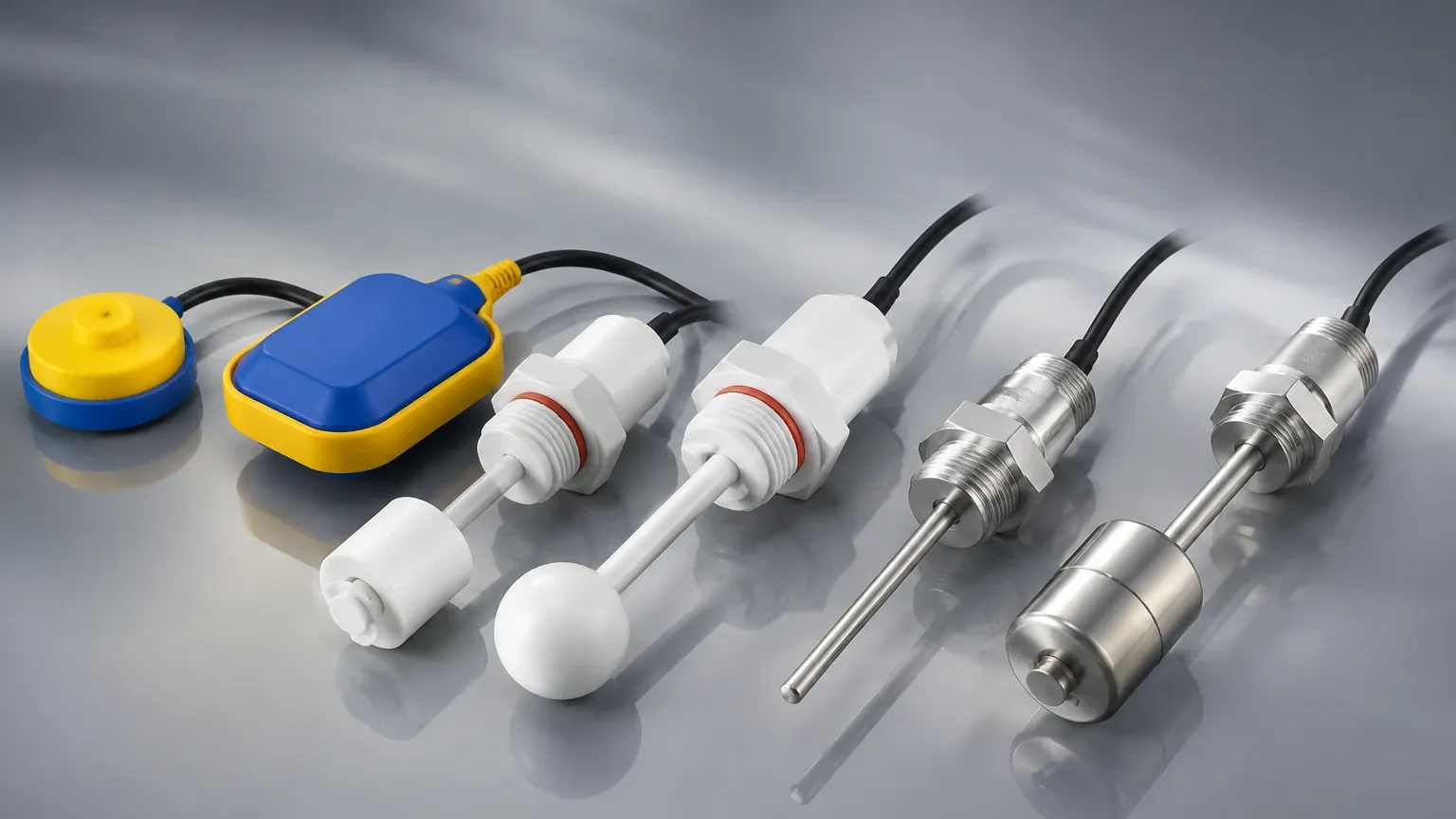
Float switches are among the most common solutions for low-level detection in clean liquids. They operate on the principle of buoyancy, where a float containing a magnet moves with the liquid level. As the level drops to the "low" set point, the float descends, and its internal magnet actuates a reed switch or a microswitch located within the stem or housing.
For low-level applications, these are often mounted at the bottom of a tank or on the side at the minimum required height. Their simplicity makes them cost-effective, but they are susceptible to mechanical failure if the liquid contains debris or is highly viscous.
Vibrating Tuning Fork Technology
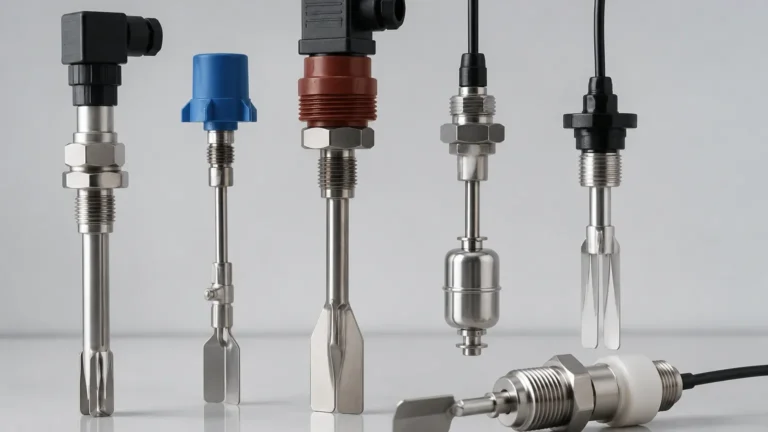
Vibrating level switches, often referred to as tuning forks, utilize piezoelectric crystals to vibrate a metal fork at its natural resonance frequency in the air. When the liquid level drops and the fork is no longer submerged (uncovered), the frequency changes. The electronics detect this shift and trigger the switch output.
This technology is highly reliable for low-level detection because it is largely unaffected by the physical properties of the liquid, such as density, conductivity, or dielectric constant. It is particularly effective for preventing dry running in pumps.
Capacitance and RF Admittance
Capacitance switches measure the change in electrical capacitance between a sensing electrode and the vessel wall (or a reference probe). As the level drops and the liquid is replaced by air or gas, the dielectric constant changes significantly, altering the measured capacitance.
Advanced RF admittance switches are a variation of this technology that uses a "guard" circuit to ignore the effects of material build-up on the probe. This is crucial for low-level detection in sticky or coating-prone media, where a false "full" signal could lead to a pump running dry.
Ultrasonic Gap Sensors
Ultrasonic gap switches consist of a sensor head with a small gap through which an ultrasonic signal is transmitted. When liquid fills the gap, the signal travels easily from the transmitter to the receiver. When the level drops below the gap (the low-level state), the signal is attenuated by the air. This change in signal strength triggers the switch. These are ideal for non-contact-sensitive applications but require clean, non-aerated liquids.
Selection Criteria for Low Level Applications
Choosing the right technology for low-level detection involves evaluating the process environment against the sensor's capabilities. The following factors are primary considerations:
1. Media Characteristics: Is the liquid corrosive, viscous, or prone to foaming? For example, a float switch may fail in a crystallizing liquid, whereas a tuning fork or capacitance switch would remain functional.
2. Process Conditions: High temperatures (above 150°C / 302°F) and high pressures (above 40 bar / 580 psi) require robust housings and specialized seals.
3. Vessel Geometry: In shallow sumps, a side-mounted switch may be necessary to detect levels as low as 50 mm (approx. 2 inches) from the bottom. In deep tanks, a top-mounted probe with an extended stem is often preferred.
4. Fail-Safe Requirements: For low-level detection, the switch should typically be configured as "Normally Closed" (NC) so that a loss of power or a broken wire triggers a low-level alarm, ensuring maximum safety.
Comparison Table of Low Level Switch Technologies
| Technology | Best For | Temperature Range | Pressure Range | Limitations |
| :— | :— | :— | :— | :— |
| Float Switch | Clean, low-viscosity liquids | -40°C to 120°C | Up to 20 bar | Susceptible to jamming/clogging |
| Vibrating Fork | General purpose, pump protection | -50°C to 150°C | Up to 64 bar | Not for highly viscous/sticky media |
| Capacitance | Coating media, solids, liquids | -100°C to 250°C | Up to 100 bar | Requires dielectric calibration |
| Conductivity | Water-based, conductive liquids | -20°C to 100°C | Up to 10 bar | Only for conductive media |
| Optical | Small tanks, clean liquids | -20°C to 80°C | Up to 50 bar | Sensitive to coating and bubbles |
Installation Guidelines and Best Practices
Proper installation is as important as technology selection. For low level switches, the goal is to ensure the sensor accurately detects the point where the process is at risk.
* Mounting Position: Side-mounting is common for low-level alarms in small vessels. However, if the tank has an internal agitator or heater, top-mounting with an extended probe is safer to avoid mechanical interference.
* The "Dead Zone": Every switch has a dead zone—a region near the mounting point where it cannot accurately detect the level. Ensure the probe length or mounting height accounts for this to avoid missing the critical low-point.
* Turbulence and Still Wells: If the liquid surface is turbulent due to an inlet or agitator, the switch may "chatter" (rapidly toggle). In such cases, installing the switch inside a still well—a vertical pipe that stabilizes the liquid—is recommended.
* Orientation: Vibrating forks should be oriented so that the flat surfaces of the forks are vertical, allowing liquid to drain off easily as the level drops. This prevents "bridging," where a drop of liquid stays between the forks and gives a false high reading.
Limitations and Common Risks
While Level Switches are highly reliable, they are not infallible. Operators should be aware of the following risks in low-level detection:
* Material Build-up: In low-level applications, the sensor is submerged most of the time. When the level finally drops, residue may remain on the sensor. If the technology cannot handle coating (like a standard capacitance probe), it may fail to report the low level, leading to pump damage.
* Specific Gravity Changes: Float switches are calibrated for a specific density. If the process media changes (e.g., switching from water to an oil-based chemical), the float may not sit at the correct level, shifting the switch point.
* Aeration and Foam: Ultrasonic and some optical switches can be fooled by foam. If a tank is being emptied rapidly, vortexing can introduce air, causing the switch to trigger prematurely or intermittently.
Practical Applications in Industry
Pump Dry-Run Protection
In chemical processing and water treatment, pumps are often the most expensive assets. A low level switch installed in the suction line or at the bottom of the supply tank acts as an interlock. If the level drops below the 100 mm (approx. 4 inches) mark, the switch cuts power to the pump instantly.
Sump and Pit Management
In wastewater applications, low level switches are used to stop submersible pumps. If the pump continues to run after the pit is empty, it will overheat. Robust float switches or non-contact ultrasonic switches are preferred here due to the presence of solids.
Hydraulic Power Units (HPUs)
In industrial automation, HPUs require a minimum oil level to maintain pressure and cooling. Low level switches with integrated temperature sensors are often used to provide dual-purpose monitoring of the hydraulic reservoir.
Frequently Asked Questions (FAQs)
Q: How do I test a low level switch without emptying the tank?
A: Many modern electronic switches, such as those from Welk, include a manual test button or a magnetic test point on the housing. For mechanical floats, a test lever can sometimes be integrated into the mounting flange to manually lift the float.
Q: Can I use a low level switch for solids?
A: Yes, but the technology must be chosen carefully. Vibrating forks designed for solids (which are bulkier) or rotating paddle switches are effective for detecting the low level of powders or granules in silos.
Q: What is the difference between "Normally Open" and "Normally Closed" in this context?
A: For low-level safety, "Normally Closed" (NC) is preferred. In this configuration, the switch remains closed when the level is high (safe). If the level drops or the power fails, the circuit opens, triggering the alarm. This is known as a fail-safe design.
Q: How often should low level switches be calibrated?
A: Mechanical float switches generally do not require calibration but should be inspected for scaling or corrosion every 6 to 12 months. Electronic switches like capacitance or tuning forks are typically "set and forget" but should be functionally tested during planned maintenance shutdowns.
By understanding these technical nuances, engineering teams can ensure that their low level switches provide reliable, long-term protection for their industrial processes. Whether protecting a high-pressure pump or managing a simple storage tank, the right choice of level measurement technology is the foundation of operational safety.