Level Limit Switch
Level Limit Switch
In industrial process control, the level limit switch serves as a critical component for safety, inventory management, and automated logic. Unlike continuous level transmitters that provide a constant stream of data regarding the exact height of a medium, a level limit switch is a point-level detection device. Its primary function is to detect whether a liquid or solid has reached a specific, predetermined height within a vessel, tank, or silo. When this limit is reached, the switch changes state—typically from open to closed or vice versa—triggering an alarm, stopping a pump, or opening a valve to prevent overfills or dry-running conditions.
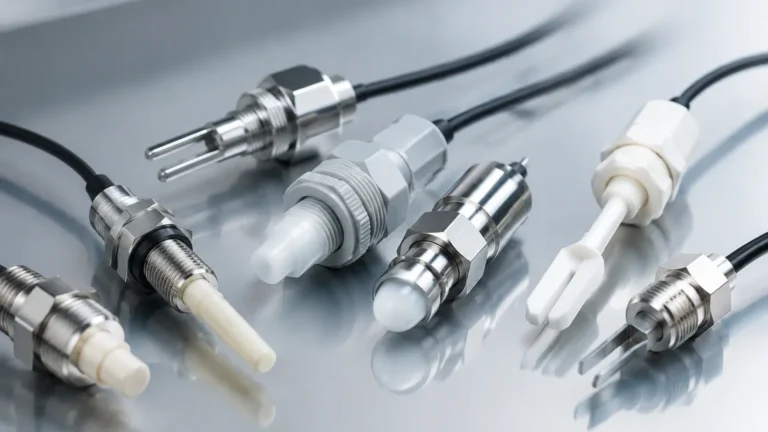
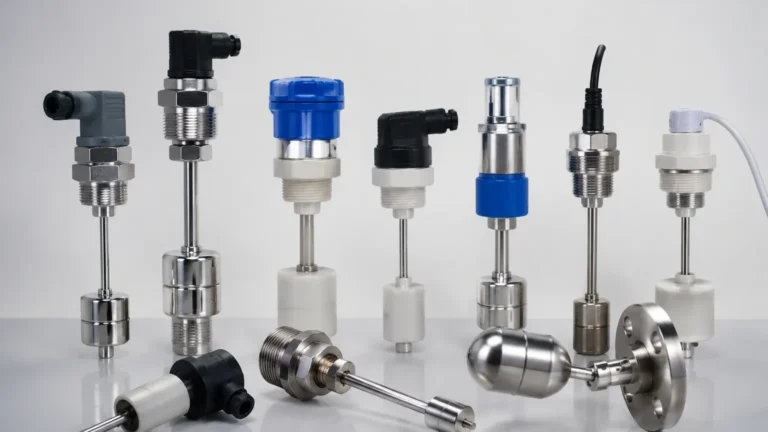
Selecting the correct technology for a level limit switch requires a deep understanding of the physical properties of the medium, the environmental conditions of the process, and the specific safety requirements of the facility. As a professional manufacturer, Welk provides a range of Level Switches designed to meet the rigorous demands of water treatment, chemical processing, and industrial automation.
Core Measurement Principles
Before selecting a level limit switch, engineers must evaluate the operating principle that best suits their application. Each technology interacts differently with the process media, and understanding these mechanics is essential for long-term reliability.
Vibrating Fork (Tuning Fork) Switches
This technology utilizes a sensing element shaped like a tuning fork, which is vibrated at its natural resonance frequency by piezoelectric crystals. When the fork is immersed in a liquid or covered by a solid, the frequency of vibration changes or the vibration is damped entirely. An electronic circuit detects this shift and triggers the output. Vibrating fork switches are highly versatile because they are largely unaffected by the flow, bubbles, or the dielectric properties of the medium.
Float and Displacement Switches
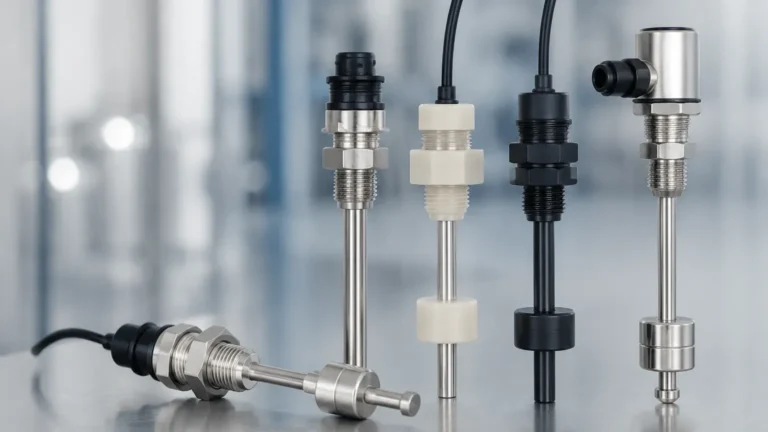
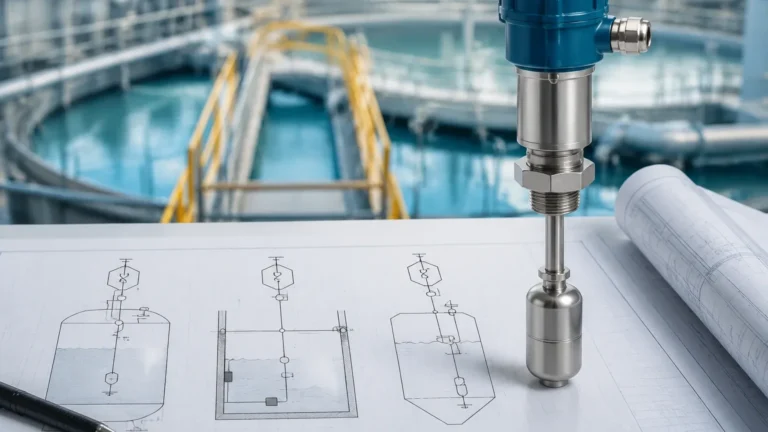
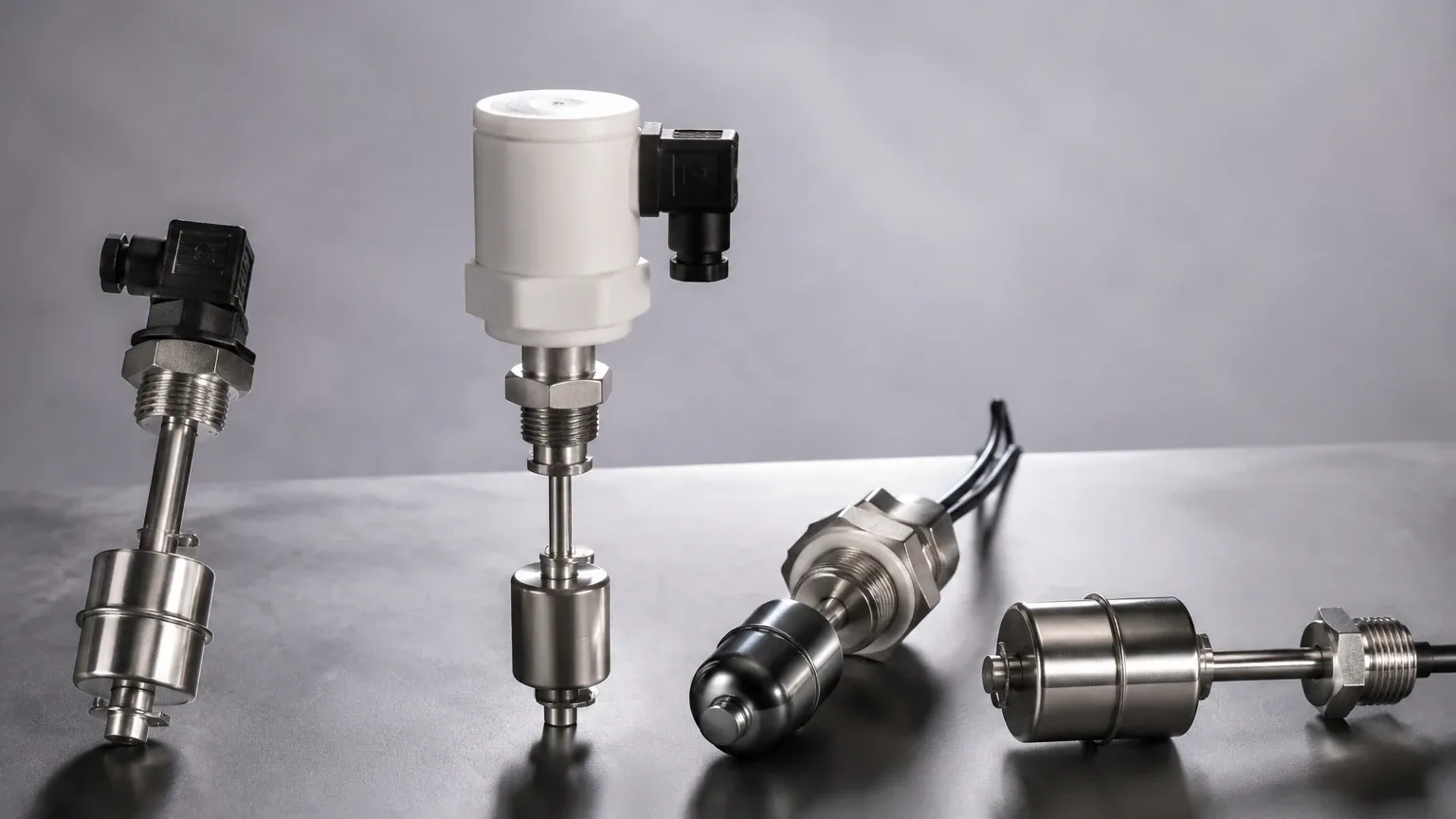
Operating on the principle of buoyancy, float switches use a floating body that contains a magnet. As the liquid level rises or falls, the float moves along a stem or pivots on a hinge. The internal magnet actuates a reed switch or a microswitch. While mechanically simple and cost-effective, these switches are generally limited to clean, non-coating liquids, as debris can jam the moving parts.
Capacitance Level Switches
Capacitance switches treat the sensor probe and the tank wall (or a second probe) as two plates of a capacitor. The process medium acts as the dielectric material. As the level rises and covers the probe, the capacitance increases because the dielectric constant of the medium is higher than that of air. This change is measured and converted into a switching signal. These are excellent for powders, granules, and liquids with consistent dielectric properties.
Ultrasonic Gap Switches
These sensors consist of two ultrasonic transducers separated by a small gap. One transducer emits a high-frequency sound wave, and the other receives it. When the gap is filled with air, the sound wave is attenuated and does not reach the receiver. When liquid fills the gap, the sound travels efficiently, completing the circuit. This is a robust method for liquid detection that does not rely on the electrical properties of the fluid.
Conductivity Switches
For conductive liquids like water or acids, conductivity switches use electrodes to detect the presence of the medium. When the liquid touches the electrode, it completes an electrical circuit between the probe and the tank wall (or a reference electrode). This is one of the most economical methods for point-level detection in water treatment applications.
Key Evaluation Criteria for Selection
Choosing the right level limit switch involves more than just identifying the media. Engineers must consider the following technical parameters to ensure the device performs accurately under stress:
1. Media Characteristics: Is the material a liquid, slurry, or bulk solid? Consider viscosity, density, and whether the material is corrosive or prone to coating (buildup).
2. Process Temperature and Pressure: Standard switches may fail if exposed to extreme heat or high-pressure environments. Always verify the maximum ratings of the sensor housing and wetted parts.
3. Chemical Compatibility: The wetted materials (e.g., 316L stainless steel, PTFE, PP) must be resistant to the chemical nature of the medium to prevent premature failure or process contamination.
4. Output Requirements: Does the system require a relay output, a transistor (PNP/NPN) output, or a two-wire loop-powered signal?
5. Hazardous Area Ratings: In oil and gas or chemical industries, switches often require ATEX or IECEx certifications for use in explosive atmospheres.
Practical Selection Table
| Technology | Suitable Media | Primary Advantage | Main Limitation |
| :— | :— | :— | :— |
| Vibrating Fork | Liquids, Powders, Granules | Immune to foam/bubbles; no calibration | Sensitive to heavy material buildup |
| Float Switch | Clean Liquids | Simple, no power required (passive) | Moving parts can jam or wear |
| Capacitive | Liquids, Solids, Slurries | No moving parts; high sensitivity | Requires calibration; dielectric sensitive |
| Conductivity | Conductive Liquids | Very low cost; simple installation | Only works with conductive media |
| Ultrasonic Gap | Non-aerated Liquids | High reliability; no calibration | Not suitable for aerated or high-viscosity liquids |
Installation Considerations and Best Practices
Proper installation is as important as selecting the right technology. Even the best level limit switch will fail if positioned incorrectly.
* Mounting Position: Switches can be mounted horizontally (through the side of the tank) or vertically (from the top). For high-level alarms, top mounting is often preferred to keep the electronics away from the liquid. For low-level detection, side mounting ensures the probe is at the exact point where the pump should shut off.
* Avoiding Turbulence: If the tank has an agitator or a high-velocity inlet, the switch should be installed in a stilling well or behind a baffle to prevent false triggers caused by splashing or waves.
* Entry Protection: Always use proper cable glands and create a "drip loop" in the wiring to prevent moisture from entering the housing via the conduit.
* Dead Zones: Be aware of the "dead zone" or the minimum distance from the mounting point where the switch cannot detect the medium. This is particularly relevant for ultrasonic and certain capacitive sensors.
* Orientation of Forks: For vibrating fork switches installed horizontally, the forks should be oriented so that the liquid can easily drain off them. If the flat side of the fork faces upward, material may rest on it, causing a false "covered" signal.
Limitations and Common Operational Risks
While industrial level switches are robust, they are not infallible. Understanding their limitations prevents process downtime.
* Material Buildup: In applications involving sticky resins or wastewater, material can accumulate on the sensor. If the buildup is thick enough, it may simulate the presence of the medium, leading to a permanent "high" signal. In these cases, vibrating forks with high-frequency electronics or specialized capacitive probes are required.
* Turbulence and Foam: Mechanical float switches and some ultrasonic sensors struggle with heavy foam. Foam can either be detected as a liquid (causing premature switching) or act as an insulator (preventing detection). Tuning forks are generally the best solution for foamy environments.
* Specific Gravity Changes: Float switches rely on the density of the liquid. If the process involves different fluids with varying densities, a float designed for water (SG 1.0) might sink in a lighter hydrocarbon (SG 0.7).
* Electromagnetic Interference (EMI): Electronic switches, particularly capacitive types, can be sensitive to EMI from nearby high-power motors or variable frequency drives (VFDs). Shielded cabling and proper grounding are essential.
Frequently Asked Questions (FAQ)
Q: What is the difference between a level switch and a level transmitter?
A: A level switch provides a discrete output (on/off) at a specific point, whereas a level transmitter provides a continuous signal (e.g., 4-20mA) representing the level across the entire range of the tank.
Q: Can a level limit switch be used for solids?
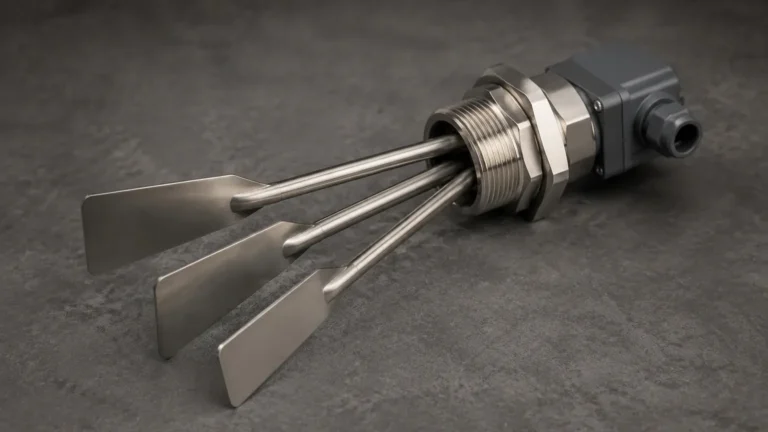
A: Yes. Vibrating fork switches and rotating paddle switches are specifically designed for bulk solids, powders, and granules in silos.
Q: How do I test a level limit switch without filling the tank?
A: Many modern switches, such as those from Welk, include a manual test magnet or a local test button that simulates a covered state to verify the logic of the control system.
Q: What is hysteresis in a level switch?
A: Hysteresis is the difference between the point where the switch activates and the point where it deactivates. This prevents "chattering" (rapid cycling) when the liquid surface is turbulent.
Q: Are there non-contact level limit switches?
A: Yes, non-contact ultrasonic sensors and radar sensors can be configured with relay outputs to act as limit switches without ever touching the medium, which is ideal for highly corrosive or hygienic applications.
By carefully matching the measurement principle to the specific process conditions, engineers can ensure that their level limit switch provides reliable, maintenance-free operation for years. For more detailed technical specifications and to explore our full range of industrial measurement tools, visit our dedicated section on Level Switches.