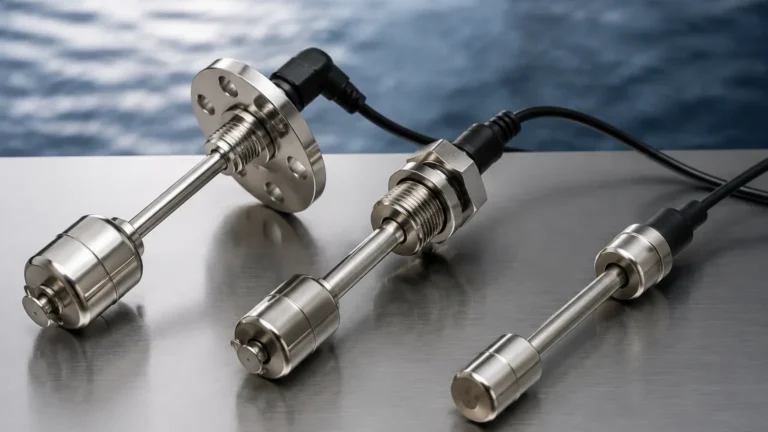
Optical Level Switches
Optical Level Switches
In the field of industrial automation and fluid management, point level detection is a critical requirement for preventing tank overfills, protecting pumps from dry running, and managing process sequences. Among the various technologies available, optical level switches have emerged as a preferred solution for applications requiring high precision, compact form factors, and the absence of moving parts. As a specialized category of Level Switches, optical sensors offer a unique approach to liquid detection based on the principles of light refraction and reflection.
This guide provides a comprehensive technical overview of optical level switches, detailing their operational physics, selection criteria, and practical installation considerations for engineering and maintenance professionals.
Measurement Principles of Optical Level Sensors
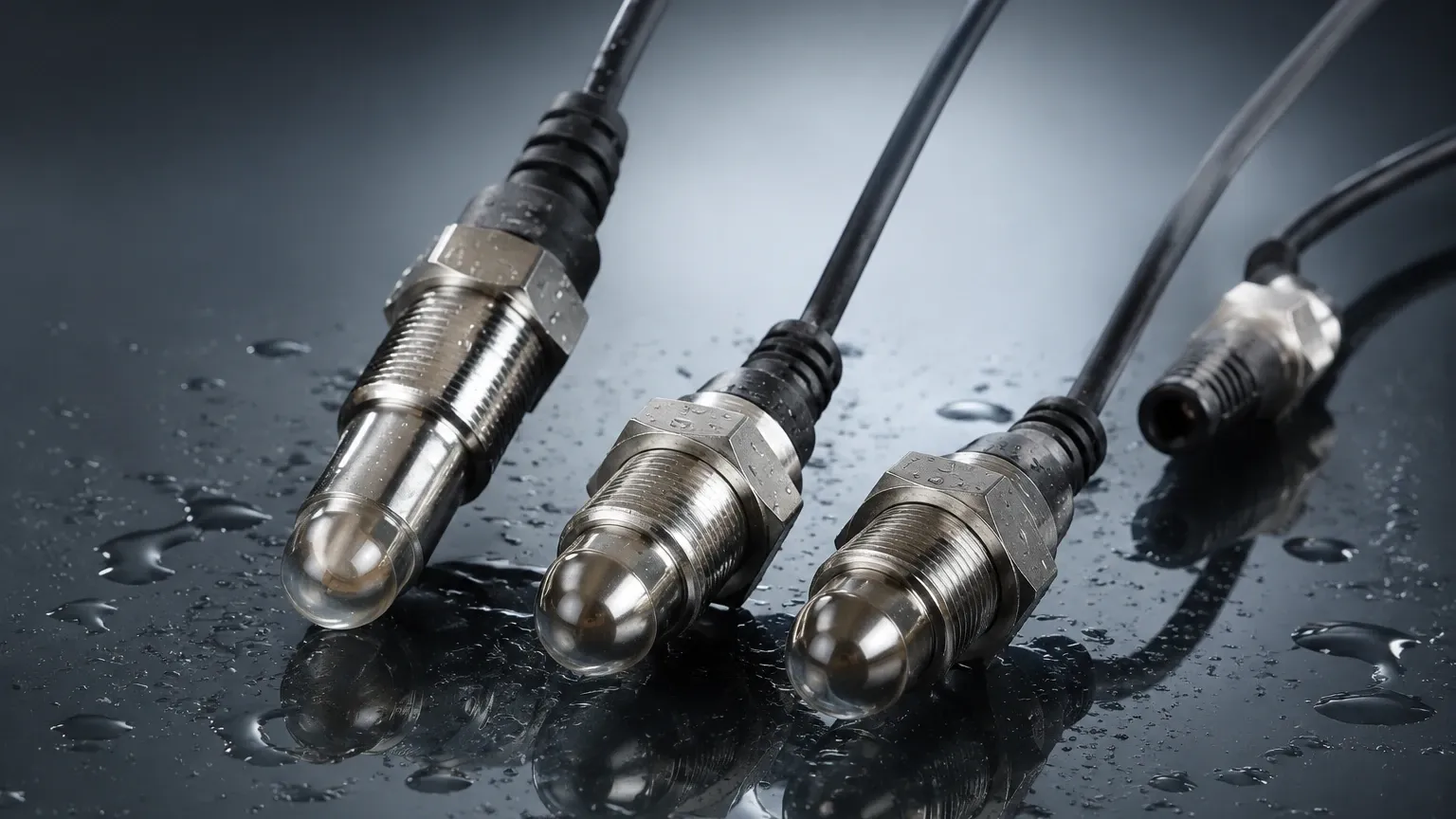
The operation of optical level switches is based on the change in refractive index between air (or gas) and a liquid. Unlike mechanical float switches that rely on buoyancy, or ultrasonic sensors that measure time-of-flight, optical switches utilize an infrared Light Emitting Diode (LED) and a phototransistor housed within a sensing tip, typically shaped as a prism.
The Refraction and Reflection Cycle
1. In Air (Dry State): When the sensor tip is surrounded by air or gas, the infrared light emitted by the LED is internally reflected within the prism. The geometry of the prism is designed so that the light bounces off the internal faces and is directed back toward the phototransistor. The receiver detects a high light intensity, signaling a "dry" state.
2. In Liquid (Wet State): When the sensor tip is submerged in a liquid, the refractive index at the interface changes. Because the refractive index of most liquids is closer to that of the prism material (such as polysulfone or glass) than air is, the light escapes the prism and refracts into the liquid. Consequently, the phototransistor receives significantly less light or no light at all. This drop in intensity triggers the electronic output, signaling a "wet" state.
This solid-state measurement principle allows optical level switches to detect the presence or absence of almost any liquid, regardless of its density, dielectric constant, or conductivity, provided the liquid is not excessively opaque or prone to heavy coating.
Key Advantages in Industrial Applications
Optical level switches are frequently selected for high-reliability environments due to several distinct engineering advantages:
* No Moving Parts: Because the sensor is entirely solid-state, there are no mechanical components to wear out, jam, or corrode. This makes them ideal for high-vibration environments where mechanical floats might fail.
* Compact Dimensions: These sensors can be manufactured in extremely small sizes, often with mounting threads as small as M12 or 1/4" NPT. This allows for installation in tight spaces, small pipes, or laboratory equipment where larger sensors cannot fit.
* High Precision: Optical switches offer excellent repeatability, often within ±1 mm (0.04 inches). The switching point is precisely defined by the tip of the prism.
* Fast Response Time: The transition from dry to wet (and vice versa) is detected almost instantaneously, typically in microseconds or milliseconds, which is vital for high-speed filling lines.
* Material Versatility: Sensor housings can be constructed from various plastics (like Polysulfone) for general use or Stainless Steel with glass prisms for high-pressure and chemically aggressive environments.
Selection Criteria and Technical Specifications
When specifying optical level switches for a project, several technical parameters must be evaluated to ensure long-term performance and compatibility with the process media.
Material Compatibility
The housing and prism material must be compatible with the liquid being measured. Common options include:
* Polysulfone (PSU): Suitable for water, mild acids, and many industrial chemicals. It is cost-effective but has limitations regarding high temperatures and certain solvents.
* Stainless Steel (316L): Used for the body in food-grade or high-pressure applications.
* Glass or Quartz Prisms: Preferred for high-temperature applications or where the liquid might chemically attack plastic prisms.
Temperature and Pressure Ratings
Standard plastic optical switches typically operate up to 80°C (176°F) and pressures up to 10 bar (145 psi). However, high-performance industrial versions with stainless steel bodies and fused glass tips can withstand temperatures exceeding 125°C (257°F) and pressures up to 50 bar (725 psi) or higher.
Electrical Output Options
Integration into a control system (PLC or DCS) requires selecting the correct electrical interface:
* NPN/PNP Transistor Outputs: Standard for DC-powered systems (typically 5V to 24V DC).
* Relay Outputs: Used when the switch must directly control a high-power load, such as a small pump or solenoid valve.
* Digital Communication: Some advanced models offer IO-Link or other protocols for diagnostic feedback.
Installation Guidelines and Best Practices
Proper installation is essential to prevent false triggering and ensure the longevity of the optical level switch. Engineers should consider the following factors during the design phase:
Mounting Orientation
Optical switches can be mounted horizontally, vertically, or at an angle. However, horizontal mounting is often preferred to allow liquid to drain easily from the prism tip when the level drops. If mounted vertically (pointing down), a small amount of liquid may remain on the tip due to surface tension, potentially causing a delay in the "dry" signal.
Avoiding Interference
* Ambient Light: While most modern optical level switches use modulated infrared light to filter out interference, extremely bright sunlight or high-intensity industrial lighting directed straight at the sensor tip can occasionally cause false readings. Shrouding the sensor or orienting it away from direct light sources is recommended.
* Reflective Surfaces: If the sensor is installed too close to a reflective tank wall (typically within 50 mm or 2 inches), the emitted light might reflect off the wall and back into the receiver, even when submerged. Always maintain the manufacturer-recommended clearance.
* Bubbles and Foam: Heavy aeration or thick foam can interfere with light refraction. In such cases, installing the sensor in a stilling well or choosing a different technology may be necessary.
Wiring and Power
Ensure that the power supply is stable and within the specified range. For long cable runs, shielded cables should be used to prevent electromagnetic interference (EMI) from affecting the signal, especially in environments with large motors or variable frequency drives (VFDs).
Limitations and Operational Challenges
While highly versatile, optical level switches are not universal solutions. Certain process conditions can limit their effectiveness:
1. Coating and Scaling: If the liquid is highly viscous or prone to leaving a thick film (like heavy oils or crystalline deposits), a coating may build up on the prism. If the coating is thick enough to reflect or refract light independently of the bulk liquid level, the sensor may fail to change state.
2. Highly Opaque Liquids: Extremely dark or opaque liquids with high solid content may absorb the light rather than refract it, though this usually results in a "wet" signal which may be the intended fail-safe state.
3. Small Tank Geometry: In very small diameter pipes, the curvature of the pipe wall can sometimes act as a lens, interfering with the optical path.
Comparison with Other Level Switch Technologies
To assist in selection, the following table compares optical level switches with other common point-level technologies found in the Level Switches category.
| Feature | Optical Switch | Float Switch | Capacitance Switch | Ultrasonic Switch |
| :— | :— | :— | :— | :— |
| Moving Parts | None | Yes | None | None |
| Size | Smallest | Large | Medium | Medium |
| Maintenance | Low (Keep tip clean) | Moderate (Moving parts) | Low | Low |
| Viscosity Limit| Low to Medium | Low to High | Low to High | Low to Medium |
| Pressure Limit | Up to 50+ bar | Up to 30 bar | Up to 100+ bar | Up to 20 bar |
| Typical Accuracy| ±1 mm | ±5 mm | ±2 mm | ±2 mm |
| Cost | Low to Moderate | Low | Moderate | Moderate to High |
Frequently Asked Questions (FAQs)
Q: Can optical level switches detect the interface between two liquids?
A: Generally, no. Optical switches are designed to detect the transition between a gas and a liquid. Detecting the interface between two liquids (e.g., oil and water) requires a sensor that can distinguish between two different refractive indices, which standard industrial optical switches are not calibrated to do.
Q: Are optical level switches suitable for hazardous areas?
A: Yes, many manufacturers offer intrinsically safe (IS) or explosion-proof versions of optical switches certified for use in Class I, Div 1 or ATEX Zone 0/1 environments. These versions often use an external barrier or isolated electronics.
Q: How do I clean the sensor tip?
A: If the prism becomes coated, it can usually be cleaned with a soft cloth and a solvent compatible with the prism material (e.g., isopropyl alcohol for glass or PSU). Avoid abrasive cleaners that could scratch the optical surface, as scratches can scatter light and cause malfunctions.
Q: Does the color of the liquid affect the sensor?
A: In most cases, no. Because the sensor uses infrared light and relies on the refractive index change at the prism boundary, the visible color of the liquid is irrelevant. However, the presence of specific infrared-absorbing dyes at high concentrations could theoretically impact performance.
By understanding these principles and limitations, engineers can effectively integrate optical level switches into their systems to achieve reliable, maintenance-free liquid level monitoring. For specific application support and to explore the full range of available configurations, professionals should consult technical documentation and product specialists in the industrial instrumentation sector.