Tuning Fork Level Switches
Tuning Fork Level Switches
In the realm of industrial automation and process control, point-level detection is a critical requirement for preventing tank overfills, protecting pumps from dry running, and managing inventory in silos. Among the various technologies available, tuning fork level switches—also known as vibrating level switches—have emerged as one of the most versatile and reliable solutions. These instruments are widely utilized across industries such as water treatment, chemical processing, oil and gas, and food production due to their robust design and immunity to changing media properties.
As a specialized category of Level Switches, tuning fork sensors offer a maintenance-free alternative to traditional float switches and a more cost-effective solution than continuous radar measurement for simple high/low alarm functions. This guide explores the engineering principles, selection criteria, and practical installation considerations for tuning fork level switches in modern industrial environments.
Measurement Principle of Tuning Fork Level Switches
The operation of a tuning fork level switch is based on the principle of vibration frequency shift. Unlike mechanical float switches that rely on buoyancy and moving parts, or capacitive switches that depend on the dielectric constant of the medium, the tuning fork utilizes the physical damping effect of the material being measured.
The Piezoelectric Effect
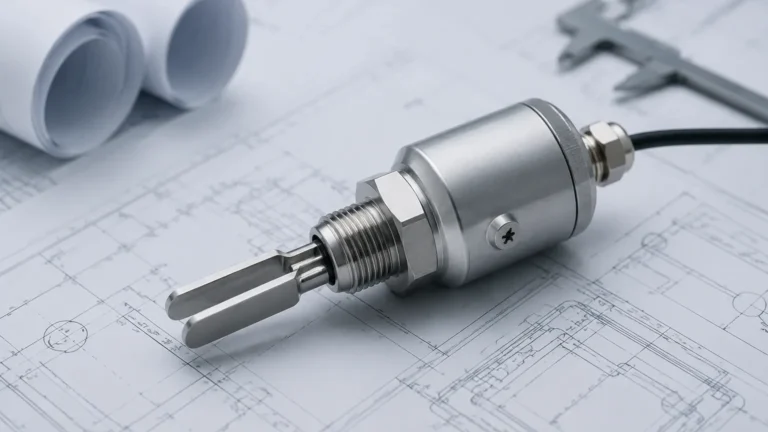
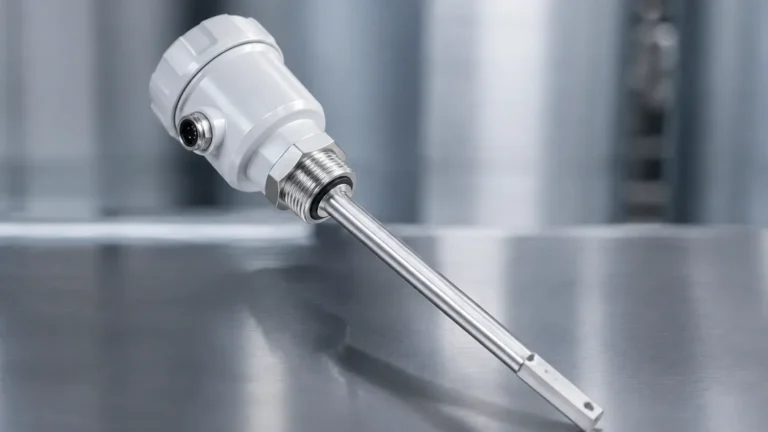
At the heart of the device is a pair of piezoelectric crystals located within the sensor housing. One crystal is excited by an electrical signal, causing it to vibrate at its natural resonant frequency (typically around 300 Hz to 1200 Hz, depending on the fork design). This vibration is transmitted to the metal tines (the "fork") that extend into the vessel.
Frequency Shift Detection
When the fork is vibrating in the air (the "empty" state), it oscillates at its maximum frequency. As the liquid or solid medium rises and makes contact with the tines, the mechanical vibration is dampened. This damping causes a significant drop in the vibration frequency and amplitude. The second piezoelectric crystal acts as a receiver, detecting this change in frequency. The internal electronics then process this shift and trigger an output relay or transistor signal to indicate a "covered" state.
Material Independence
One of the primary advantages of this principle is that the switch is largely independent of the medium's physical properties, such as conductivity, dielectric constant, pressure, or temperature. As long as the medium has sufficient density to dampen the vibration, the switch will function accurately. This makes tuning fork level switches particularly effective for applications involving varying liquids or powders where other sensor types might fail.
Technical Specifications and Selection Table
Selecting the correct tuning fork level switch requires an understanding of the process environment. Welk provides various configurations to suit different media densities and chemical compatibilities. The following table outlines the general technical boundaries for standard industrial tuning fork switches.
| Feature | Liquid Level Switches | Solid/Silo Level Switches |
| :— | :— | :— |
| Minimum Medium Density | 0.5 g/cm³ (Standard) to 0.7 g/cm³ | 10 g/L to 100 g/L (Adjustable) |
| Viscosity Limit | Up to 10,000 mPa·s | N/A (Requires flowable solids) |
| Process Temperature | -40°C to +150°C (Standard) | -40°C to +230°C (High-temp models) |
| Process Pressure | Vacuum to 6.4 MPa (64 bar) | Vacuum to 2.0 MPa (20 bar) |
| Wetted Materials | 316L Stainless Steel, PFA Coating | 316L Stainless Steel, Tungsten Carbide |
| Output Options | Relay (DPDT), PNP/NPN, 2-wire AC/DC | Relay, Transistor, NAMUR |
| Ingress Protection | IP66 / IP67 | IP65 / IP66 |
Industrial Applications: From Water Treatment to Chemical Processing
Tuning fork level switches are prized for their versatility. Because they lack moving parts, they are not prone to jamming or mechanical wear, which is a common failure point in float-based systems.
Water and Wastewater Management
In water treatment plants, these switches are frequently used for pump protection. By installing a tuning fork switch at the bottom of a tank, operators can ensure that pumps are automatically shut off if the water level drops too low, preventing cavitation and expensive motor damage. They are also used in chemical dosing tanks to alert operators when reagents need refilling.
Chemical and Petrochemical Industry
In the chemical sector, the ability to handle corrosive fluids is paramount. Welk offers tuning fork switches with 316L stainless steel tines or specialized coatings like PFA/PTFE. These are used to detect levels in acid storage tanks, solvent recovery systems, and oil-water separators. Their immunity to foam and turbulence makes them superior to ultrasonic or capacitive sensors in agitated vessels.
Food and Beverage Production
For hygienic applications, tuning fork switches are designed with polished surfaces and tri-clamp fittings to meet sanitary standards. They are used in milk storage, syrup tanks, and brewery processes. The vibration of the fork also provides a slight "self-cleaning" effect, which helps prevent the build-up of thin films or residues that might affect other sensor types.
Dry Bulk Solids and Powders
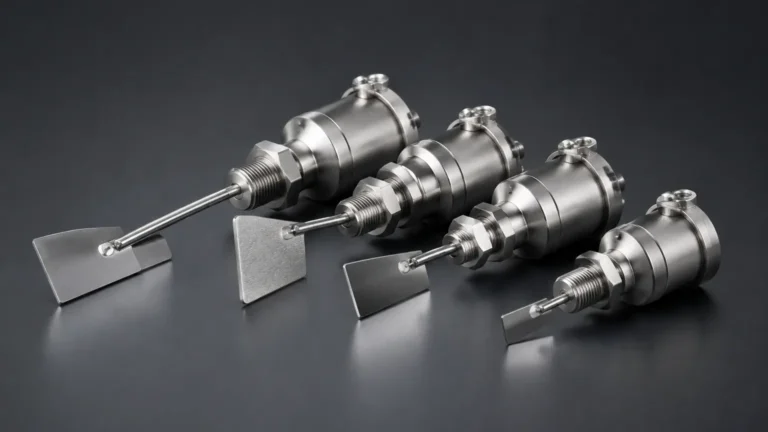
In silos containing grain, plastic pellets, or cement, specialized "solids" tuning forks are used. These forks are typically larger and more robust than liquid versions to withstand the mechanical load of falling material. They are essential for high-level alarms in silos to prevent overfilling and dust explosions.
Installation Best Practices and Orientation
Correct installation is vital to ensure the long-term reliability of tuning fork level switches. While these devices are robust, improper placement can lead to false triggers or physical damage.
Mounting Orientation
* Top Mounting (Vertical): Often used for high-level alarms. The fork should be positioned away from the fill inlet to avoid the direct impact of falling material, which can cause false alarms or bend the tines.
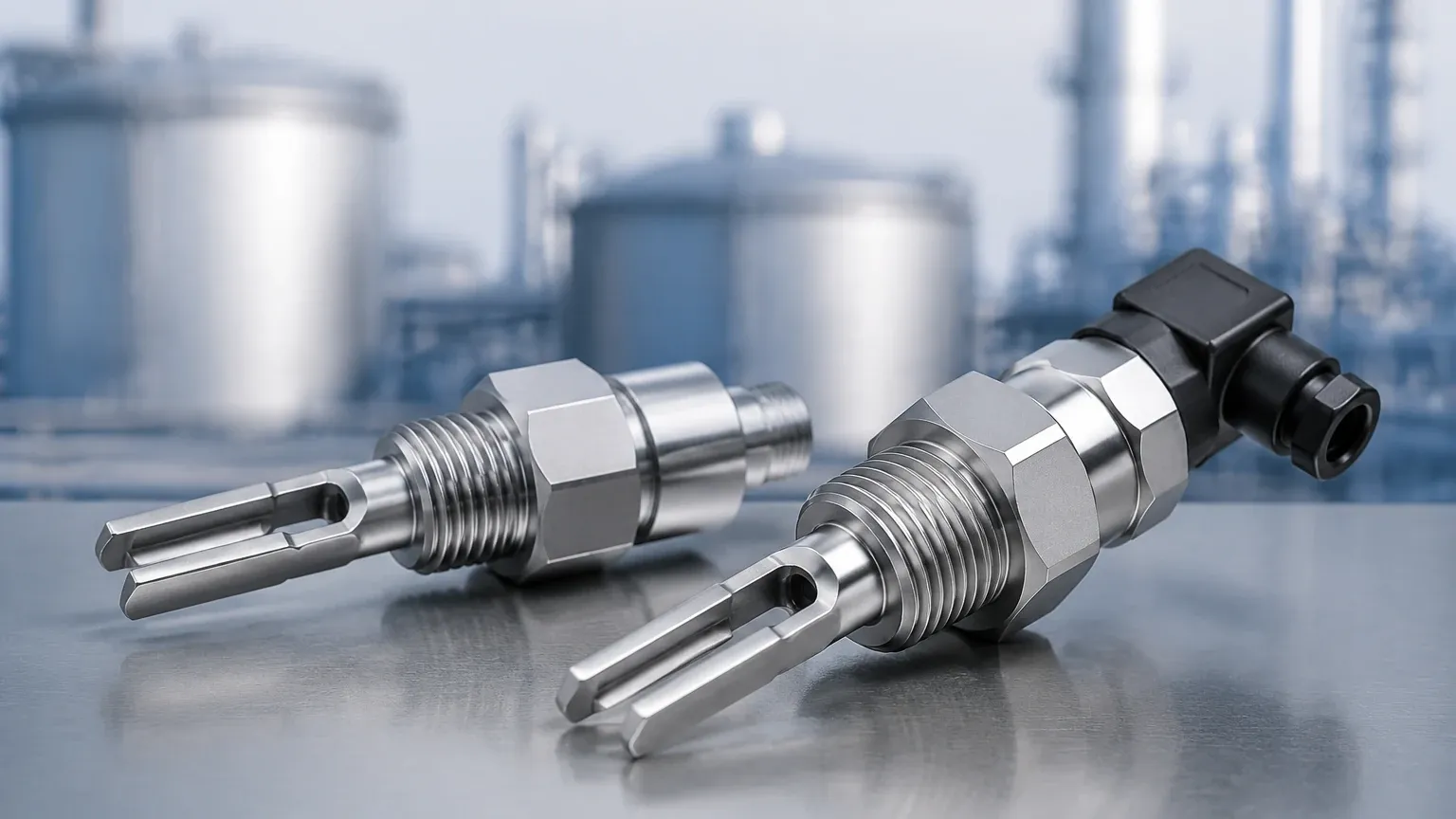
* Side Mounting (Horizontal): Common for both high and low-level detection. In horizontal installations, the tines must be oriented so that the flat surfaces are vertical (perpendicular to the ground). This prevents material or liquid from "bridging" or pooling between the tines, which could cause the sensor to remain in a "covered" state even after the level has dropped.
Avoiding Build-up and Bridging
In viscous liquids or sticky powders, bridging between the tines is the most common cause of failure. To mitigate this, ensure the switch is installed in a location with sufficient flow or agitation. If the medium is prone to heavy scaling, a compact fork design or a coated version may be required. For solids, a protective shield or "roof" can be installed above the fork to deflect the weight of the material column while still allowing the fork to sense the presence of the medium.
Pipe Installation
When installed in pipes for flow detection or empty-pipe alarms, the fork should be aligned parallel to the flow direction. This minimizes the resistance to the fluid and prevents the accumulation of debris on the tines.
Comparing Tuning Forks with Other Level Switches
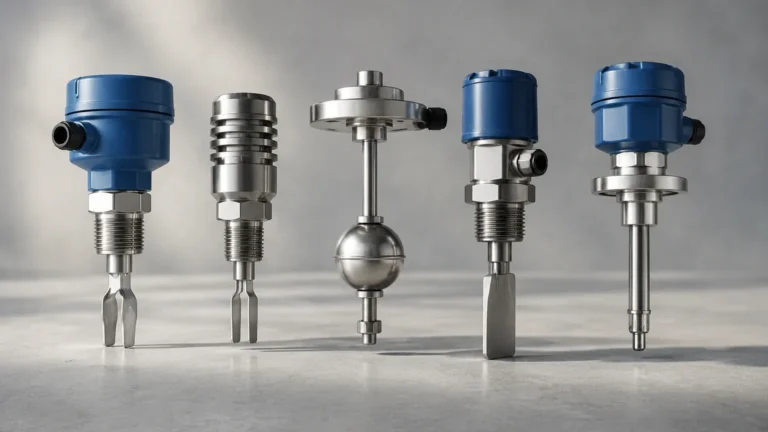
To understand why tuning fork level switches are selected for specific projects, it is helpful to compare them against alternative technologies found in the Level Switches category.
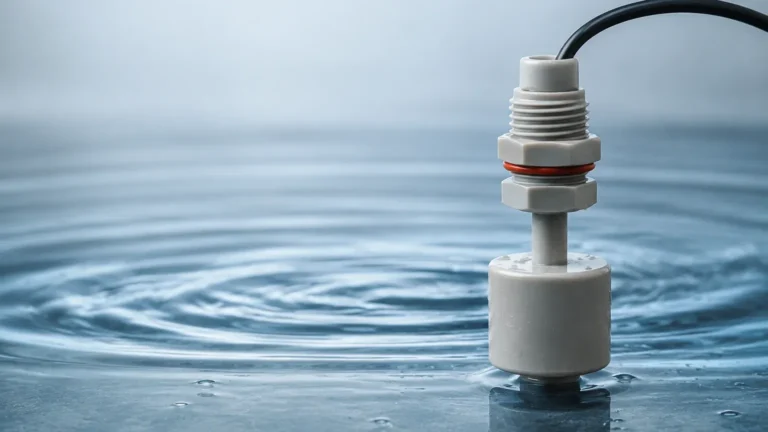
1. Vs. Float Switches: Float switches are mechanical and subject to wear, sticking, and corrosion. Tuning forks have no moving parts and can handle much higher pressures and temperatures. However, float switches are generally cheaper for simple water tank applications.
2. Vs. Capacitive Switches: Capacitive sensors are sensitive to changes in the dielectric constant and material build-up on the probe. Tuning forks are much more reliable in applications where the medium changes (e.g., switching from oil to water) or where coating occurs.
3. Vs. Ultrasonic Switches: Ultrasonic point-level sensors can be affected by foam, heavy vapors, or ambient noise. Tuning forks are unaffected by surface conditions like foam or turbulence, making them the preferred choice for agitated process tanks.
4. Vs. Optical Switches: Optical sensors fail if the medium is opaque or if the lens becomes coated. Tuning forks are ideal for opaque, dirty, or light-shielded environments.
Limitations and Considerations
Despite their versatility, tuning fork level switches have specific limitations:
* Density Requirements: If a medium is extremely light (e.g., very low-density aerated foam or fine volcanic ash), it may not provide enough damping to trigger the switch. Users must confirm the minimum density of their medium before selection.
* Viscosity Limits: While they handle viscosities up to 10,000 mPa·s, extremely thick, paste-like substances can cause "caking" between the tines, leading to false signals.
* Mechanical Stress: In heavy bulk solids, the lateral force of moving material can bend or break the tines. In such cases, heavy-duty versions or alternative technologies like rotary paddle switches may be considered.
Frequently Asked Questions (FAQs)
Q: Can tuning fork level switches detect foam?
A: It depends on the foam density. Standard tuning forks are designed to ignore light foam and only trigger when they contact the actual liquid. However, high-sensitivity models can be calibrated to detect dense foams if required.
Q: Do I need to calibrate the switch for different liquids?
A: In most cases, no. Tuning fork switches are typically "plug-and-play." They are factory-set to trigger at a specific frequency shift that covers a wide range of standard liquid densities (0.7 g/cm³ and above).
Q: What is the difference between a "compact" and "standard" tuning fork?
A: Compact versions have shorter tines and smaller housings, making them ideal for small pipes or tight spaces. Standard versions are more robust and often come with extended probe lengths for reaching deeper into a tank from a top-mounted flange.
Q: How do I handle fail-safe requirements?
A: Most tuning fork switches include a selectable fail-safe mode (High or Low). In "High" fail-safe mode, the relay de-energizes when the fork is covered or if power is lost, preventing overfills. In "Low" fail-safe mode, it de-energizes when the fork is uncovered, protecting against dry-running.
Conclusion
Tuning fork level switches represent a pinnacle of reliability for point-level detection in industrial automation. By leveraging the physics of resonant frequency, these devices provide a stable, maintenance-free solution that withstands the rigors of chemical processing, water treatment, and bulk material handling. When selecting a switch, engineers must carefully consider the medium's density, the potential for material build-up, and the specific mounting requirements of the vessel. For organizations seeking to enhance their process safety and efficiency, Welk offers a comprehensive range of level measurement instruments tailored to these demanding environments.