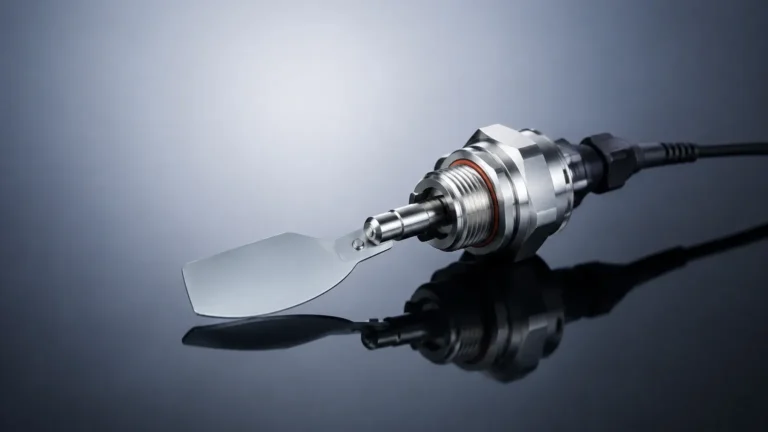
Level Switch Trumen
Level Switch Trumen
In the landscape of industrial automation, point level detection serves as a critical safety and process control mechanism. Whether preventing a storage tank from overflowing or ensuring a pump does not run dry, the reliability of a level switch is paramount. Among the various providers in the global market, the level switch Trumen range has gained recognition for its focus on robust engineering and adaptability to diverse media.
For process engineers and procurement specialists, selecting the right level switch requires a deep understanding of the underlying measurement principles, the physical properties of the media, and the specific environmental constraints of the installation site. This guide provides a technical overview of the technologies often associated with Trumen level switches, offering a practical reference for choosing the most effective Level Switches for industrial applications.
Understanding Point Level Detection Technology
Point level detection differs from continuous level measurement in that it provides a binary output (on/off) when the material reaches a specific height in a vessel. This is typically achieved through one of several physical interactions: mechanical displacement, vibration damping, electrical capacitance, or thermal conductivity.
In modern industrial settings, electronic level switches have largely superseded mechanical float switches in demanding applications due to their lack of moving parts and resistance to wear. When evaluating a level switch Trumen solution, the choice usually centers on which physical principle best handles the specific characteristics of the material—such as viscosity, dielectric constant, or the tendency to form coatings.
Key Technologies in the Trumen Level Switch Range
Trumen Technologies offers a variety of sensors designed for both liquids and solids. Understanding how these sensors function is the first step in successful integration.
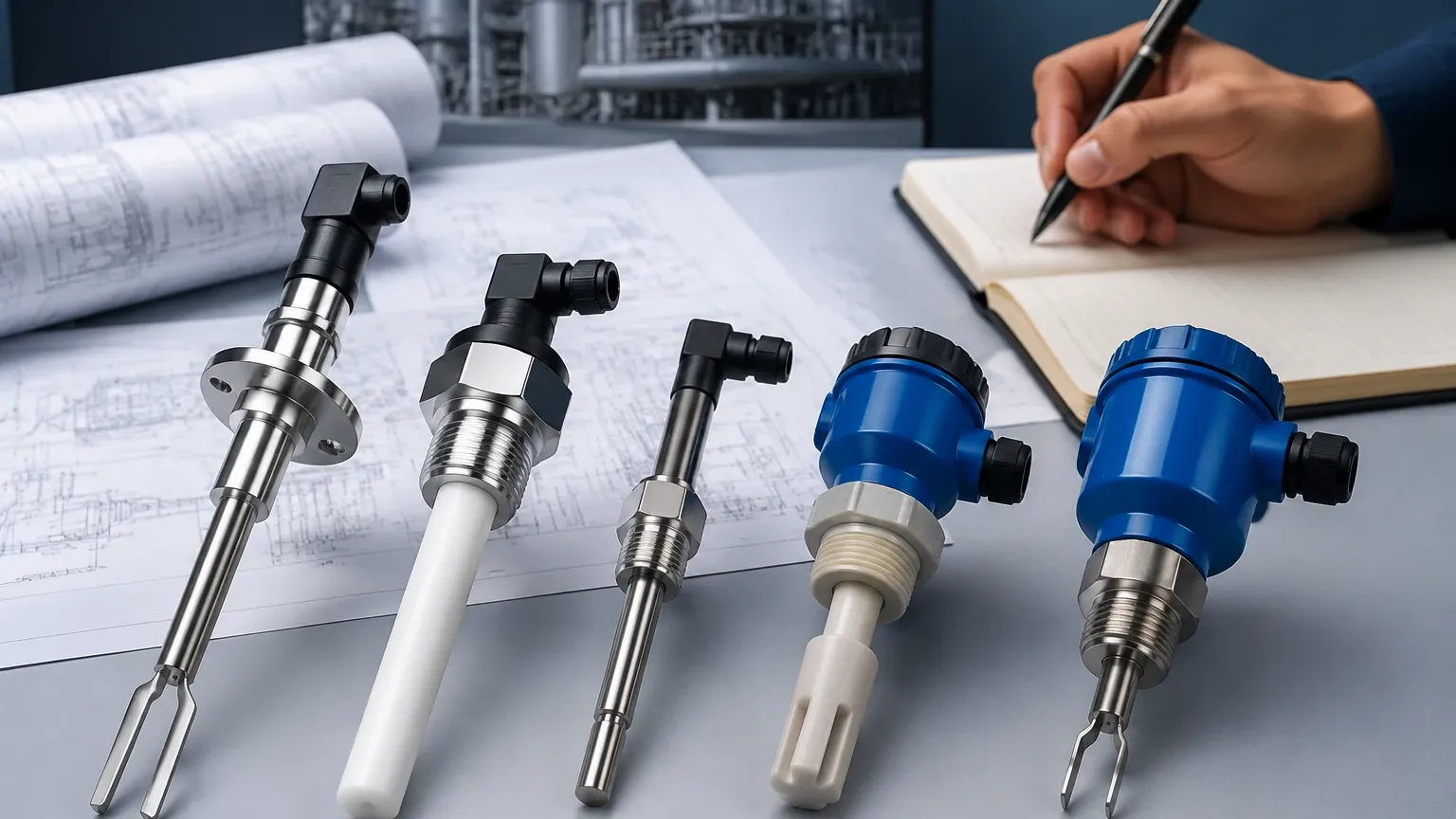
1. Vibrating Fork (Tuning Fork) Level Switches
The vibrating fork level switch is one of the most versatile point level sensors. It utilizes two tines that are vibrated at their natural resonant frequency by a piezoelectric crystal.
* Principle of Operation: When the tines are in the air, they vibrate freely at a specific frequency. As the medium (liquid or powder) covers the tines, the frequency changes or the vibration is damped. The internal electronics detect this shift and trigger the relay or transistor output.
* Applications: Ideal for most liquids, including those with bubbles or turbulence. It is also widely used for fine-grained solids and powders.
* Advantages: It is largely independent of the chemical and physical properties of the liquid, such as density (above a certain threshold), conductivity, or dielectric constant.
2. RF Admittance and Capacitance Level Switches
Capacitance-based sensors measure the electrical capacitance between the probe and the tank wall (or a reference electrode).
* Principle of Operation: The probe and the tank wall act as two plates of a capacitor, with the material acting as the dielectric. As the level rises, the dielectric constant changes, altering the capacitance. RF Admittance is an advanced version of this technology that uses a high-frequency signal and a "guard" circuit to ignore the effects of material buildup or coating on the probe.
* Applications: Excellent for highly corrosive liquids, slurries, and bulk solids.
* Advantages: No moving parts and highly sensitive. RF Admittance models are particularly effective in sticky environments where other sensors might fail due to false triggering.
3. Rotary Paddle Level Switches
Designed specifically for bulk solids and powders, the rotary paddle switch is a mechanical solution for level detection.
* Principle of Operation: A low-speed motor rotates a paddle. When the material reaches the paddle, it creates resistance, causing the motor to stall. This stall is detected by a switch that triggers the output and stops the motor.
* Applications: Grains, sand, plastic pellets, and cement silos.
* Advantages: Simple, cost-effective, and easy to troubleshoot.
Technical Selection Criteria for Industrial Applications
Choosing a level switch Trumen model requires a systematic evaluation of the process conditions. Failure to account for even one variable can lead to premature sensor failure or inaccurate readings.
Media Characteristics
* State: Is the material a liquid, a slurry, or a dry solid? Dry solids require sensors capable of handling bulk density variations, while liquids require consideration of viscosity and surface tension.
* Dielectric Constant (εr): For capacitance and RF admittance switches, the dielectric constant must be high enough for the sensor to detect a change. Water has a high εr (~80), while oils have a low εr (~2).
* Viscosity and Coating: If the material is sticky (like molasses or wet cement), a vibrating fork might become clogged, or a standard capacitance probe might give a false high reading. In these cases, RF Admittance with coating rejection is preferred.
Process Conditions
* Temperature: Standard sensors typically operate up to 80°C (176°F). For high-temperature applications, such as steam boilers or bitumen tanks, specialized high-temperature versions with cooling fins or ceramic insulators are required to protect the electronics.
* Pressure: The process connection and the sensor housing must be rated for the maximum vessel pressure. Common ratings include 10 bar, 25 bar, or even higher for specialized high-pressure reactors.
* Chemical Compatibility: The wetted parts (the parts of the sensor in contact with the material) must be resistant to corrosion. Stainless steel 316L is the industry standard, but PTFE or Hastelloy coatings may be necessary for aggressive acids.
Comparative Analysis of Level Switch Types
The following table provides a general comparison of the most common level switch technologies used in the industry to help narrow down the selection for a specific application.
| Technology | Suitable Media | Max Temp (Typical) | Pressure Resistance | Key Limitation |
| :— | :— | :— | :— | :— |
| Vibrating Fork | Liquids, Fine Solids | Up to 150°C | Up to 40 bar | High viscosity liquids (>10,000 cP) |
| RF Admittance | Liquids, Slurries, Solids | Up to 250°C+ | Up to 60 bar | Requires calibration for specific media |
| Capacitance | Non-coating Liquids | Up to 200°C | Up to 40 bar | Sensitive to material buildup |
| Rotary Paddle | Bulk Solids, Powders | Up to 80°C | Atmospheric | Mechanical wear of motor/seals |
| Conductivity | Conductive Liquids | Up to 100°C | Up to 10 bar | Only works with conductive media |
Installation Best Practices and Engineering Considerations
Proper installation is just as critical as selecting the right technology. Even the highest quality level switch Trumen device will fail if it is positioned incorrectly.
1. Positioning and Orientation
* Avoid the Inflow: Never install a level switch directly in the path of the material entering the tank. The force of the falling material can damage the probe or cause false switching.
* Sidewall vs. Top Mount: Vibrating forks are often mounted on the side for high/low alarms. If top-mounting a long probe, ensure it is supported if there is significant agitation in the tank.
* Nozzle Length: Ensure the active part of the sensor (e.g., the tines of a vibrating fork) extends fully into the vessel. If the nozzle is too long, material can get trapped inside, leading to false readings.
2. Electrical Integration
* Cable Glands: Always point cable glands downward to prevent moisture from entering the housing via the cable. Use a "drip loop" in the wiring.
* Grounding: For RF Admittance and Capacitance switches, a solid ground connection to the metal tank wall is essential. For plastic tanks, a reference electrode or a grounding strap must be used.
3. Turbulence and Agitation
In tanks with mixers or agitators, the physical force of the moving liquid can bend or snap long sensor probes. In these environments, use a shorter probe or install a stilling well to protect the sensor from lateral forces.
Limitations and Operational Constraints
While highly reliable, no single level switch technology is a "silver bullet" for every application.
* Vibrating Forks: While excellent for most liquids, they can struggle with very high viscosity materials that "bridge" between the tines, preventing them from vibrating even after the level has dropped.
* RF Admittance: These require a stable power supply and are more complex to calibrate than a simple vibrating fork. They may also be affected by significant changes in the moisture content of bulk solids.
* Mechanical Switches: Any device with moving parts, such as a rotary paddle or a float switch, has a finite lifespan and will eventually require seal replacement or motor maintenance.
Frequently Asked Questions (FAQs)
Q: Can a level switch Trumen vibrating fork be used for both high and low-level detection?
A: Yes. The same sensor can be used for high-level (overfill) or low-level (dry run) protection. The logic is usually configured at the controller or by selecting the Normally Open (NO) or Normally Closed (NC) contacts on the switch.
Q: How do I handle material buildup on the sensor?
A: For materials that tend to stick or coat, RF Admittance technology is the best choice. It specifically filters out the capacitive effect of the coating, only triggering when the bulk material makes contact with the probe.
Q: Is it necessary to calibrate a vibrating fork switch?
A: Generally, no. Most vibrating fork switches are factory-calibrated to detect media above a certain density (e.g., >0.7 g/cm³). Calibration is usually only required for extremely low-density materials or specific application requirements.
Q: What is the maximum temperature a level switch can handle?
A: This depends on the model. Standard electronics are rated to 80°C. With high-temperature extensions and specialized seals, some RF Admittance or vibrating fork switches can operate in environments exceeding 250°C.
For engineers looking to integrate these technologies into their systems, it is advisable to consult a professional manufacturer to ensure that the specific model matches the chemical and physical demands of the process. Reliable Level Switches are the foundation of process safety, and understanding the nuances of the level switch Trumen range ensures long-term operational success.