Nivelco Level Switches
Nivelco Level Switches
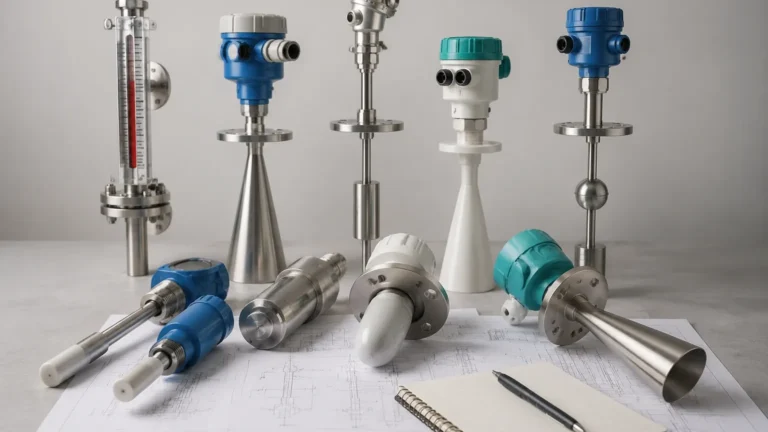
In industrial process automation, point level detection serves as a critical safety and control mechanism. Level switches are designed to detect the presence or absence of a medium at a specific height within a tank, silo, or pipe, triggering an electrical signal to prevent overflows, protect pumps from dry running, or manage automated filling cycles. Among the established providers in this sector, Nivelco level switches are recognized for their versatility in handling both liquid and bulk solid applications.
This guide explores the technical principles, selection criteria, and installation best practices for level switches, providing a reference for engineers and procurement specialists looking to integrate these devices into industrial systems.
Measurement Principles of Level Switches
Before selecting a specific model, it is essential to understand the physics behind the various sensing technologies. Level switches operate on different physical properties of the process material, such as density, conductivity, or mechanical resistance.
Vibrating Fork Technology
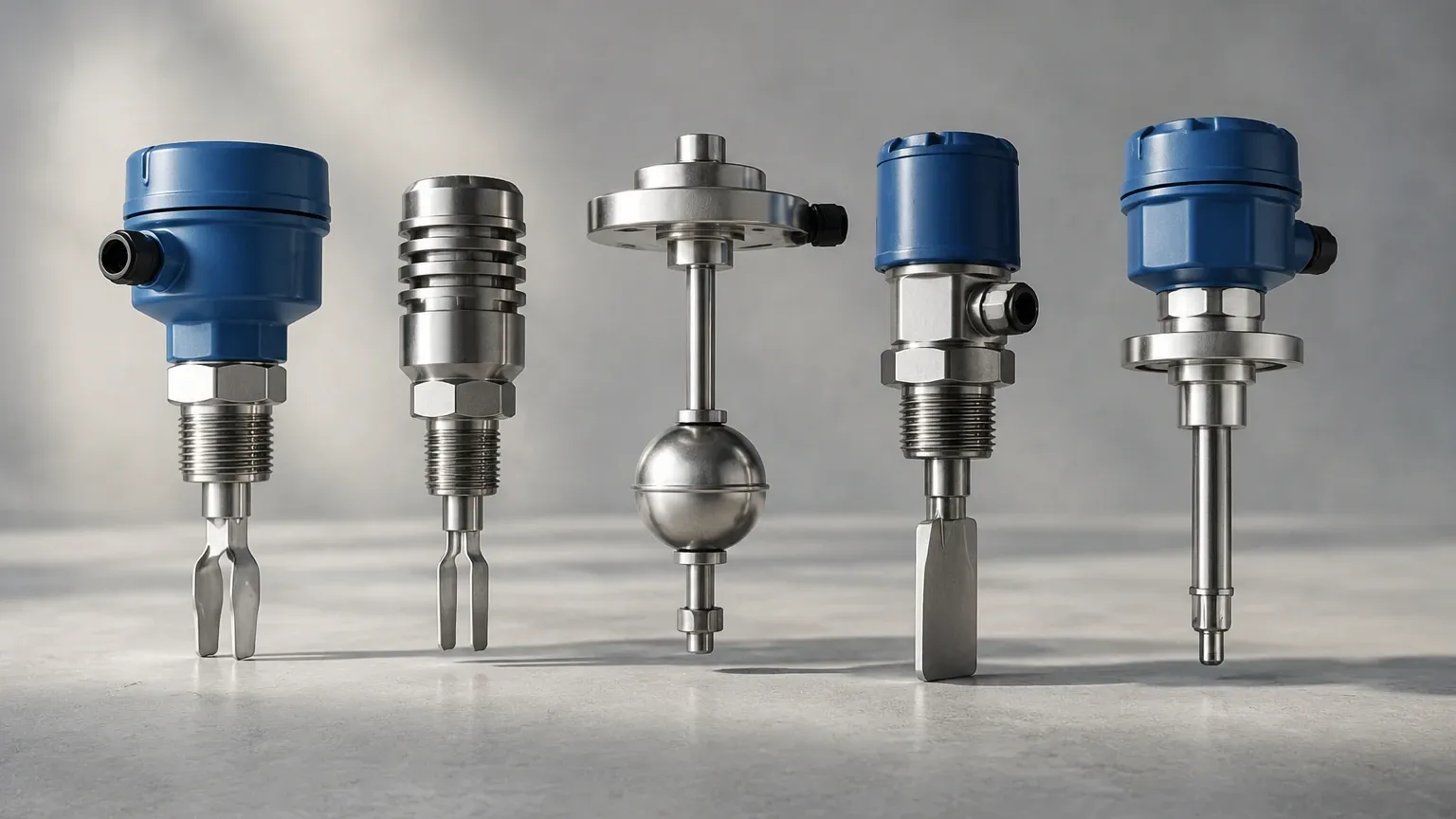
Used extensively in the NivoSWITCH series, the vibrating fork principle relies on a piezoelectric crystal to vibrate a metal fork at its natural resonance frequency (typically around 300–400 Hz for liquids). When the fork is immersed in a medium, the frequency shifts or the amplitude decreases. The internal electronics detect this change and switch the output relay. This technology is highly reliable because it is largely independent of the medium's chemical properties, such as dielectric constant or conductivity.
Float and Displacement Principles
Float switches, such as the NivoFLOAT range, utilize buoyancy. A float containing a magnet moves with the liquid level. When it reaches a predetermined point, the magnetic field actuates a reed switch or a microswitch. This is a purely mechanical-to-electrical interface that requires no auxiliary power for the sensing element itself, making it ideal for basic sump control and water treatment applications.
Conductive Level Sensing
Conductive switches (e.g., NivoCONT K) operate by measuring the electrical resistance between two or more electrodes. When a conductive liquid bridges the gap between the probe and the tank wall (or a reference probe), a small current flows, triggering the switch. This method is cost-effective but limited to conductive liquids like water, acids, or alkalis.
Rotary Paddle Principles
For bulk solids and powders, the rotary paddle principle is a standard. A small motor drives a paddle at low speed. When the material reaches the paddle, it creates mechanical resistance that stops the motor and toggles a microswitch. This is a robust solution for grains, plastic pellets, and cement silos.
Categorization of Nivelco Level Switches
Nivelco offers a structured portfolio categorized by the nature of the medium and the specific environmental demands of the application.
1. Liquid Level Switches
* Vibrating Forks (NivoSWITCH): Suitable for most liquids with a density greater than 0.7 g/cm³. They are often used for overfill protection in chemical tanks.
* Float Switches (NivoFLOAT / Magnetic): Used for wastewater, potable water, and non-aggressive chemicals. Variants include plastic floats for water and stainless steel versions for higher temperatures.
* Conductive Probes (NivoCONT K): Best for multi-point detection in small tanks containing conductive fluids.
2. Solid Level Switches
* Vibrating Rods and Forks: Unlike liquid forks, these are designed with a single rod or a more robust fork structure to prevent material bridging. They are used for fine powders and granules.
* Rotary Paddles (NivoROTA): The preferred choice for heavy bulk solids where mechanical force is required to confirm the presence of material.
* Capacitance Switches (NivoCONT C): These detect the change in capacitance caused by the presence of solids between the probe and the silo wall. They are effective for materials with low dielectric constants.
Practical Selection Table
Choosing the correct Level Switches requires balancing process conditions against instrument specifications. The following table provides a general comparison of common technologies used in the industry.
| Technology | Suitable Media | Max Pressure (Typical) | Temp Range (Typical) | Main Advantage |
| :— | :— | :— | :— | :— |
| Vibrating Fork | Liquids / Fine Solids | 40 bar (4.0 MPa) | -40°C to +150°C | Maintenance-free, no calibration |
| Float Switch | Clean Liquids | 10–25 bar (1.0–2.5 MPa) | -20°C to +100°C | Low cost, simple installation |
| Conductive | Conductive Liquids | 16 bar (1.6 MPa) | Up to +200°C | Multi-point detection in one probe |
| Rotary Paddle | Bulk Solids | Atmospheric | -20°C to +200°C | Robust for heavy materials |
| Capacitance | Liquids / Solids | 30 bar (3.0 MPa) | -30°C to +200°C | High sensitivity for low-density solids |
Key Evaluation Criteria for Engineering Projects
When specifying Nivelco level switches or equivalent industrial instruments, engineers must confirm several technical variables to ensure long-term reliability.
Media Density and Viscosity
Vibrating switches have a minimum density requirement. If the liquid is too light (e.g., certain liquefied gases), the fork may not detect the frequency shift. Similarly, highly viscous liquids can "cling" to the fork, causing a delay in the switch returning to the "off" state when the level drops. For high-viscosity applications, a coated probe or a different technology like a heavy-duty float may be required.
Chemical Compatibility
The wetted parts of the switch must be resistant to the process medium. While 316L stainless steel is the standard for most Nivelco level switches, aggressive chemicals like hydrochloric acid may require plastic coatings (PFA, PP, or PVDF) or specialized alloys.
Process Connections and Housing
Standard threaded connections (e.g., 1" BSP or NPT) are common, but food and pharmaceutical applications require hygienic flanges (Tri-Clamp). Furthermore, the electronics housing should be selected based on the environment: plastic for general use, aluminum for industrial durability, or stainless steel for corrosive atmospheres.
Installation Considerations
Proper installation is as important as instrument selection. Incorrect mounting is the leading cause of premature failure or false readings in level detection.
1. Avoid Inflow Streams: Never install a level switch directly in the path of the filling stream. The turbulence and mechanical force of the falling material can cause false triggers or damage the sensing element.
2. Orientation: Vibrating forks should be oriented so that the blades are vertical (side-by-side) rather than horizontal. This prevents material from resting on top of the blades, which could lead to a permanent "covered" signal.
3. Nozzle Length: For vibrating switches, ensure the fork protrudes fully into the tank. If the fork is recessed inside a long mounting nozzle, material can build up in the dead space, causing the switch to malfunction.
4. Cable Entry: Always point cable entries downward to prevent moisture from entering the housing via the conduit. Use proper cable glands to maintain the IP rating (typically IP67 or IP68).
Limitations and Common Risks
Despite their reliability, level switches have limitations that must be addressed during the design phase:
* Turbulence and Foam: In liquids, heavy foam can be interpreted as a liquid level by some technologies (like ultrasonic or capacitance) while being ignored by others (like vibrating forks). If foam detection is the goal, specific sensitivity adjustments are needed.
* Build-up and Coating: In sticky applications, material can coat the sensor. While vibrating forks have some self-cleaning properties due to their vibration, excessive build-up will eventually dampen the signal.
* Mechanical Wear: Rotary paddles are subject to mechanical wear of the motor and seals. In highly abrasive environments, these components may require more frequent inspection than solid-state electronic switches.
Frequently Asked Questions (FAQs)
Q: Can Nivelco level switches be used in hazardous areas?
A: Yes, many models are available with ATEX, IECEx, or FM certifications for use in explosive gas or dust atmospheres. These versions typically use intrinsically safe (Ex i) or flameproof (Ex d) protection methods.
Q: How do I test a level switch without filling the tank?
A: Most modern vibrating switches include a magnetic test point or a local test button on the electronics module. By holding a magnet to the designated spot on the housing, you can simulate a covered state to verify the relay logic and alarm circuits.
Q: What is the difference between a PNP/NPN output and a Relay output?
A: PNP/NPN outputs are transistor-based and are used for high-speed switching into a PLC. Relay outputs are mechanical contacts that can handle higher current loads and are generally used for direct control of pumps or sirens.
Conclusion
Nivelco level switches provide a diverse range of solutions for point level monitoring in the water, chemical, and food industries. By understanding the underlying measurement principles—whether it be the resonance of a vibrating fork or the mechanical resistance of a rotary paddle—engineers can select the most appropriate device for their specific process conditions.
For projects requiring precise control and high-quality manufacturing standards, exploring a comprehensive range of Level Switches ensures that safety and efficiency targets are met with reliable, industry-proven technology. Always consult the technical data sheet for specific pressure and temperature derating curves before finalizing an installation design.