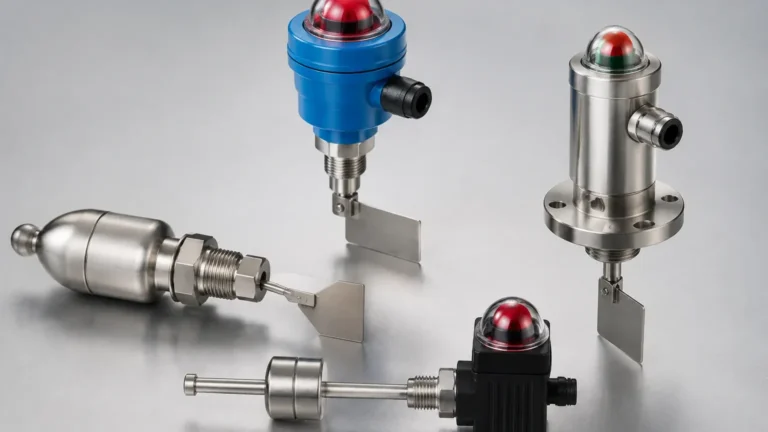
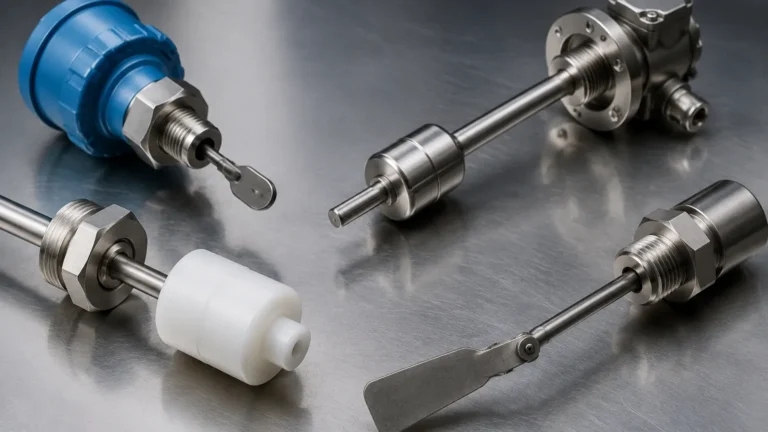
Level Switch Vibrating Type
Level Switch Vibrating Type
In the landscape of industrial automation, point-level detection serves as a critical safety and process control mechanism. Among the various technologies available, the level switch vibrating type has emerged as one of the most versatile and reliable solutions for both liquid and solid applications. Often referred to as "tuning fork" switches, these instruments provide robust performance in environments where other technologies, such as ultrasonic or float switches, might fail due to turbulence, foam, or changing material properties.
As a professional manufacturer of industrial level measurement instruments, Welk provides high-performance level switches designed to withstand the rigors of chemical processing, water treatment, and industrial manufacturing. Understanding the engineering principles, selection criteria, and installation nuances of these devices is essential for ensuring long-term operational efficiency.
Measurement Principles of Vibrating Level Switches
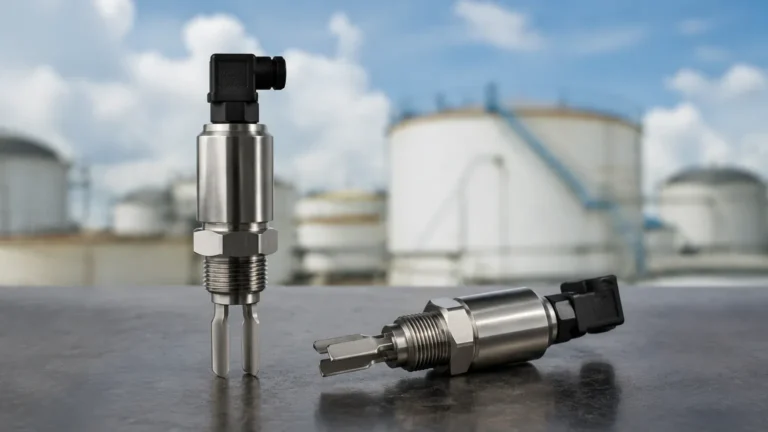
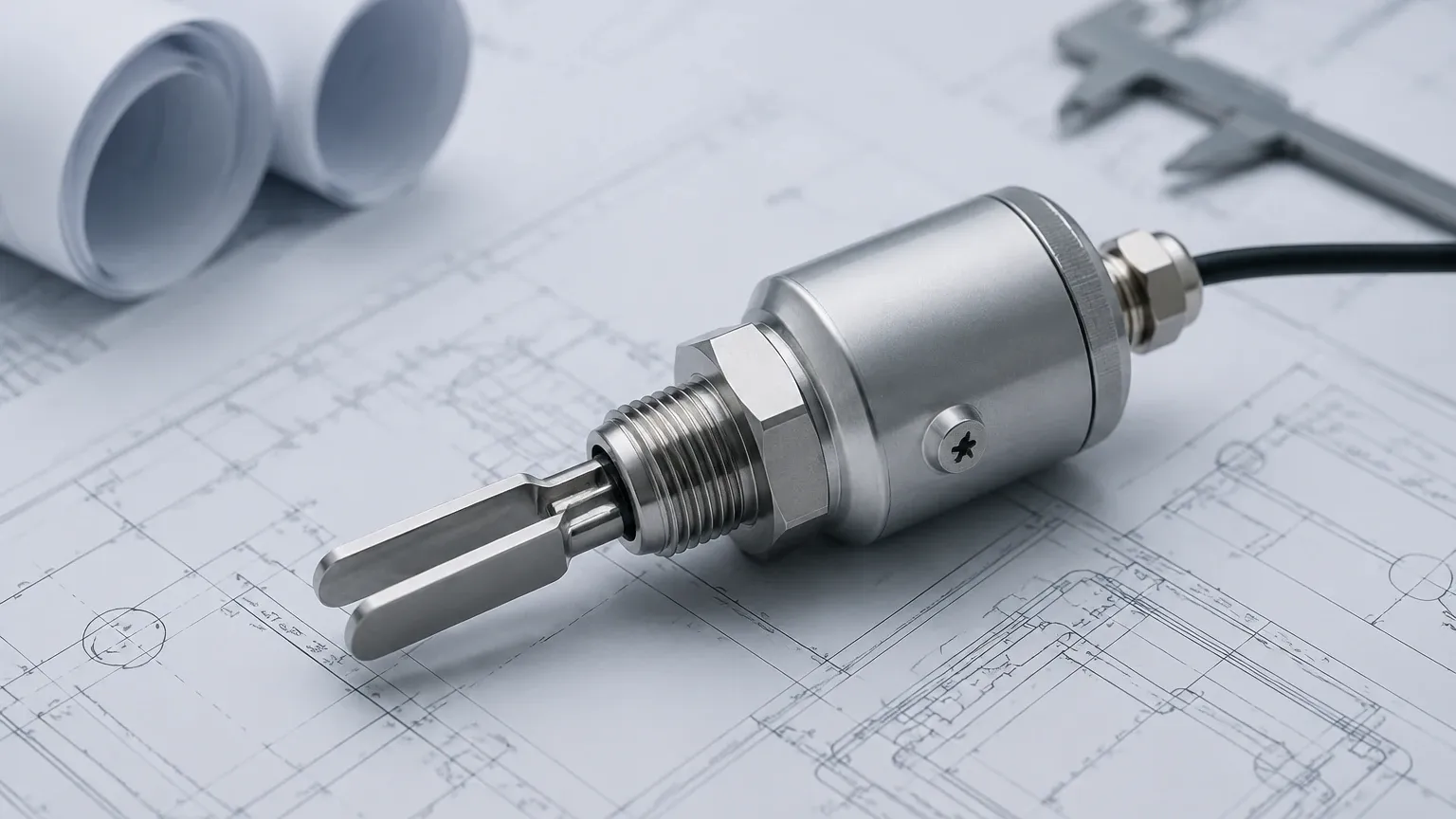
The fundamental operation of a level switch vibrating type relies on the physics of resonance. The sensor head typically consists of two tines (the fork) or a single rod that is driven to vibrate at its natural resonant frequency.
The Piezoelectric Effect
Inside the housing of the switch, piezoelectric crystals are utilized for two purposes: excitation and detection. One set of crystals receives an electrical signal, causing it to mechanically expand and contract. This vibration is transmitted to the fork or rod. A second set of crystals acts as a receiver, converting the mechanical vibration back into an electrical signal.
Frequency Shift and Damping
When the sensor is in free air (or a gas-filled headspace), it vibrates at its maximum frequency. As the process medium—whether liquid or solid—rises and makes contact with the vibrating element, the frequency of vibration changes.
1. For Liquids: The density of the liquid causes a significant shift in the resonant frequency. The electronics detect this frequency drop and trigger the output relay or transistor.
2. For Solids: The presence of bulk solids dampens the amplitude of the vibration. Once the vibration is suppressed below a specific threshold, the switch changes state.
Because this method relies on physical contact and mechanical resonance rather than electrical properties like conductivity or dielectric constants, the level switch vibrating type is largely unaffected by changes in the medium's chemical composition, pressure, or temperature.
Types of Vibrating Level Switches
While the underlying principle remains consistent, the physical design of the sensor is optimized for different material states. Selecting the correct geometry is the first step in successful application engineering.
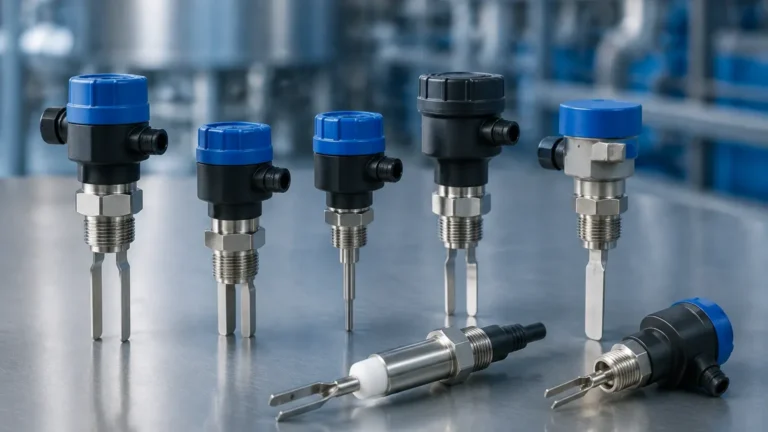
1. Vibrating Fork Switches for Liquids
These are characterized by short, thin tines. They are engineered to detect liquids with varying viscosities. Because the tines are relatively close together, they are highly sensitive to the density changes associated with liquid immersion. They are ideal for overfill protection in tanks and dry-run protection for pumps.
2. Vibrating Fork Switches for Solids
Designed for powders and fine-grained bulk materials, these forks have larger tines and a more robust construction. They are used in silos and hoppers to detect high or low levels of materials like flour, cement, or plastic pellets. The larger surface area allows for better interaction with dry materials.
3. Vibrating Rod Switches
For applications involving coarser solids or materials that tend to bridge or clog (such as large wood chips or sticky granules), a single-rod design is preferred. Since there is only one vibrating element, there is no space for material to become trapped, which is a common failure mode for fork designs in heavy-duty solids applications.
Key Evaluation Criteria for Selection
When specifying a Level Switches vibrating type for a project, engineers must evaluate several environmental and material factors to ensure compatibility.
Medium Density
Every vibrating switch has a minimum density requirement. For liquids, this is typically around 0.5 to 0.7 g/cm³ (500 to 700 kg/m³). For very light materials, such as aerated powders or expanded polystyrene, specialized high-sensitivity models may be required.
Viscosity and Coating
While vibrating switches are resistant to minor coatings, extremely viscous liquids (e.g., heavy resins or molasses) can cause "false positives" if the material does not drain away from the tines when the level drops. In these cases, a polished finish or a specific fork orientation is necessary.
Process Temperature and Pressure
Standard industrial models typically handle temperatures up to 150°C (302°F) and pressures up to 40 bar (580 psi). For high-temperature applications, such as steam boilers or chemical reactors, models with extended necks or thermal separators are used to protect the internal electronics from heat transfer.
Chemical Compatibility
The wetted parts are usually manufactured from 316L stainless steel. However, for aggressive acids or bases, coatings like PFA or ECTFE, or exotic alloys like Hastelloy, may be required to prevent corrosion.
Practical Selection Table
The following table provides a general guideline for choosing between different vibrating type configurations based on the application environment.
| Application Feature | Vibrating Fork (Liquid) | Vibrating Fork (Solid) | Vibrating Rod (Solid) |
| :— | :— | :— | :— |
| Primary Medium | Water, Oils, Chemicals | Powders, Fine Grains | Granules, Pellets, Chips |
| Viscosity Limit | Up to 10,000 mm²/s | N/A | N/A |
| Max Grain Size | N/A | < 10 mm | < 50 mm |
| Build-up Risk | Low | Moderate | Very Low |
| Sensitivity | Very High | High | Moderate |
| Common Use | Pump Protection | Flour Silos | Plastic Pellets |
Installation Considerations
Correct installation is paramount to the longevity and accuracy of a level switch vibrating type. Even the most advanced sensor will fail if placed in a high-stress or poorly planned location.
Orientation and Positioning
* Side Mounting: This is common for high-level or low-level alarms. The switch should be installed so that the tines are oriented vertically (on edge) to allow the medium to flow through them and drain off easily. If the tines are horizontal, material can settle on the flat surfaces, leading to false readings.
* Top Mounting: Used for high-level alarms or overfill protection. Extensions (rigid rods or flexible cables) may be used to reach the desired switching point.
Avoiding Mechanical Stress
In silos or tanks with heavy flow, the incoming material stream should not hit the sensor directly. This can cause mechanical fatigue or damage the tines. If the sensor must be placed near an inlet, a protective baffle or shield should be installed above the switch to deflect the material.
Turbulence and Agitation
In tanks with agitators, the vibrating switch should be placed in a location where the turbulence is minimized. While the switch is generally immune to the effects of waves, extreme mechanical vibration from the tank itself can interfere with the sensor’s resonant frequency. In such cases, vibration-dampening mounts may be necessary.
Electrical Connection
Modern level switches offer various output options, including SPDT/DPDT relays, PNP/NPN transistors, and 2-wire AC/DC connections. It is vital to ensure the power supply matches the instrument's requirements and that the cable glands are properly sealed to prevent moisture ingress (IP66/IP67/IP68 ratings).
Limitations and Common Risks
Despite their reliability, vibrating level switches are not universal solutions. Engineers should be aware of the following limitations:
1. Heavy Coating and Bridging: If a material is so sticky that it creates a bridge between the two tines of a fork, the switch will remain in the "covered" state even after the level drops. In these scenarios, a vibrating rod or a different technology (like a microwave barrier) is more appropriate.
2. Extremely Low Density: Materials with a density below the switch's threshold (e.g., very light foams or fine dust) may not provide enough damping to trigger the sensor.
3. Vacuum Applications: While the switch can operate in a vacuum, the lack of air can affect the heat dissipation of the electronics in high-temperature models. Always verify the manufacturer's vacuum rating.
4. Mechanical Damage: The tines are precision-tuned. Any physical damage, such as bending or significant abrasion from abrasive ores, will change the resonant frequency and render the device inaccurate.
Frequently Asked Questions (FAQs)
Q: Can a vibrating level switch detect foam?
A: It depends on the density of the foam. High-density foams will usually trigger the switch, whereas light, airy foams may be ignored. This can be an advantage if the goal is to detect the liquid level beneath a layer of foam.
Q: Does the dielectric constant of the liquid affect the measurement?
A: No. Unlike capacitive sensors, the vibrating type is purely mechanical. It will work equally well in deionized water, oils, and alcohols regardless of their electrical properties.
Q: How often does the switch require calibration?
A: Generally, these switches are factory-calibrated and do not require field calibration. They are considered "maintenance-free" unless the medium causes significant buildup or erosion of the tines.
Q: Can I use a liquid fork switch for solids?
A: It is not recommended. Liquid forks are tuned for the specific damping characteristics of fluids. Using them in solids can lead to unreliable switching and a higher risk of material entrapment between the tines.
Conclusion
The level switch vibrating type remains a cornerstone of point-level detection due to its simplicity, lack of moving parts, and immunity to changing process conditions. By understanding the mechanical principles of resonance and carefully matching the sensor geometry to the material properties, engineers can implement a solution that provides years of reliable service.
For industrial operators looking to upgrade their level control systems or specify new equipment for water treatment, chemical storage, or dry bulk handling, Welk offers a comprehensive range of solutions. Our technical team is available to assist in selecting the optimal configuration for your specific process requirements. To explore our full range of point-level detection technologies, please Review product options and application support.