Ultrasonic Level Switches
Ultrasonic Level Switches
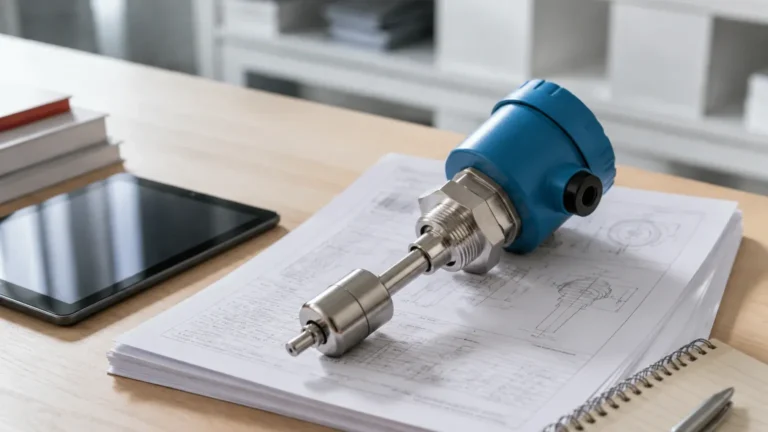
In industrial process control, point level detection serves as a critical safeguard against tank overflows, dry-run conditions for pumps, and the automation of batching processes. Among the various technologies available, ultrasonic level switches have emerged as a reliable, non-mechanical solution for detecting the presence or absence of liquids at specific heights. Unlike mechanical float switches, which are prone to fouling and mechanical wear, ultrasonic technology utilizes acoustic waves to determine the state of a medium, offering a high degree of reliability in demanding environments.
For engineers and plant managers, selecting the right point level sensor requires a deep understanding of the underlying physics and the specific constraints of the application environment. This guide explores the operational principles, selection criteria, and installation best practices for integrating these instruments into modern industrial systems.
Measurement Principles of Ultrasonic Level Switches
Ultrasonic level switches primarily operate on two distinct principles: the "gap" transmission method and the "echo" or non-contact method. Understanding these is essential before selecting a device for a specific process.
The Gap Principle (Contact-Based)
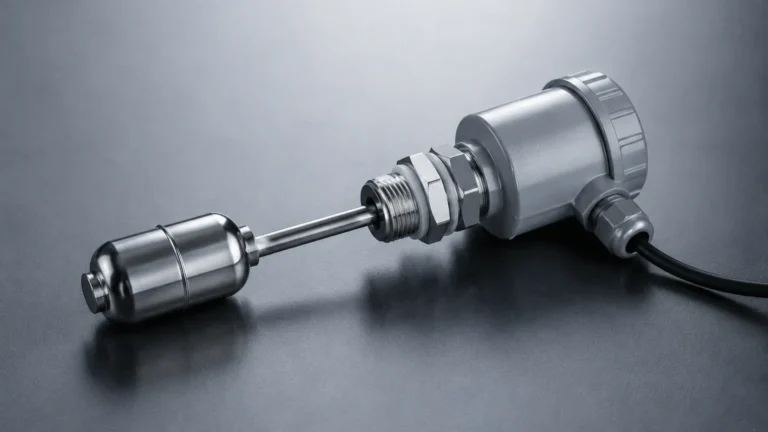
The most common industrial ultrasonic level switch is the gap sensor. This device features a sensing head with a small physical gap (typically 10 mm to 25 mm) between two piezoelectric crystals. One crystal acts as a transmitter, and the other acts as a receiver.
1. In Air: When the gap is filled with air or gas, the ultrasonic signal emitted by the transmitter is heavily attenuated. The acoustic impedance of air is very low, meaning the sound waves cannot effectively bridge the gap to reach the receiver.
2. In Liquid: When the liquid level rises and fills the gap, the acoustic impedance changes significantly. Liquids are much denser than gases and serve as an efficient medium for sound conduction. The ultrasonic signal travels across the gap and is detected by the receiver crystal.
3. Signal Processing: The electronics within the switch detect this increase in signal strength and trigger a relay or solid-state output (such as an NPN/PNP signal) to indicate the presence of the liquid.
The Echo Principle (Non-Contact)
Non-contact ultrasonic switches function similarly to ultrasonic level transmitters but are configured for point detection. The sensor emits a pulse that reflects off the surface of the material. The switch triggers when the "time-of-flight" of the reflected pulse corresponds to a pre-set distance. These are more common in bulk solids or where the sensor must remain entirely out of the medium.
Key Advantages of Ultrasonic Technology
Ultrasonic level switches offer several distinct benefits over traditional mechanical and electronic level sensors:
* No Moving Parts: Because there are no pivots, floats, or linkages, these switches are not subject to mechanical fatigue or jamming due to debris. This significantly reduces maintenance requirements and extends the service life of the instrument.
* Independence from Fluid Properties: Unlike capacitive switches, ultrasonic gap switches are generally unaffected by changes in the dielectric constant, conductivity, or density of the liquid. As long as the liquid can transmit sound, the switch will function.
* High Reliability in Pure Liquids: They are exceptionally effective in clean, non-aerated liquids, making them a preferred choice for high-purity water, solvents, and fuels.
* Compact Design: The small footprint of the sensing probe allows for installation in tight spaces or small-diameter pipes where a float switch would not fit.
Comparison with Other Level Switches
When evaluating point-level solutions, engineers often compare various Level Switches to determine which technology suits the specific chemical compatibility and process pressure of their application. The following table provides a high-level comparison between ultrasonic technology and other common alternatives.
| Technology | Media Type | Moving Parts | Sensitivity to Coating | Best Use Case |
| :— | :— | :— | :— | :— |
| Ultrasonic (Gap) | Liquids | No | Low to Moderate | Clean liquids, fuels, high-purity water |
| Tuning Fork | Liquids/Solids | No (Vibrating) | Low | Aerated liquids, slurries, powders |
| Float Switch | Liquids | Yes | High | Simple water tanks, low-budget projects |
| Capacitive | Liquids/Solids | No | High | Non-conductive liquids, interface detection |
| Optical | Clean Liquids | No | High | Leak detection, small vessels |
Selection Criteria for Engineering Projects
To ensure the long-term accuracy and reliability of ultrasonic level switches, several technical factors must be evaluated during the procurement phase.
1. Fluid Viscosity and Coating
While ultrasonic switches are robust, extremely viscous fluids (above 5,000 cP) can pose a challenge. If the liquid is thick enough to "bridge" the gap even after the level has dropped, the switch may provide a false positive reading. In these instances, a tuning fork switch or a gap switch with a specialized "non-stick" coating (like PFA) may be required.
2. Aeration and Turbulence
Ultrasonic waves are scattered by air bubbles. If the process involves heavy aeration, cavitation, or foaming, the signal may be blocked even when liquid is present. For applications involving carbonated beverages or aggressive mixing, other technologies like vibrating forks are usually superior.
3. Chemical Compatibility
The wetted materials of the sensor must withstand the process media. Standard sensors are often constructed from 316L stainless steel, but for corrosive acids or bases, specialized plastics like PVC, PP, or PVDF are necessary. Welk provides customized OEM/ODM services to match material requirements to specific chemical profiles.
4. Process Temperature and Pressure
Standard ultrasonic switches typically operate within a range of -40°C to 150°C (-40°F to 302°F). High-temperature variants are available, but extreme heat can affect the piezoelectric crystals. Similarly, pressure ratings must be checked, especially in oil and gas applications where pressures can exceed 100 bar (1450 psi).
Practical Selection Table
| Application | Recommended Material | Recommended Output | Consideration |
| :— | :— | :— | :— |
| Water Treatment | 316L SS or PP | Relay | Standard cost-effective choice |
| Chemical Storage | PVDF / PFA Coated | PNP/NPN | Check acid concentration |
| Fuel/Oil Tanks | 316L SS (Explosion Proof) | Relay/Two-wire | Requires ATEX/IECEx certification |
| Food & Beverage | 316L SS (Sanitary) | PNP | Use Tri-clamp fittings for hygiene |
| Pump Protection | 316L SS | Relay | High-speed response is critical |

Installation Best Practices
Proper installation is as critical as sensor selection. Incorrect mounting can lead to false triggers or premature sensor failure.
* Orientation: For gap-style switches, the gap should be oriented so that liquid can easily drain out when the level falls. If mounted horizontally, the gap should be vertical (slotted top-to-bottom) to prevent air bubbles from becoming trapped or sediment from settling in the gap.
* Avoid the Fill Stream: Never install a level switch directly in the path of the incoming liquid flow. The turbulence and force of the falling liquid can cause false triggers and mechanical stress on the probe.
* Stilling Wells: In tanks with significant agitation or surface waves, installing the switch inside a stilling well (a vertical pipe with vent holes) can provide a stable environment for accurate detection.
* Mounting Nozzles: Ensure that the mounting nozzle is not so long that it creates a "dead zone" where liquid can be trapped, preventing the sensor from seeing the actual tank level change.
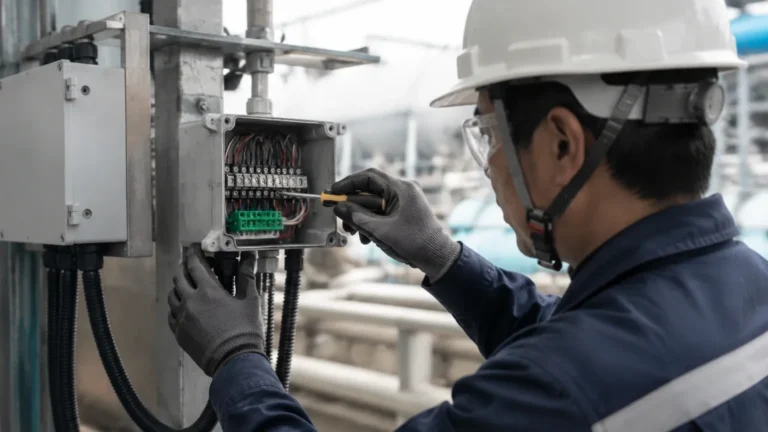
* Wiring and Grounding: Industrial environments are often rife with electromagnetic interference (EMI). Use shielded cables and ensure the instrument is properly grounded to the vessel or the plant's common ground to prevent signal noise from affecting the internal electronics.
Limitations and Application Risks
While highly versatile, ultrasonic level switches are not universal solutions. Engineers must be aware of the following limitations:
1. Vacuum Applications: Sound requires a medium to travel. In a total vacuum, ultrasonic switches (especially non-contact versions) cannot function. However, gap switches can work in partial vacuums as long as the gap is filled with liquid during the "on" state.
2. Heavy Foam: Thick, dense foam absorbs ultrasonic energy. If the application involves a thick layer of foam on top of the liquid, the switch may trigger early or fail to trigger at all, depending on the foam's density.
3. Suspended Solids: While small amounts of suspended solids are usually fine, high concentrations of large particles can block the gap or cause physical wear on the sensor face.
Maintenance and Troubleshooting
Because there are no moving parts, maintenance is minimal. However, a periodic inspection schedule should include:
* Cleaning: Check the gap for any buildup of scale, biological growth, or sediment. A simple wipe-down with a compatible solvent is usually sufficient.
* Seal Inspection: Check the cable entry points and mounting threads for signs of moisture ingress or corrosion.
* Functional Test: Most modern switches include a "test" magnet or button that allows operators to manually trigger the output to verify that the downstream control logic (alarms, pump shutdowns) is functioning correctly.
Frequently Asked Questions (FAQs)
Q1: Can ultrasonic level switches detect the interface between two liquids?
A1: Generally, no. Standard ultrasonic gap switches detect the difference between a gas and a liquid. Detecting the interface between two liquids (like oil and water) requires a sensor that can distinguish between the acoustic impedance of the two specific liquids, which is a much more complex calibration.
Q2: Are these switches safe for hazardous areas?
A2: Yes, many models are designed with intrinsically safe or explosion-proof housings. Always verify that the specific model has the required certifications (e.g., ATEX, IECEx, or UL) for the zone in which it will be installed.
Q3: How does temperature affect the accuracy of the switch?
A3: For gap-style switches, temperature has a negligible effect on the "on/off" logic because the difference in acoustic impedance between any liquid and any gas is vast. However, the electronics and the piezoelectric material themselves have rated limits that must be respected.
Q4: Can I use an ultrasonic switch for dry powders?
A4: Gap-style ultrasonic switches are designed for liquids. For dry powders or bulk solids, a non-contact ultrasonic switch or a vibrating rod/tuning fork switch is much more effective.
Q5: What is the typical response time?
A5: Most ultrasonic level switches have a response time of less than 500 milliseconds, making them suitable for high-speed filling lines and emergency shutdown systems.
By carefully considering the process media, environmental conditions, and installation requirements, engineers can leverage ultrasonic technology to create robust and maintenance-free level control systems. For more specialized applications or custom material requirements, consulting with a professional manufacturer like Welk ensures that the selected instrument meets the rigorous demands of industrial automation.