Level Switch Kgl 3b
Level Switch Kgl 3b
In the landscape of industrial automation, point level detection remains a fundamental requirement for process safety, inventory management, and equipment protection. Among the various technologies available, the level switch kgl 3b represents a specialized category of magnetic float switches designed for reliability in demanding environments. This guide explores the technical architecture, operational principles, and engineering considerations essential for integrating these Level Switches into modern industrial systems.
Understanding Point Level Measurement Principles
The operation of the level switch kgl 3b is rooted in the principle of buoyancy and magnetic induction. Unlike continuous level sensors that provide a real-time percentage of tank volume, a point level switch is designed to trigger a discrete electrical signal when the liquid reaches a specific height. This is critical for preventing tank overflows (high-level alarms) or protecting pumps from running dry (low-level alarms).
The Magnetic Float Mechanism
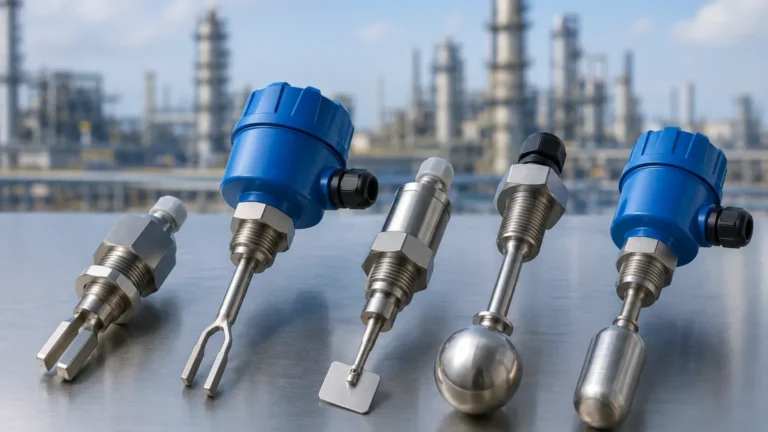
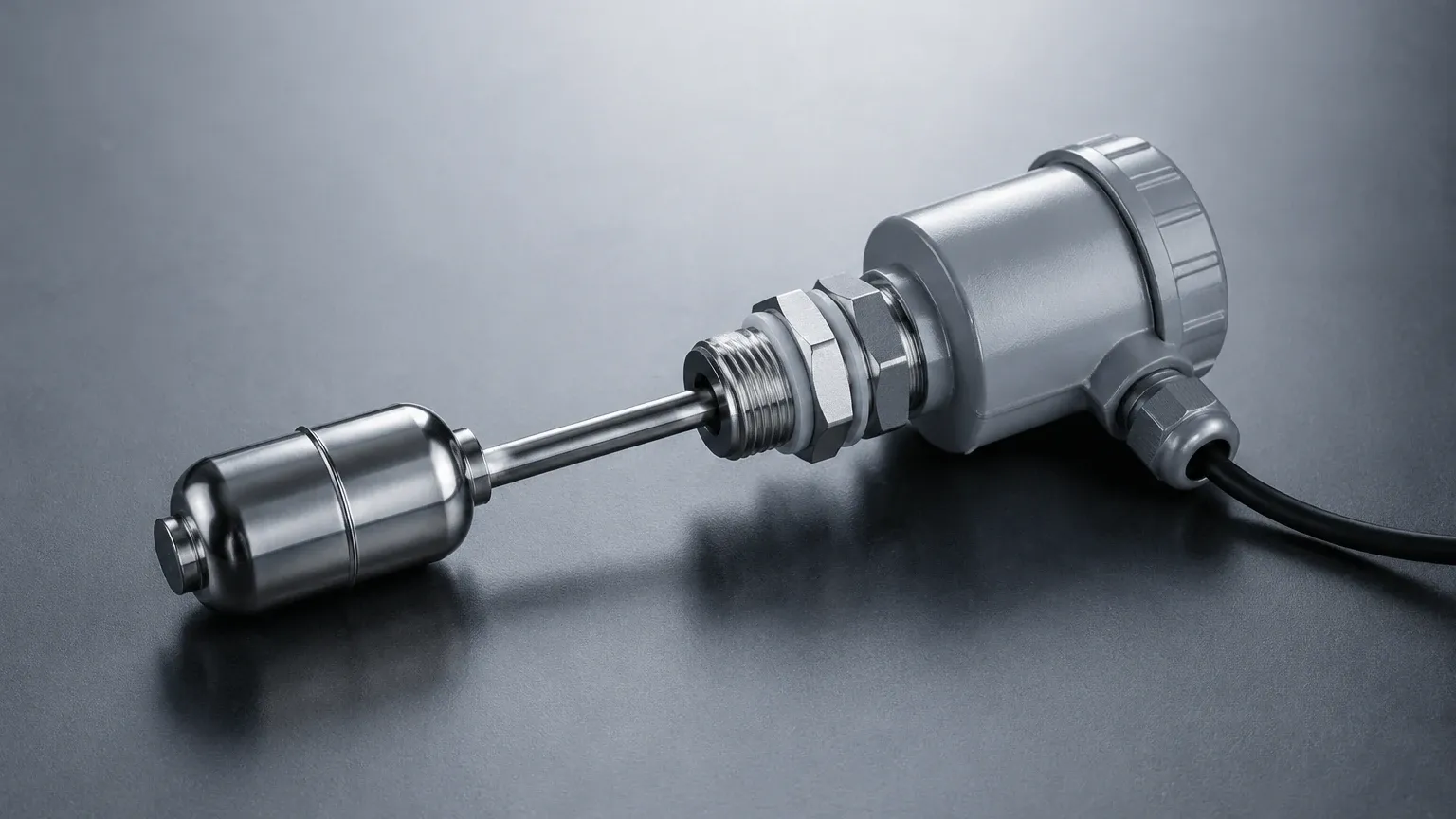
At the core of the KGL 3B design is a buoyant float containing a permanent internal magnet. As the liquid level rises or falls, the float moves along a stationary stem. Inside this stem, a hermetically sealed reed switch or a microswitch is positioned at a predetermined set point. When the float’s magnetic field aligns with the switch, the circuit is either opened or closed.
This non-contact interaction between the float and the switching element offers several advantages:
1. Isolation: The electrical components are completely isolated from the process media, reducing the risk of corrosion or short-circuiting.
2. Simplicity: The mechanical action is straightforward, requiring no external power to sense the level change (though power is required for the output signal).
3. Durability: With fewer moving parts than traditional mechanical toggles, magnetic float switches exhibit a long operational lifespan.
Technical Specifications and Design Features
When evaluating the level switch kgl 3b, engineers must consider the mechanical and electrical specifications to ensure compatibility with the existing control infrastructure. These instruments are typically constructed to withstand industrial rigors, often featuring stainless steel or high-grade polymers.
Material Construction
The choice of material is the first line of defense against chemical degradation. Most KGL 3B variants utilize 316L stainless steel for the wetted parts, including the float and the guide rod. This material provides excellent resistance to oxidation and organic chemicals. For highly corrosive environments involving strong acids or bases, specialized coatings like PTFE (Polytetrafluoroethylene) or construction from PVC/PP may be required.
Electrical Ratings and Output
The switching capacity of a level switch kgl 3b is a critical safety parameter. Standard configurations often include:
* Switching Voltage: Typically up to 250V AC or 200V DC.
* Switching Current: Generally ranging from 0.5A to 1.5A.
* Contact Form: Available in SPST (Single Pole Single Throw) or SPDT (Single Pole Double Throw) configurations. SPDT is often preferred in B2B applications as it allows for both "Normally Open" and "Normally Closed" logic within a single device.
Environmental Resistance
Industrial environments often expose instruments to moisture and dust. The KGL 3B is usually rated to IP65 or IP68 standards, ensuring that the terminal housing is protected against high-pressure water jets or continuous immersion. Furthermore, the pressure rating of the float is a vital constraint; standard floats can typically handle up to 1.0 MPa (10 bar), though high-pressure variants are available for boiler or hydraulic applications.
Selection Criteria for Level Switch Kgl 3b
Selecting the correct Level Switches requires a detailed analysis of the process media and the physical constraints of the vessel. The following table provides a reference for the primary evaluation criteria:
| Parameter | Requirement/Value | Engineering Significance |
| :— | :— | :— |
| Specific Gravity | ≥ 0.7 g/cm³ | The liquid must be dense enough to provide sufficient buoyancy to lift the float. |
| Operating Temperature | -20°C to +120°C | Standard limits; high-temperature versions may extend to 200°C. |
| Maximum Pressure | Up to 2.0 MPa (20 bar) | Must exceed the maximum possible surge pressure in the tank. |
| Viscosity | < 500 cSt | High viscosity can cause "float drag," slowing response times or causing sticking. |
| Mounting Type | Vertical or Horizontal | Determines the physical orientation and entry point into the vessel. |
| Connection Size | G1/2", G1", or Flanged | Must match the existing tank nozzles or ports. |
Media Compatibility
Before installation, it is imperative to confirm that the liquid will not cause buildup or crystallization on the float rod. In wastewater applications, for instance, suspended solids can accumulate on the stem of a level switch kgl 3b, eventually impeding the movement of the float. In such cases, a non-contact solution like an ultrasonic level sensor might be more appropriate, though the KGL 3B remains the cost-effective choice for clean liquids.
Installation Guidelines for Optimal Performance
Proper installation is the most significant factor in the long-term reliability of any level instrument. For the level switch kgl 3b, alignment and positioning are paramount.
Orientation and Clearance
Vertical switches must be installed perfectly plumb. Even a slight tilt can increase friction between the float and the stem, leading to premature wear or failure to trigger. Additionally, ensure there is sufficient clearance from the tank walls and internal structures like agitators or baffles. A minimum clearance of 50 mm is generally recommended to avoid interference from surface tension or mechanical impact.
Turbulence and Still Wells
In tanks where high-velocity filling or agitation occurs, the liquid surface can become turbulent. This turbulence can cause the float to "bounce," leading to rapid, intermittent switching (chattering). To mitigate this, engineers often install the level switch kgl 3b inside a stilling well—a vertical pipe with vent holes that dampens surface movement while allowing the liquid level to equalize with the rest of the tank.
Wiring and Safety
When wiring the switch, always use shielded cables if the signal is traveling long distances to a PLC (Programmable Logic Controller). For hazardous areas where explosive gases may be present, the switch must be connected via an intrinsically safe barrier to limit the electrical energy available for ignition.
Comparative Analysis: Point Level vs. Continuous Measurement
While the level switch kgl 3b is an excellent tool for discrete control, it is important to understand when it is the right choice compared to continuous measurement technologies offered by manufacturers like Welk.
1. Cost Efficiency: For simple high/low alarms, a point level switch is significantly more affordable than a radar or hydrostatic transmitter.
2. System Redundancy: Many safety-critical systems use a continuous radar level meter for primary monitoring and a mechanical level switch kgl 3b as a secondary, independent high-level trip. This diversity in technology reduces the risk of common-mode failures.
3. Complexity: Level switches require no complex calibration or software configuration. Once the physical set point is established by the mounting height, the device is operational.
However, if the application requires monitoring the exact volume of a tank for inventory purposes, a continuous sensor—such as an ultrasonic level transmitter—should be prioritized. These devices provide a 4-20mA or digital signal representing the entire range of the tank.
Maintenance and Operational Safety
Maintenance requirements for the level switch kgl 3b are minimal but essential. A quarterly inspection schedule is recommended for most industrial applications.
* Visual Inspection: Check for signs of corrosion on the housing and ensure the cable entry glands are tight to prevent moisture ingress.
* Functional Testing: Manually move the float (if the tank is empty or accessible) to verify that the control room receives the correct signal. If the float is inaccessible, use an external magnet to trigger the internal reed switch.
* Cleaning: If the media is prone to scaling, remove the switch and clean the stem and float with a compatible solvent. Ensure that no abrasive materials are used, as scratches can become focal points for future buildup.
Frequently Asked Questions (FAQ)
Q: Can the level switch kgl 3b be used in pressurized tanks?
A: Yes, provided the tank pressure does not exceed the rated collapse pressure of the float. Always verify the pressure rating (e.g., 10 bar or 20 bar) before installation.
Q: What happens if the liquid density changes?
A: Since the float relies on buoyancy, a significant drop in liquid density (specific gravity) may cause the float to sink. The level switch kgl 3b is typically calibrated for water-like densities (SG = 1.0). If you are measuring light oils (SG = 0.7), ensure the float is specified for low-density applications.
Q: Is it possible to have multiple switching points on one stem?
A: While the standard KGL 3B often features a single point, many Level Switches can be customized with multiple reed switches at different heights along a single stem to provide high, low, and intermediate signals.
Q: How do I handle inductive loads with this switch?
A: If the switch is directly controlling a motor or a large solenoid, the inductive back-EMF can damage the reed switch contacts. It is highly recommended to use an intermediate relay or a surge suppression circuit (like a snubber or diode) to protect the switch.
Conclusion and Engineering Summary
The level switch kgl 3b remains a staple in industrial fluid management due to its simplicity, reliability, and cost-effectiveness. By understanding the buoyancy principles and adhering to strict installation and material selection guidelines, engineers can implement a robust level control solution that enhances process safety. Whether used as a primary control element or a redundant safety backup, the KGL 3B offers the performance required for modern water treatment, chemical processing, and industrial automation. For applications involving complex geometries or non-contact requirements, consulting with a professional manufacturer like Welk can help identify whether a switch or a continuous transmitter is the optimal fit for the project's specific needs.