Level Switches Price
Level Switches Price
In the landscape of industrial automation, point level detection serves as a critical safeguard for process integrity, environmental safety, and inventory management. Level switches are the primary instruments used to detect the presence or absence of liquids or solids at specific heights within a vessel. However, for procurement managers and process engineers, understanding the level switches price requires a deep dive into the underlying technologies, material requirements, and environmental constraints that dictate the cost of these essential components.
Selecting the right instrument involves balancing the initial purchase price against the operational reliability required for the specific application. This guide explores the technical principles of various level switches and the factors that influence their market pricing.
Measurement Principles and Technology Overview
Before evaluating the level switches price, it is essential to understand how different technologies function. The complexity of the measurement principle is often the primary driver of the instrument's cost.
Float Level Switches
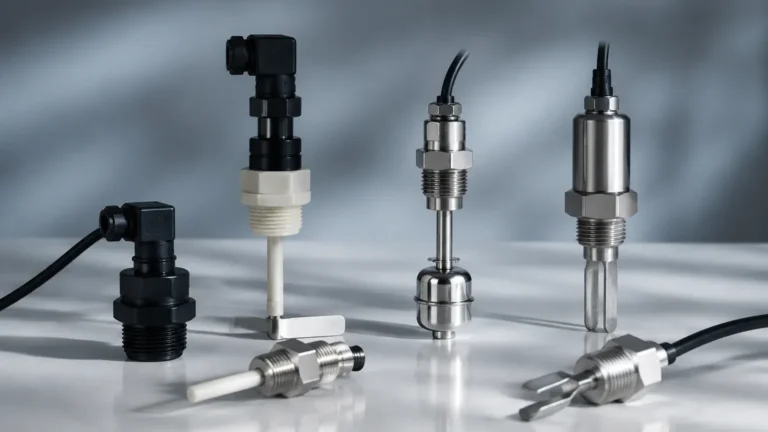
Float switches operate on the principle of buoyancy. A float containing a magnet moves with the liquid level; when it reaches a reed switch or microswitch within the stem, it triggers a state change. These are mechanical or electro-mechanical devices. Due to their simplicity, they often represent the most economical entry point for liquid level detection.
Vibrating Level Switches (Tuning Fork)
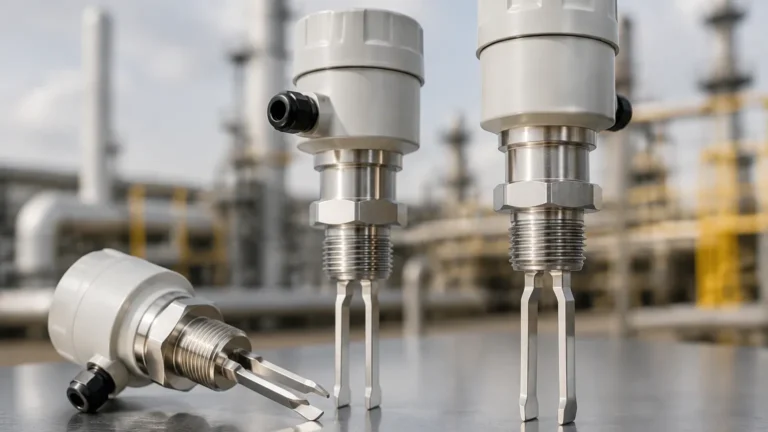
Commonly known as tuning fork switches, these devices utilize an electronic circuit to vibrate a fork-shaped sensor at its resonant frequency. When the fork is submerged in a medium (liquid or powder), the frequency changes or the vibration is damped. The electronics detect this shift and trigger the switch. This technology is robust and requires no calibration, placing it in a mid-range price bracket.
Capacitive Level Switches
Capacitive sensors treat the probe and the tank wall (or a second probe) as two plates of a capacitor. As the material level rises, the dielectric constant between the plates changes, altering the capacitance. These switches are highly versatile and can handle both liquids and solids, though their price fluctuates based on the sophistication of their build-up compensation electronics.
Ultrasonic Level Switches
These non-contact or gap-style sensors use high-frequency sound waves to detect the presence of a medium. In gap-style switches, the signal is transmitted across a small space; if liquid fills the gap, the signal strength increases, triggering the switch. Ultrasonic options are typically priced higher due to the advanced electronics required for signal processing.
Conductivity Level Switches
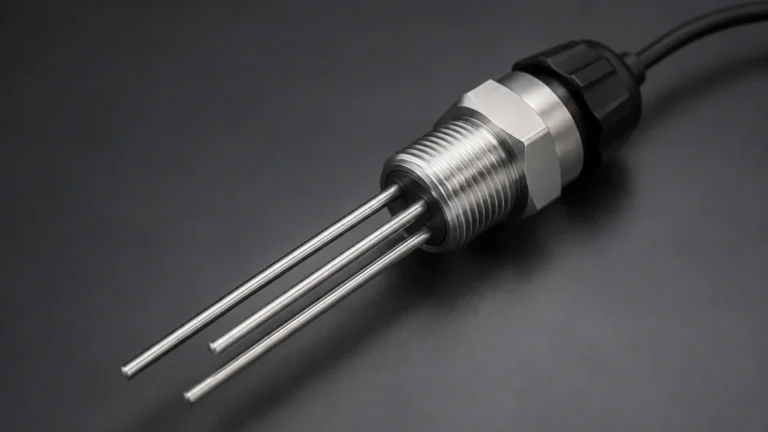
Used exclusively for conductive liquids, these switches apply a low voltage between electrodes. When the liquid touches the electrodes, a circuit is completed. These are simple and cost-effective but limited to specific fluid types.
Factors Influencing Level Switches Price
The base technology is only one component of the total cost. Several engineering specifications can significantly increase the level switches price from a standard catalog item to a specialized industrial instrument.
1. Material of Construction (MoC)
Standard switches are often constructed from PVC, PP, or 304 Stainless Steel. However, in chemical or pharmaceutical applications, more expensive materials are required:
* 316L Stainless Steel: Standard for food, beverage, and mild corrosive environments.
* PTFE/PFA Coating: Essential for highly aggressive acids.
* Exotic Alloys: Materials like Hastelloy or Monel are used in extreme chemical processing, often doubling or tripling the base price.
2. Pressure and Temperature Ratings
Standard level switches are designed for atmospheric pressure and temperatures below 80°C. If the process involves high-pressure steam or cryogenic liquids, the housing and seals must be upgraded. High-temperature versions (up to 250°C or higher) require specialized cooling fins or remote electronics to protect the sensor head, which adds to the manufacturing cost.
3. Hazardous Area Certifications
In oil and gas or chemical industries, instruments must often be explosion-proof or intrinsically safe. Obtaining and maintaining certifications such as ATEX, IECEx, or SIL 2/3 (Safety Integrity Level) involves rigorous testing and specialized enclosure designs (e.g., flameproof housings). These certifications are a major contributor to the final level switches price.
4. Output Options and Electronics
A simple SPDT (Single Pole Double Throw) relay output is the standard. However, modern industrial systems may require NPN/PNP transistor outputs, NAMUR signals for hazardous areas, or even digital communication protocols. The complexity of the internal PCB (Printed Circuit Board) directly correlates with the price.
Technical Selection and Price Comparison Table
When reviewing Level Switches, the following table provides a general comparison of how technology choice impacts the application range and relative cost.
| Technology | Typical Media | Relative Price | Key Advantage | Limitation |
| :— | :— | :— | :— | :— |
| Float | Clean Liquids | Low | Simple, no power required | Moving parts can jam |
| Conductivity | Conductive Liquids | Low | Very economical | Not for oils/non-conductive |
| Vibrating Fork | Liquids / Solids | Medium | High reliability, no calibration | Can be affected by heavy coating |
| Capacitance | Liquids / Powders | Medium | No moving parts | Requires calibration for media |
| Ultrasonic | Liquids | High | Non-contact or gap-style | Sensitive to foam/bubbles |
| Optical | Clear Liquids | Medium | Compact size | Not for coating/dirty liquids |
Installation Considerations and Total Cost of Ownership
The level switches price is not merely the procurement cost; installation and maintenance play a significant role in the total cost of ownership (TCO).
Mounting Type
* Threaded Connections: (e.g., G1/2", 1" NPT) are generally the least expensive and easiest to install.
* Flanged Connections: Required for high-pressure vessels or specific industry standards (ANSI/DIN). Flanges increase the material cost and shipping weight.
* Sanitary Connections: (e.g., Tri-clamp) are required for hygienic applications and require specialized polishing of the wetted parts.
Wiring and Integration
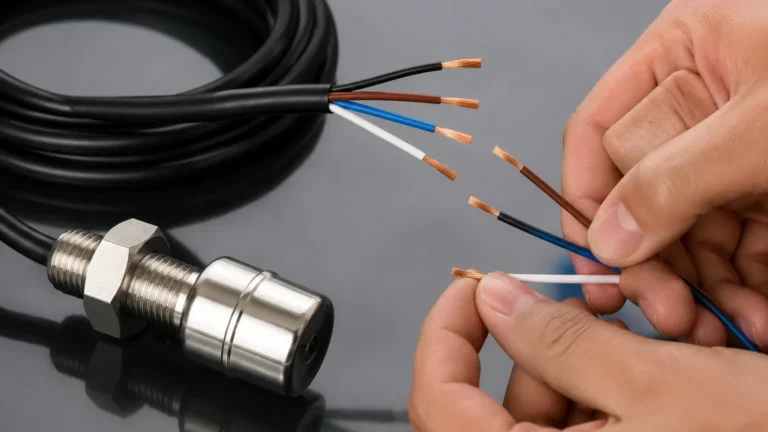
Labor costs for wiring can be reduced by choosing switches with M12 plug connectors rather than internal terminal blocks, although the connectors themselves add a small premium to the hardware price. Furthermore, choosing a switch with built-in LED status indicators can reduce commissioning time and simplify future troubleshooting.
Maintenance Intervals
Mechanical switches (floats) may have a lower initial price but often require more frequent inspection to ensure the moving parts are not fouled by debris or scale. Electronic switches like tuning forks or capacitive probes have no moving parts, leading to lower long-term maintenance costs despite a higher initial level switches price.

Limitations and Risk Assessment
Opting for the lowest level switches price can lead to significant risks if the technology is mismatched to the application.
1. Media Buildup: In applications with viscous liquids or sticky powders, inexpensive float or standard capacitive switches may fail. A vibrating fork or a capacitance switch with "active shield" technology is necessary to ignore coating, though these features increase the price.
2. Turbulence and Foam: Mechanical floats can bounce in turbulent tanks, leading to "chatter" in the relay. Electronic switches with adjustable delay settings are required here.
3. Chemical Compatibility: Using a low-cost stainless steel switch in a hydrochloric acid tank will lead to rapid sensor failure and potential tank leakage, far outweighing the savings on the initial purchase.
Frequently Asked Questions (FAQ)
Why is there such a large range in level switches price for the same technology?
The price variance usually stems from the quality of the electronics, the thickness of the housing, and the certifications provided. A "commercial grade" switch for a water tank is built differently than an "industrial grade" switch for a refinery.
Can I use a liquid level switch for dry solids?
Generally, no. Floats and conductivity switches will not work with solids. Vibrating forks (specifically designed for solids) and capacitive switches are the standard choices for powders and granules. Using the wrong type will result in zero reliability.
How does the sensing length affect the price?
For side-mounted switches, the length is usually fixed and has a minimal impact on price. For top-mounted switches that require long probes (e.g., 1 meter or more) to reach a specific low-level point, the price increases based on the additional material and the structural reinforcement of the probe.
Is a more expensive switch always more accurate?
In point-level detection, "accuracy" refers to the repeatability of the switching point (switching hysteresis). While more expensive electronic switches often have better repeatability (within ±1 mm), the higher price is usually paying for durability, chemical resistance, and safety certifications rather than just precision.
Conclusion
Understanding the level switches price requires looking beyond the sticker value and analyzing the specific demands of the industrial environment. While float switches offer an economical solution for simple water applications, the complexity of modern chemical processing and dry bulk handling often necessitates the use of vibrating fork or capacitive technologies. By carefully matching the sensor's material, pressure rating, and measurement principle to the process media, engineers can ensure a reliable installation that minimizes downtime and provides the best value over the instrument's lifecycle.