Level Switch Wireless
Level Switch Wireless
In the landscape of industrial automation, the ability to monitor fluid and solid levels without the constraints of physical cabling has transformed operational efficiency. A level switch wireless system—comprising a point-level sensor integrated with a wireless transmitter—provides a robust solution for high-level alarms, low-level alerts, and overfill protection in environments where traditional wiring is either cost-prohibitive or technically unfeasible.
For process engineers and plant managers, transitioning to wireless technology requires a deep understanding of both the sensing physics and the communication protocols that ensure data integrity. This guide explores the principles, selection criteria, and practical implementation of wireless level switching in modern industrial applications.
Understanding the Measurement Principles
Before selecting a wireless configuration, it is essential to understand the underlying sensing technology. A wireless level switch is essentially a standard point-level sensor whose output (typically a relay or transistor switch) is digitized and transmitted via radio frequency (RF). The most common sensing principles used in these systems include:
1. Vibrating Fork (Tuning Fork)
Vibrating fork sensors utilize piezoelectric crystals to energize a metal fork at its natural resonant frequency. When the fork is submerged in a medium (liquid or powder), the frequency shifts or the vibration is damped. The internal electronics detect this change and trigger the switch. In a wireless setup, this change state is sent to a gateway via a wireless protocol. These are highly reliable for liquids and granulates and are unaffected by flow, turbulence, bubbles, or foam.
2. Float and Magnetic Reed Switches
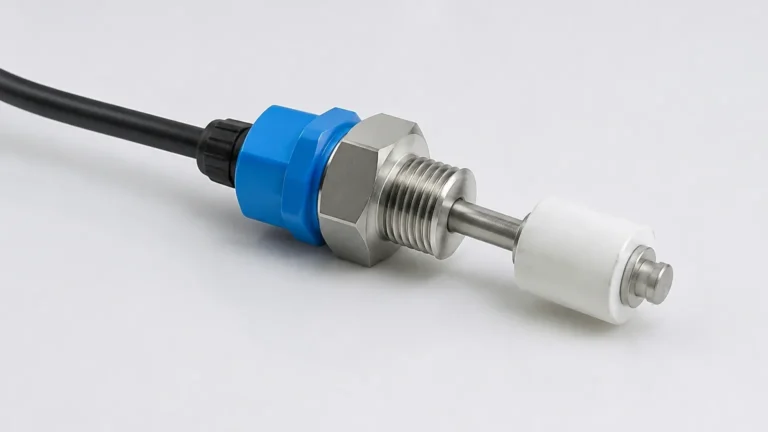
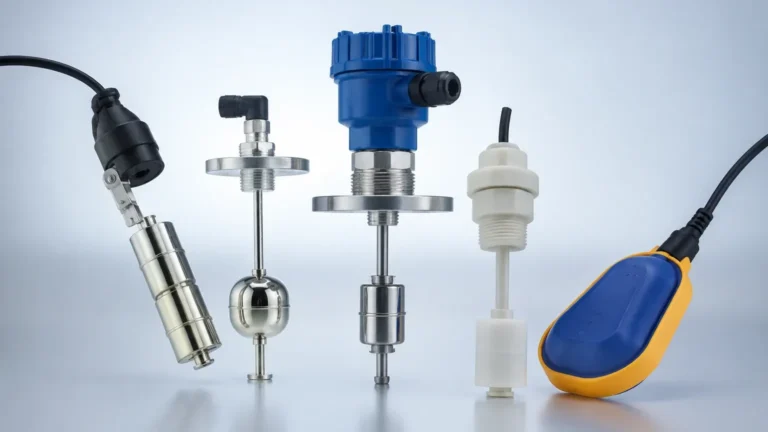
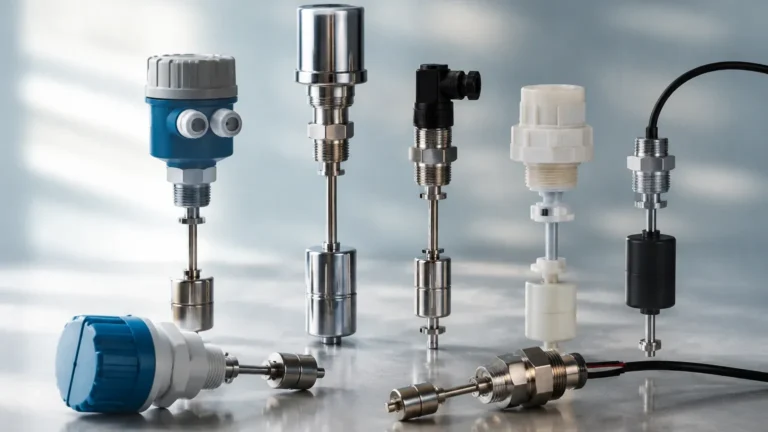
This is one of the simplest and most cost-effective methods. A float containing a magnet moves with the liquid level. When it reaches a specific height, it actuates a reed switch housed within the stem. For wireless applications, these are often used in remote water tanks or sumps because they require very little power to operate, extending the battery life of the wireless transmitter.
3. Capacitive Level Switches
Capacitive sensors measure the change in capacitance between a probe and the tank wall (or between two electrodes). As the level rises and covers the probe, the dielectric constant changes, altering the capacitance. These are excellent for detecting the interface between different liquids or for use with corrosive materials, provided the wireless transmitter is properly shielded from electromagnetic interference.
4. Ultrasonic Point Level
Ultrasonic switches emit high-frequency sound waves. In point-level detection, the sensor detects the presence of a medium by the attenuation of the signal or the return time. While often used for continuous measurement, point-level ultrasonic switches are useful in non-contact applications where the media might be sticky or highly abrasive.
The Architecture of a Level Switch Wireless System
A wireless level monitoring system is not a standalone device but a network of components working in tandem. When evaluating Level Switches for wireless integration, the following architectural elements must be considered:
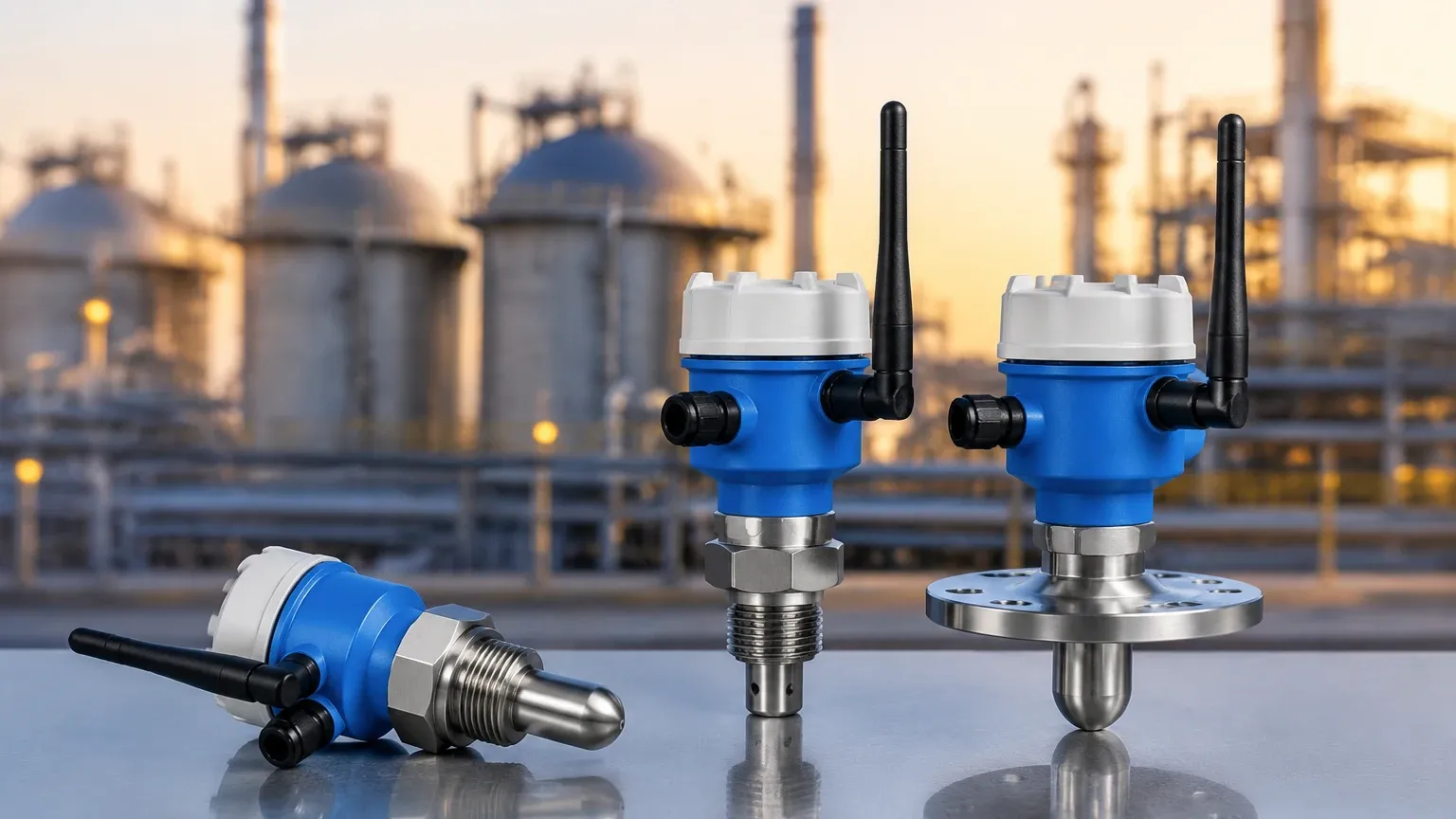
* The Sensor Node: This includes the physical level switch and the wireless radio module. It is usually battery-powered or powered by a small solar panel.
* The Gateway: The central hub that receives signals from multiple wireless nodes. It converts the wireless protocols (like WirelessHART or LoRaWAN) into a wired format (like Modbus TCP or EtherNet/IP) for the PLC or DCS.
* The Network Topology: Most industrial systems use either a "Star" topology (direct link from sensor to gateway) or a "Mesh" topology (where sensors can pass data through each other to reach the gateway). Mesh networks are preferred in dense industrial plants with many metal obstructions.
Practical Selection Table
Choosing the right technology depends on the media properties and the installation environment. The following table provides a comparison for common industrial scenarios.
| Technology | Suitable Media | Max Wireless Range (Line of Sight) | Power Consumption | Best Application |
| :— | :— | :— | :— | :— |
| Vibrating Fork | Liquids, fine powders | 300m – 500m | Moderate | Overfill protection in chemical tanks |
| Float Switch | Clean liquids, water | 1km – 2km (LoRa) | Very Low | Remote reservoir monitoring |
| Capacitive | Slurries, pastes, oils | 200m – 400m | Moderate | Interface detection in separators |
| Ultrasonic | Corrosive liquids | 300m | High | Non-contact acids/bases storage |
Key Advantages of Wireless Integration
Cost Reduction in Infrastructure
The primary driver for adopting level switch wireless technology is the elimination of cabling. In large-scale facilities, the cost of running conduit, trays, and shielded cables can exceed $100 per meter. Wireless systems bypass these costs, making them ideal for "brownfield" expansions where cable trays are already full.
Enhanced Safety and Accessibility
In hazardous areas (ATEX/IECEx zones), installing wired switches requires explosion-proof conduits and complex sealing. Wireless switches designed for these zones simplify installation. Furthermore, they allow for monitoring in inaccessible locations, such as the top of a 30-meter silo or a remote wastewater pit, without requiring personnel to run wires in dangerous spots.
Rapid Deployment
Wireless units can be pre-configured and installed in a fraction of the time required for wired sensors. This is particularly useful for temporary storage tanks or pilot plants where the layout may change frequently.
Installation Considerations and Best Practices
To ensure the reliability of a wireless level switch, several engineering factors must be addressed during the installation phase:
1. Signal Strength and Obstructions
Industrial environments are filled with metal structures, which act as barriers to RF signals. It is vital to maintain a clear "Line of Sight" (LoS) where possible. If LoS is not possible, the use of a mesh network or high-gain antennas may be necessary. Always perform a site signal survey before final mounting.
2. Antenna Orientation
Antennas should generally be mounted vertically. For maximum range, the transmitting and receiving antennas should be parallel to each other. Avoid mounting the antenna directly against a metal wall, as this can cause signal reflection and destructive interference.
3. Battery Life Management
The longevity of a wireless level switch depends on the "update rate" or "heartbeat." If the switch only reports when a state changes (e.g., from Low to High), the battery can last up to 10 years. However, if the system requires a status update every few seconds, battery life will drop significantly. For most point-level applications, an update rate of 1 minute is sufficient for safety while preserving power.
4. Environmental Ratings
Since wireless switches are often used in outdoor or exposed locations, ensure the housing is rated at least IP66 or IP67. The wireless transmitter housing must also be UV-resistant to prevent degradation of the antenna casing and seals over time.
Limitations and Potential Risks
While wireless technology is highly advanced, it is not a universal replacement for wired systems. Engineers must be aware of the following limitations:
* Latency: There is a inherent delay in wireless transmission. For high-speed processes where a level change must trigger a pump shut-off within milliseconds, a hardwired switch is still the gold standard.
* Interference: While industrial protocols like WirelessHART use frequency hopping to avoid interference, extremely crowded RF environments (with heavy Wi-Fi or microwave usage) can occasionally drop packets.
* Safety Integrity Levels (SIL): Most wireless level switches are suitable for monitoring and control but may not meet the requirements for SIL2 or SIL3 safety instrumented functions (SIF) unless specifically certified as a wireless safety system.
Frequently Asked Questions (FAQs)
Q: How far can a wireless level switch transmit?
A: This depends on the protocol. Standard industrial Bluetooth or Zigbee might reach 50-100 meters. WirelessHART typically reaches 200-300 meters in a plant environment, while LoRaWAN can reach several kilometers in open areas.
Q: Can wireless switches handle high temperatures?
A: The sensing element (the part inside the tank) can handle high temperatures (up to 250°C or more), but the wireless electronics must be kept within their operating range, usually -40°C to +85°C. Remote-mount electronics are often used for high-temperature applications.
Q: What happens if the wireless signal is lost?
A: Most industrial gateways have a "fail-safe" configuration. If the gateway loses contact with a sensor for a predetermined period, it will trigger an alarm in the DCS, allowing operators to investigate.
Q: Are wireless signals secure from hacking?
A: Modern industrial wireless protocols use AES-128 bit encryption and complex join keys. They are significantly more secure than older analog signals and are designed to prevent unauthorized access or data spoofing.
Conclusion
The adoption of level switch wireless technology represents a significant step toward the Industrial Internet of Things (IIoT). By combining the physical reliability of traditional Level Switches with the flexibility of RF communication, facilities can achieve higher levels of data granularity and safety without the prohibitive costs of traditional infrastructure. When selecting a system, prioritize the sensing principle that matches your media, and ensure the wireless protocol aligns with your facility's existing network architecture for a seamless, long-term solution.