Level Switch Oil
Level Switch Oil
In industrial process control, the reliable detection of liquid levels in oil-based systems is critical for operational safety, machinery longevity, and environmental protection. Whether managing hydraulic fluid in a heavy-duty press, monitoring lubrication oil in a turbine, or controlling fuel levels in a storage tank, selecting the appropriate level switch oil technology requires a deep understanding of fluid dynamics and sensor physics.
As a professional manufacturer, Welk provides a range of Level Switches designed to meet the rigorous demands of the oil and gas, automotive, and power generation sectors. This guide explores the measurement principles, selection criteria, and installation best practices for point-level detection in oil applications.
Measurement Principles for Oil Level Detection
Before selecting a device, it is essential to understand how different sensing technologies interact with the physical properties of oil. Unlike water, oils typically have lower density, higher viscosity, and lower dielectric constants, all of which influence sensor performance.
1. Buoyancy (Float) Principle
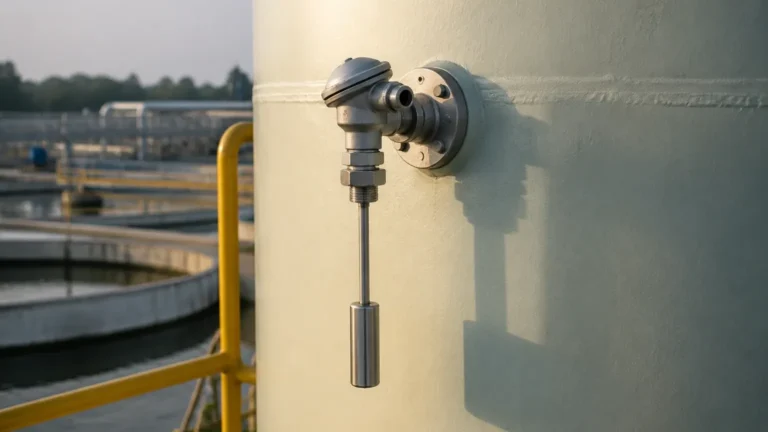
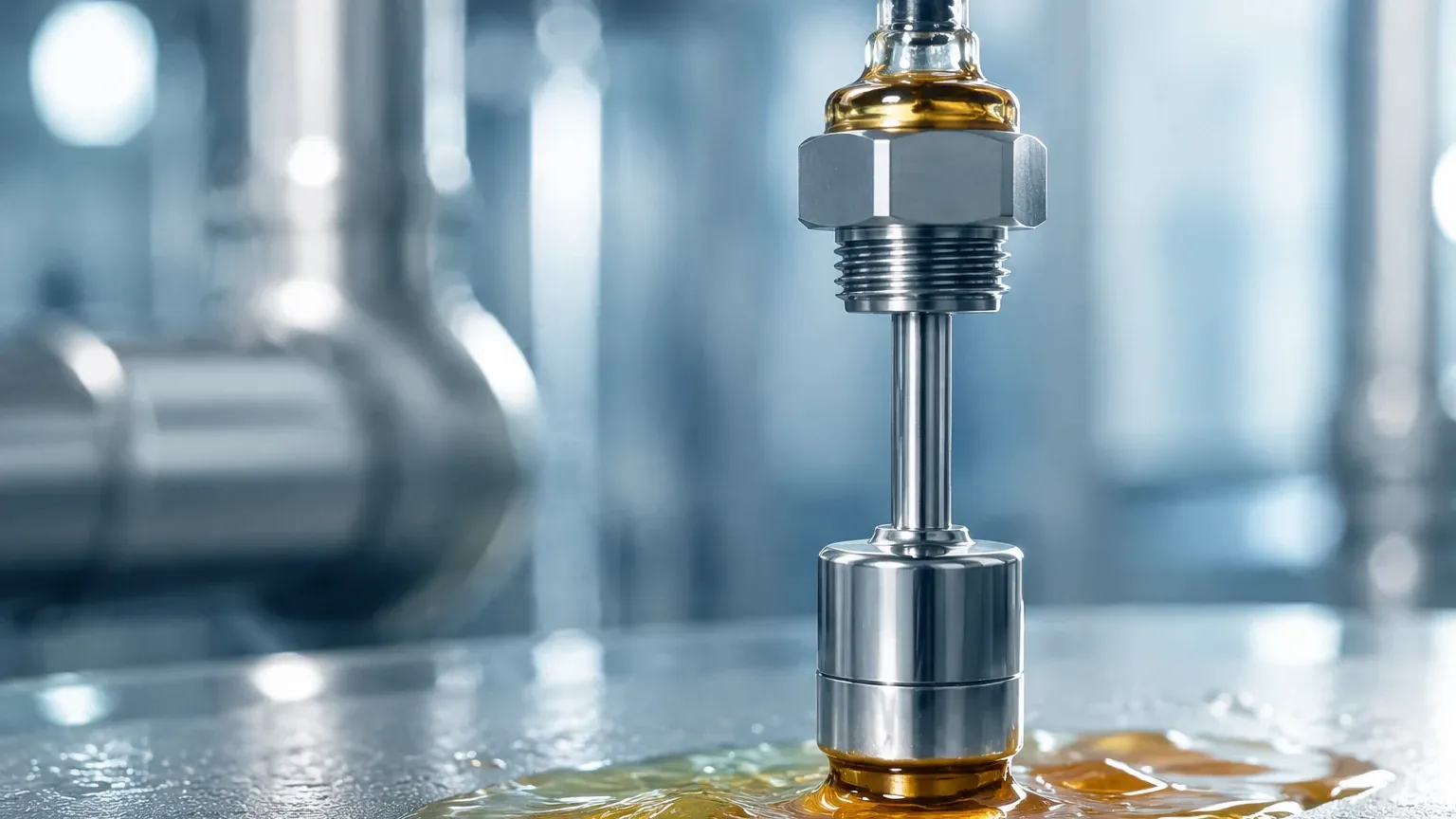
Float-type level switches operate on Archimedes' principle. A float with a built-in magnet moves with the liquid level. When the oil reaches a specific point, the magnet actuate a reed switch or a microswitch.
* Oil Consideration: Since oils usually have a specific gravity (SG) between 0.7 and 0.9 (compared to water's 1.0), the float must be engineered with sufficient buoyancy to displace the lighter fluid. If the float is too heavy, it will remain submerged and fail to trigger.
2. Vibrating Tuning Fork Principle
A vibrating level switch utilizes a piezoelectric crystal to energize a tuning fork at its natural resonant frequency (typically around 1,200 Hz). When the tines are immersed in oil, the frequency shifts. This change is detected by the internal electronics and converted into a switching signal.
* Oil Consideration: Tuning forks are highly effective for oil because they are largely unaffected by changes in density or dielectric constant. However, extremely high-viscosity oils can dampen the vibration excessively, requiring specific sensitivity adjustments.
3. Capacitance Principle
Capacitance switches measure the change in electrical capacitance between the sensor probe and the tank wall (or a reference probe). Oil acts as the dielectric material. As the oil level rises and covers the probe, the capacitance increases.
* Oil Consideration: Most oils are non-conductive and have low dielectric constants ($ε_r ≈ 2.0$ to 4.0). This requires a highly sensitive capacitance switch capable of detecting minute changes in picofarads (pF). If the oil is contaminated with water, the dielectric constant will fluctuate, potentially causing false triggers.
4. Optical Refraction Principle
Optical sensors use an infrared LED and a light receiver housed within a prism. When the prism is in air, the IR light reflects back to the receiver. When immersed in oil, the light refracts into the liquid, and the receiver detects the loss of signal.
* Oil Consideration: These are excellent for clean oils (like hydraulic or transformer oil) but can be prone to errors if the oil is highly opaque or if heavy sludge coats the prism.
Selection Guide for Level Switch Oil Applications
Choosing the right level switch oil depends on the specific type of oil and the environmental conditions. The following table provides a general reference for technology selection based on oil characteristics.
| Oil Type | Recommended Technology | Key Advantage | Potential Limitation |
| :— | :— | :— | :— |
| Light Fuel / Diesel | Float or Tuning Fork | High reliability, low cost | Turbulence can affect floats |
| Hydraulic Oil | Optical or Capacitance | Compact size for manifolds | Sensitive to oil foam |
| Lubrication Oil | Tuning Fork | Ignores bubbles/foam | High viscosity may require tuning |
| Crude Oil | Heavy-duty Float or Radar | Robust against buildup | Coating can stick to probes |
| Transformer Oil | Capacitance or Float | High precision, no moving parts | Must be compatible with insulation |
| Waste Oil | Tuning Fork | Handles suspended solids | Heavy sludge may require cleaning |
Technical Evaluation Criteria
When evaluating a level switch oil for a specific project, engineers must confirm the following parameters:
1. Viscosity: Measured in Centistokes (cSt) or $mm^2/s$. High viscosity oils (e.g., gear oil at low temperatures) can cause "drag" on float switches or dampen tuning forks.
2. Specific Gravity (Density): Ensure the float is rated for the specific gravity of the oil (e.g., 0.85 $g/cm^3$).
3. Chemical Compatibility: The wetted materials (316L Stainless Steel, PTFE, or NBR) must be resistant to the specific chemical additives found in industrial oils.
4. Temperature and Pressure: Industrial oils often operate at elevated temperatures (up to 150°C / 302°F) and pressures (up to 40 bar / 580 psi).
Installation Considerations for Oil Systems
Proper installation is as important as technology selection. Incorrect placement can lead to "chatter" (rapid switching) or complete failure to detect the level.
Mounting Orientation
* Top Mounting: Ideal for high-level alarms. Ensure the probe length is sufficient to reach the desired trip point.
* Side Mounting: Common for low-level or run-dry protection in sumps and reservoirs. Ensure there is enough clearance for the float or fork to move/vibrate without hitting the tank wall.
Avoiding Turbulence and Foam
In systems with high-speed agitators or return lines, oil can become turbulent or foamy.
* Stilling Wells: For float switches, a stilling well (a pipe surrounding the float) can be used to dampen surface movement.
* Sensitivity Tuning: For tuning forks, the sensitivity should be set to ignore foam while still detecting the liquid phase of the oil.
Wiring and Hazardous Areas
Many oil-based fluids, particularly fuels and crude oils, are flammable. In these environments, level switches must be rated for hazardous locations (ATEX, IECEx, or UL Class I, Div 1).
* Intrinsically Safe (IS): Uses a barrier to limit the energy available to the sensor, preventing sparks.
* Explosion-Proof (Ex d): Uses a heavy-duty housing to contain any internal explosion, preventing it from igniting the external atmosphere.
Limitations and Risks in Oil Level Measurement
While modern sensors are highly advanced, certain conditions can compromise the accuracy of a level switch oil.
1. Coating and Buoyancy: In heavy fuel oil (HFO) or crude oil applications, paraffin or bitumen can build up on the sensor. A coated float may become too heavy to rise, or a coated tuning fork may stop vibrating. Regular inspection or the use of "active shield" capacitance probes is recommended.
2. Dielectric Shifts: If an oil system is prone to water ingress (e.g., outdoor storage tanks), the dielectric constant of the fluid will change. This can cause capacitance switches to trigger prematurely or not at all.
3. Temperature-Induced Density Changes: As oil heats up, its density decreases. A float calibrated for cold oil (high density) might sink in hot oil (low density). Always select a float with a safety margin for the lowest expected density.
Frequently Asked Questions (FAQs)
Q: Can I use a standard water level switch for oil?
A: Generally, no. Most water level switches use floats designed for a specific gravity of 1.0. Because oil is lighter (SG 0.7–0.9), a water float may not rise. Additionally, the seal materials in a water switch (like EPDM) may degrade when exposed to petroleum-based oils.
Q: How do I handle high-viscosity oil that sticks to the sensor?
A: Vibrating tuning forks are usually the best choice for viscous oils because the vibration helps shed some of the material. For extremely sticky substances, a non-contact radar or a heavy-duty magnetic level gauge may be more appropriate than a standard switch.
Q: What is the best level switch for a hydraulic power unit (HPU)?
A: For small HPUs, a compact optical level switch or a small stainless steel float switch is common. If the HPU experiences significant vibration, a tuning fork switch is preferred as it is immune to mechanical vibration.
Q: Does the color of the oil affect the sensor?
A: Only for optical sensors. If the oil is very dark or contains a lot of particulates (like used engine oil), the infrared light may be absorbed rather than refracted, leading to errors. In such cases, tuning forks or floats are better alternatives.
Q: What maintenance is required for an oil level switch?
A: Maintenance depends on the oil quality. For clean hydraulic oils, an annual functional test is usually sufficient. For crude or waste oils, monthly inspections to check for buildup or mechanical sticking are advised.
Conclusion
Selecting a level switch oil solution requires balancing the physical properties of the medium with the operational requirements of the plant. By understanding the measurement principles—whether buoyancy, vibration, or capacitance—and accounting for factors like viscosity and density, engineers can ensure reliable point-level control. For specialized applications or high-pressure environments, consulting with a manufacturer like Welk ensures that the selected Level Switches are perfectly matched to the application's technical demands.