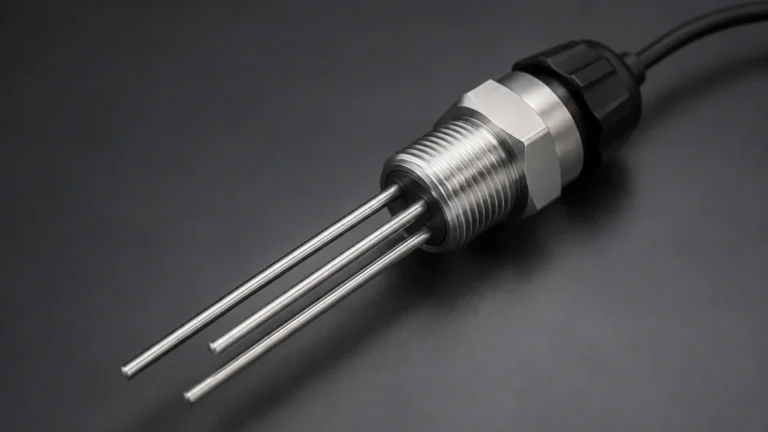
Wolfenstein First Level Switches
Wolfenstein First Level Switches
In the realm of industrial automation and process control, the term "first level" refers to the foundational layer of detection and safety. Just as a primary mechanism triggers a critical sequence in complex systems, industrial level switches serve as the first line of defense against tank overfills, dry-run pump damage, and process inconsistencies. For engineers and facility managers, selecting the right "first level" switch is not merely a matter of binary logic; it is a technical decision based on fluid dynamics, material compatibility, and environmental constraints.
Industrial Level Switches are discrete sensors designed to detect the presence or absence of a substance at a specific height within a vessel. Unlike continuous level transmitters that provide a constant data stream (e.g., 4-20mA or HART), a switch provides a simple On/Off signal. This signal is crucial for high-level alarms, low-level pump protection, and automated batching processes.
Core Measurement Principles for Level Detection
Before selecting a switch for a specific application, it is essential to understand the underlying physical principles that govern their operation. Level switches are categorized into mechanical and electronic types, each suited for different media and conditions.
1. Buoyancy-Based Float Switches
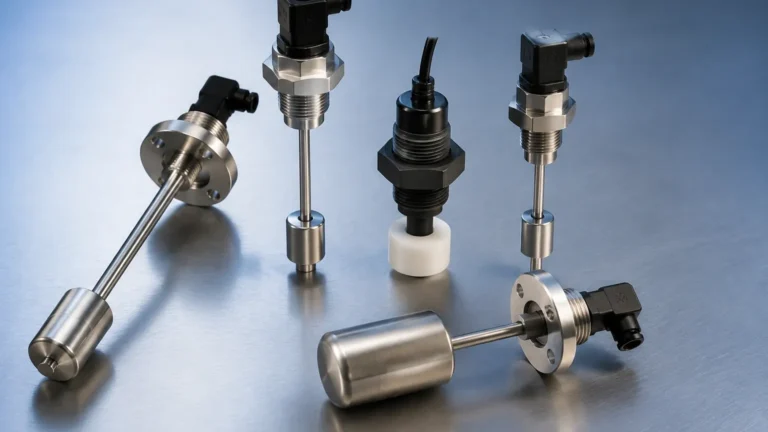
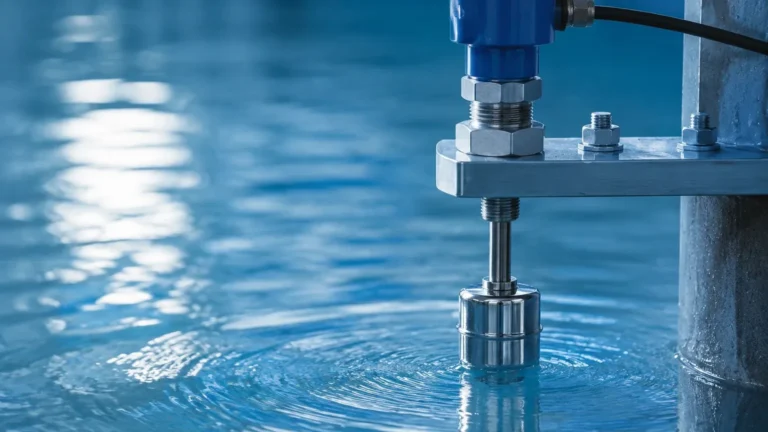
Float switches operate on the principle of buoyancy (Archimedes' Principle). A float, typically made of stainless steel or plastic, contains a magnet and moves with the liquid level. As the float reaches a predetermined point, the magnetic field actuates a reed switch or a microswitch.
* Advantages: Simple, cost-effective, and requires no external power (for reed types).
* Best For: Clean liquids with stable specific gravity, such as water tanks or fuel storage.
2. Vibrating Level Switches (Tuning Fork)
These switches utilize a tuning fork-shaped sensing element that vibrates at its natural resonant frequency via piezoelectric crystals. When the fork is submerged in a liquid or solid, the frequency changes. The electronics detect this shift and trigger the switch output.
* Advantages: Highly resistant to turbulence, foam, and bubbles. They are often considered the "universal" switch for liquids.
* Best For: Chemical processing, food and beverage, and applications where the media density might vary slightly.
3. Capacitance Level Switches
Capacitance switches measure the change in electrical capacitance between a probe and the tank wall (or a reference probe). As the medium displaces air, the dielectric constant changes, altering the capacitance.
* Advantages: No moving parts; suitable for high-pressure and high-temperature environments.
* Best For: Corrosive chemicals, powders, and granulates.
4. Conductivity Level Switches
These switches detect the electrical resistance between two electrodes. When a conductive liquid bridges the gap between the electrodes, a small current flows, signaling the presence of the liquid.
* Advantages: Extremely simple and robust for conductive media.
* Best For: Water treatment, wastewater, and acidic or alkaline solutions.
Comparative Selection Criteria for Process Environments
Choosing the "first level" of protection requires a systematic evaluation of the medium and the vessel environment. The following table provides a practical engineering reference for common industrial scenarios.
| Feature | Float Switch | Vibrating Fork | Capacitance | Conductivity |
| :— | :— | :— | :— | :— |
| Media Type | Clean Liquids | Liquids/Solids | Liquids/Solids | Conductive Liquids |
| Viscosity Limit | Low (< 500 cP) | Medium (< 10,000 cP) | High | Low |
| Pressure Range | Up to 40 bar (580 psi) | Up to 64 bar (928 psi) | Up to 100 bar+ | Low/Medium |
| Temp. Range | -20°C to 150°C | -50°C to 250°C | -100°C to 400°C | -20°C to 100°C |
| Foam Sensitivity | High (False trips) | Low (Excellent) | Moderate | Low |
| Build-up Resistance| Poor | Moderate | High (with Shield) | Poor |
Installation Guidelines and Best Practices
The reliability of a level switch is heavily dependent on its installation. Even the most advanced sensor will fail if placed in an area of extreme turbulence or near an inlet pipe without proper shielding.
Orientation and Positioning
* Top-Down Mounting: Common for float and ultrasonic switches. Ensure the probe length is calculated accurately, accounting for any "dead zones" at the top of the tank.
* Side Mounting: Ideal for high or low-point alarms. For tuning forks, the tines should be oriented vertically (in liquids) to allow the medium to flow off easily and prevent build-up.
Avoiding Interference
* Inlet Streams: Never install a switch directly under an inlet pipe. The force of the incoming fluid can cause mechanical damage or false triggers.
* Agitators and Stirrers: If the tank has an agitator, ensure the switch is positioned outside the vortex zone. In some cases, a stilling well (a perforated pipe) may be required to stabilize the surface around the sensor.
* Tank Walls: For capacitance switches, maintain the manufacturer’s recommended distance from the tank wall to avoid parasitic capacitance interference.
Electrical Considerations
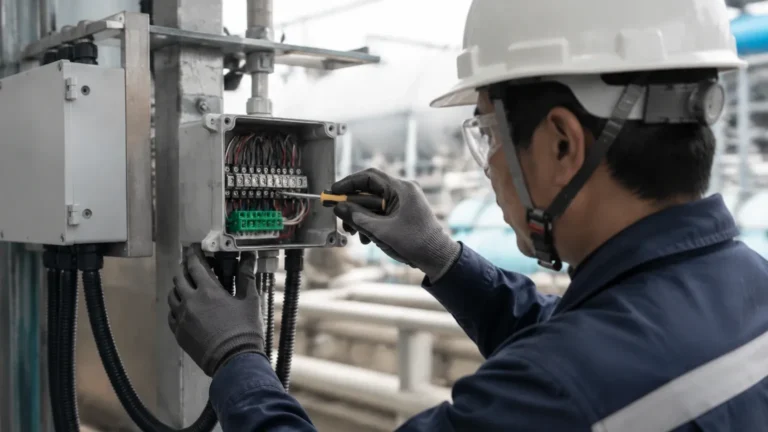
* Contact Rating: Ensure the switch’s relay or transistor output matches the load of the PLC or alarm system. Using a low-power reed switch to drive a heavy motor directly will lead to contact welding.
* Cable Glands: Always use IP67 or higher rated cable glands and create a "drip loop" to prevent moisture from entering the housing via the cable.
Operational Limitations and Troubleshooting
While level switches are robust, they are not infallible. Understanding their limits is the "first level" of effective maintenance.
1. Coating and Build-up: In sticky or viscous media (like molasses or heavy crude), material can accumulate on the sensor. Vibrating forks and capacitance switches with "active shield" technology are better at ignoring build-up than traditional floats.
2. Specific Gravity Changes: Float switches are calibrated for a specific density. If the process fluid changes from oil (SG 0.8) to water (SG 1.0), the float's buoyancy point will shift, potentially affecting accuracy.
3. Turbulence and Surface Waves: Rapidly fluctuating levels can cause "chatter" (rapid cycling of the relay). This can be mitigated by using a switch with an adjustable time delay (typically 0.5 to 5 seconds).
4. Dielectric Constant (Dk): Capacitance switches require a minimum Dk to function. If the medium is a highly refined oil with a very low Dk, the sensor may fail to detect it unless specifically calibrated for low-dielectric applications.

Industry-Specific Applications
Water and Wastewater Treatment
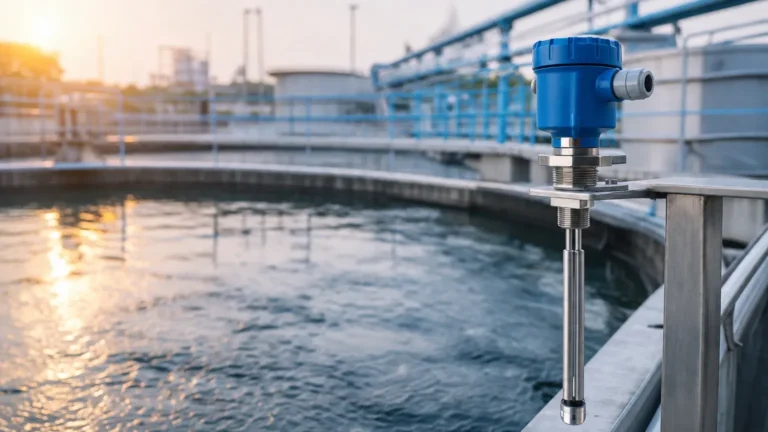
In this sector, reliability in harsh environments is paramount. Conductivity switches are frequently used for sump pump control, while ultrasonic or vibrating fork switches provide high-level overflow protection in chemical dosing tanks. Welk’s solutions often incorporate corrosion-resistant materials like PVDF or PTFE to withstand chlorine and other treatment chemicals.
Chemical and Petrochemical
Safety is the primary driver here. Switches used in these environments must often carry ATEX or IECEx certifications for explosive atmospheres. Capacitance switches are favored for their ability to handle high pressures and temperatures, providing a critical safety interlock for reactor vessels.
Food and Beverage
Hygiene is the critical factor. Level switches must feature polished stainless steel (316L) surfaces and Tri-clamp connections to meet CIP (Clean-in-Place) and SIP (Steam-in-Place) requirements. Tuning fork switches are widely used here because they can detect the interface between liquid and foam, ensuring that tanks are truly full without being fooled by head space bubbles.
Frequently Asked Questions (FAQs)
Q: Can I use a level switch for continuous measurement?
A: No. A level switch only provides a signal at a specific point. If you need to know the exact percentage of a tank's volume at all times, you should look into radar or ultrasonic level meters.
Q: What is the difference between NPN and PNP outputs?
A: These refer to the type of transistor output. PNP (Source) switches provide a positive voltage when triggered, while NPN (Sink) switches pull the load to ground. Most European PLCs use PNP, while NPN is more common in some Asian markets.
Q: How do I test a level switch without filling the tank?
A: Many modern electronic switches (like tuning forks) feature a "test" magnet or button on the housing that simulates a covered state. For float switches, you may need to manually lift the float if the vessel is empty and safe to enter.
Q: Why is my vibrating fork switch vibrating even when not powered?
A: It isn't. If you feel a vibration, it is likely mechanical resonance from a nearby pump or motor. This can cause false trips. Ensure the switch is isolated from heavy structural vibration.
Conclusion
Identifying the correct "first level" switch is a fundamental step in engineering a safe and efficient process. By matching the measurement principle—whether it be buoyancy, vibration, or capacitance—to the specific physical properties of the medium, operators can significantly reduce downtime and prevent costly accidents. For those seeking to upgrade their facility's detection capabilities, reviewing a diverse range of Level Switches is the first step toward achieving robust industrial automation.