Level 3 Switch vs Router
Level 3 Switch vs Router
In the landscape of modern industrial automation and process control, the distinction between data management and physical sensing is becoming increasingly blurred. As facilities move toward Industry 4.0, understanding the infrastructure that supports instrumentation is as critical as the instruments themselves. For engineers designing control loops for liquid or solid storage, two distinct "levels" of technology often arise in conversation: the networking architecture—specifically the choice of a level 3 switch vs router—and the physical Level Switches that provide the primary data points for these networks.
This article examines the technical differences between Layer 3 (L3) switches and routers within industrial environments and provides a comprehensive guide to the industrial level switches that feed these digital systems.
Understanding the Network Layer: Level 3 Switch vs Router
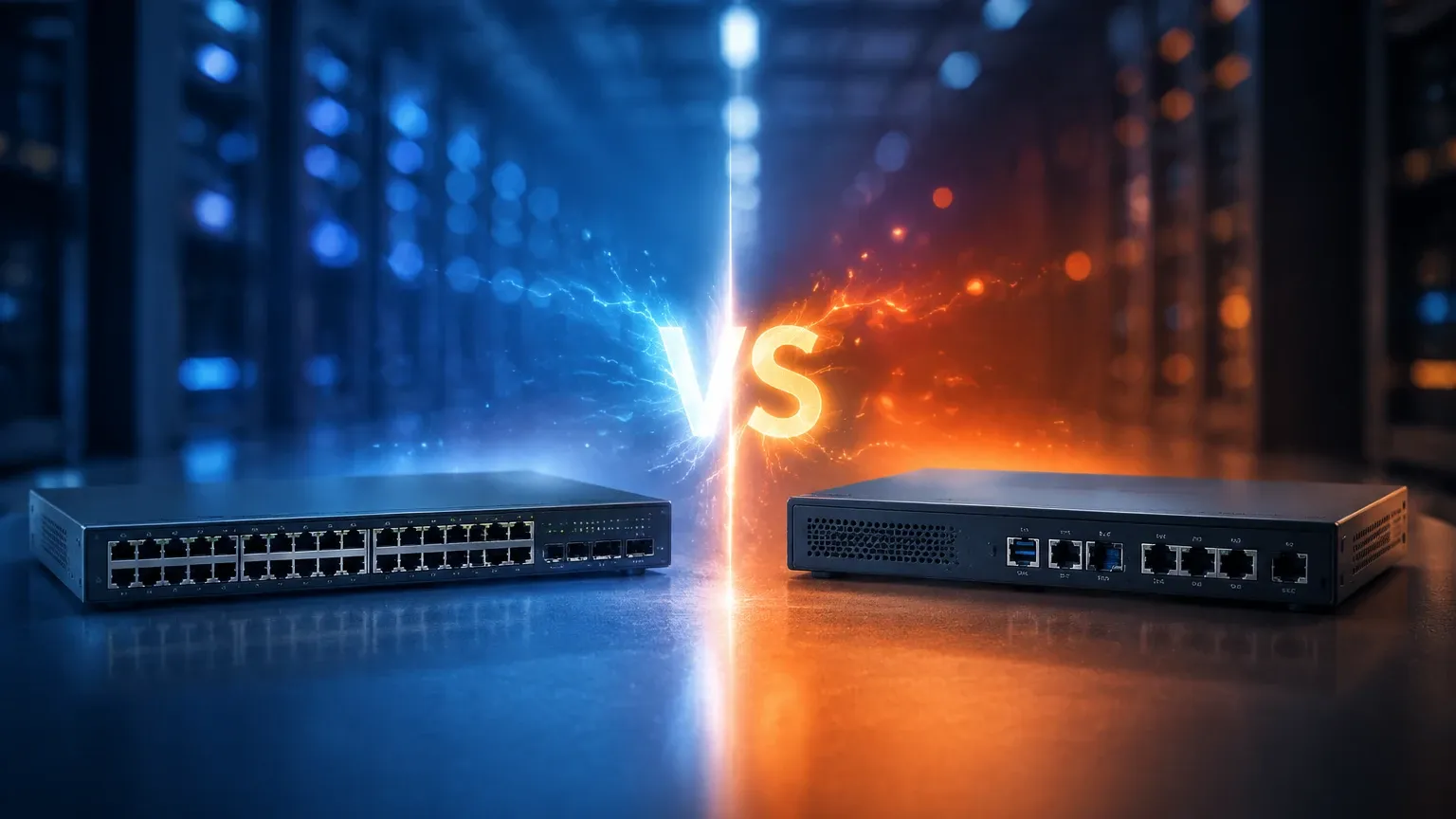
Before discussing the physical measurement of tanks and silos, it is essential to clarify the networking components that transport sensor data. In an industrial Ethernet framework, both L3 switches and routers handle IP routing, but they serve different roles based on hardware architecture and application.
What is a Router?
An industrial router is designed to connect different networks, typically a local area network (LAN) to a wide area network (WAN) or the internet. Routers perform routing using software-based engines. They support a wide array of protocols and features, such as Network Address Translation (NAT), firewalls, and Virtual Private Network (VPN) tunneling. In a process plant, a router is the gateway that allows remote monitoring of tank levels from a corporate headquarters miles away.
What is a Level 3 Switch?
A Level 3 switch is essentially a high-performance switch that possesses routing capabilities. Unlike a router, which uses software to route packets, an L3 switch uses specialized hardware called Application-Specific Integrated Circuits (ASICs). This allows the L3 switch to route data at the same speed it switches data (wire-speed). Within a large facility, L3 switches are used to segment the network into Virtual LANs (VLANs) to improve security and reduce broadcast traffic without sacrificing speed.
Key Differences for Industrial Applications
| Feature | Router | Level 3 Switch |
| :— | :— | :— |
| Primary Function | Connecting different network types (LAN to WAN) | Connecting devices within a high-speed LAN |
| Performance | Slower (Software-based routing) | Faster (Hardware-based/ASIC routing) |
| Port Density | Low (Typically few high-speed ports) | High (Often 24 or 48 ports) |
| Advanced Services | NAT, Firewall, VPN, Deep Packet Inspection | Limited to basic routing and VLAN management |
| Deployment | Network Edge / Gateway | Network Core or Distribution Layer |
In a typical level measurement application, a series of Level Switches might connect to an I/O module. That module then communicates via an L3 switch to the plant’s SCADA system, while a router manages the secure connection to external cloud analytics.
The Physical Layer: Industrial Level Switches
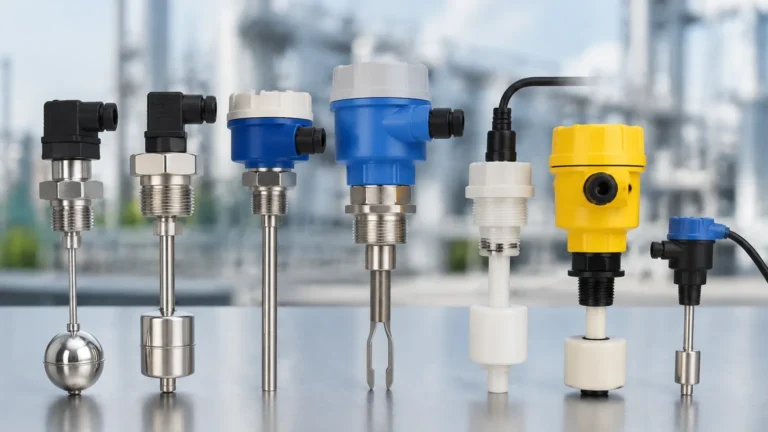
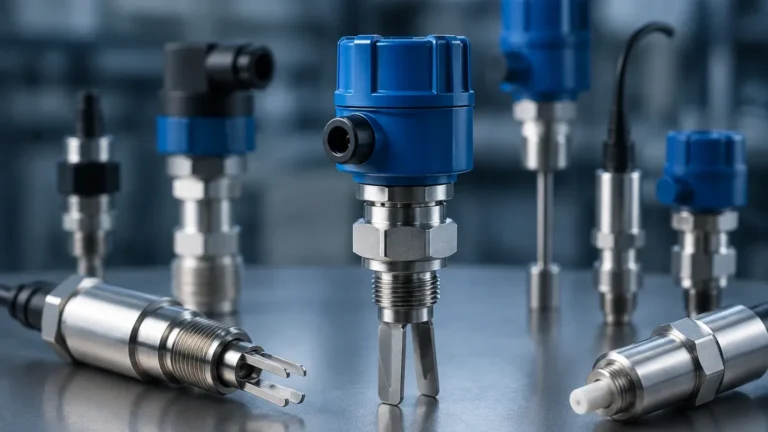
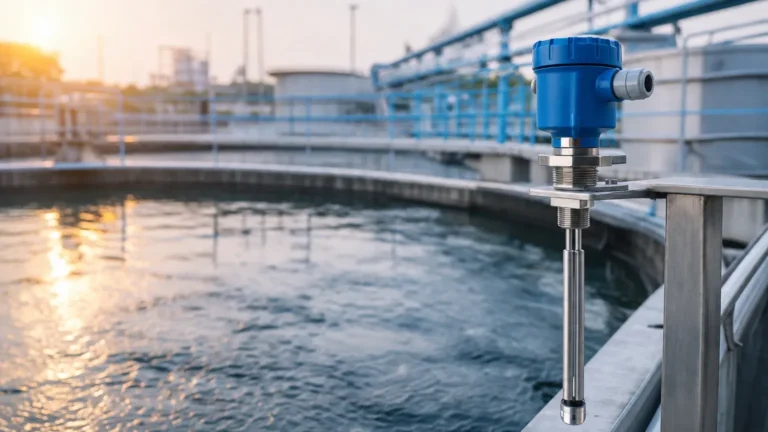
While routers and L3 switches manage the flow of information, the "Level Switch" in an industrial context refers to a physical sensor used to detect the presence or absence of a substance at a specific point. These are critical for overfill protection, pump control, and dry-run prevention.
Measurement Principles
To select the correct instrument, one must first understand the physics behind the detection. Welk provides several technologies tailored to different media and environmental conditions.
1. Vibrating Fork (Tuning Fork) Principle
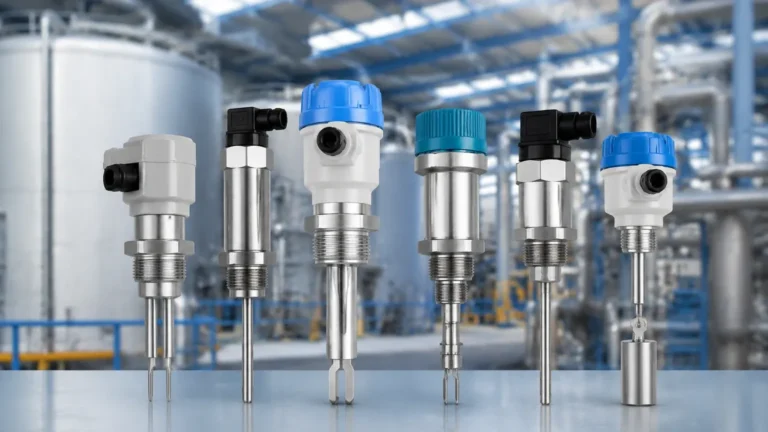
Vibrating level switches utilize a sensing element shaped like a tuning fork, which is driven by piezoelectric crystals to vibrate at its natural resonance frequency (typically around 1200 Hz to 1400 Hz). When the fork is immersed in a liquid or solid, the frequency shifts. The electronics detect this change and trigger a relay or transistor output. This technology is highly immune to changes in pressure, temperature, or dielectric constants.
2. Float (Magnetic) Principle
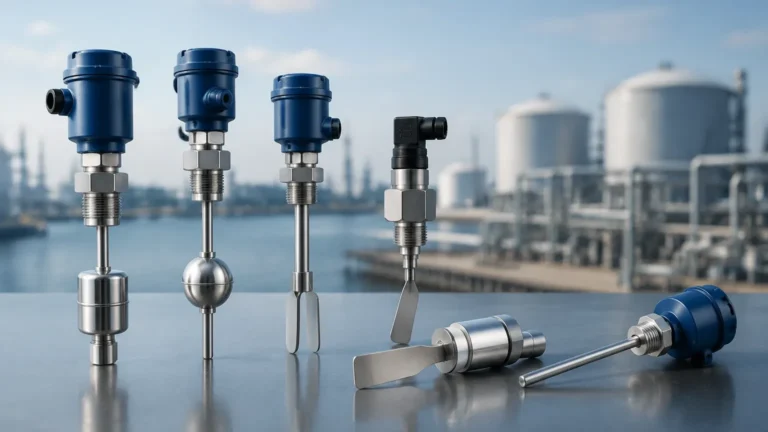
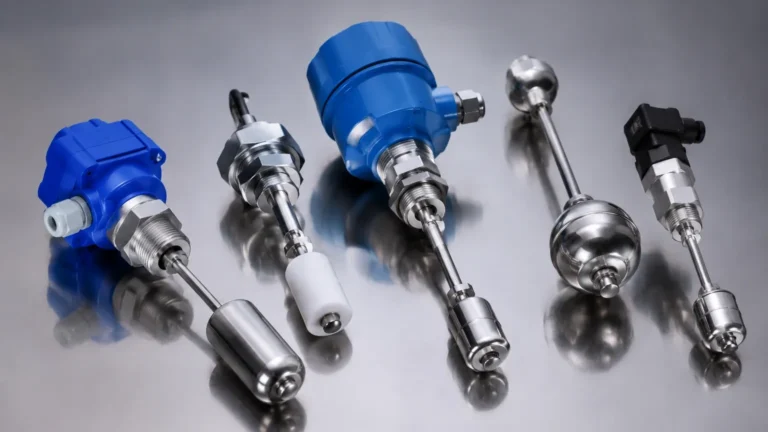
This is a mechanical method based on buoyancy. A float containing a permanent magnet moves up and down a stem as the liquid level changes. Inside the stem are reed switches. When the float’s magnetic field reaches the reed switch, the circuit closes or opens. It is a simple, reliable method for clean liquids but is susceptible to mechanical jamming if solids are present.
3. Capacitance Principle
Capacitive level switches treat the probe and the tank wall (or a second probe) as two plates of a capacitor. The air or the process medium acts as the dielectric. As the medium covers the probe, the dielectric constant changes, leading to a change in measured capacitance. This is ideal for powders and granulated solids but requires calibration based on the material's dielectric properties.
4. Rotary Paddle Principle
Commonly used for bulk solids, a motor slowly rotates a paddle. When the material reaches the paddle, it creates resistance, stalling the motor and tripping a switch. Once the material level drops, a spring returns the motor to its original position, and rotation resumes.
Practical Selection Table for Level Switches
Choosing between these technologies depends on the physical properties of the medium and the vessel conditions.
| Technology | Best For | Temperature Range | Pressure Range | Limitations |
| :— | :— | :— | :— | :— |
| Vibrating Fork | Liquids, Slurries, Powders | -50°C to +150°C | Up to 40 bar | Not for very high viscosity |
| Float Switch | Clean Liquids, Water | -20°C to +120°C | Up to 20 bar | Moving parts; prone to scaling |
| Capacitance | Solids, Corrosive Liquids | -40°C to +200°C | Up to 25 bar | Sensitive to coating/buildup |
| Rotary Paddle | Grains, Sand, Pellets | -20°C to +80°C | Atmospheric | Mechanical wear; solids only |
| Conductivity | Conductive Liquids (Water/Acid) | -20°C to +100°C | Up to 10 bar | Requires conductive medium |
Installation and Engineering Considerations
Successful deployment of Level Switches requires more than just selecting the right principle. The installation environment significantly impacts reliability.
1. Mounting Orientation: Vibrating forks can often be mounted horizontally or vertically. However, if mounted horizontally in a viscous liquid, the fork should be oriented so the "blades" are vertical to allow the liquid to drain off easily.
2. Turbulence and Agitation: In tanks with mixers, float switches may bounce, causing "chatter" in the signal. In such cases, a stilling well or a technology with a built-in delay (like a vibrating fork with adjustable damping) is preferred.
3. Nozzle Length: Ensure the sensing element extends far enough into the vessel. If a probe is buried in a long mounting nozzle, material can bridge or trap air, leading to false readings.
4. Wiring and Grounding: Especially for capacitive switches, proper grounding to the metal tank wall is essential for a stable reference point. In plastic tanks, a ground strap or a dual-probe version must be used.
Limitations and Common Risks
While level switches are robust, they are not universal solutions. Engineers must account for the following risks:
* Material Buildup: In sticky or crystallizing media, material can coat the probe. While some capacitive switches feature "active shield" technology to ignore buildup, vibrating forks may eventually fail to vibrate if the coating becomes too heavy.
* Dielectric Fluctuations: Capacitance switches rely on a stable dielectric constant. If a process switches between different oils or chemicals, the switch may require recalibration.
* Mechanical Fatigue: Any switch with moving parts (floats, paddles) has a finite lifecycle. In high-cycle applications, solid-state technologies like vibrating forks or ultrasonic gap switches are more cost-effective over the long term.
* Network Latency: Returning to the level 3 switch vs router discussion, if a level switch is part of a safety-instrumented system (SIS), the network latency must be minimized. Using a Level 3 switch for local inter-VLAN routing ensures that the emergency stop signal reaches the PLC with sub-millisecond delay, which might not be guaranteed by a slower, software-based router.
Frequently Asked Questions (FAQ)
Q: Can I use a Level 3 switch as a router?
A: Yes, for internal routing between subnets (VLANs). However, it cannot replace a router for WAN connections, as it lacks features like NAT and advanced security protocols required for internet-facing links.
Q: Why choose a vibrating fork over a float switch for overfill protection?
A: Vibrating forks have no moving parts to jam and are generally more reliable for critical safety applications. They also offer "self-monitoring" capabilities where the electronics can detect if the crystal has failed.
Q: Are level switches compatible with Modbus or EtherNet/IP?
A: Many modern industrial level switches offer digital outputs or can be connected to I/O blocks that communicate via these protocols, allowing them to integrate seamlessly into a network managed by L3 switches.
Q: What is the maximum pressure a standard level switch can handle?
A: Most standard industrial units handle up to 40 bar (approx. 580 psi). For high-pressure boiler applications, specialized high-pressure models are required.
Conclusion
Whether you are optimizing the digital backbone of your facility by choosing between a level 3 switch vs router, or selecting the physical Level Switches for a chemical storage tank, the goal remains the same: reliability and accuracy. By understanding the measurement principles—from the resonance of a tuning fork to the buoyancy of a float—and ensuring they are supported by a high-speed, low-latency network architecture, process engineers can ensure maximum uptime and safety for their operations. For customized OEM/ODM solutions and expert guidance on level measurement, Welk offers a range of technologies designed to meet the rigors of industrial automation.