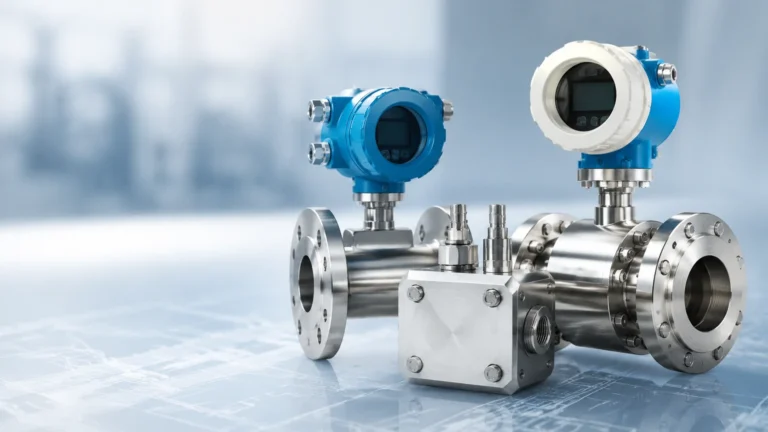
Vegapuls 31
Vegapuls 31
In the landscape of industrial process automation, the transition toward non-contact level measurement has accelerated with the refinement of radar technology. The Vegapuls 31 represents a significant milestone in this evolution, offering a compact, 80 GHz radar sensor designed for continuous level measurement. This guide explores the technical principles, application suitability, and installation requirements for the Vegapuls 31, providing engineers and procurement professionals with the factual data needed to evaluate its role in modern liquid management systems.
Understanding Radar Level Measurement Principles
Before evaluating specific hardware like the Vegapuls 31, it is essential to understand the underlying physics of radar level measurement. Radar sensors operate on the principle of Time-of-Flight (ToF). The sensor emits a high-frequency signal toward the medium, which is reflected by the surface of the product and received back by the antenna.
The Move to 80 GHz Technology
Historically, industrial radar sensors operated at lower frequencies, typically around 6 GHz or 26 GHz. The Vegapuls 31 utilizes 80 GHz technology, which offers several distinct advantages:
1. Narrow Beam Angle: Higher frequencies allow for a much tighter focus of the signal. While a 26 GHz sensor might have a beam angle of 15 to 20 degrees, an 80 GHz sensor can achieve angles as narrow as 8 degrees. This precision allows the sensor to be installed in narrow tanks or vessels with internal obstructions (like ladders or agitators) without receiving false echoes.
2. Increased Sensitivity: High-frequency signals are more effectively reflected by media with low dielectric constants (εr). This makes 80 GHz sensors more reliable for measuring a wider variety of liquids, including certain hydrocarbons and oils.
3. Compact Antenna Design: The wavelength of an 80 GHz signal is approximately 3.75 mm. Since antenna size is proportional to wavelength, these sensors can be made significantly smaller, facilitating installation in tight spaces or on small process fittings.
FMCW vs. Pulse Radar
The Vegapuls 31 utilizes Frequency Modulated Continuous Wave (FMCW) technology. Unlike pulse radar, which measures the time a single pulse takes to return, FMCW transmits a continuous signal with a constantly changing frequency. The difference in frequency between the transmitted and received signals is directly proportional to the distance to the medium. This method provides superior signal-to-noise ratios and higher measurement accuracy, typically within ±2 mm (0.08 in).
Key Features and Capabilities of the Vegapuls 31
The Vegapuls 31 is positioned as a cost-effective, high-performance solution for standard applications. It is particularly noted for its maintenance-free operation, as the non-contact principle ensures the sensor is not subject to wear, corrosion, or buildup from the measured media.
Technical Specifications
* Measuring Range: Up to 15 meters (49.21 feet).
* Process Temperature: -40 °C to +80 °C (-40 °F to +176 °F).
* Process Pressure: -1 to 3 bar (-100 to 300 kPa / -14.5 to 43.5 psig).
* Accuracy: ±2 mm.
* Output Signals: 4…20 mA, HART, Modbus, or SDI-12, depending on the specific model configuration.
* Adjustment: Wireless adjustment via Bluetooth using a smartphone, tablet, or PC, which simplifies commissioning in hazardous or hard-to-reach areas.
Housing and Durability
The device typically features a high-resistance plastic housing (PVDF or PBT) with an IP66/IP67 or IP68 (3 bar) protection rating. This makes it suitable for outdoor use, such as in water treatment plants or open-air storage tanks, where exposure to rain and humidity is constant.
Application Areas in Industrial Automation
While the Vegapuls 31 is a versatile instrument, its design parameters make it particularly well-suited for specific industrial sectors. Professionals seeking comprehensive Review product options and application support can find further technical details on the Welk Main Page regarding integrated systems.
Water and Wastewater Management
In the water industry, the Vegapuls 31 is frequently used for level measurement in water storage tanks, pump stations, and rain overflow basins. Because it is a non-contact sensor, it is unaffected by the debris, grease, or foam often found in wastewater, which can cause traditional ultrasonic or hydrostatic sensors to fail.
Chemical Storage
For small to medium-sized chemical tanks, the 80 GHz radar provides reliable data even when the medium is aggressive. The PVDF encapsulated antenna resists chemical attack, and the narrow beam avoids interference from tank walls in smaller plastic IBCs (Intermediate Bulk Containers) or dosing tanks.
Industrial Automation and Utilities
Plant utilities, such as cooling water circuits or fuel storage for backup generators, benefit from the simple integration of the Vegapuls 31. Its ability to provide continuous data via digital protocols allows for seamless integration into PLC (Programmable Logic Controller) or SCADA systems.
Selection Criteria for Radar Level Sensors
Choosing the right level measurement technology requires a thorough analysis of the process environment. The following table provides a comparison of common technologies used alongside or in place of the Vegapuls 31.
Technology Comparison Table
| Feature | 80 GHz Radar (Vegapuls 31) | Ultrasonic Sensors | Hydrostatic Transmitters |
| :— | :— | :— | :— |
| Measurement Type | Non-contact | Non-contact | Contact (Pressure-based) |
| Accuracy | High (±2 mm) | Moderate (±0.2% of range) | Moderate to High |
| Effect of Vapor/Gas | Minimal | Significant (Speed of sound changes) | None |
| Effect of Foam | Moderate (depends on density) | High (absorbs signal) | None |
| Maintenance | Very Low | Low | Moderate (cleaning required) |
| Cost | Mid-range | Low to Mid-range | Low to Mid-range |
Critical Evaluation Factors
1. Dielectric Constant (εr): The reflectiveness of the liquid. Water has a high εr (~80), making it easy to measure. Oils have a low εr (~2), requiring more sensitive radar settings.
2. Vessel Geometry: If the tank is very narrow or has many internal pipes, the 80 GHz radar is preferred over ultrasonic or lower-frequency radar.
3. Environmental Conditions: If there is heavy dust, steam, or temperature fluctuations, radar is generally superior to ultrasonic technology.

Installation and Commissioning Best Practices
Proper installation is critical to ensuring the accuracy and longevity of the Vegapuls 31. Despite its narrow beam, certain geometric rules must be followed.
Positioning the Sensor
* Avoid the Center: Do not mount the sensor in the center of a tank with a domed roof, as this can lead to multiple reflections that interfere with the signal.
* Distance from Wall: Maintain a minimum distance from the tank wall (typically >200 mm) to avoid signal attenuation.
* Nozzle Height: If mounting on a nozzle, ensure the antenna end protrudes slightly into the tank or that the nozzle diameter is sufficient to prevent internal reflections.
Mounting Checklist
| Consideration | Recommendation |
| :— | :— |
| Alignment | Sensor should be perpendicular to the liquid surface. |
| Obstructions | Ensure the signal path is clear of agitators, heating coils, or ladders. |
| Inflow | Do not mount the sensor directly above the filling stream. |
| Outdoor Use | Use a sunshade or weather protective cover to prevent extreme temperature swings on the housing. |
Commissioning via Bluetooth
One of the primary advantages of the Vegapuls 31 is the ability to configure the device wirelessly. Using the proprietary adjustment app, technicians can perform a "False Signal Suppression" (also known as a static map). This tells the sensor to ignore fixed reflections from internal tank structures, focusing only on the moving liquid level. This can be done from a safe distance of up to 25 meters (82 feet), enhancing site safety.
Limitations and Operational Considerations
While highly capable, the Vegapuls 31 has limitations that must be acknowledged during the engineering phase:
* Heavy Foam: Extremely thick, dense foam can absorb radar signals. While 80 GHz is better at penetrating light foam than ultrasonic, it may still struggle with very dry, stable foam layers.
* Pressure and Temperature: The Vegapuls 31 is designed for standard process conditions. For high-pressure (above 3 bar) or high-temperature (above 80 °C) applications, other models in the Welk or Vega portfolio with stainless steel flanges and specialized seals would be required.
* Vacuum Applications: While it can operate in a vacuum, the sealing and housing must be checked for compatibility with the specific vacuum level and chemical vapors present.
Frequently Asked Questions (FAQ)
Q: Can the Vegapuls 31 measure through a plastic tank wall?
A: Yes. Because radar signals can penetrate non-conductive materials like plastic or glass, the sensor can often measure the level from outside the tank, provided the wall is not too thick and does not contain metal reinforcement.
Q: How does the Vegapuls 31 handle condensation on the antenna?
A: The 80 GHz signal is relatively unaffected by small droplets. Furthermore, the antenna design of the Vegapuls 31 is typically convex or optimized to allow condensation to run off, preventing signal blockage.
Q: Is a special license required for the 80 GHz frequency?
A: No. The device is generally certified for use in industrial environments globally under LPR (Level Probing Radar) or TLPR (Tank Level Probing Radar) standards without requiring a specific user license.
Q: What is the minimum dielectric constant required for a reliable measurement?
A: The Vegapuls 31 can typically measure media with a dielectric constant as low as 1.6, depending on the distance and the surface conditions (e.g., calm vs. turbulent).
Conclusion
The Vegapuls 31 serves as a robust entry point into high-frequency radar level measurement. By leveraging 80 GHz FMCW technology, it addresses many of the historical challenges associated with narrow tanks, internal obstructions, and varying atmospheric conditions. For engineers looking to upgrade from mechanical or ultrasonic systems, it provides a maintenance-free alternative with high precision. For more information on selecting the appropriate level measurement technology for your specific industrial application, visit the Welk Main Page to explore a full range of radar, ultrasonic, and hydrostatic solutions.