Vibrating Level Switch
Vibrating Level Switch
In the field of industrial automation and process control, point level detection is a critical requirement for safety, inventory management, and overfill prevention. Among the various technologies available, the vibrating level switch—often referred to as a tuning fork switch or vibrating rod—has emerged as one of the most versatile and reliable solutions. These instruments are designed to detect the presence or absence of liquids or solids at a specific height within a tank, silo, or pipe.
Manufacturers like Welk provide a broad range of these instruments to handle diverse media, from low-density powders to highly viscous liquids. Because they do not rely on the electrical properties of the medium (such as dielectric constant or conductivity), they are often preferred over capacitive or conductive sensors in complex applications. For a comprehensive overview of available models and technical specifications, engineers often refer to the Main Page of specialized instrumentation providers.
Understanding the Measurement Principle
The fundamental operation of a vibrating level switch is based on the principle of resonance and frequency damping. The sensor consists of a mechanical element—typically a two-pronged tuning fork or a single vibrating rod—that is driven into vibration at its natural resonant frequency by an internal piezoelectric crystal.
The Piezoelectric Effect
One piezoelectric crystal (the transmitter) is excited by an electrical signal, causing it to change shape and induce mechanical vibration in the fork or rod. A second piezoelectric crystal (the receiver) detects these vibrations and converts them back into an electrical signal.
Frequency Shift and Damping
When the vibrating element is in the air (the "dry" state), it vibrates freely at its designed frequency (typically around 300 to 1200 Hz depending on the design). As the material level rises and makes contact with the vibrating element, the mechanical resonance is dampened. This contact causes a significant shift in the frequency or a decrease in the amplitude of the vibration.
The internal electronics continuously monitor these changes. Once the frequency shift passes a predefined threshold, the instrument triggers an output signal—usually a relay contact, a transistor switch (PNP/NPN), or a 4-20mA loop change—to indicate that the level has reached the sensor's position.
Types of Vibrating Level Sensors
While the core principle remains the same, the physical design of the vibrating level switch is tailored to the specific medium being measured. Choosing the correct geometry is essential for long-term reliability.
1. Vibrating Tuning Fork (Liquids)
For liquid applications, the tuning fork design is standard. The two prongs allow for a high degree of sensitivity. These sensors are optimized to detect changes in density. They are particularly effective in water treatment, chemical processing, and food and beverage industries. Because the prongs are thin, they offer minimal resistance to flow and are less likely to be affected by turbulence.
2. Vibrating Rod (Solids and Powders)
In bulk solids applications, such as grain silos, cement hoppers, or plastic pellet bins, a single vibrating rod is often preferred over a fork. The single-rod design prevents material from becoming trapped between prongs (a phenomenon known as "bridging"), which could cause a false high-level alarm. The rod is robust and capable of withstanding the heavy mechanical loads imposed by falling solids.
3. Extended Length Switches
In many cases, the switch must be mounted from the top of a vessel to detect a specific level deep within the tank. Manufacturers offer extended prongs or rods, sometimes reaching up to 3,000 mm (approx. 118 inches), to reach the desired switching point without requiring side-wall penetration.
Key Selection Criteria for Industrial Applications
Selecting the right vibrating level switch requires a detailed understanding of the process environment. Engineers should evaluate the following parameters before procurement:
Medium Density
The switch must be calibrated for the density of the material. Most liquid tuning forks can detect media with a density as low as 0.5 g/cm³ (31.2 lb/ft³). For very light powders or aerated solids, specialized high-sensitivity rods are required that can detect densities as low as 0.01 g/cm³.
Viscosity and Coating
Highly viscous liquids (e.g., molasses, heavy oils) can cause "clinging" where the material stays on the fork even after the level drops. While vibrating switches are generally better at shedding build-up than capacitive sensors, extreme cases require forks with specific coatings (like PFA or ECTFE) or polished surfaces to minimize adhesion.
Process Temperature and Pressure
Standard industrial switches typically handle temperatures from -40°C to 150°C (-40°F to 302°F). However, for steam-jacketed vessels or cryogenic storage, high-temperature versions with thermal separators are necessary. Pressure ratings usually range from vacuum up to 40 bar (580 psi) or higher for specialized high-pressure variants.
Chemical Compatibility
The wetted parts must be resistant to the process medium. Stainless steel (316L) is the industry standard, but for corrosive acids or bases, alloys like Hastelloy or plastic coatings are utilized.
| Feature | Liquid Tuning Fork | Solid Vibrating Rod |
| :— | :— | :— |
| Primary Media | Water, Oils, Chemicals | Grains, Sand, Powders |
| Density Limit | > 0.5 g/cm³ | > 0.01 g/cm³ |
| Bridging Risk | Low | Very Low (Single Rod) |
| Typical Mounting | Side or Top | Top or Side (with protection) |
| Viscosity Limit | Up to 10,000 mPa.s | N/A |
Installation Best Practices and Considerations
Proper installation is paramount to ensuring the vibrating level switch functions correctly throughout its lifecycle. Failure to follow engineering guidelines can lead to false triggers or mechanical failure.
1. Orientation: For liquid applications, the prongs of a tuning fork should be oriented so that the liquid can easily drain off them. If mounted horizontally, the prongs should be vertical (side-by-side) rather than stacked one over the other to prevent liquid from being trapped between them.
2. Avoid the Inflow Stream: Never install the switch directly in the path of the material filling the tank. The mechanical impact of falling solids or high-velocity liquid can damage the prongs or cause constant false alarms. If a direct path is unavoidable, a protective baffle or "weather shield" should be installed above the sensor.
3. Nozzle Length: Ensure the vibrating element extends fully into the vessel. If the prongs are recessed inside a mounting nozzle, material (especially solids) can build up in the dead space, dampening the vibration and causing a permanent "covered" signal.
4. Mechanical Stress: When used in heavy bulk solids like gravel or large ores, the switch should be mounted at an angle or protected by a heavy-duty deflector to prevent the weight of the shifting material from bending the rod.
5. Cable Entry: Always point cable glands downward and use a drip loop to prevent moisture from migrating into the electronics housing via the conduit.

Comparing Vibrating Switches with Alternative Technologies
Engineers often weigh the vibrating level switch against other point-level technologies such as float switches, ultrasonic gap switches, and capacitance probes.
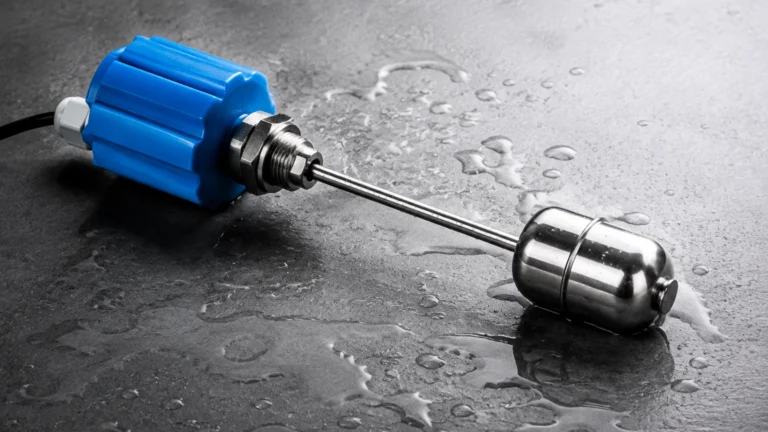
* Vs. Float Switches: Float switches are mechanical and prone to jamming due to debris or calcification. The vibrating switch has no moving parts (excluding the microscopic vibration), making it significantly more reliable in dirty or scaling liquids.
* Vs. Capacitance Probes: Capacitance sensors depend on the dielectric constant of the material. If the moisture content of a solid changes, the dielectric constant changes, requiring recalibration. Vibrating switches are independent of these electrical properties, offering a "plug-and-play" experience across different media.
* Vs. Ultrasonic Gap Switches: Ultrasonic gap switches require a liquid medium to transmit sound across a gap. They can fail if bubbles or foam are present. Vibrating forks are generally more robust in aerated liquids or foaming applications.
Maintenance and Troubleshooting Common Issues
Because they have no macro-moving parts, vibrating level switches are largely maintenance-free. However, certain conditions can lead to operational issues.
False Alarms (Indicates Covered when Dry)
This is most commonly caused by excessive material build-up or "bridging" between the prongs. In solids, check if the material is damp or sticky. In liquids, check for a thick coating or crystalline growth. Cleaning the prongs and ensuring the nozzle is not too long usually resolves this.
Failure to Detect (Indicates Dry when Covered)
This typically happens if the material density is lower than the switch’s sensitivity setting. Some advanced units have a sensitivity adjustment (High/Low) via a DIP switch in the housing. Increasing the sensitivity may allow the unit to detect lighter foams or powders.
Mechanical Damage
If the vibrating element is bent or cracked, its resonant frequency will change permanently, and the unit will likely enter an error state. This is usually the result of improper installation in a high-impact zone.
Frequently Asked Questions (FAQs)
Q: Can a vibrating level switch be used in turbulent liquids?
A: Yes. Unlike float switches, vibrating forks are relatively unaffected by turbulence. However, if the turbulence is extreme, a stilling well or a short delay timer in the electronics can be used to prevent rapid cycling of the output.
Q: Does the color or transparency of the liquid affect the sensor?
A: No. Since the measurement is purely mechanical (vibration-based), the optical properties of the fluid have no impact on performance. This makes it superior to optical sensors in dark or opaque liquids.
Q: Are these sensors suitable for hygienic applications?
A: Absolutely. Many vibrating level switches are designed with polished stainless steel and tri-clamp fittings, meeting 3A and EHEDG standards for the food, beverage, and pharmaceutical industries.
Q: Can I use a vibrating switch for interface detection (e.g., oil on water)?
A: It depends on the density difference. If the two liquids have a significant density gap and the switch is calibrated to trigger only on the denser liquid, it can sometimes be used for interface detection. However, specialized interface sensors are usually recommended for high accuracy.
Q: What is the typical lifespan of a vibrating level switch?
A: In a properly specified application without corrosive attack or extreme mechanical impact, these sensors can easily last over 10 years. The use of high-quality piezoelectric crystals and robust housing materials, as seen in Welk's product lines, ensures long-term stability.
For technical support regarding specific chemical compatibilities or to request a quote for a customized length, visiting the Main Page of an experienced manufacturer is the best next step for project engineers and procurement teams. Selecting the right vibrating level switch is a balance of understanding the physical properties of the media and the mechanical constraints of the vessel, ensuring a safe and efficient process environment.