Biopharmaceutical Measuring Instruments
Biopharmaceutical Measuring Instruments
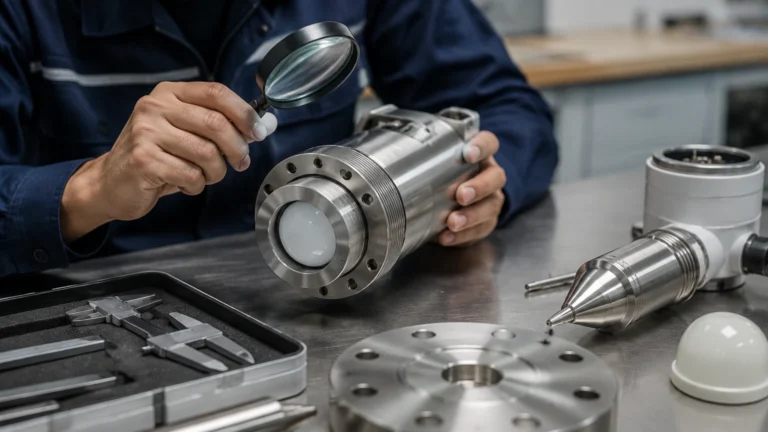
In the biopharmaceutical industry, precision and hygiene are not merely operational goals but fundamental regulatory requirements. The selection and implementation of biopharmaceutical measuring instruments play a critical role in ensuring batch consistency, safety, and compliance with global standards such as the FDA and EMA. Level measurement, in particular, is vital for managing bioreactors, buffer preparation tanks, and storage vessels where high-value products are processed under sterile conditions.
This guide examines the core technologies used for level measurement within the biopharma sector, providing engineering insights into their principles, selection criteria, and installation requirements. For a detailed look at specific hardware configurations, engineers are encouraged to visit the Main Page to review product options and application support.
Understanding Measurement Principles in Biopharmaceutical Applications
Before selecting biopharmaceutical measuring instruments, it is essential to understand the physical principles that govern their operation. In sterile environments, the method of measurement determines how the instrument interacts with the process media and the cleaning protocols.
Radar Level Measurement (Non-Contact)
Radar level meters operate on the Time-of-Flight (ToF) principle. The device emits high-frequency electromagnetic pulses (typically in the 26GHz or 80GHz range) toward the liquid surface. The time taken for the pulse to reflect back is measured to calculate the distance.
In biopharma, 80GHz radar is often preferred because its narrow beam angle allows it to avoid internal obstructions like agitators or spray balls. Because it is non-contact, there is no risk of product contamination, and the sensor can often measure through plastic vessels or specialized glass windows.
Ultrasonic Level Measurement
Ultrasonic sensors emit high-frequency sound waves. Like radar, they use the ToF principle. However, because sound requires a medium (air/gas) to travel, the accuracy of ultrasonic sensors can be affected by changes in gas composition, temperature gradients, or heavy foam. These are typically used in less critical water treatment or waste-neutralization stages of the biopharmaceutical facility.
Hydrostatic Level Measurement
Hydrostatic transmitters measure the pressure exerted by a liquid column at the bottom of a tank. The pressure is proportional to the height of the liquid and its density ($P = \rho gh$). To meet sanitary requirements, these instruments must use a flush-mounted diaphragm. This prevents "dead legs" where bacteria could grow. They are highly reliable for constant-density liquids but require compensation if the process temperature or density changes significantly.
Magnetic Level Gauges and Switches
Magnetic level gauges utilize a float containing a magnet that moves with the liquid level inside a bypass chamber or directly within the tank. As the float moves, it flips magnetic flags or triggers external reed switches. While traditional bypass chambers are harder to clean, specialized sanitary magnetic switches are used for point-level detection (high/low alarms) in buffer tanks.
Key Evaluation Criteria for Sanitary Level Measurement
When evaluating biopharmaceutical measuring instruments, standard industrial specifications are insufficient. The following criteria are mandatory for any instrument entering a sterile process zone:
1. Material Compatibility: All wetted parts must be made of non-reactive, corrosion-resistant materials. 316L Stainless Steel (1.4404/1.4435) is the industry standard. For highly aggressive media, Hastelloy or PTFE-coated components may be required.
2. Surface Finish: To prevent microbial adhesion, wetted surfaces must be polished. A surface roughness ($R_a$) of less than 0.8 μm is typical, often achieved through electropolishing.
3. Hygienic Connections: Instruments must use standardized sanitary fittings, such as Tri-Clamp (ISO 2852) or Varivent connections. These allow for easy removal and ensure a leak-proof, crevice-free seal.
4. CIP/SIP Compliance: Instruments must withstand Clean-in-Place (CIP) chemicals (like sodium hydroxide) and Steaming-in-Place (SIP) temperatures, which typically reach 121°C (250±F) to 135°C (275±F).
5. Certifications: Look for compliance with 3-A Sanitary Standards, EHEDG (European Hygienic Engineering & Design Group), and USP Class VI for plastic components.
Comparison of Technologies for Biopharma Processes
Choosing the right technology depends on the specific vessel type and the physical properties of the fluid. The following table provides a comparison of common level measurement technologies used in the industry.
| Technology | Contact Type | Accuracy | SIP/CIP Suitability | Best Application |
| :— | :— | :— | :— | :— |
| 80GHz Radar | Non-contact | ±1 mm | Excellent | Bioreactors, Buffer Tanks |
| Hydrostatic | Contact | ±0.1% Span | Good (Flush mount) | Pressurized Storage |
| Ultrasonic | Non-contact | ±2 mm | Moderate | Water Treatment |
| Capacitance | Contact | ±5 mm | Good | Point Level Detection |
| Magnetic Switch| Non-contact* | ±2 mm | Excellent | Overfill Protection |
*Note: Magnetic switches are often non-contact regarding the electronics, but the float or displacer is a wetted part.*
Installation Guidelines and Best Practices
Proper installation is as critical as the instrument selection itself. Poorly installed biopharmaceutical measuring instruments can lead to false readings or, worse, batch contamination.
* Eliminate Dead Legs: Ensure that the mounting nozzle is as short as possible. The "2D" rule (where the length of the nozzle should not exceed twice its diameter) is a common engineering benchmark to ensure that cleaning fluids can reach all surfaces during CIP.
* Orientation for Drainage: Instruments should be mounted at an angle or in a position that allows for complete self-drainage. Any pooling of liquid on a sensor face can lead to biofilm formation.
* Vessel Obstructions: For radar and ultrasonic sensors, ensure the signal path is clear of agitator blades, heating coils, or baffles. Even with modern "false signal suppression" software, a clear line of sight provides the most reliable data.
* Gasket Selection: Use only FDA-approved EPDM, FKM, or PTFE gaskets. Ensure the gasket is centered correctly; a protruding gasket creates a crevice where bacteria can flourish.

Limitations and Operational Risks
Every measurement technology has physical limits that must be accounted for during the design phase:
* Foam Interference: In fermentation processes, heavy foam can absorb radar and ultrasonic signals, leading to a "loss of echo." In these cases, hydrostatic pressure or guided wave radar (with a sanitary probe) may be more effective.
* Dielectric Constant ($d_k$): Radar relies on the dielectric constant of the liquid. While most aqueous biopharma solutions have a high $d_k$, some oils or solvents used in downstream processing may have low $d_k$ values, requiring more sensitive radar units.
* Temperature Shocks: During SIP, the rapid transition from ambient temperature to 130°C can cause thermal shock in ceramic diaphragms or electronics. Choosing instruments with high-quality thermal decoupling is essential.
* Vapor and Condensation: Steam during SIP or evaporation during high-temperature processing can cause condensation on sensor faces. Radar sensors with PTFE drop antennas are designed to shed droplets and maintain signal integrity.
Frequently Asked Questions (FAQs)
Q: Can I use a standard industrial level transmitter in a biopharma cleanroom?
A: Generally, no. Standard transmitters often have crevices, threaded connections, or materials that cannot withstand the aggressive sterilization cycles required in biopharma. Always specify sanitary-grade versions.
Q: How often should biopharmaceutical measuring instruments be calibrated?
A: Calibration frequency is determined by the facility's Quality Management System (QMS). However, it is common to calibrate critical instruments annually or after every major maintenance shutdown. Many modern transmitters offer "self-verification" features that can extend calibration intervals.
Q: Is 80GHz radar better than 26GHz for small bioreactors?
A: Yes. The 80GHz frequency allows for a much smaller antenna and a narrower beam, which is ideal for the small-diameter nozzles and cluttered internal environments of 50L to 500L bioreactors.
Q: What is the benefit of a flush-mounted hydrostatic sensor?
A: A flush mount ensures that the sensing diaphragm is level with the tank wall. This eliminates any recessed areas (dead legs) where product could get trapped and bypass the cleaning process.
Conclusion and Project Confirmation
Selecting the appropriate level measurement technology is a cornerstone of biopharmaceutical process engineering. By matching the measurement principle to the specific requirements of the media and the vessel, manufacturers can ensure high yields and maintain the stringent hygiene standards required by law.
When planning a new installation or upgrading an existing suite, it is vital to confirm the chemical compatibility of wetted parts, the required accuracy, and the mechanical constraints of the vessel. For technical specifications and to explore a wide range of industrial measurement solutions, visit the Main Page to find the right equipment for your specific application.