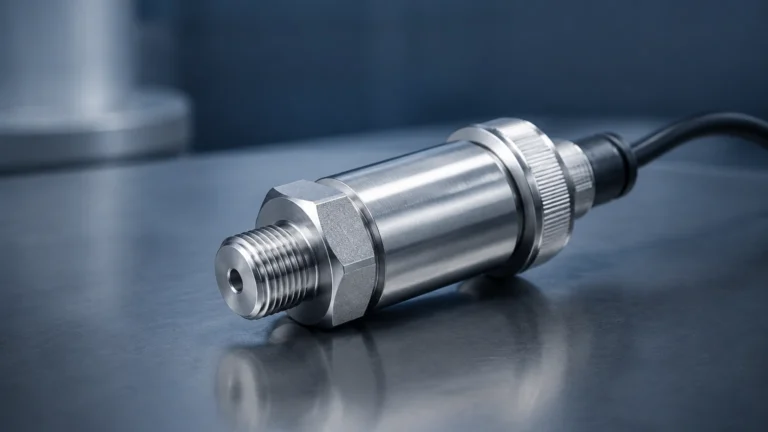
Point Level Switch
Point Level Switch
In the landscape of industrial process control, the point level switch serves as a critical component for safety, inventory management, and automation. Unlike continuous level transmitters that provide a real-time percentage of a vessel's contents, a point level switch is a binary device. It is designed to detect the presence or absence of a substance at a specific, predetermined height. This functionality is essential for preventing tank overfills, protecting pumps from dry-running, and managing the automated filling or emptying of silos and reactors.
Selecting the appropriate point level switch requires a deep understanding of the physical properties of the media, the environmental conditions of the process, and the mechanical constraints of the installation site. As a professional manufacturer, Welk provides a range of instrumentation designed to meet these diverse industrial needs, ensuring accuracy and reliability in demanding applications.
Core Measurement Principles and Technologies
Before selecting a device, it is necessary to understand the physics behind the various sensing technologies. Each principle has specific strengths depending on whether the media is a liquid, a slurry, or a bulk solid.
1. Vibrating Level Switches (Tuning Fork)
This technology utilizes a sensing element shaped like a tuning fork, which is vibrated at its resonant frequency by internal piezoelectric crystals. When the fork is covered by the process media (liquid or solid), the frequency of vibration shifts or the amplitude is dampened. An internal electronic circuit detects this change and triggers the output relay.
* Applications: Ideal for most liquids, including aerated and carbonated fluids, as well as fine-grained solids.
* Key Advantage: It is largely unaffected by changes in the dielectric constant, density, or pressure of the media.
2. Capacitive Level Switches
Capacitive switches operate based on the principle of a capacitor. The probe acts as one electrode, and the vessel wall (if metallic) acts as the second. When the material fills the space between the probe and the wall, the capacitance changes due to the material's dielectric constant ($ε_r$).
* Applications: Used for both liquids and solids. It is particularly effective in non-conductive tanks where a ground reference can be provided.
* Key Advantage: No moving parts, making it suitable for high-vibration environments.
3. Rotary Paddle Switches
A small electric motor slowly rotates a paddle. When the material level reaches the paddle, it creates a mechanical resistance (torque) that stalls the motor. This stall triggers a microswitch to signal the level state.
* Applications: Specifically designed for bulk solids, powders, and granules in silos.
* Key Advantage: Robust and cost-effective for heavy materials like sand, cement, or grain.
4. Float and Displacement Switches
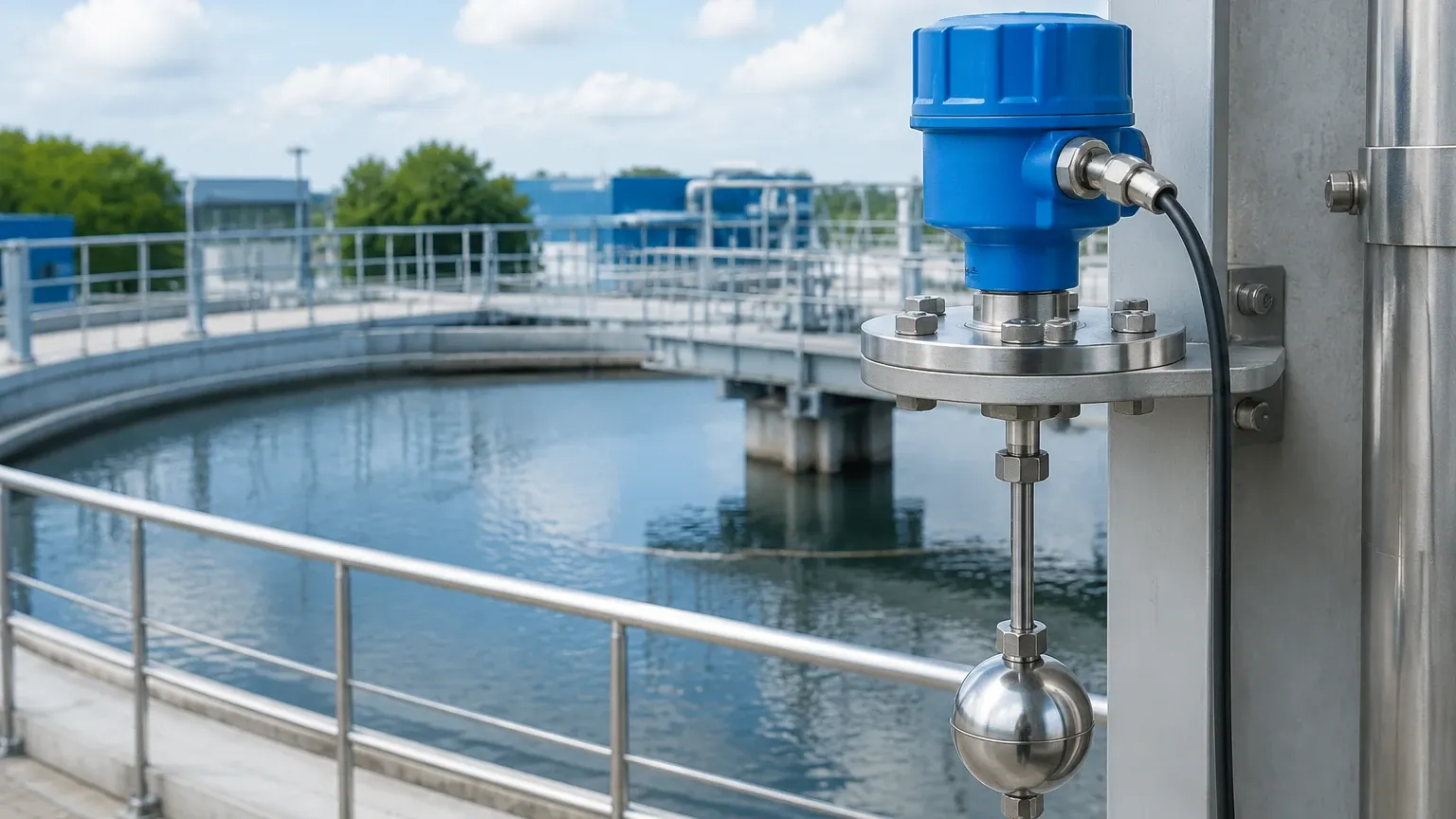
These rely on buoyancy. A float moves with the liquid level, and when it reaches a specific point, it mechanically or magnetically actuates a switch (often a reed switch or a microswitch).
* Applications: Clean liquids and water treatment.
* Key Advantage: Simple, low-cost, and requires no power for the sensing element itself.
5. Ultrasonic Point Level Switches
These devices consist of two piezoelectric crystals separated by a gap. One crystal transmits an ultrasonic signal, and the other receives it. When liquid fills the gap, the signal transmission is enhanced, triggering the switch.
* Applications: Highly viscous liquids or applications where non-contact or minimal contact is preferred.
Technical Selection Criteria for Process Environments
Choosing the right point level switch involves evaluating several technical parameters to ensure long-term operational stability. For a broader look at how these switches integrate into wider measurement systems, engineers can consult the Main Page for detailed technical specifications and product compatibility.
Media Characteristics
* Dielectric Constant: Critical for capacitive sensors. Materials with a dielectric constant less than 2.0 require high-sensitivity probes.
* Viscosity and Coating: Sticky materials (like resins or heavy oils) can cause "build-up" on the sensor. Vibrating forks or specialized capacitive probes with active shield technology are often required to ignore this buildup.
* Bulk Density: For solids, the material must be heavy enough to stall a rotary paddle or dampen a tuning fork. Most tuning forks for solids require a minimum density of 20 g/l to 50 g/l.
Process Conditions
* Temperature: Standard switches often handle up to 80°C. High-temperature versions with cooling fins or ceramic insulators are needed for steam or furnace applications reaching up to 250°C or higher.
* Pressure: While many switches are rated for atmospheric pressure, high-pressure reactors may require sensors rated for 40 bar (4.0 MPa) or more.
* Chemical Compatibility: The wetted parts (the parts touching the media) must be resistant to corrosion. Common materials include 316L Stainless Steel, PTFE (Teflon), or Hastelloy for aggressive acids.
Comparison Table: Point Level Switch Technologies
| Technology | Suitable Media | Max Temp (Typical) | Max Pressure (Typical) | Main Advantage | Main Limitation |
| :— | :— | :— | :— | :— | :— |
| Vibrating Fork | Liquids / Fine Solids | -50°C to 150°C | 40 bar | Reliable, no calibration | Not for very high viscosity |
| Capacitive | Liquids / Solids | -100°C to 250°C | 100 bar | No moving parts | Sensitive to coating |
| Rotary Paddle | Bulk Solids | -20°C to 80°C | 0.5 bar | Simple, robust | Mechanical wear |
| Float Switch | Clean Liquids | -20°C to 120°C | 20 bar | Low cost | Moving parts can jam |
| Ultrasonic | Viscous Liquids | -40°C to 100°C | 10 bar | Good for thick fluids | Affected by foam/bubbles |
Engineering Installation and Maintenance Guidelines
Correct installation is as important as technology selection. Improperly mounted sensors are the leading cause of false triggers or equipment failure.
Orientation and Positioning
* Top Mounting: Usually preferred for high-level alarms. Ensure the probe length is sufficient to reach the desired switch point.
* Side Mounting: Common for low-level or mid-level detection. For solids, the sensor should be angled or protected by a baffle to prevent damage from the falling material stream during filling.
* Avoid the Inflow: Never install a point level switch directly in the path of the filling stream. The turbulence and force can cause false switching or mechanical damage.
Electrical and Wiring
* Output Types: Most switches offer a Relay (SPDT/DPDT), Transistor (PNP/NPN), or a 2-wire AC/DC output. Ensure the controller (PLC/DCS) is compatible with the switch's output.
* Failsafe Modes: Set the switch to the appropriate failsafe mode. "Failsafe High" means the relay de-energizes when the level is high or power is lost, preventing an overflow. "Failsafe Low" protects against dry-running.
Maintenance
While many modern switches are maintenance-free, periodic inspections are recommended:
1. Check for Buildup: In sticky applications, ensure the sensing element is clean.
2. Seal Integrity: Inspect cable glands and housing seals to prevent moisture ingress, which is a common cause of electronic failure.
3. Functional Test: Manually trigger the switch (if possible) or raise the level to the switch point to verify the signal reaches the control room.
Limitations and Common Risks in Application
Despite their versatility, point level switches have inherent limitations that engineers must account for during the design phase.
* Turbulence and Foam: In liquid tanks with heavy agitation, mechanical switches like floats may bounce, causing "chatter" in the relay. In such cases, a vibrating fork with a built-in time delay (typically 0.5 to 3 seconds) is a better choice. Foam can also be a challenge; ultrasonic and capacitive switches might detect the top of the foam rather than the liquid level.
* Material Bridging: In silos containing powders, material can "bridge" or form a hole (rat-holing) around the sensor. If a rotary paddle is used, it may indicate the silo is full when it is actually empty because a clump of material is stuck on the paddle.
* Electromagnetic Interference (EMI): Electronic switches (capacitive and ultrasonic) can be affected by nearby high-power motors or VFDs. Using shielded cables and ensuring proper grounding of the sensor housing is essential.
Frequently Asked Questions (FAQs)
Q: Can a point level switch be used for continuous measurement?
No. A point level switch only detects if the material has reached a specific level. For continuous data (e.g., 0-100% full), a radar or ultrasonic level transmitter is required.
Q: What is the "dead zone" in ultrasonic switches?
In point-level ultrasonic sensors, the dead zone is generally negligible because the gap between the crystals is small. However, for non-contact ultrasonic transmitters used as switches, there is a minimum distance (usually 100mm to 500mm) from the sensor face where measurement is impossible.
Q: How do I handle hazardous areas (Ex-zones)?
In environments with explosive dust or gases, you must use an intrinsically safe (IS) or explosion-proof (Ex d) rated switch. These devices are designed to limit electrical energy or contain an internal explosion to prevent igniting the surrounding atmosphere.
Q: Is it possible to adjust the sensitivity of a capacitive switch?
Yes, most capacitive switches feature a potentiometer or digital interface to adjust the sensitivity. This allows the sensor to ignore the vessel wall or a certain amount of material buildup while still detecting the main body of the media.
Conclusion
The point level switch is an indispensable tool for modern industrial processes. By selecting the right technology—whether it be the robust rotary paddle for solids or the versatile vibrating fork for liquids—and following rigorous installation standards, facilities can significantly improve their operational safety and efficiency. For further technical assistance and a complete range of industrial measurement solutions, visiting the Main Page will provide the necessary resources to finalize your project specifications.