Endress Hauser Coriolis Flow Meter
Endress Hauser Coriolis Flow Meter
In the landscape of industrial process control, the Endress Hauser Coriolis flow meter stands as a benchmark for precision and multi-variable measurement. While many flow technologies focus solely on volume, Coriolis meters measure mass flow directly, providing a higher level of accuracy that is unaffected by changes in fluid properties such as density, viscosity, or temperature. For engineers and facility managers, understanding the technical nuances of these instruments is essential for optimizing process efficiency and ensuring product quality.
This guide explores the fundamental principles of Coriolis measurement, the specific features of the Endress+Hauser Promass series, and the practical considerations for selection and installation in demanding industrial environments.
Understanding the Coriolis Measurement Principle
Before selecting a specific model, it is vital to understand the physics that allows a Coriolis meter to function. The measurement is based on the Coriolis effect, a phenomenon where an inertial force is exerted on an object moving within a rotating frame of reference.
The Oscillating Tube Mechanism
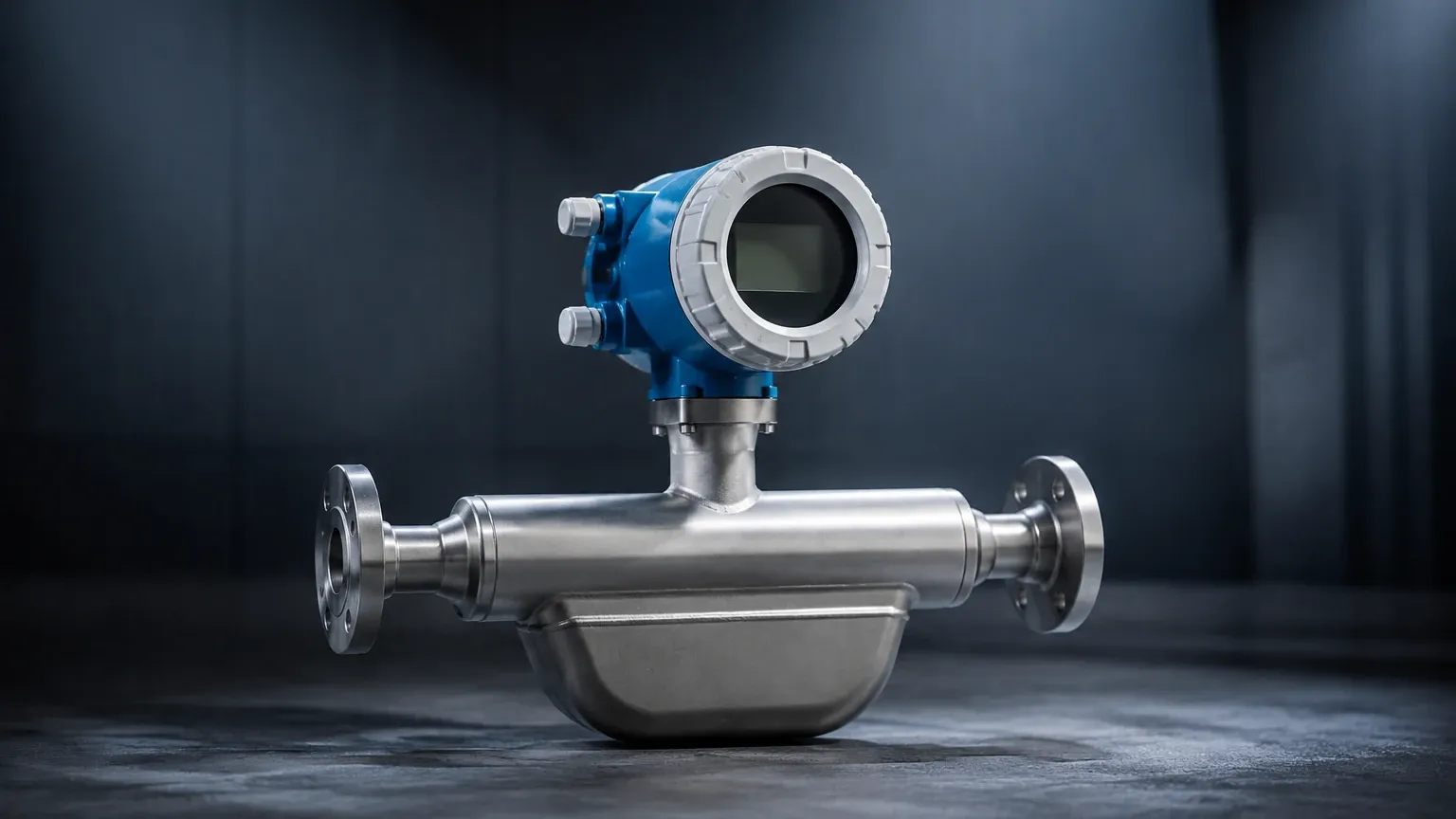
In an Endress Hauser Coriolis flow meter, the fluid passes through one or more measuring tubes that are intentionally vibrated by an exciter coil. This vibration typically occurs at the resonant frequency of the tubes. When there is no flow, the tubes vibrate in a symmetrical fashion, and sensors located at the inlet and outlet detect the oscillation in phase with one another.
Phase Shift and Mass Flow
As fluid begins to flow through the vibrating tubes, the Coriolis force causes the tubes to twist or distort. This distortion results in a phase shift between the inlet and outlet sensors. The magnitude of this phase difference is directly proportional to the mass flow rate. Because the measurement relies on inertia and mass rather than volume, it remains accurate regardless of whether the fluid is a thin solvent or a thick slurry.
Density and Temperature Measurement
Beyond mass flow, these meters are inherently capable of measuring fluid density. The resonant frequency at which the tubes vibrate changes depending on the mass of the fluid contained within them. By monitoring this frequency, the device calculates density in real-time. Furthermore, integrated PT1000 sensors measure the tube temperature to compensate for thermal expansion, providing a third data point for process monitoring.
Key Features of the Endress+Hauser Promass Series
Endress+Hauser categorizes its Coriolis meters under the "Promass" brand. These instruments are designed to handle various industrial challenges, from ultra-high pressure to hygienic requirements in the food and beverage sector.
Multi-Variable Data Integration
A single Endress Hauser Coriolis flow meter can replace multiple instruments by providing mass flow, volume flow, density, and temperature simultaneously. This reduces the number of process penetrations and simplifies the overall control architecture.
Heartbeat Technology
One of the defining features of modern Promass units is Heartbeat Technology. This diagnostic suite allows for continuous self-monitoring without interrupting the process. It provides documented proof of device health and calibration stability, which is critical for industries regulated by strict quality standards (such as ISO 9001). This proactive monitoring helps identify issues like tube coating or corrosion before they lead to measurement failure.
Transmitter Architectures
E+H offers different transmitter options to suit specific installation needs:
* Proline 100: Compact and space-saving, ideal for skid builders and integrated systems.
* Proline 300: A versatile transmitter with full functionality and multiple I/O options (4-20mA HART, Modbus, EtherNet/IP).
* Proline 500: A remote version that allows the transmitter to be mounted up to 300 meters (approx. 980 feet) from the sensor, providing easier access in hazardous or hard-to-reach areas.
Selection Criteria for Industrial Applications
Choosing the right Endress Hauser Coriolis flow meter requires a detailed analysis of the process fluid and the environmental conditions. The following table outlines the common Promass sensor types and their primary applications.
Selection Table: Promass Sensor Series
| Sensor Series | Primary Application | Key Characteristic | Typical Size Range (Metric) |
| :— | :— | :— | :— |
| Promass F | Universal / Chemical | High accuracy and robustness | DN 8 to 250 |
| Promass E | Basic Utility | Cost-effective for standard tasks | DN 8 to 80 |
| Promass G | High Pressure Gas | Optimized for high-pressure recovery | DN 8 to 25 |
| Promass I | Viscous / Shear Sensitive | Straight-tube design for low pressure drop | DN 8 to 80 |
| Promass O | Oil & Gas | High pressure and offshore durability | DN 80 to 250 |
| Promass P | Life Sciences | Hygienic design with electropolished finish | DN 8 to 50 |
| Promass X | High Volume | Maximum throughput for custody transfer | DN 300 to 400 |
Accuracy and Repeatability
For most liquid applications, the Promass F series offers a mass flow accuracy of ±0.05% of the reading. In gas applications, this typically shifts to ±0.35%. When selecting a meter, engineers must ensure the expected flow rate falls within the "sweet spot" of the meter’s range to maintain these accuracy levels. Operating too close to the zero-point of the meter can significantly increase the percentage of error.
Installation and Maintenance Best Practices
Proper installation is paramount to the longevity and accuracy of a Coriolis meter. Because the device relies on sensitive vibrations, external factors can interfere with the signal.
Mechanical Mounting and Vibration
The meter should be mounted on a rigid support system. While Coriolis meters are designed to be resistant to external pipe vibrations, extreme mechanical noise can interfere with the tube's resonant frequency. It is recommended to install the meter away from heavy pumps or vibrating machinery. If vibration is unavoidable, flexible connectors or specialized mounting brackets should be used.
Orientation for Different Media
* Liquids: The preferred orientation is vertical with the flow moving upward. This ensures that the tubes remain full and prevents the entrapment of air bubbles, which can cause measurement errors.
* Gases: For gas measurement, the meter should ideally be installed with the tubes pointing downward (in a horizontal line) or in a vertical line with downward flow to allow any condensed liquids to drain out.
* Slurries: To prevent the buildup of solids, vertical installation with upward flow is mandatory.
Upstream and Downstream Requirements
Unlike electromagnetic or ultrasonic flow meters, Coriolis meters are generally not sensitive to flow profile disturbances. This means they typically do not require long straight runs of pipe upstream or downstream. However, it is still good practice to avoid placing valves or reducers immediately before the meter to minimize turbulence and pressure drops.
Limitations and Operational Challenges
While highly versatile, the Endress Hauser Coriolis flow meter is not a universal solution for every scenario. Engineers must be aware of the following limitations:
1. Pressure Drop: The geometry of curved-tube Coriolis meters can cause a significant pressure drop across the device. In systems with low available head, a straight-tube design (like the Promass I) may be required, though these are often less sensitive.
2. Entrained Air: The presence of gas bubbles in a liquid stream (or liquid droplets in a gas stream) can dampen the tube vibration, leading to a "slug flow" condition. While modern E+H electronics can compensate for some entrainment, excessive air will cause the meter to error out.
3. Initial Cost: Coriolis meters represent a higher capital investment compared to vortex or turbine meters. The justification for this cost usually comes from reduced maintenance, higher accuracy, and the elimination of secondary instruments for density and temperature.
Integrating Flow and Level Measurement
In comprehensive process automation, flow measurement and level measurement are two sides of the same coin. While a Coriolis meter tells you how much material is moving through a pipe, level sensors tell you how much material is currently stored in a vessel. For complex mass balance calculations, data from both instruments must be synchronized.
For example, in a chemical blending tank, a Coriolis meter might be used to precisely dose expensive catalysts, while a radar or ultrasonic level transmitter monitors the bulk volume of the tank to prevent overfills. Integrating these technologies ensures that inventory management is both accurate and safe. For those looking to explore a wide range of level measurement solutions that complement flow data, you can Review product options and application support on our Main Page to find the right level instrumentation for your specific industrial environment.
Frequently Asked Questions (FAQ)
Q: Can a Coriolis meter measure the flow of non-conductive liquids?
A: Yes. Unlike electromagnetic flow meters, which require the fluid to be conductive, Coriolis meters rely on mass and inertia. They work perfectly with oils, deionized water, and various solvents.
Q: How often does an Endress Hauser Coriolis flow meter need calibration?
A: Due to the lack of moving parts, these meters are extremely stable. Many users find that they only need to perform a verification every 2 to 5 years, depending on the criticality of the process and regulatory requirements. Heartbeat Technology can often extend these intervals by providing continuous health checks.
Q: Is it possible to measure steam with a Coriolis meter?
A: While theoretically possible, Coriolis meters are generally not recommended for steam due to the high temperatures and the potential for rapid phase changes (condensate), which can interfere with the vibration. Vortex flow meters are typically the preferred choice for steam applications.
Q: What is the maximum temperature a Promass meter can handle?
A: Specialized versions of the Promass series can handle process temperatures up to +350°C (approx. +662°F). Standard models typically operate up to +200°C (approx. +392°F).
Conclusion
The Endress Hauser Coriolis flow meter remains a top-tier choice for industrial professionals who prioritize accuracy and multi-variable data. By understanding the underlying Coriolis principle and adhering to strict installation guidelines, facilities can achieve unparalleled control over their mass flow processes. Whether used in the delicate environment of pharmaceutical manufacturing or the rugged conditions of an oil refinery, these instruments provide the reliable data necessary for modern industrial automation. When paired with robust level measurement strategies, they form the foundation of a highly efficient and transparent production cycle.