Food Processing Wastewater Treatment
Food Processing Wastewater Treatment
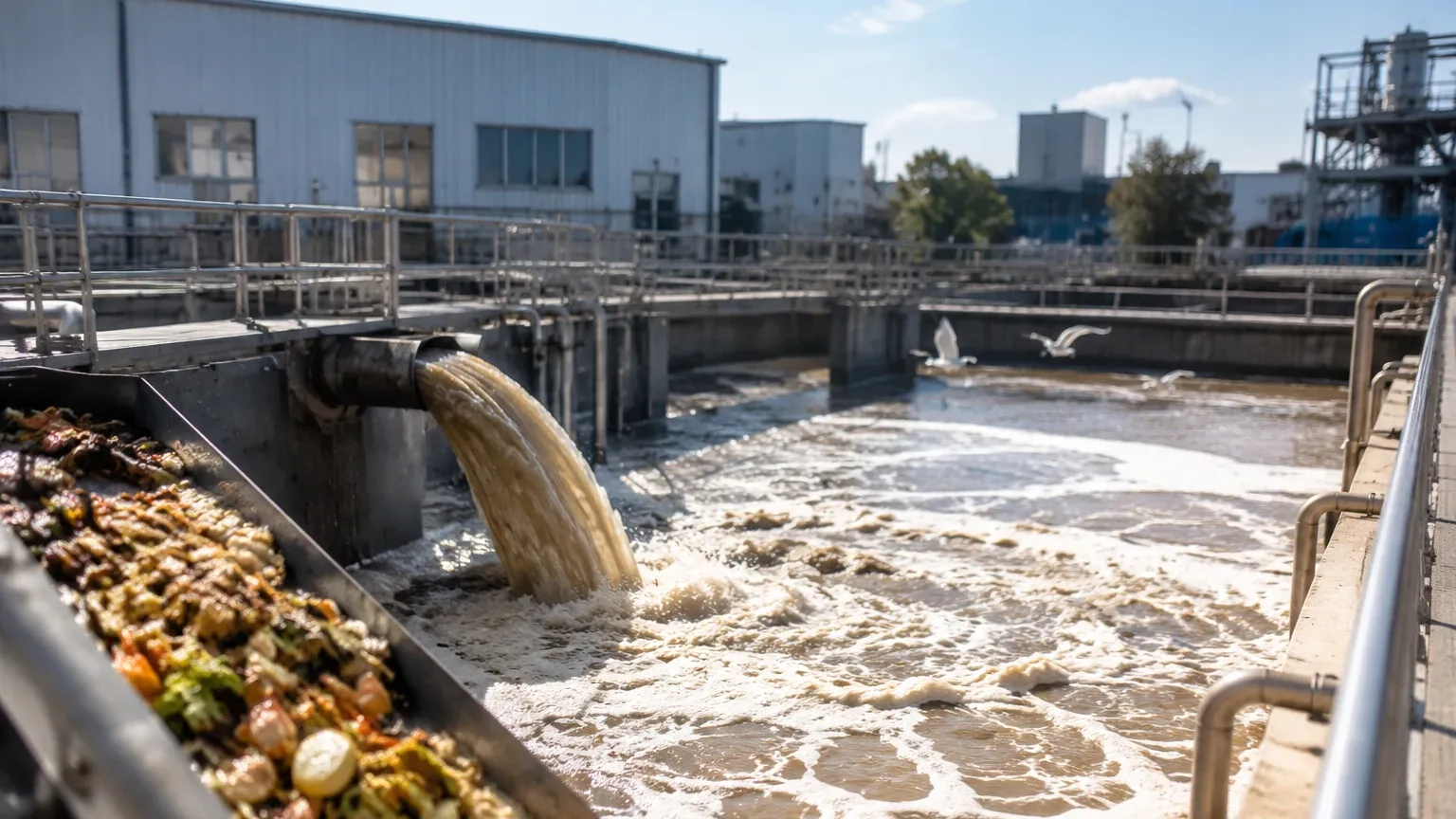
Food processing wastewater treatment represents one of the most complex challenges in industrial environmental management. Unlike municipal sewage, wastewater generated from food and beverage production is characterized by extreme variability in flow rates, high concentrations of organic matter (BOD and COD), significant levels of fats, oils, and grease (FOG), and fluctuating pH levels due to rigorous cleaning-in-place (CIP) cycles. Effective management of these streams is essential not only for regulatory compliance but also for operational efficiency and resource recovery.
In a modern food processing facility, the treatment plant must handle diverse inputs—from vegetable washing and meat processing to dairy production and brewery washdowns. Accurate monitoring and control are the foundations of a successful treatment strategy. This guide explores the engineering principles of food processing wastewater treatment, with a specific focus on the level measurement technologies that ensure these systems operate reliably under harsh industrial conditions.
The Nature of Food Processing Wastewater
Before selecting treatment equipment or instrumentation, it is vital to understand the constituents of the waste stream. Food processing wastewater treatment typically deals with high organic loads. For example, dairy processing effluent can have a Biological Oxygen Demand (BOD) thousands of mg/L higher than standard domestic sewage.
Key characteristics include:
- High Organic Content: Sugars, proteins, and starches that require intensive biological treatment.
- Suspended Solids: Soil from root vegetables, grain husks, or meat particles.
- Fats, Oils, and Grease (FOG): These substances can coat sensors and clog pipes, requiring specialized removal such as Dissolved Air Flotation (DAF).
- Thermal Fluctuations: Hot water from pasteurization or blanching can affect the performance of measurement instruments.
- Chemical Variability: The use of caustic and acidic cleaning agents creates a corrosive environment for submerged equipment.
Level Measurement Principles in Wastewater Applications
To automate the flow of wastewater through various treatment stages, engineers rely on several core level measurement principles. Understanding how these technologies function is the first step in making an informed recommendation for a specific process stage.
1. Ultrasonic Level Measurement (Non-Contact)
Ultrasonic sensors emit high-frequency sound pulses that travel through the air, bounce off the liquid surface, and return to the transducer. The device calculates the distance based on the time-of-flight of the sound wave.
- Principle: Time-of-flight (ToF) using acoustic waves.
- Best For: Open channels, sumps, and atmospheric tanks where the liquid surface is relatively calm.
- Limitations: Ultrasonic waves are sensitive to air temperature fluctuations, heavy foam, and steam, which can attenuate the signal.
2. Radar Level Measurement (Non-Contact)
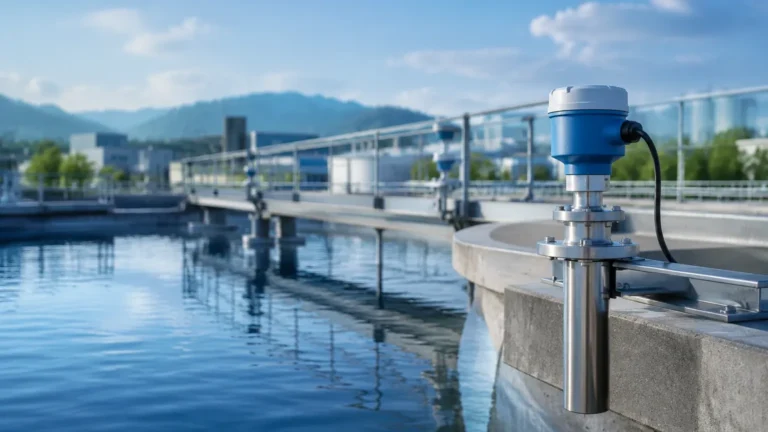
Radar transmitters utilize high-frequency electromagnetic waves (typically in the 26GHz or 80GHz range). These waves travel at the speed of light and reflect off the surface of the wastewater back to the sensor.
- Principle: Time-of-flight (ToF) or Frequency Modulated Continuous Wave (FMCW) using microwaves.
- Best For: Tanks with steam, dust, or light foam. Radar is unaffected by air temperature or pressure changes.
- Limitations: Extremely thick, dense foam can still pose a challenge, though high-frequency 80GHz radar has improved performance in these areas significantly.
3. Hydrostatic Level Measurement (Contact)
This method measures the head pressure exerted by the liquid column. A pressure transmitter is either submerged at the bottom of the tank or mounted to a flange at the base.
- Principle: $P = \rho gh$ (Pressure equals density times gravity times height).
- Best For: Deep tanks or underground pits where top-down mounting is difficult. It is unaffected by surface foam or turbulence.
- Limitations: Changes in liquid density (e.g., varying concentrations of solids or salts) will introduce measurement errors unless compensated.
4. Magnetic Level Gauges and Switches (Point Level)
For high-level alarms or pump control, point level switches are often used. Magnetic level gauges provide a visual bypass indication while offering continuous output via a reed chain or magnetostrictive transmitter.
- Principle: Buoyancy and magnetic coupling.
- Best For: Chemical storage tanks used in wastewater treatment (e.g., sulfuric acid or sodium hydroxide).
Application Stages and Technology Selection
In food processing wastewater treatment, the process is generally divided into primary, secondary, and tertiary stages. Each stage presents unique environmental factors that dictate instrument selection.
Equalization and Neutralization Tanks
Equalization tanks balance the flow and organic load before the wastewater enters the biological treatment phase. These tanks often experience significant turbulence and varying pH levels.
- Recommendation: Radar level meters are preferred here because they are non-contact and immune to the vapors often present in neutralization tanks. If the budget is a primary concern and the tank is vented to the atmosphere, ultrasonic sensors are a viable alternative.
Dissolved Air Flotation (DAF) Units
DAF systems remove FOG and suspended solids by introducing fine air bubbles that attach to particles, causing them to float to the surface as a thick sludge blanket.
- Recommendation: Measuring the level in a DAF unit is difficult due to the thick layer of surface foam. Hydrostatic pressure transmitters are often the most reliable choice here because they measure the liquid column from the bottom, ignoring the foam layer on top.
Biological Treatment (Aeration Basins)
Microorganisms break down organic matter in aeration basins. These tanks are characterized by high turbulence and the presence of bubbles.
- Recommendation: Non-contact radar with a high frequency (80GHz) is excellent for penetrating the mist and turbulence. For simpler setups, ultrasonic sensors with integrated temperature compensation can be used, provided they are mounted away from the aeration blowers.
Sludge Holding and Dewatering
Sludge is the byproduct of the treatment process. It is thick, viscous, and often contains abrasive solids.
- Recommendation: For sludge tanks, hydrostatic transmitters with a flush diaphragm are ideal to prevent clogging. Alternatively, high-power ultrasonic sensors can be used if the sludge surface is not overly agitated.
Selection Table for Level Instruments
| Application Stage | Primary Challenge | Recommended Technology | Alternative Technology |
| :— | :— | :— | :— |
| Inlet Sump / Pit | Solids, turbulence | Ultrasonic (Non-contact) | Hydrostatic (Submersible) |
| Equalization Tank | Vapors, pH swings | 80GHz Radar | Ultrasonic |
| DAF Unit | Heavy foam, grease | Hydrostatic | Radar (with foam logic) |
| Aeration Basin | Turbulence, mist | Radar | Ultrasonic |
| Chemical Storage | Corrosive liquids | Magnetic Level Gauge | Radar (PTFE coated) |
| Sludge Tank | Viscosity, coating | Hydrostatic (Flush) | Radar |
Installation Considerations
Proper installation is as critical as technology selection. Even the most advanced sensor will fail if poorly positioned.
1. Dead Zones (Blocking Distance): Every ultrasonic and radar sensor has a "dead zone" directly beneath the transducer (typically 0.1m to 0.5m or 4" to 20"). Ensure the sensor is mounted high enough so the maximum liquid level never enters this zone.
2. Mounting Position: Avoid mounting sensors directly above the inlet pipe or near the tank wall. Inlets create turbulence and false echoes, while tank walls can cause signal interference.
3. Stilling Wells: In tanks with extreme turbulence or heavy foam, installing the sensor inside a stilling well (a vertical pipe) can provide a calm surface for accurate measurement.
4. Beam Angle: Ensure the signal beam path is clear of internal obstructions like ladders, agitators, or heating coils. Radar typically offers narrower beam angles than ultrasonic, making it easier to install in cluttered tanks.
5. Environmental Protection: In food processing, washdown procedures are frequent. Ensure all instrumentation has an IP67 or IP68 rating and that housings are resistant to the cleaning chemicals used in the facility.
Limitations and Risks
While modern instrumentation is robust, certain conditions in food processing wastewater treatment can lead to measurement failure:
- Extreme Foam: While some radar units can "see through" light foam, dense, protein-based foam (common in dairy or brewery waste) can reflect the signal prematurely or absorb it entirely.
- Coating and Buildup: In sludge or FOG-heavy applications, material buildup on the sensor face can cause signal loss. Non-contact sensors are generally better, but even they may require periodic cleaning if vapors condense and dry on the lens.
- Temperature Shocks: Rapid changes from cold rinse water to hot CIP fluids can cause condensation on sensor faces. Using sensors with integrated heaters or air purges can mitigate this risk.
Frequently Asked Questions (FAQ)
Q: Can I use one type of level sensor for the entire treatment plant?
A: While it is tempting for spare parts standardization, it is rarely optimal. A DAF unit requires a different approach (Hydrostatic) than a chemical storage tank (Radar or Magnetic). However, radar is the most versatile and can often cover 70-80% of applications.
Q: How does pH affect level measurement?
A: pH does not directly affect the physics of radar or ultrasonic measurement. However, it affects the material selection. For highly acidic or alkaline wastewater, sensors should have wetted parts made of PTFE, PVDF, or high-grade stainless steel.
Q: What is the maintenance requirement for these sensors?
A: Non-contact sensors like radar and ultrasonic require very little maintenance beyond occasional inspection for buildup. Hydrostatic sensors may require periodic recalibration or cleaning of the diaphragm if the wastewater is particularly prone to scaling.
Conclusion
Selecting the right instrumentation for food processing wastewater treatment is a balance of performance, durability, and cost. By understanding the measurement principles—whether the acoustic reflection of an ultrasonic sensor or the electromagnetic precision of a radar meter—engineers can design systems that minimize downtime and ensure environmental compliance. For a comprehensive range of solutions tailored to these demanding environments, you can Review product options and application support to find the specific instrument that meets your facility's requirements.