Fmr10
Fmr10
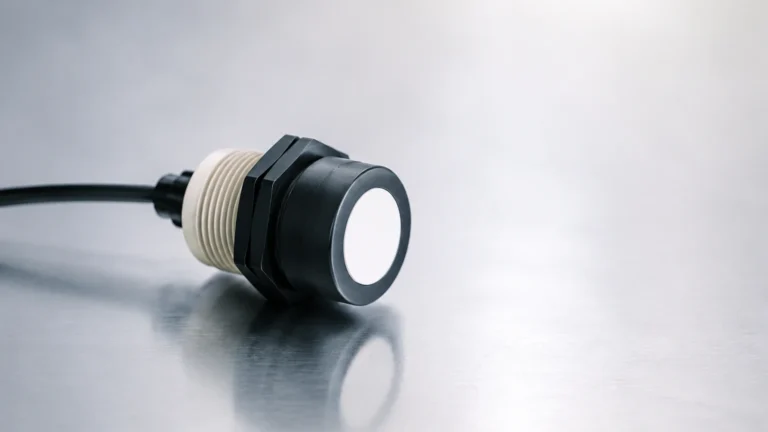
In the field of industrial process automation, the transition from traditional contact-based level measurement to non-contact radar technology has significantly improved reliability and reduced maintenance overhead. The FMR10 represents a specific class of compact, high-frequency radar sensors designed primarily for water, wastewater, and utility applications. By utilizing 80 GHz technology, these sensors address many of the limitations found in older ultrasonic or lower-frequency radar systems. For engineers and plant managers, understanding the technical nuances of the FMR10 is essential for optimizing liquid level monitoring in storage tanks, open channels, and pump stations.
Measurement Principles of 80 GHz Radar
To appreciate the utility of the FMR10, one must first understand the underlying physics of radar level measurement. Radar sensors operate on the Time-of-Flight (ToF) principle, where electromagnetic pulses are emitted, reflected by the medium surface, and received by the sensor antenna.
Modern compact sensors like the FMR10 typically employ Frequency Modulated Continuous Wave (FMCW) technology. Unlike pulsed radar, which measures the time delay of a single pulse, FMCW radar transmits a continuous signal with a frequency that changes linearly over time (a frequency sweep). The signal reflected from the liquid surface is received and mixed with the currently transmitted signal. The resulting frequency difference is directly proportional to the distance between the sensor and the medium.
The Advantage of 80 GHz
The shift from 26 GHz to 80 GHz is a critical evolution in radar design. Higher frequencies allow for a much narrower beam angle. In a standard FMR10 configuration, the beam angle is significantly tighter than that of an ultrasonic sensor or a low-frequency radar. This narrow focus means the signal is less likely to hit internal tank obstructions like ladders, agitators, or heating coils, which often cause "false echoes" or signal interference in older systems. Furthermore, 80 GHz technology allows for a smaller antenna size, making the sensor compact enough for installation in tight spaces or through small nozzles.
Technical Specifications and Features
The FMR10 is characterized by its simplicity and robust design. As a professional manufacturer, Welk emphasizes that compact radar solutions must balance precision with ease of integration. Below are the typical technical parameters associated with this class of sensor:
* Measuring Range: Typically up to 5 meters (16.4 ft) or 8 meters (26.2 ft) depending on the specific model variant.
* Accuracy: +/- 5 mm (0.2 inches) under reference conditions.
* Operating Frequency: 80 GHz (W-band).
* Output Signal: 4 to 20 mA analog output, often supplemented by digital communication such as Bluetooth for commissioning.
* Process Temperature: -40°C to +60°C (-40°F to +140°F).
* Process Pressure: -1 to +3 bar (-14.5 to +43.5 psi).
* Ingress Protection: IP66 or IP68 (NEMA 4X/6P), making it suitable for outdoor use and flooding conditions.
Practical Selection and Comparison
When selecting a level measurement technology, engineers must compare the FMR10 against other common methods. The following table provides a comparative overview of how compact radar stacks up against ultrasonic and hydrostatic transmitters.
| Feature | 80 GHz Compact Radar (FMR10) | Ultrasonic Sensors | Hydrostatic Transmitters |
| :— | :— | :— | :— |
| Measurement Type | Non-contact | Non-contact | Contact (Pressure) |
| Effect of Vapor/Gas | Negligible | Significant (Speed of sound changes) | None |
| Effect of Temperature | Minimal | High (Requires compensation) | Minimal |
| Accuracy | High (+/- 5mm) | Moderate (+/- 10-20mm) | High (Depends on density) |
| Maintenance | Low (No moving parts) | Moderate (Transducer cleaning) | Moderate (Diaphragm fouling) |
| Installation Ease | High (Small footprint) | High | Moderate (Requires tank penetration) |
| Cost | Mid-range | Low to Mid-range | Low to Mid-range |
Application Scenarios
The FMR10 is specifically engineered for "utility" applications rather than complex process chemical reactors. Its design excels in the following environments:
1. Water and Wastewater Treatment: Monitoring levels in basins, flumes, and open channels. The 80 GHz signal is unaffected by wind or temperature fluctuations, which often plague ultrasonic sensors in outdoor wastewater plants.
2. Storage Tanks: Ideal for plastic or metal tanks containing water, additives, or diluted chemicals. Because the radar can penetrate plastic, it is sometimes possible to measure through the top of a plastic IBC (Intermediate Bulk Container) without a direct opening.
3. Pump Stations: The compact size allows for installation in small wet wells where space is at a premium and turbulence is common.
4. Cooling Water Systems: Monitoring levels in cooling towers where steam and humidity are present. Radar signals are not attenuated by water vapor, ensuring a stable reading.
Installation Considerations and Best Practices
To ensure the FMR10 provides accurate data, certain installation guidelines must be followed. Even with a narrow beam angle, the physics of wave reflection requires a clear path to the product surface.
* Nozzle Height and Diameter: While 80 GHz radar is more forgiving than 26 GHz, the sensor should ideally be mounted so the antenna extends slightly below the nozzle or is flush with the tank ceiling to prevent "ringing" or internal reflections within the nozzle.
* Avoid the Center: In cylindrical tanks, avoid mounting the sensor in the dead center. This prevents the "parabolic effect," where multiple reflections from the tank walls converge at the center, potentially drowning out the actual level signal.
* Perpendicular Alignment: The sensor must be mounted perpendicular to the liquid surface. If the sensor is tilted, the radar signal may reflect away from the antenna rather than back to it, leading to a loss of signal (ECHO loss).
* Blocking Distance (Dead Zone): Every radar sensor has a minimum distance it can measure (typically around 0.1 meters or 4 inches). Ensure the maximum liquid level never enters this blocking distance to avoid erratic readings.
Limitations and Challenges
While the FMR10 is a versatile tool, it is not a universal solution for every process. Engineers should be aware of the following limitations:
* Dielectric Constant (dk): Radar relies on the dielectric constant of the medium to reflect the signal. Water has a high dk (~80) and is easy to measure. However, oils and hydrocarbons have low dk values (2-5). While the FMR10 can measure these, the maximum effective range may be reduced.
* Heavy Foam: Extremely thick, dense foam can absorb radar signals. If the application involves significant protein-based foam or thick chemical suds, a guided wave radar or hydrostatic sensor might be more appropriate.
* Turbulence: While radar handles surface ripples better than ultrasonic sensors, extreme turbulence can scatter the signal. In such cases, software damping or the use of a stilling well may be required.
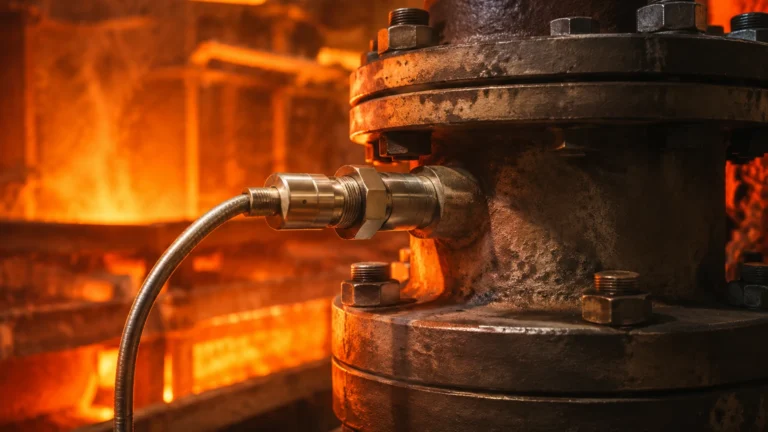
* High Pressure/Temperature: The FMR10 is a "utility" grade sensor. For high-pressure steam boilers or high-temperature molten metals, specialized heavy-duty radar units from the Main Page product line should be consulted.
Commissioning via Bluetooth
One of the standout features of the FMR10 class of sensors is the integration of Bluetooth wireless technology. Traditionally, commissioning required a specialized handheld terminal or a laptop with a HART modem. With Bluetooth, technicians can configure the sensor using a smartphone or tablet app. This is particularly beneficial for sensors mounted in hard-to-reach locations, such as the top of a tall silo or inside a hazardous wet well. The app allows for real-time visualization of the "envelope curve," which shows the signal strength and allows the user to perform false-echo suppression (mapping) to ignore static internal obstructions.
Maintenance and Longevity
Because radar is a non-contact technology, the FMR10 requires very little maintenance. There are no moving parts to wear out and no diaphragms to clog. However, in applications with heavy condensation or crystallization, a buildup of material on the antenna face can eventually degrade the signal. Periodic visual inspections and a simple wipe-down with a soft cloth are usually sufficient to maintain performance for many years.
Frequently Asked Questions (FAQs)
Q: Can the FMR10 measure solids like sand or grain?
A: While primarily designed for liquids, the FMR10 can measure solids over short distances. However, because solids have an angle of repose and can scatter the signal, the effective range is typically reduced by 50% or more compared to liquids.
Q: Is the Bluetooth connection secure?
A: Yes, industrial Bluetooth implementations use encrypted communication and require a unique password (PIN) provided with the device's documentation to prevent unauthorized access.
Q: Can I use the FMR10 in explosive atmospheres?
A: Many versions of this sensor carry ATEX, IECEx, or CSA hazardous area approvals. Always check the specific nameplate and certification of the unit before installing it in a rated zone.
Q: How does the FMR10 handle heavy rain when installed outdoors?
A: The 80 GHz frequency is slightly more sensitive to heavy rain than lower frequencies, but for the short ranges (under 8m) typical of the FMR10, the impact is usually negligible. The IP68 rating ensures the sensor itself is not damaged by moisture.
Conclusion
The FMR10 represents a significant step forward in making high-end radar technology accessible for everyday utility applications. By combining the precision of 80 GHz FMCW radar with the convenience of Bluetooth commissioning and a compact form factor, it provides a reliable alternative to ultrasonic and hydrostatic sensors. For industrial operators looking to upgrade their level measurement capabilities, reviewing the full range of options on the Main Page is the first step toward achieving more accurate and maintenance-free process control.