Pmp71
Pmp71
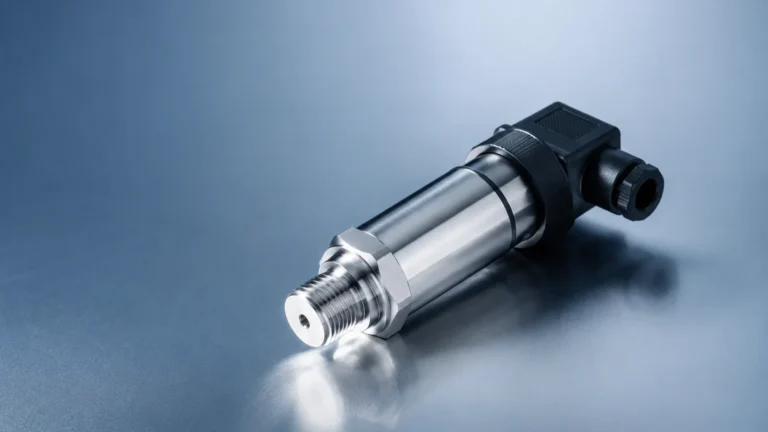
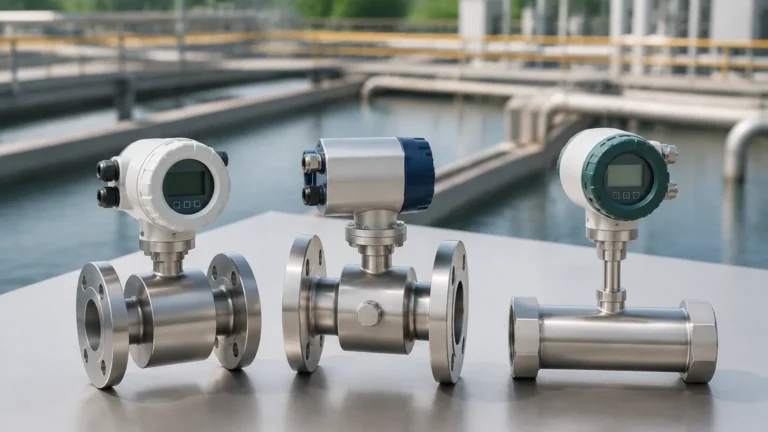
In the field of industrial process automation, the PMP71 represents a standard for high-performance digital pressure transmitters. Designed primarily for pressure, level, volume, or mass measurement in liquids or gases, it is a critical component in systems requiring high precision and long-term stability. This guide provides a technical overview of the PMP71, its operating principles, selection criteria, and practical installation considerations for engineering professionals.
Measurement Principle: Hydrostatic Pressure and Piezoresistive Sensing
Before selecting a transmitter like the PMP71, it is essential to understand the underlying physics of its operation. The PMP71 utilizes the hydrostatic pressure measurement principle, which is one of the most reliable methods for determining liquid level in a vessel.
The Hydrostatic Law
Hydrostatic level measurement is based on the principle that the pressure exerted by a static liquid column is directly proportional to the height of the liquid above the measurement point, the density of the liquid, and the force of gravity. The formula is expressed as:
P = ρ × g × h
Where:
* P = Hydrostatic pressure (Pa)
* ρ (rho) = Density of the medium (kg/m³)
* g = Acceleration due to gravity (approx. 9.81 m/s²)
* h = Height of the liquid column (m)
In a vented tank, the transmitter measures the pressure of the liquid and converts it into a level signal. In pressurized tanks, a differential pressure measurement is required to compensate for the overhead gas pressure.
Piezoresistive Sensor Technology
The PMP71 specifically employs a metallic diaphragm with a piezoresistive sensor. When pressure is applied to the process diaphragm, it deflects slightly. This deflection is transmitted via a fill fluid (usually silicone or vegetable oil) to a resistance bridge located on a silicon substrate. The resulting change in resistance is proportional to the applied pressure. This analog signal is then digitized and processed by the transmitter's electronics to provide a highly accurate output, often with a reference accuracy of up to ±0.025%.
Technical Specifications and Performance
The PMP71 is engineered for demanding applications. Its robust design allows it to operate in extreme environments where accuracy cannot be compromised. Key technical attributes include:
* Measurement Ranges: Capable of measuring from small spans (e.g., 400 mbar / 6 psi) up to high-pressure environments (e.g., 700 bar / 10,500 psi).
* Process Temperature: Standard models typically handle temperatures from -40°C to +125°C (-40°F to +257°F). For higher temperatures, diaphragm seals with capillaries are utilized.
* Accuracy: Standard accuracy is ±0.05%, with a "Platinum" version offering ±0.025% of the set span.
* Long-term Stability: Excellent stability ratings, often cited at ±0.05% of the URL (Upper Range Limit) per year or better over a five-to-ten-year period.
For more information on comparable high-precision instruments and their integration into industrial systems, you can visit the Main Page.
Practical Selection Criteria
Choosing the correct configuration for a PMP71 involves evaluating the chemical compatibility of the wetted parts, the process connection type, and the communication protocol requirements.
Selection Table: Material and Connection Options
| Feature | Options | Application Context |
| :— | :— | :— |
| Diaphragm Material | 316L, Alloy C276, Monel, Tantalum | 316L for water/oil; Alloy C for corrosive chemicals; Tantalum for strong acids. |
| Process Connection | Threaded (NPT, G), Flanged (ANSI, DIN, JIS), Hygienic | Flanges for heavy industrial tanks; Hygienic for food/pharma; Threaded for pipes. |
| Communication | 4-20mA HART, PROFIBUS PA, FOUNDATION Fieldbus | HART is standard; PROFIBUS/FF for integrated digital plant architectures. |
| Housing Material | Aluminum, Stainless Steel (316L) | Stainless steel for offshore or highly corrosive atmospheres. |
Evaluation of Diaphragm Seals
If the process medium is highly viscous, prone to polymerization, or extremely hot, a diaphragm seal system is necessary. This separates the PMP71 sensor from the process using a flexible diaphragm and a capillary tube filled with transmission fluid. While this protects the instrument, it can introduce temperature-induced errors that must be compensated for during the engineering phase.
Installation Considerations
Proper installation is paramount to ensuring the longevity and accuracy of the PMP71. Engineers should adhere to the following guidelines:
1. Orientation: The transmitter can be mounted in any orientation, but the position can cause a zero-point shift due to the weight of the fill fluid in the sensor. A zero-point calibration should always be performed after installation.
2. Impulse Lines: If using impulse piping, ensure the lines are sloped (at least 1:12) to prevent gas pockets in liquid lines or liquid accumulation in gas lines.
3. Venting: For liquid applications, the transmitter should be mounted below the process connection to ensure the sensor stays flooded and can be vented of air.
4. Environmental Protection: While the PMP71 is usually IP66/68 rated, using a weather shield is recommended in outdoor installations to prevent solar heating, which can affect measurement stability.

Limitations and Risks
While the PMP71 is a versatile instrument, it is not a "one-size-fits-all" solution. Understanding its limitations prevents premature failure or inaccurate data.
* Vacuum Applications: Special care must be taken when using diaphragm seals in vacuum conditions. The fill fluid can degas, or the diaphragm can be damaged if the system is not designed for absolute vacuum.
* Density Variations: Since hydrostatic measurement relies on constant density, any change in the temperature or concentration of the liquid that alters its density will result in a level error unless a compensation algorithm is used.
* Abrasive Media: Although metallic diaphragms are tough, highly abrasive slurries can wear down the thin metal over time, leading to sensor failure.
* Hydrogen Permeation: In high-pressure hydrogen applications, hydrogen atoms can permeate through standard metal diaphragms, causing internal gold plating to be necessary to prevent sensor drift.
Comparison with Other Technologies
In many B2B procurement scenarios, the PMP71 is weighed against non-contact technologies like radar or ultrasonic sensors.
| Feature | PMP71 (Hydrostatic) | Radar (Non-contact) | Ultrasonic |
| :— | :— | :— | :— |
| Surface Foam | Unaffected | Can be attenuated | Often fails |
| Internal Obstructions | Unaffected | Requires clear path | Requires clear path |
| Moving Surfaces | Excellent stability | Good stability | Poor stability |
| Installation | Wetted (requires tank penetration) | Non-wetted or top-mounted | Non-wetted |
| Cost | Moderate | High | Low to Moderate |
Frequently Asked Questions (FAQ)
Q: How often should the PMP71 be calibrated?
A: Due to its high long-term stability, many facilities extend calibration cycles to every 2 to 5 years, depending on the criticality of the process and local regulatory requirements. However, a functional check (loop check) is recommended annually.
Q: Can the PMP71 be used for SIL2/SIL3 safety applications?
A: Yes, many versions of the PMP71 are developed according to IEC 61508 and are suitable for use in SIL2 (single device) or SIL3 (homogeneous redundancy) safety-instrumented systems.
Q: What is the difference between absolute and gauge pressure in a PMP71?
A: Gauge pressure versions measure relative to local atmospheric pressure (vented to the atmosphere), while absolute pressure versions measure relative to a vacuum. Level measurement in open tanks typically uses gauge pressure.
Q: How do I handle a plugged process connection?
A: If the medium tends to clog, use a flush-mounted diaphragm instead of a threaded connection with an internal cavity. This allows the process fluid to flow past the sensor face without accumulating.
Conclusion for Project Planning
Before finalizing the specification of a PMP71 for your project, it is vital to confirm the chemical properties of the medium, the maximum possible process temperature, and the required digital integration. The PMP71 remains a benchmark for reliability in hydrostatic level and pressure monitoring, provided the environmental and physical limitations are accounted for during the design phase.
For engineers seeking comprehensive support in selecting the right level measurement technology—whether radar, ultrasonic, or hydrostatic—referencing established technical resources and product catalogs is the best next step. Detailed specifications and application support can be found on the Main Page.