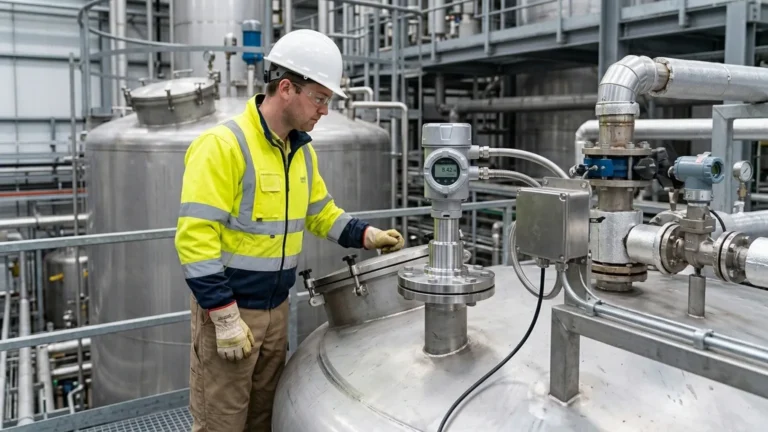
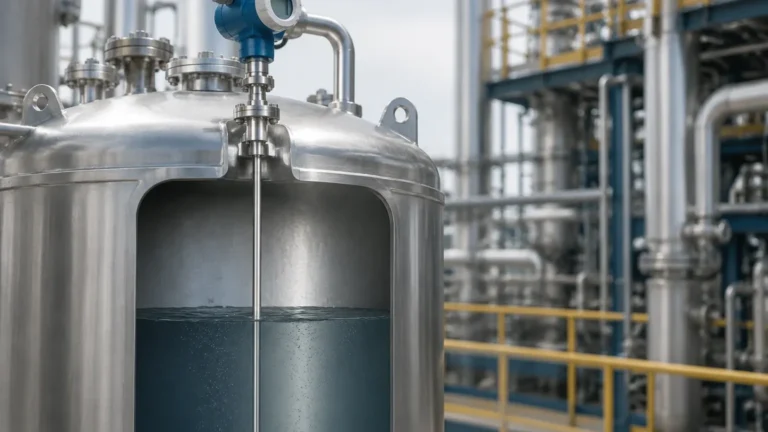
Radar Level Transmitter for Water Tank
Radar Level Transmitter for Water Tank: A Technical Engineering Guide
In industrial process control, the accurate measurement of liquid levels in storage tanks is fundamental to operational safety, inventory management, and process efficiency. While various technologies exist for this purpose, the use of a radar level transmitter for water tank applications has become the preferred standard for engineers seeking high precision and low maintenance. This guide examines the technical principles, selection criteria, and installation requirements for implementing radar technology in water storage and processing environments.
Understanding Radar Measurement Principles
Before selecting a specific instrument, it is essential to understand how radar technology interacts with the medium. Industrial Radar Level Meters typically operate using one of two primary methods: Pulse Radar or Frequency Modulated Continuous Wave (FMCW).
Pulse Radar
Pulse radar transmitters emit a high-frequency microwave signal in short bursts. The instrument measures the "time-of-flight"—the duration it takes for the pulse to travel to the water surface and return to the sensor. Since the speed of light is constant, the distance is calculated as:
*Distance = (Speed of Light × Time of Flight) / 2*
Frequency Modulated Continuous Wave (FMCW)
FMCW radar is the modern standard for high-precision industrial applications. Instead of pulses, the transmitter emits a continuous signal with a constantly changing frequency. When the reflected signal is received, it is compared to the signal being emitted at that exact moment. The frequency difference (Δf) is directly proportional to the distance. FMCW technology generally offers superior signal-to-noise ratios and higher accuracy (often up to ±1 mm) compared to pulse-based systems.
The Role of Dielectric Constant (εr)
Radar measurement relies on the reflection of electromagnetic waves at the interface between two mediums with different dielectric constants. Water has a high dielectric constant (εr ≈ 80), making it an excellent reflector for radar signals. This high reflectivity ensures a strong return signal, allowing for reliable measurement even in deep tanks or turbulent conditions.
Why Choose Radar Over Other Technologies?
Engineers often compare radar with ultrasonic and hydrostatic pressure sensors. Each has its place, but radar offers distinct advantages in specific water tank scenarios:
1. Non-Contact Measurement: Unlike hydrostatic transmitters, radar does not touch the liquid, eliminating concerns regarding sensor corrosion, scaling, or sediment buildup.
2. Immunity to Atmospheric Variations: Ultrasonic sensors rely on the speed of sound, which changes with air temperature, pressure, and humidity. Radar uses electromagnetic waves, which are unaffected by vacuum, pressure, or temperature fluctuations in the tank headspace.
3. Accuracy in Vapor and Steam: In hot water tanks or applications where evaporation occurs, ultrasonic signals can be scattered or absorbed by steam. Radar signals penetrate these vapors with negligible attenuation.
Selecting the Right Radar Level Transmitter for a Water Tank
Choosing the correct radar level transmitter for water tank applications requires evaluating the tank's physical characteristics and the water's properties.
Frequency Selection: 26GHz vs. 80GHz
* 26GHz Radar: Often used for large, open-air reservoirs or large-diameter tanks. It has a wider beam angle, which can be advantageous if the surface is highly turbulent, but requires more clearance from internal tank obstructions.
* 80GHz Radar: The current industry preference for most process tanks. The higher frequency allows for a much narrower beam angle (as small as 3 degrees). This is critical for avoiding false reflections from tank walls, ladders, or inlet pipes.
Tank Geometry and Material
* Flat Roof vs. Conical Roof: The shape of the tank roof influences where the transmitter should be mounted to avoid "ringing" or multiple reflection errors.
* Plastic vs. Metal Tanks: Radar waves can penetrate plastic (non-conductive) materials. In some cases, a radar sensor can measure the level through a plastic tank roof without a penetration point, though this reduces signal strength.
Media Characteristics
While clean water is a simple target, wastewater or chemical-treated water may involve foam or agitation. If heavy foam is present, a lower frequency or a guided wave radar (GWR) might be considered, although high-performance non-contact 80GHz units can often penetrate light foam.
Technical Selection Table
| Feature | 26GHz Pulse/FMCW | 80GHz FMCW | Guided Wave Radar (GWR) |
| :— | :— | :— | :— |
| Typical Range | Up to 30m (98ft) | Up to 120m (393ft) | Up to 30m (98ft) |
| Accuracy | ±3mm to ±5mm | ±1mm to ±2mm | ±2mm |
| Beam Angle | 8° – 20° | 3° – 6° | N/A (Guided) |
| Best For | Large reservoirs | Narrow tanks, high precision | Low dielectric fluids, foam |
| Installation | Top-mounted | Top-mounted | Top-mounted (Probe) |
Installation Engineering and Best Practices
Correct installation is as critical as instrument selection. Even the most advanced Radar Level Meters will fail if environmental factors are ignored.
Positioning and Clearance
* The 1/6 Rule: A common engineering rule of thumb is to mount the transmitter 1/6 of the tank diameter away from the side wall. This prevents the beam from hitting the wall while staying far enough from the center to avoid the "parabolic effect" where the tank roof focuses reflections back to the sensor.
* Avoid the Center: Never mount a radar transmitter in the exact center of a tank with a domed or conical roof, as this is the focal point for noise reflections.
* Obstruction Clearance: Ensure the signal beam path is clear of heating coils, agitators, and support beams. If an obstruction is unavoidable, many modern transmitters offer "False Echo Suppression," allowing the software to map out and ignore fixed reflections.
Nozzle Considerations
If mounting on a nozzle, the antenna should ideally extend slightly beyond the bottom of the nozzle to prevent signal interference from the nozzle walls. If the nozzle is long and narrow, an 80GHz transmitter is mandatory due to its focused beam.
Environmental Protection
For outdoor water tanks, ensure the transmitter has a sunshade to prevent electronics overheating and an IP67 or IP68 rating to protect against moisture ingress during heavy rain or tank cleaning.

Limitations and Application Risks
While radar is highly versatile, engineers must be aware of its limitations:
1. Heavy Foam: Extremely thick, dense foam (like shaving cream) can absorb the radar signal entirely. In such cases, a guided wave radar or a differential pressure transmitter may be more appropriate.
2. Condensation: While radar can see through vapor, heavy condensation on the antenna lens can cause signal attenuation. Choosing an instrument with a PTFE (Teflon) drip-off lens or a curved antenna face helps shed water droplets.
3. Extreme Turbulence: Rapidly fluctuating surfaces can scatter the radar signal. This is usually managed by increasing the damping (averaging) time in the transmitter's software or using a stilling well.
International Buyer Checklist
When sourcing a radar level transmitter for water tank projects globally, ensure the following specifications are confirmed with the manufacturer:
* Process Connection: Confirm thread (NPT/G) or flange standards (ANSI/DIN/JIS).
* Output Protocol: Standard 4-20mA HART is most common, but RS485 Modbus or Profibus may be required for integration into modern SCADA systems.
* Certifications: Verify if the site requires explosion-proof (Ex-d) or intrinsically safe (Ex-ia) ratings, even if the medium is water, as the surrounding environment may be classified.
* Minimum Dielectric Constant: Ensure the device is rated for a dielectric constant of at least 1.4 (though water at 80 is well within range).
* Supply Voltage: Confirm whether the site provides 24V DC (2-wire/4-wire) or 220V AC power.
Frequently Asked Questions (FAQ)
Q: Can radar measure the level of demineralized or ultra-pure water?
A: Yes. Although pure water has a slightly different dielectric constant than raw water, it remains high enough for reliable radar reflection. Radar is often preferred here as it maintains the purity of the water by being non-contact.
Q: Is a stilling well necessary for a radar transmitter?
A: A stilling well is usually not necessary for non-contact radar unless there is extreme surface foam or if the tank is very narrow with many internal obstructions that cannot be mapped out via software.
Q: How does wind affect radar measurement in open tanks?
A: Unlike ultrasonic sensors, radar is completely unaffected by wind or air movement over the surface of the water.
Q: What is the lifespan of a typical radar level transmitter?
A: With no moving parts and non-contact operation, a high-quality radar transmitter can reliably operate for 10 to 15 years with minimal maintenance, provided the electronics are protected from extreme environmental surges.
Conclusion
The implementation of a radar level transmitter for water tank monitoring provides a robust, high-accuracy solution for modern industrial needs. By understanding the frequency requirements, dielectric properties, and installation constraints, process engineers can ensure long-term reliability and data integrity. For critical applications, consulting with a professional manufacturer like Welk ensures that the selected Radar Level Meters are optimized for the specific challenges of the site's infrastructure.