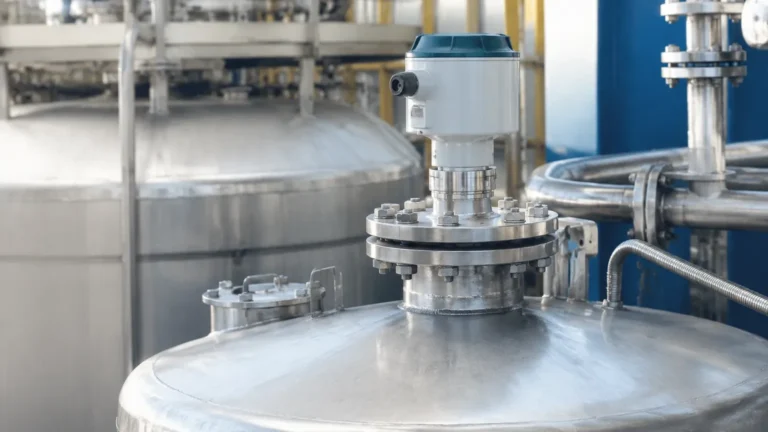
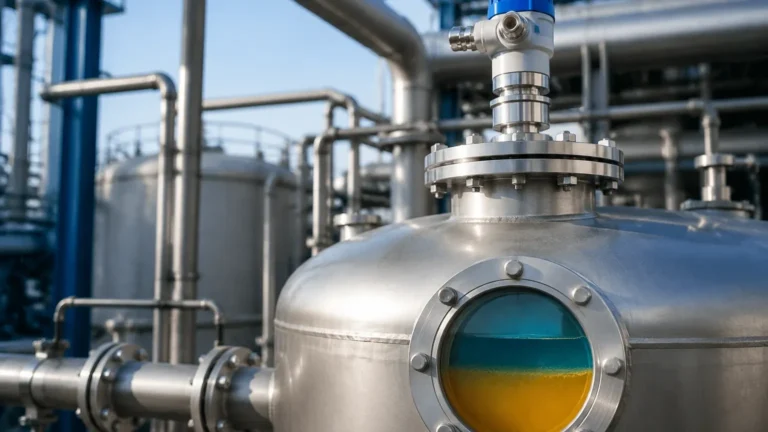
Emerson Radar Level Transmitter 5300
Emerson Radar Level Transmitter 5300: A Technical Engineering Guide
In the landscape of industrial process control, accurate level measurement is a fundamental requirement for safety, efficiency, and inventory management. Among the various technologies available, Guided Wave Radar (GWR) has emerged as a preferred solution for challenging applications involving high temperatures, high pressures, and low dielectric media. The Emerson Radar Level Transmitter 5300 (specifically the Rosemount 5300 series) represents a high-performance implementation of GWR technology. This article provides a factual engineering overview of the 5300 series, its operating principles, selection criteria, and installation requirements for B2B procurement and engineering teams.
Understanding the Measurement Principle: Guided Wave Radar (GWR)
Before evaluating specific hardware like the Emerson 5300, it is essential to understand the underlying physics of Guided Wave Radar. Unlike non-contact Radar Level Meters that broadcast electromagnetic waves through the air, GWR systems utilize a physical probe to guide the signal directly to the process media.
Time Domain Reflectometry (TDR)
The Emerson radar level transmitter 5300 operates on the principle of Time Domain Reflectometry (TDR). The transmitter electronics generate low-power microwave pulses that travel down the probe at the speed of light. When these pulses encounter a change in the dielectric constant ($\\epsilon_r$)—typically the interface between gas/vapor and the liquid or solid surface—a portion of the pulse energy is reflected back to the transmitter.
By measuring the time delay between the transmitted pulse and the received echo, the device calculates the distance to the product surface. The level is then determined by subtracting this distance from the known tank height (the "zero" point). Because the signal is physically guided by a probe, it is less susceptible to signal attenuation caused by turbulence, foam, or tank obstructions compared to non-contact radar systems.
Key Features of the Emerson 5300 Series
The 5300 series is designed for high-end process applications where reliability is critical. Several technical features distinguish this transmitter from entry-level GWR units:
1. Direct Switch Technology (DST): This circuitry enhancement increases the signal strength of the reflected pulse. By minimizing signal loss in the transmitter head, the 5300 can handle longer probes and media with lower dielectric constants (down to 1.2) more effectively than standard GWR transmitters.
2. Probe End Projection (PEP): In applications where the dielectric constant is extremely low, the reflection from the surface may be too weak to detect. PEP allows the transmitter to calculate the level by measuring the time of flight to the end of the probe and accounting for the slower speed of the microwave pulse as it passes through the product.
3. Signal Quality Metrics: The device provides diagnostic data regarding the signal-to-noise ratio, allowing maintenance teams to predict potential failures caused by heavy coating or probe degradation before they result in a process trip.
Technical Specifications and Selection Criteria
Selecting the correct configuration for an Emerson radar level transmitter 5300 requires a detailed analysis of the process environment. The following table outlines the primary probe types and their typical application envelopes.
Table 1: Probe Selection Matrix
| Probe Type | Best For | Max Range (m) | Min Dielectric ($\\epsilon_r$) | Viscosity Limit |
| :— | :— | :— | :— | :— |
| Single Lead (Rigid/Flexible) | High viscosity, coating liquids, large tanks | 50m | >1.9 (with PEP) | High |
| Twin Lead (Rigid/Flexible) | Long range, mid-dielectric liquids | 50m | >1.4 | Medium |
| Coaxial | High accuracy, low dielectric, turbulence | 6m | >1.2 | Low (clean liquids) |
Process Constraints
* Temperature and Pressure: The 5300 series is available in versions capable of handling temperatures from -196°C to +400°C and pressures up to 345 bar (5000 psi). High-temperature versions utilize specialized ceramic seals to protect the electronics.
* Dielectric Constant ($\\epsilon_r$): The dielectric constant of the media is the most critical factor. Water has a high $\\epsilon_r$ (~80), making it easy to measure. Hydrocarbons often have low $\\epsilon_r$ (1.7 to 2.5), requiring more sensitive probe configurations like coaxial or twin-lead designs.
Installation Considerations and Engineering Boundaries
Proper installation is paramount to ensuring the accuracy of the Emerson radar level transmitter 5300. Engineers must adhere to specific mechanical boundaries to prevent signal interference.
Nozzle Dimensions and Clearance
While GWR is less sensitive to tank internals than non-contact radar, the "dead zone" or "upper blocking distance" must be respected. This is the area near the top of the probe where measurements are not possible or are less accurate.
* Nozzle Diameter: For single-lead probes, the nozzle diameter should be as large as possible to minimize parasitic reflections.
* Wall Clearance: Single and twin-lead probes require a minimum clearance from the tank wall and internal obstructions (like ladders or agitators) to prevent false echoes. Typically, a minimum of 300 mm (12 inches) is recommended for single-lead probes.
* Coaxial Advantage: Coaxial probes are immune to external interference because the signal is contained entirely within the outer tube. These are ideal for installation in narrow nozzles or tanks with complex internals.
Probe Anchoring
In tanks with high turbulence or agitators, flexible probes must be anchored to the bottom of the vessel. However, the anchor must be designed to allow for thermal expansion of the probe to prevent mechanical stress on the transmitter head.
Comparison: Guided Wave vs. Non-Contact Radar
When specifying level instrumentation, engineers often choose between GWR (like the 5300) and non-contact Radar Level Meters. Each has distinct advantages.
* GWR (Emerson 5300): Best for low dielectric fluids, tanks with heavy foam, or applications with high pressure/temperature vapors that change the speed of light in the vapor space. Since the signal is guided, changes in vapor composition are compensated for more easily.
* Non-Contact Radar: Preferred for highly corrosive or extremely viscous media that would damage or cling to a physical probe. It is also the standard choice for large-scale bulk solids storage where the mechanical pull-down forces on a GWR probe would be excessive.
Application Risks and Limitations
Despite its robustness, the Emerson radar level transmitter 5300 has limitations that buyers must confirm before procurement:
1. Coating and Buildup: While single-lead probes handle coating better than others, extreme buildup of conductive material (like metallic ores or high-moisture cakes) can bridge the signal to the tank wall, causing a "high level" false reading.
2. Interface Measurement Risks: GWR is excellent for measuring the interface between two liquids (e.g., oil and water). However, the upper liquid must have a lower dielectric constant than the lower liquid, and the upper layer must be thick enough (typically >100 mm) for the transmitter to distinguish the two echoes.
3. Physical Obstructions: If a probe touches a metallic object inside the tank, the signal will be lost at that point. Ensuring the probe remains vertical and clear is the most common installation challenge.
Maintenance and Troubleshooting
The 5300 series is virtually maintenance-free due to its lack of moving parts. However, in demanding applications, the following steps are recommended:
* Echo Curve Analysis: Periodically review the echo curve using service software. A decreasing signal-to-noise ratio over time usually indicates material buildup on the probe or the process seal.
* Verification: Many industries require periodic verification. The 5300 supports "Remote Proof Testing," allowing operators to verify the transmitter's integrity without removing it from the tank or raising the fluid level manually.
Frequently Asked Questions (FAQ)
Q: Can the Emerson 5300 be used for solids measurement?
A: Yes, but with limitations. It is suitable for powders and small granules. However, for large aggregates or high-silo applications, the tensile load on the probe must be calculated to prevent the tank roof from collapsing under the weight of the material pulling on the cable.
Q: How does the 5300 handle boiling surfaces?
A: Because the probe guides the signal, GWR is significantly more stable than non-contact radar in boiling conditions. The Emerson 5300's Direct Switch Technology helps maintain a visible surface echo even when the surface is turbulent.
Q: Is it possible to cut the probe to length in the field?
A: Most flexible cable probes and some rigid single-lead probes in the 5300 series can be shortened in the field. However, the transmitter configuration must be updated with the new probe length to maintain accuracy. Coaxial probes generally cannot be field-cut without specialized tools and re-calibration.
Q: What information is required for an accurate quote?
A: At a minimum, provide the media name, dielectric constant, operating temperature/pressure, tank height, nozzle dimensions, and required output protocol (HART, Foundation Fieldbus, or Modbus).
Conclusion
The Emerson Radar Level Transmitter 5300 is a sophisticated tool for industrial level measurement, offering high reliability through Guided Wave Radar technology. By understanding the dielectric properties of the process media and selecting the appropriate probe geometry, engineers can implement a solution that withstands the rigors of modern industrial processing. For applications where a physical probe is not feasible, exploring non-contact Radar Level Meters remains the recommended alternative path for technical evaluation.