Composite Water Sampler
Composite Water Sampler
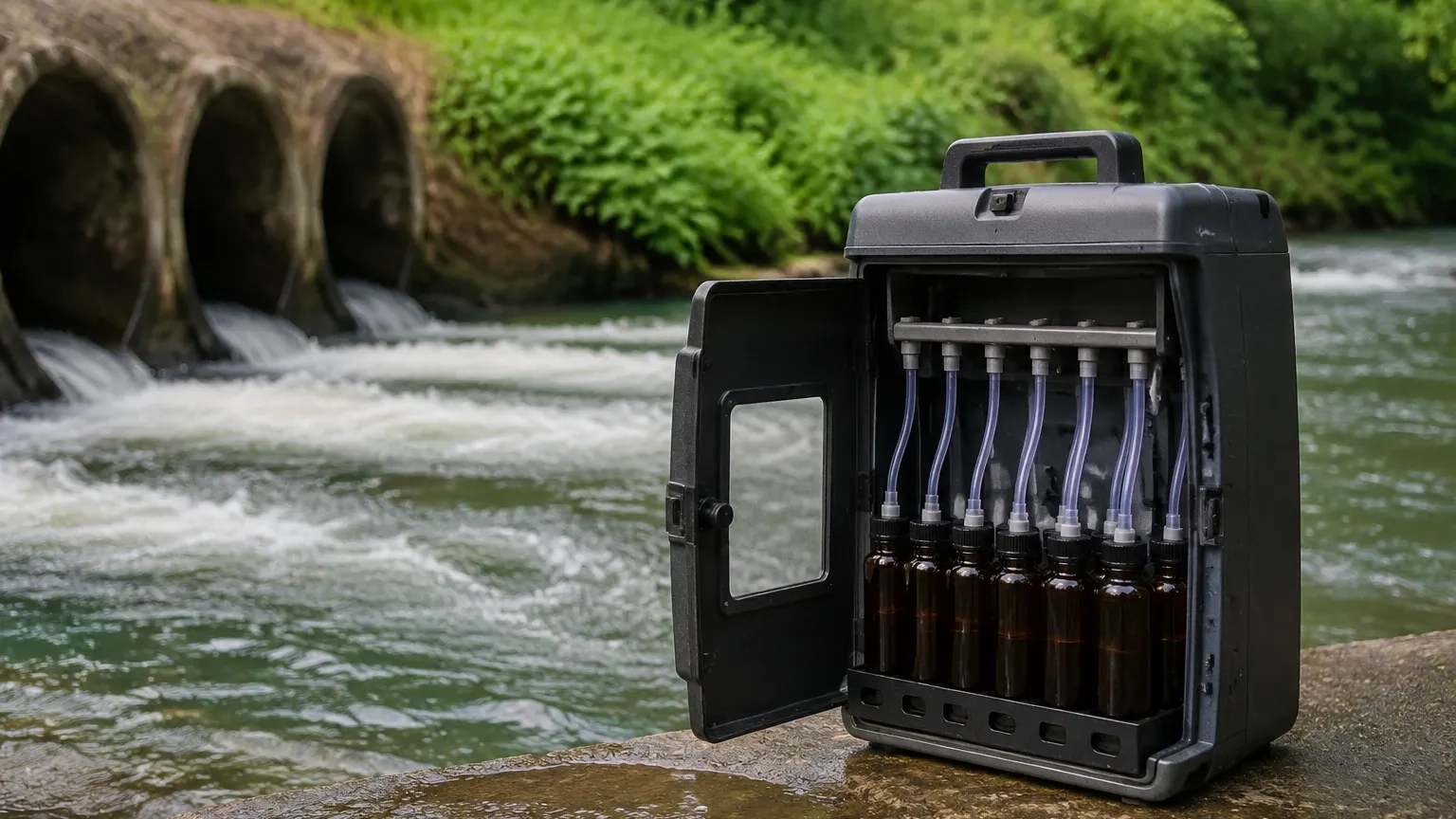
In industrial wastewater management, environmental monitoring, and municipal water treatment, the accuracy of laboratory analysis is entirely dependent on the quality of the initial sample. A composite water sampler is an automated instrument engineered to collect discrete liquid samples over a defined period and combine them into a single container. This process provides a representative average of the water quality, smoothing out fluctuations that occur in "grab" samples taken at a single point in time.
For engineers and plant managers, selecting the right composite water sampler requires an understanding of fluid dynamics, chemical compatibility, and the integration of secondary sensors, such as flow and level meters. This guide examines the technical principles, selection criteria, and installation requirements for industrial sampling systems.
Measurement and Sampling Principles
Before selecting a sampling system, it is essential to understand the physical mechanisms used to extract the liquid from the source. Most modern composite water samplers utilize one of three primary methods: peristaltic pumps, vacuum-suction systems, or pressurized systems.
Peristaltic Pump Sampling
Peristaltic pumps are the most common mechanism in portable and stationary samplers. They operate by compressing a flexible tube with rollers, creating a vacuum that draws the liquid upward.
* Advantages: The liquid never contacts the pump components, only the tubing, which reduces cross-contamination risks and simplifies cleaning.
* Limitations: They are generally limited to a vertical lift of approximately 8 to 9 meters (26 to 30 feet). At higher lifts, the flow rate decreases significantly.
Vacuum-Suction Sampling
Vacuum samplers use a vacuum pump to evacuate air from a chamber, drawing the sample into a metering vessel. Once the vessel is full, the vacuum is released, and the sample flows by gravity into the composite container.
* Advantages: This method often provides higher transport velocities, which is critical for keeping suspended solids in the sample stream.
* Limitations: The internal chambers require more intensive cleaning compared to peristaltic systems.
Integration with Level and Flow Measurement
Composite sampling is rarely a standalone process. To achieve a truly representative sample, the sampler must often be triggered by external conditions. In many industrial applications, a Main Page level or flow meter provides the trigger signal. For example, in an open channel, an ultrasonic level sensor measures the head height over a weir; the resulting flow data is then used to trigger the sampler to take a volume-proportional sample.
Types of Composite Sampling Strategies
There are two primary logic patterns used when configuring a composite water sampler: time-weighted and flow-weighted.
1. Time-Weighted Sampling
In this mode, the sampler is programmed to collect a specific volume (e.g., 200 ml) at fixed time intervals (e.g., every 30 minutes). This is suitable for stable waste streams where the flow rate does not vary significantly. However, if a high-concentration pollutant spike occurs during a low-flow period, time-weighted sampling may over-represent that pollutant in the final composite.
2. Flow-Weighted (Proportional) Sampling
Flow-weighted sampling is the industry standard for compliance monitoring. The sampler receives a pulse or 4-20mA signal from a flow meter. There are two sub-methods:
* Constant Volume/Variable Time (CVVT): A fixed sample volume is taken every time a specific volume of water passes the sensor (e.g., one 100 ml sample for every 1,000 liters of flow).
* Variable Volume/Constant Time (VVCT): Samples are taken at regular time intervals, but the volume of each sample is determined by the flow rate at that moment.
Selection Criteria for Industrial Applications
Choosing a composite water sampler involves evaluating the environment, the chemical nature of the effluent, and regulatory requirements. The following table provides a comparison of key features to consider.
Sampler Selection Table
| Feature | Portable Samplers | Stationary Samplers | Refrigerated Samplers |
| :— | :— | :— | :— |
| Primary Use | Short-term studies, remote sites | Permanent compliance points | Biological/Organic monitoring |
| Power Source | 12V DC Battery / Solar | 110V/220V AC | 110V/220V AC |
| Housing Material | Heavy-duty Plastic (PE) | Stainless Steel / GRP | Insulated Metal/Plastic |
| Sample Cooling | Ice or Gel Packs | None (Ambient) | Compressor-based Cooling |
| Vertical Lift | Up to 8 meters | Up to 9+ meters | Up to 9+ meters |
| Data Logging | Internal memory | PLC / SCADA Integration | PLC / SCADA Integration |
Material Compatibility
The choice of intake tubing and sample containers is critical. For general wastewater, Polyethylene (PE) or Polypropylene (PP) containers are standard. However, if the analysis involves trace organics or pesticides, glass containers and Teflon-lined suction tubing are required to prevent the sample from leaching plasticizers or absorbing chemicals from the container walls.
Installation and Engineering Considerations
Proper installation is the difference between a valid sample and a failed compliance test. Engineers should adhere to the following guidelines during the design phase:
1. Intake Placement: The suction head (strainer) should be placed in a zone of high turbulence, such as the center of the flow stream, to ensure the liquid is well-mixed. Avoid placing the intake too close to the bottom to prevent the uptake of heavy sediments, and avoid the very top to prevent the collection of floating oils or debris.
2. Suction Line Slope: The tubing should have a continuous downward slope from the sampler to the source. This ensures that the line drains completely between samples, preventing cross-contamination and freezing in cold climates.
3. Lift Height and Velocity: To prevent the settling of suspended solids within the suction line, a minimum transport velocity of 0.6 m/s (2 ft/s) is recommended. As the vertical lift increases, the pump speed must be sufficient to maintain this velocity.
4. Refrigeration Requirements: Many regulatory bodies (such as the EPA) require samples to be maintained at 4°C (±2°C) to inhibit biological activity and chemical degradation. In these cases, a stationary refrigerated sampler is mandatory.
Integration with Level Measurement Systems
As a manufacturer of industrial level measurement instruments, Welk emphasizes the importance of the interface between the level sensor and the sampler. In many wastewater applications, the sampler is "slaved" to a level meter.
For instance, in a storm-water monitoring application, a hydrostatic level transmitter or an ultrasonic sensor can detect a rise in water level. Once a pre-set "threshold level" is reached, the sensor triggers the composite water sampler to begin its program. This ensures that the sampler only operates during relevant events, saving battery power and sample storage capacity. For detailed specifications on the sensors used to trigger these systems, engineers should consult the technical documentation on the Main Page.
Limitations and Common Risks
While automated samplers are highly efficient, they are not without limitations:
* Representativeness of Solids: If the intake velocity is too low, heavier solids will not be drawn into the sampler, leading to an underestimation of Total Suspended Solids (TSS).
* Peristaltic Tube Wear: The flexible tubing in a peristaltic pump degrades over time. If the tube loses its elasticity, the vacuum pressure drops, and the sample volume becomes inconsistent.
* Cross-Contamination: If the system does not include a "pre-purge" and "post-purge" cycle (blowing air through the line before and after sampling), residual liquid from the previous sample may contaminate the current one.
* Volatile Organic Compounds (VOCs): Standard composite samplers are often unsuitable for VOC analysis because the vacuum and turbulence can cause the volatile components to outgas. Specialized "Closed-loop" or "Bladder" samplers are required for these specific parameters.
Frequently Asked Questions (FAQ)
Q: How often should the suction tubing be replaced?
A: In standard wastewater applications, the pump tubing should be inspected monthly and replaced every 3 to 6 months. The suction line (from the source to the sampler) should be replaced annually or whenever visible biofilm or staining occurs.
Q: Can a composite water sampler be used for hazardous (Class 1, Div 1) environments?
A: Yes, but you must specify an explosion-proof (ATEX or IECEx certified) model. These units feature pressurized enclosures or intrinsically safe electronics to prevent ignition in the presence of flammable gases.
Q: What is the maximum distance the sampler can be from the water source?
A: While vertical lift is limited to ~9 meters, the horizontal distance can be much longer (up to 30 meters or more). However, longer horizontal runs increase the risk of sediment settling and require more powerful purge cycles.
Q: How do I calibrate the sample volume?
A: Most samplers have a calibration routine where you command the unit to take a 1000 ml sample. You measure the actual volume delivered in a graduated cylinder and input that value into the controller. The sampler then adjusts its pump timing to compensate for the specific lift and friction of your installation.
Conclusion
The composite water sampler is a cornerstone of industrial process control and environmental protection. By automating the collection of flow-proportional or time-weighted samples, facilities can ensure they remain in compliance with local discharge permits while gaining valuable insights into their waste streams. Success depends on selecting the correct pump mechanism, ensuring material compatibility, and integrating reliable level and flow triggers to drive the sampling logic. For those designing a new monitoring station, reviewing the available measurement technologies and support options on the Main Page is a recommended next step to ensure system-wide accuracy.