Fork Level Switches
Fork Level Switches
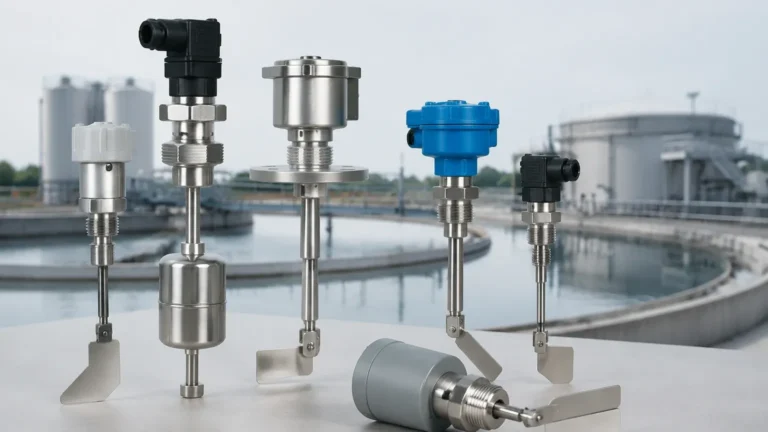
In the landscape of industrial automation and process control, point level detection serves as a critical safeguard against tank overfills, pump dry-running, and material shortages. Among the various technologies available, fork level switches—also known as vibrating fork sensors or tuning fork switches—have emerged as one of the most versatile and reliable solutions for both liquid and solid applications.
Characterized by their robust design and immunity to changing material properties like conductivity, dielectric constant, or pressure, these instruments are a staple in industries ranging from wastewater treatment to chemical processing. This guide provides a comprehensive technical overview of fork level switches, their operating principles, selection criteria, and practical installation guidance for engineering professionals.
Understanding the Vibrating Fork Principle
Before selecting a device for a specific application, it is essential to understand the physics that allow fork level switches to function. The core of the instrument is a mechanical tuning fork, typically constructed from stainless steel (such as 316L) or specialized alloys for corrosive environments.
The Piezoelectric Effect
The operation begins within the housing of the switch, where a pair of piezoelectric crystals is located. One crystal is energized with an electrical signal, causing it to vibrate. These vibrations are mechanically coupled to the tuning fork, driving it to its natural resonant frequency in the air. The second piezoelectric crystal acts as a receiver, converting the mechanical vibrations back into an electrical signal that the internal electronics monitor.
Frequency Shift and Detection
When the tuning fork is not in contact with the process medium, it vibrates freely at its resonant frequency. However, as the liquid or solid material rises and covers the fork tines, the frequency of vibration changes.
1. In Liquids: The immersion of the tines in a liquid causes a significant drop in the resonant frequency due to the increased mass and damping effect of the fluid.
2. In Solids: The presence of granular material or powder restricts the mechanical movement of the tines, causing the vibration to stop or shift significantly.
The internal microprocessor detects this frequency shift or cessation of vibration and compares it against a pre-set threshold. Once the threshold is crossed, the device changes its output state—typically a relay, PNP/NPN transistor, or a 4-20mA signal—to alert the control system that the target level has been reached.
Key Applications for Fork Level Switches
Fork level switches are categorized based on the medium they are designed to detect. While the underlying principle is the same, the fork geometry and sensitivity settings differ between liquid and solid variants.
Liquid Level Detection
In liquid applications, Level Switches are primarily used for high-level alarm (overfill protection) and low-level alarm (pump protection). Because they do not rely on the electrical properties of the fluid, they are ideal for:
* Hydrocarbons and Oils: Detecting fuels or lubricants where capacitive sensors might fail due to low dielectric constants.
* Aerated Liquids: Functioning reliably in fluids with bubbles or foam, which can confuse ultrasonic or optical sensors.
* High-Purity Water: Providing non-intrusive detection in deionized water systems.
Solids and Powder Detection
For bulk solids, fork level switches are designed with larger, more robust tines to handle the physical impact of granules. They are frequently used in:
* Grains and Feeds: Monitoring silos in the agricultural sector.
* Plastic Pellets: Controlling the feed rate in injection molding processes.
* Fine Powders: Detecting cement, flour, or fly ash where dust clouds would render optical or ultrasonic sensors ineffective.
Technical Selection Criteria
Selecting the correct fork level switch requires an analysis of the process environment. Engineers should evaluate the following parameters to ensure long-term reliability.
1. Medium Density
The sensitivity of a vibrating fork is calibrated to a specific density range. For liquids, most switches require a minimum density of 0.7 g/cm³ (43.7 lb/ft³), though high-sensitivity models can detect fluids as light as 0.5 g/cm³. For solids, the bulk density is even more critical; standard switches typically require at least 0.05 g/cm³ to 0.1 g/cm³ to effectively dampen the vibration.
2. Viscosity and Coating
While fork switches are resistant to minor build-up, highly viscous liquids (above 10,000 mm²/s or cSt) can cause "bridging" between the tines. If the material sticks to the fork and creates a bridge, the sensor may indicate a "covered" state even after the actual level has dropped. In such cases, a wide-tine design or a different technology might be required.
3. Temperature and Pressure
Standard industrial fork switches are typically rated for temperatures between -40°C and 150°C (-40°F to 302°F). For high-temperature applications, such as steam boilers or molten plastics, specialized models with thermal extensions are necessary to protect the electronics. Pressure ratings usually range from vacuum up to 64 bar (928 psi).
4. Material Compatibility
The wetted parts must be compatible with the process media. While 316L stainless steel is standard, Welk offers coatings such as PFA or ECTFE for highly corrosive acids and bases. For sanitary applications in food and beverage, polished forks with Tri-Clamp fittings are required to meet hygiene standards.
| Feature | Liquid Fork Switch | Solids Fork Switch |
| :— | :— | :— |
| Primary Goal | Overfill/Dry-run protection | Silo level management |
| Min. Density | ~0.5 – 0.7 g/cm³ | ~0.05 – 0.1 g/cm³ |
| Max. Viscosity | 10,000 cSt | N/A (Flowability matters) |
| Common Fitting | G1", 1" NPT, Flange | G1.5", 1.5" NPT, Flange |
| Vibration Freq. | High (~1000 Hz) | Low (~100-300 Hz) |
Installation and Mounting Considerations
Proper installation is paramount to preventing false triggers and mechanical damage. Unlike continuous level transmitters, fork level switches are point-level devices and should be positioned at the exact height where the switching action is desired.
Orientation
* Top Mounting: Used for high-level alarms. The switch is installed vertically. It is important to ensure the fork tines are long enough to reach the desired trip point, often requiring an extension pipe.
* Side Mounting: The most common orientation for both high and low levels. The switch is installed horizontally through the tank wall.
* Positioning the Tines: For liquid applications, the tines should be oriented so that the liquid can drain easily from between them. In horizontal installations, this usually means the flat surfaces of the tines should be vertical (perpendicular to the floor) to prevent liquid from pooling between them.
Avoiding Interference
* Inflow Streams: Never install a fork level switch directly in the path of a falling material stream or near a fill pipe. The physical force of the material can damage the tines or cause intermittent false signals.
* Agitators: Ensure the tines are outside the radius of any mixers or agitators. If turbulence is high, a protective baffle or a stilling well may be required.
* Wall Proximity: Maintain a minimum distance (typically 50mm or 2 inches) from the tank wall to prevent material buildup from bridging the gap between the wall and the fork.

Comparison with Other Level Switches
To understand why an engineer might choose fork level switches over other technologies, it is helpful to look at the trade-offs.
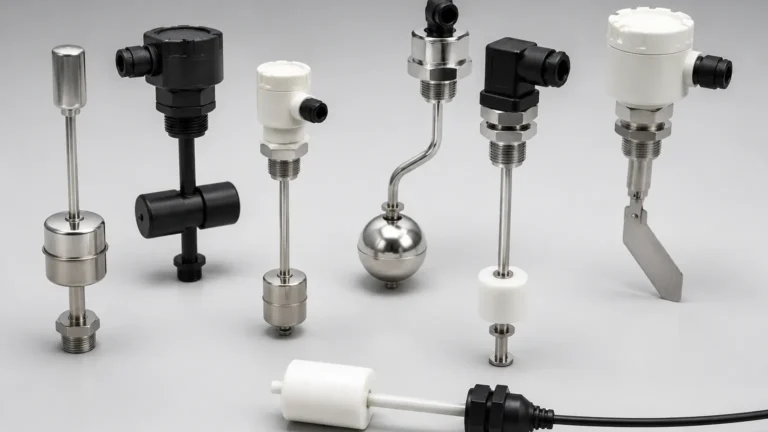
1. vs. Float Switches: Float switches are mechanical and prone to jamming if the liquid contains solids or becomes sticky. Fork switches have no moving parts, significantly reducing maintenance needs.
2. vs. Capacitive Switches: Capacitive sensors depend on the dielectric constant of the material. If the moisture content of a solid changes, the dielectric constant changes, requiring recalibration. Fork switches are independent of these electrical properties.
3. vs. Optical Sensors: Optical sensors fail in the presence of dust, fog, or coating on the lens. Fork switches are unaffected by the optical clarity of the environment.
Limitations and Operational Challenges
While highly versatile, fork level switches are not a universal solution. Engineers should be aware of the following limitations:
* Material Bridging: As mentioned, if a sticky substance bridges the gap between the tines, the sensor will fail to reset. This is a common issue with chocolate, heavy syrups, or wet powders.
* Extreme Turbulence: In very violent mixing applications, the mechanical stress on the tines can lead to fatigue over several years. In these cases, a non-contact method or a heavy-duty hydrostatic transmitter might be preferred.
* Very Low Density: If a powder is extremely light (like some fumed silicas), it may not provide enough mechanical resistance to stop the vibration of a standard fork switch.
Frequently Asked Questions (FAQ)
Q: Can fork level switches be used in hazardous areas?
A: Yes. Most manufacturers provide ATEX, IECEx, or North American explosion-proof certifications. These models use intrinsically safe circuits or flameproof enclosures to prevent ignition in volatile environments.
Q: Do fork level switches require calibration?
A: Generally, no. Most modern fork switches are "plug-and-play." They are factory-calibrated to vibrate at a specific frequency. Some models include a sensitivity adjustment (high/low) to account for extremely light powders or aerated liquids.
Q: How do I test if the switch is working without filling the tank?
A: Many fork switches feature a magnetic test point on the housing. By placing a magnet against the housing, you can manually trigger the electronics to simulate a "covered" state, allowing you to verify the wiring and control logic.
Q: Can these sensors detect the interface between two liquids?
A: It is possible but difficult. A fork switch can detect the interface between a liquid and a gas easily. Detecting the interface between two liquids (like oil and water) requires a very specific density difference and a high-precision sensor calibrated to trigger at the density of the heavier liquid but not the lighter one.
Conclusion
Fork level switches represent a reliable, low-maintenance solution for point level detection in modern process industries. By leveraging the principle of resonant frequency, they provide a robust alternative to mechanical floats and electrical-property-dependent sensors. When selecting a switch, focusing on material density, viscosity, and proper mounting orientation will ensure the instrument provides years of trouble-free service. For specific technical data and model variations, engineers should consult detailed product specifications to match the device to their unique process conditions.